
Your Browsing History
BEST SELLERS


BEST SELLERS
In Wired Networking
Our most popular products, based on sales and updated frequently.Shop Department

Verbatim 8-in-1 USB-C Hub with 4K HDMI Output, USB-C 100W Power Delivery, 2x USB 3.0 Ports, SD+MicroSD Card Reader, 3.5mm Audio
- Type: USB / Ethernet
- Standards: USB 3.0
- Ports: 2 x USB 3.0 1 x USB C for data 1 x USB C for power 2 x SD card readers 1 x HDMI 1 x 3.5mm audio port
- Dimensions: 7" x 3.82" x 1"
- Model #: VUC-2081D
- Item #: N82E16817130333
- Return Policy: Standard Return Policy
$14.38
$59.99
Free Shipping
Small, have a 90° angled cable and have non-slip feet.
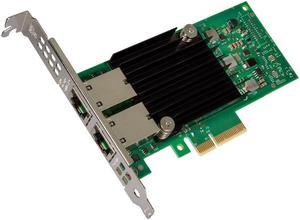
Intel Ethernet Converged Network Adapter X550, Backward compatible 10GBASE-T network adapter | X550T2
- Brand: Intel
- Part Number: X550-T2
- Speed: Dual-port 100Mb/s: 3.9 W (Typical Power) 4.9 W (Maximum Power) Dual-port 1GbE 5.5 W (Typical Power) 6.4 W (Maximum Power) Dual-port 10GbE 11.2 W (Typical Power) 13.0 W (Maximum Power)
- Connectors: 2 x RJ45
- Model #: X550T2
- Item #: N82E16833106292
- Return Policy: Standard Return Policy
$168.99
$169.99
Free Shipping
This is the real deal. It comes with full and half height brackets.
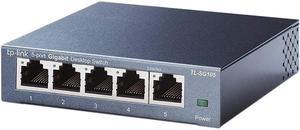
TP-Link 5 Port Gigabit Ethernet Network Switch - Ethernet Splitter | Plug & Play | Fanless | Sturdy Metal w/ Shielded Ports | Traffic Optimization | Unmanaged | Limited Lifetime Protection(TL-SG105)
- Brand: TP-Link
- Format: Desktop
- Standards: IEEE802.3, IEEE802.3u, IEEE802.3ab, IEEE802.3x
- Network Management Type: Unmanaged
- Model #: TL-SG105
- Item #: 9SIA7BB2JK5302
- Return Policy: View Return Policy
$48.76
Free Shipping
A Gigabit switch in a metal case. The unit appears to be high quality and solidly constructed. I’ve had it at a critical junction within my gigabit network, and it’s been 100% stable over the last 3 weeks, producing very good throughput.
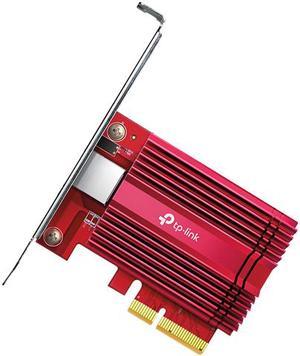
TP-Link 10Gbps PCIe Network Card (TX401) - PCIe to 10 Gigabit Ethernet Network Adapter, Supports Windows 10/8.1/8/7, Windows Servers 2019/2016/2012 R2, and Linux, Including a CAT6A Ethernet Cable
- Brand: TP-Link
- Standards: IEEE 802.3, IEEE 802.3u, IEEE 802.3ab, IEEE 802.3bz, IEEE802.3an, IEEE802.3az, IEEE 802.3x
- Speed: 10Gbps
- Connectors: 1 x RJ45
- Model #: TX401
- Item #: 9SIA9U1KDH7810
- Return Policy: View Return Policy
$177.99
$30.99 Shipping
I purchased 2 of these. one to put in my desktop and the other to put in my truenas server. truenas core will not support this card. I had to update to truenas scale for it to recognize.
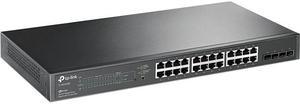
TP-Link JetStream 28-Port Gigabit Smart Switch with 24-Port PoE+ (TL-SG2428P)
- Switch Type: other
- Format: Desktop
- Standards: IEEE 802.3i, IEEE 802.3u, IEEE 802.3ab, IEEE802.3z, IEEE 802.3ad, IEEE 802.3x, IEEE 802.3az, IEEE 802.1d, IEEE 802.1s, IEEE 802.1w, IEEE 802.1q, IEEE 802.1p, IEEE 802.1x
- Primary Ports: 24 x RJ45 + 4 x SFP
- Model #: SG2428P
- Item #: 0XP-001U-00667
- Return Policy: Standard Return Policy
$399.99
$29.99 Shipping
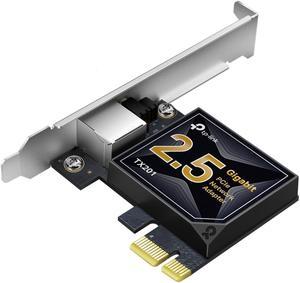
TP-Link TX201 PCI-Express Interface Cards
- Connectors: 1 x RJ45
- Wake On LAN: Yes
- Model #: TX201
- Item #: 9SIAH2MM6J1229
- Return Policy: View Return Policy
$53.48
Free Shipping
Plugged into older Alienware R7 that only had gigabit on-board, just worked and at full speed.
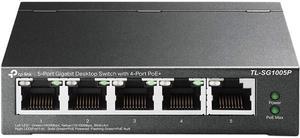
TP-Link TL-SG1005P | 5 Port Fast Ethernet PoE Switch | 4 PoE+ Ports @67W | Desktop | Plug & Play | Sturdy Metal w/ Shielded Ports | Fanless | Limited Lifetime Protection | Extend & Priority Mode
- Brand: TP-Link
- Switch Type: desktop
- Format: Desktop
- Network Management Type: Unmanaged
- Model #: TL-SG1005P
- Item #: 2WG-002T-000D4
- Return Policy: Standard Return Policy
$49.99
$59.99
$1.99 Shipping
Sturdy metal case. REALLY reminds me of a sturdy line of switches from a more expensive competitor that starts with an 'N' and ends with 'etgear.' Good throughput overall, much better than using 10/100. I really like that the lights obey the same syntax as other gigabit switches... Amber means full gigabit, where green means 100Mbit.
TP-Link Omada 16-Port 8 POE+ Managed Switch SG3218XP-M2
- Model #: SG3218XP-M2
- Item #: 0XP-001U-008K9
- Return Policy: Standard Return Policy
$595.99
Free Shipping
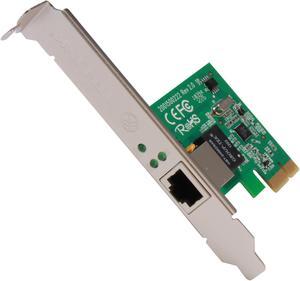
TP-Link TG-3468 PCI-Express Network Adapter (with Normal and Low Profile Bracket)
- Standards: IEEE 802.3, 802.3u, 802.3ab, 802.3x, 802.1q, 802.1p, CSMA / CD, TCP / IP
- Connectors: 1 x RJ45
- LEDs: 1000 Mbps Link / Act, 100 Mbps Link / Act, 10 Mbps Link / Act
- Temperature: Operating Temperature: 0 ~ 40 degree Celsius (32 ~ 104 degree Fahrenheit) Storage Temperature: -40 ~ 70 degree Celsius (-40 ~ 158 degree Fahrenheit)
- Model #: TG-3468
- Item #: N82E16833704060
- Return Policy: Standard Return Policy
$14.99
$5.99 Shipping
I have had this card for about 6+months and it has been a great experience. The drivers it came with were the most current available and were simple to install. This is a very small card and works great with your pci-x 1.0 that has a heat sink directly behind it. This was a concern of mine since my ASRock M3A770DE has this configuration. I'm also getting great speed with my upgraded cable based internet.
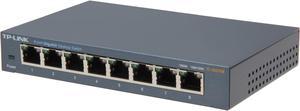
TP-Link 8 Port Gigabit Ethernet Network Switch | Ethernet Splitter | Sturdy Metal w/ Shielded Ports | Plug-and-Play | Traffic Optimization | Unmanaged (TL-SG108)
- Brand: TP-Link
- Format: Desktop
- Standards: IEEE802.3, IEEE802.3u, IEEE802.3ab, IEEE802.3x
- Network Management Type: Unmanaged
- Model #: TL-SG108
- Item #: N82E16833704173
- Return Policy: Standard Return Policy
$27.99
$31.99
Est. Shipping Fee $5.99
Eligible for Free Shipping
Small but solid gigabit switch. It's case is made of sheet metal and weighs about a pound or so. No need for software installation. Works right out of the box. Fanless so it's silent. The two mounting holes on the back have slots with vertical and horizontal notches for mounting in tight spaces. As for performance, it has a sustained transfer rate of around 69MB/s across CAT5e cables from a 2TB hard drive on one computer to a 128GB SSD on the other.
Omada ES206XPP-M2 Ethernet Switch
- Brand: TP LINK
- Model #: ES206XPP-M2
- Item #: 0XP-001U-00DS6
- Return Policy: International Order Return Policy
$199.99
Free Shipping
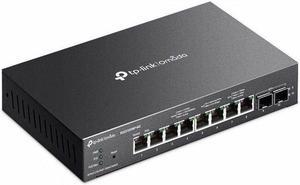
TP-Link Omada 8-Port 2.5GBASE-T and 2-Port 10GE SFP+ Smart Switch with 8-Port PoE+ - Gigabit Ethernet, 100 Gigabit Ethernet, 2.5 Gigabit Ethernet - 100Base-T, 1000Base-T, 2500Base-T, 10GBase-X - 180.1
- Model #: SG2210XMP-M2
- Item #: 0XP-001U-008V0
- Return Policy: Standard Return Policy
$419.99
Free Shipping
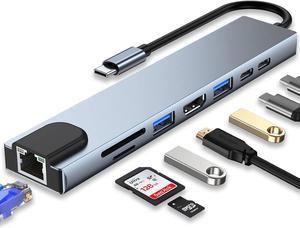
USB C HUB, 8 in 1 USB C Adapter with 4K HDMI, 100W PD, USB C Port, USB 3.0, RJ45 Ethernet, SD/TF Card Reader, Docking Station Compatible with MacBook Pro/Air USB C Laptops and Other Type C Devices
- Brand: AUBEAMTO
- Part Number: CM2017L8
- Color: Gray
- Compatibility: Smartphones, Tablets, Keyboards, Laptops, Card Readers, Televisions, Desktops
- Model #: A-CM2017L8
- Item #: 9SIC7B7M1M1846
- Return Policy: View Return Policy
$32.99
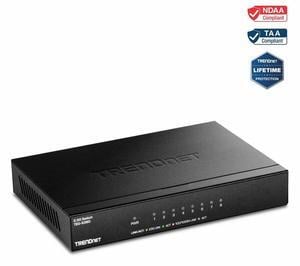
TRENDnet 8-Port Unmanaged 2.5G Switch, 8 x 2.5GBASE-T Ports, 40Gbps Switching Capacity, Backwards Compatible with 10-100-1000Mbps Devices, Fanless, Wall Mountable, Black, TEG-S380
- Brand: TRENDnet
- Format: Desktop
- Standards: IEEE 802.3 IEEE 802.3u IEEE 802.3x IEEE 802.3z IEEE 802.3ab IEEE 802.3az IEEE 802.3bz
- Network Media: Media Type Supported: Twisted Pair Ethernet Technology: 2.5 Gigabit Ethernet Network Technology: 2.5GBase-T
- Model #: TEG-S380
- Item #: 9SIA7BBFG08137
- Return Policy: View Return Policy
Works as advertised and had no issues with autonegotiating speeds on interfaces with Google Fiber's provided equipment (an issue I had read about in reviews for other boxes which I was concerned about). Get full speed.
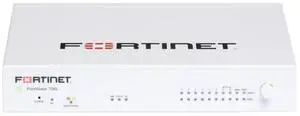
Fortinet Firewall FortiGate-70G + 3 year enterprise protection FG-70G-BDL-809-36
- Model #: FG-70G-BDL-809-36
- Item #: 9SIAHEBKGP2276
- Return Policy: View Return Policy
$3,574.90
Free Shipping
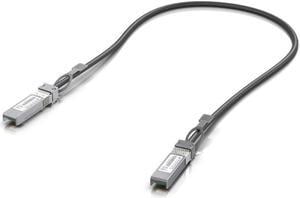
ubiquiti direct attach copper cable sfp+ 10gbps 0,5m uacc-dac-sfp10-0.5m uacc-dac-sfp10-0.5m, sfp+, 10 gbps (uacc-dac-sfp10-05m)
- Brand: Ubiquiti Networks
- Device Type: Transceiver
- Form Factor: SFP+
- Network Media: Copper
- Model #: RNAB0BCPJQGSQ
- Item #: 9SIA7BBKET5498
- Return Policy: View Return Policy
$34.37
Free Shipping
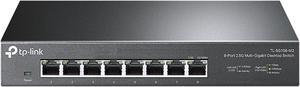
TP-Link TL-SG108-M2 | 8 Port Multi-Gigabit Unmanaged Network Switch, Ethernet Splitter | 2.5G Bandwidth | Plug & Play | Desktop/Wall-Mount | Fanless Metal Design | Limited Lifetime Protection
- Format: Desktop
- Standards: IEEE 802.3, 802.3u, 802.3ab, 802.3x, 802.1p, 802.3bz
- Primary Ports: 8 x RJ45
- Primary Port Speed: 2.5 Gbps
- Model #: TL-SG108-M2
- Item #: N82E16833704544
- Return Policy: Standard Return Policy
- Full 2.5gbps speed on all ports! - It does the job without any compromise. I've saturated the 2.5gb ports many times and it performs well.

Ubiquiti Pro Max 48, 48-port Layer 3 Switch (USW-Pro-Max-48)
- Brand: Ubiquiti
- Series: Network Switch
- Part Number: USW-Pro-Max-48
- Format: Rackmount
- Model #: USW-Pro-Max-48
- Item #: 2WK-00B4-000Z6
- Return Policy: Standard Return Policy
$991.99
Free Shipping
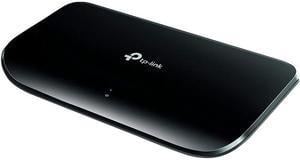
TP-Link 8 Port Gigabit Ethernet Network Switch | Plug and Play | Desktop or Wall-Mount | Plastic Case Ethernet Splitter | Fanless | Traffic Optimization | Unmanaged (TL-SG1008D)
- Format: Desktop
- Standards: IEEE 802.3i / 802.3u / 802.3ab / 802.3x
- Primary Ports: 8 x RJ45
- Primary Port Speed: 10/100/1000Mbps
- Model #: TL-SG1008D
- Item #: N82E16833704043
- Return Policy: 45/1 Return Policy
$26.99
$4.99 Shipping
8 ports, install and forget
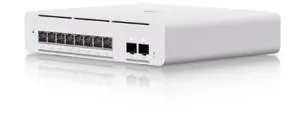
Ubiquiti Pro XG 8 PoE, Professional-Grade 8-Port, Layer 3 PoE Switch (USW-Pro-XG-8-PoE (155W))
- Brand: Ubiquiti
- Series: Utility
- Part Number: USW-Pro-XG-8-PoE (155W)
- Format: Compact desktop, wall
- Model #: USW-PRO-XG-8-POE
- Item #: 9SIBGJ3M6T2563
- Return Policy: View Return Policy
$1,267.99
-Plug & Play -Fully managed -Low heat -Dual SFP+ for lower heat -Overall package is so well thought out compared to other low quality switches.