
Your Browsing History
BEST SELLERS


BEST SELLERS
In Networking
Our most popular products, based on sales and updated frequently.Shop Department
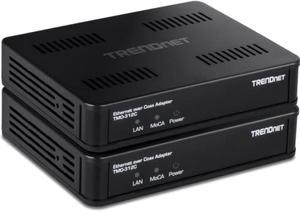
TRENDnet TMO-312C2K, Ethernet over Coax 2.5Gbps Adapter (2-Pack)
- Brand: TrendNet
- LEDs: LED indicators
- Certifications: FCC
- Connection Type: Coax and Ethernet
- Model #: MBVB09K97S3QL
- Item #: 1BV-000D-000K1
- Return Policy: Standard Return Policy
$168.99
Free Shipping
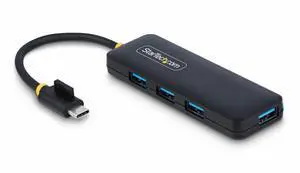
StarTech 4-Port USB-C Hub - 5Gbps - USB-C to 4x USB-A - Bus Powered - Small Travel Mini Hub - USB 3.0 Expansion Hub - Portable - H5C4A-USB-HUB
- Brand: StarTech.com
- Type: 4-Port USB-C Hub, Bus Powered
- Standards: USB 3.0 (5 Gbps)
- Max Devices Supported: 4
- Model #: H5C4A-USB-HUB
- Item #: 9SIA7BBKKN2885
- Return Policy: View Return Policy
$28.07
Free Shipping
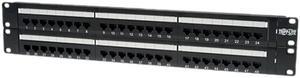
Tripp Lite 48-Port 2U Rackmount Cat6 110 Patch Panel 568B, RJ45 Ethernet (N252-048)
- Type: Office Products
- Specifications: Connector A: 110-TYPE TERMINAL (X48) Connector B: RJ45 (FEMALE) (X48) Connector C: (x12) RJ45 (Female) Connector D: (x12) RJ45 (Female) Ports 48
- Model #: N252-048
- Item #: 9SIAH2MM091760
- Return Policy: View Return Policy
$215.01
Free Shipping
Never hooked up a patch panel before, bought this, looked at the back, and went, "oh that's easy". Quality, well built, easy to wire.
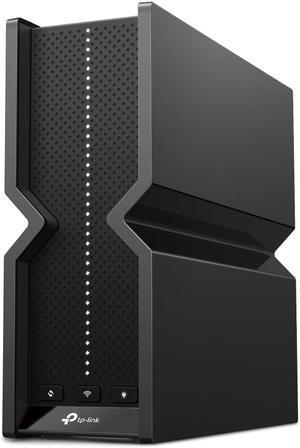
TP-Link Archer BE550 Pro BE9300 Tri-Band WiFI 7 10G / 2.5G Router
- WAN Ports: 1× 10 Gbps WAN
- WPA: • WPA • WPA2 • WPA3 • WPA/WPA2-Enterprise (802.1x)
- LAN Ports: 4× 2.5 Gbps LAN
- Buttons: • Power On/Off Button • Wi-Fi On/Off Button • LED Button • WPS Button • Reset Button
- Model #: Archer BE550 Pro
- Item #: N82E16833704767
- Return Policy: Standard Return Policy
$349.99
Free Shipping
I've purchased and installed 3 of these - at my house, my in-laws house, and my brother's house. So far, they have been absolutely fantastic routers for the price. I've done speed tests when I had fiber internet available, and seen actual speeds of 950/850 through the router, WIRELESSLY to my phone. Have options to turn on "bedtime" for different devices - so my kids lose their WiFi and are encouraged to go to bed after 11:00 PM. They support plugging storage devices right into the router, and the UI is very simple, and easy to use. The app is quite helpful as well. I have been pairing these as the "primary router" in the house, and use the BE230 as "Satellite routers". They work well as either mesh or backhauled with Ethernet. Speeds are (obviously) dramatically higher with a backhaul line.
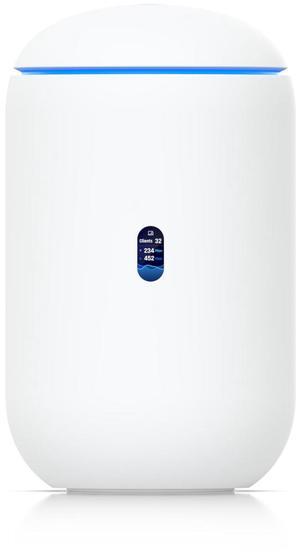
Ubiquiti Dream Router 7, Desktop 10G Cloud Gateway with Integrated WiFi 7, PoE Switch, microSD Storage (UDR7 (15W))
- Wireless Data Rates: Supported Data Rates 802.11a: 6, 9, 12, 18, 24, 36, 48, 54 Mbps 802.11b: 1, 2, 5.5, 11 Mbps 802.11g: 6, 9, 12, 18, 24, 36, 48, 54 Mbps 802.11n: 6.5 Mbps to 300 Mbps (MCS0 - MCS15, HT 20/40) 802.11ac (WiFi 5): 6.5 Mbps to 1.7 Gbps (MCS0 - MCS9 NSS1/2, VHT 20/40/80/160) 802.11ax (WiFi 6/6E): 7.3 Mbps to 2.4 Gbps (MCS0 - MCS11 NSS1/2, HE 20/40/80/160) 802.11be (WiFi 7): 7.3 Mbps to 5.7 Gbps (MCS0 - MCS13 NSS1/2, EHT 20/40/80/160/240/320)
- Frequency Band: 2.4 GHz / 5 GHz / 6 GHz
- WAN Ports: (1) 10G SFP+ (1) 2.5 GbE RJ45
- Interface: WAN: (1) 10G SFP+ (1) 2.5 GbE RJ45 LAN: (4) 2.5 GbE RJ45
- Model #: UDR7-US
- Item #: 9SIBGJ3KRY4053
- Return Policy: View Return Policy
$804.99
Free Shipping
I found this product to be extremely easy to configure. This was my first attempt at segmenting my network and home network hardening. I found it to have more tools than Ill ever know how to use, but not to the point of overwhelming.
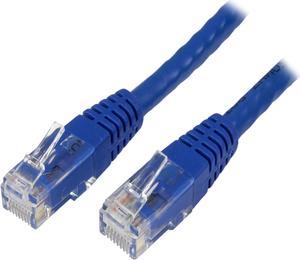
StarTech.com C6PATCH1BL Cat6 Ethernet Cable - 1 ft - Blue - Patch Cable - Molded Cat6 Cable - Short Network Cable - Ethernet Cord - Cat 6 Cable - 1ft
- Brand: StarTech.com
- Type: Network Cable
- Cat: 6
- Length: 1 ft.
- Model #: C6PATCH1BL
- Item #: N82E16812200031
- Return Policy: 15/30 Return Policy
$7.99
$1.99 Shipping
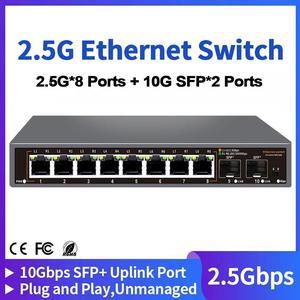
TelDaykemei 8+2 Ports 2.5G Ethernet Network Switch 2500BASE-TX Switch with 2*10G SFP Port for IP Camera/CCTV Security
- Switch Type: 10000 Mbps
- Format: Stackable
- Uplink Interface: SFP
- Uplink Speed: SFP+
- Model #: 10-port 2.5G+10G switch 8+2
- Item #: 9SIASPTKC17843
- Return Policy: View Return Policy
$70.00
Free Shipping
Metal case. Very compact for a 10-port switch - I really like how small it is. I plugged in 10Gbps SFTP and 2.5Gbps devices and tested throughput. It moved 2.36Gbps between two 2.5Gbps ports and 9.39Gbps between two SFTP ports. In comparison, the same test (using iperf3 in Linux) between two SFP ports on my more-expensive Aruba switch gives the same 9.39Gbps. I was pleasantly surprised to see a "VLAN" switch on the front. The product description does not mention this.

TP-Link JetStream TL-SG3210XHP-M2 Ethernet Switch* - 8 Ports - Manageable - 3 Layer Supported - Modular - 240 W PoE Budget - Optical Fiber, Twisted Pair - PoE Ports - Rack-mountable, Desktop
- Switch Type: ethernet
- Model #: TL-SG3210XHP-M2
- Item #: 9SIA5SCM6A5167
- Return Policy: View Return Policy
$512.00
Free Shipping
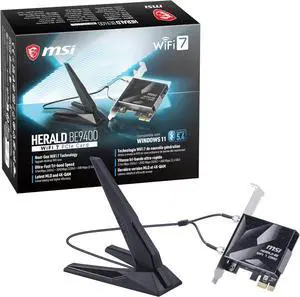
MSI Herald-BE WI-FI 7 MAX (Wi-Fi 7, 802.11BE, Bluetooth 5.4, PCIe, Multi-Link Operation Technology, External Antenna)
- Frequency Band: 2.4 GHz / 5 GHz / 6 GHz
- Interface: PCI Express
- Brand: MSI
- Part Number: 914-8660-001
- Model #: 914-8660-001
- Item #: 9SIA9H5KXA9614
- Return Policy: View Return Policy
$95.99
Free Shipping
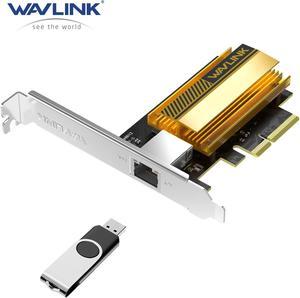
WAVLINK 10G Base-T PCIe Network Card, 10000/5000/2500Mbps PCI Express Ethernet Adapter with AQC113 Controller, 10G NIC for Windows 11/10 & Linux with Low Profile Bracket
- Part Number: 1* RJ45 Ethernet port
- Wireless Speed: Supports 10/100/1000Mbps/2.5Gbps/5Gbps/ 10Gbps speed
- LEDs: 1 x Link(Green), 1 x Ethernet (Yellow)
- Features: - One RJ45 Ethernet port delivers 10X-faster data-transfer speeds for bandwidth-demanding tasks. - One PCle 3.0×4 is designed to work seamlessly with PCIe×4/×8/×16 interfaces, ensuring a perfect fit for your system. - Built-in QoS technology intelligently prioritizes bandwidth for game packets, ensuring a smooth and lag-free gaming experience. - Support for Jumbo Frames
- Model #: WL-NWP004
- Item #: 9SIC7HJM0C0905
- Return Policy: View Return Policy
$89.99
Free Shipping

Ubiquiti Pro Max 16 PoE, 16-Port Layer 3 PoE Switch (USW-Pro-Max-16-PoE (180W))
- Brand: Ubiquiti Networks
- Series: Network Switch
- Part Number: USW-Pro-Max-16-PoE
- Format: Desktop
- Model #: USW-Pro-Max-16-PoE
- Item #: 0XP-000A-006A0
- Return Policy: Manufacturer Only Return Policy
$605.99
Free Shipping
Fast performance and PoE+/++ out of the box! Small footprint and overall a performance beast for my network
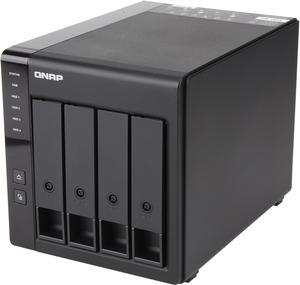
QNAP TR-004-US 4 Bay Type-C Direct Attached Storage DAS Expansion with Hardware RAID (Diskless)
- Form Factor: 4-Bay
- Port USB: 1 x Type-C USB 3.2 Gen 1
- HDD Interface: 4 x SATA (4 x Bay)
- Operating System: Minimum operating system requirements: QNAP NAS: QTS 4.3.6 and later Windows: Windows 8.1 and later Mac: macOS X 10.11 and later
- Model #: TR-004-US
- Item #: 9SIA7BBKGB5245
- Return Policy: View Return Policy
$476.93
Free Shipping
The product was easy to set-up for someone like me who is not a computer expert but with an above average level of computer knowledge.
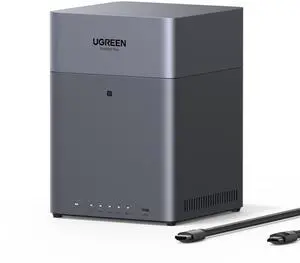
UGREEN NASync DH4300 Plus Storage Hub with HDMI Cable
- Brand: Ugreen
- Included HDD Capacity: Diskless System
- Form Factor: 4-Bay
- Port RJ-45: 1x 2.5GbE
- Model #: DH4300Plus
- Item #: N82E16822995007
- Return Policy: Standard Return Policy
$554.99
Free Shipping
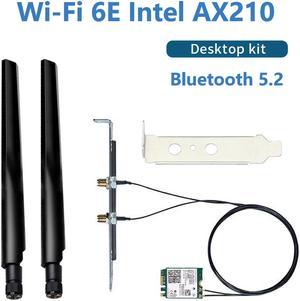
Teday Wi-Fi 6E Intel AX210 Bluetooth 5.2 + 3000Mbps 2.4Ghz 5Ghz 6Ghz M.2 2230 Key E Desktop Kit Wireless Adapter AX210NGW NGFF WiFi 6 Card 802.11ax/ac MU-MIMO OFDMA Windows 10 With 6Dbi Antenna Set
- Wireless Data Rates: Speed up to 2400Mbps (The router must support 802.11ax)
- Frequency Band: 2.4Ghz/5Ghz/6Ghz
- Type: M.2 Wi-FI Adapter
- Standards: IEEE 802.11ax/ac
- Model #: AX210 Kit
- Item #: 9SIASPTKAP0815
- Return Policy: View Return Policy
$24.80
Free Shipping
so, I have a desktop connected to the router by means of Wi-Fi; no more cables around the room; and it works, no issues moreover, I am able to connect my Bluetooth keyboard and mouse without interruptions; if before it was 50%-ish, now is in the 95% and more (and I suspect the 5% is not due to the card) I have 2 USBs free now on the front of the HTPC I use Linux Mint
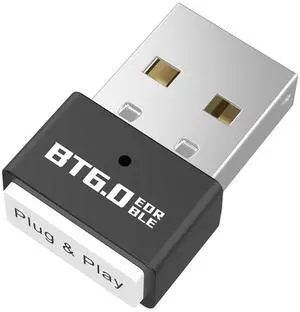
USB Bluetooth 6.0 Adapter for PC Win11/10/8.1/8/7/XP/Vista, Bluetooth Dongle Receiver/Transmitter Support Multiple Device Connections: Headset, Mouse, Keyboard, Printer, Speaker
- Type: Bluetooth Adapter
- Parts: 1 Year
- Labor: 1 Year
- Model #: BA002
- Item #: 9SIAZVYERV4706
- Return Policy: View Return Policy
$17.99
$21.58
Free Shipping
Solid Bluetooth connectivity, Lag free (easily connected a bluetooth speaker to it).
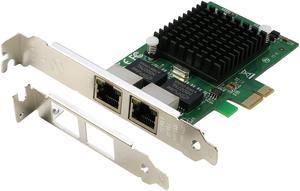
RIITOP 2-Port 1000M PCIe Express Network Adapter Card NIC Intel 82575 Chipset Dual RJ45 PCI Express Gigabit Ethernet Lan Card Come with Low Profile Bracket
- Connectors: 2 x RJ45
- Dimensions: 12*11*2 cm / 4.7*4.3*0.8in.
- Weight: 75g / 2.5oz.
- Package Contents: 1x PCIE Dual Port Network Card Adapter(10/100/1000M). 1x Low Profile Bracket. 1x Drive CD.
- Model #: PCIE1000M-2P
- Item #: 9SIAFMX96K5886
- Return Policy: View Return Policy
$44.99
Free Shipping
- Easy setup. Used in OPNSense setup on a custom system. Recognized without issue.
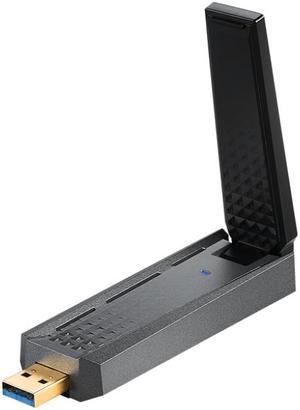
MSI AX1800 WiFi 6 Dual-Band USB Adapter - WLAN up to 1800 Mbps (5GHz, 2.4GHz Wireless), USB 3.2 Gen 1 Type-A, MU-MIMO, Adjustable Antenna, Beamforming, WPA3 - Wired Bracket Included
- Wireless Data Rates: WiFi 6 (802.11ax) (2.4GHz) : up to 574 Mbps WiFi 6 (802.11ax) (5GHz) : up to 1201 Mbps
- Type: USB Wi-FI Adapter
- Standards: WiFi 6 (802.11ax) Backwards Compatible with 802.11a/b/g/n/ac Wi-Fi
- Model #: 302-8ZE00XU-000
- Item #: 9SIA7BBJP31468
- Return Policy: View Return Policy
$60.99
Free Shipping
was quick to set up. Speed is fast. My internet is 300 /300 Mbps and I am getting right around that.
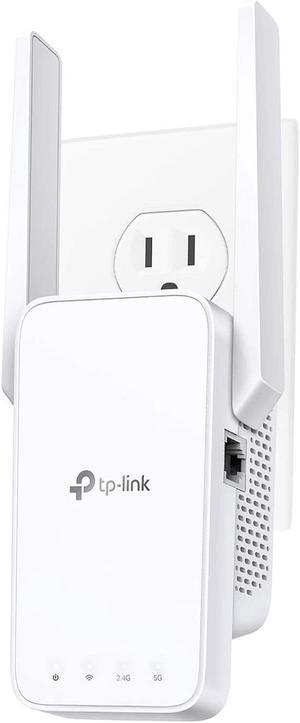
TP-Link AC1200 WiFi Extender (RE315), Covers Up to 1500 Sq.ft and 25 Devices, 1200Mbps Dual Band WiFi Booster with External Antennas, WiFi Repeater, Supports OneMesh
- Model #: RE315
- Item #: 375-0094-000D6
- Return Policy: Standard Return Policy
Easy to setup Repeatable results
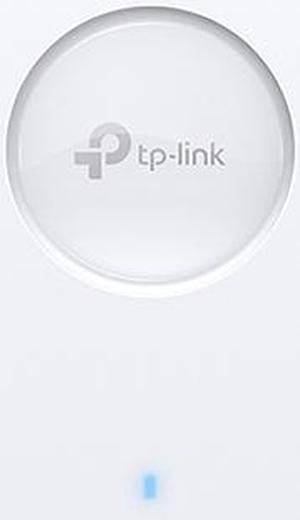
TP-Link EAP650 | Omada WiFi 6 AX3000 Wireless Gigabit Ceiling Mount Access Point | Support Mesh, OFDMA, Seamless Roaming, HE160 & MU-MIMO | SDN Integrated | Cloud Access & Omada App | PoE+ Powered
- Frequency Band: 2.4 GHz / 5 GHz
- Interface: 1 x Gigabit Ethernet (RJ-45) Port (supports IEEE802.3at PoE)
- Standards: IEEE 802.11ax/ac/n/g/b/a
- Security: Captive Portal Authentication§ Access Control Wireless Mac Address Filtering Wireless Isolation Between Clients SSID to VLAN Mapping Rogue AP Detection 802.1X Support WPA-Personal/Enterprise, WPA2-Personal/Enterprise, WPA3-Personal/Enterprise
- Model #: EAP650
- Item #: N82E16833704652
- Return Policy: Standard Return Policy
- Good WAP overall - The range covers all my house (1 floor). - The speed is good (sufficient for me) - Plug and play - Reliable for the few moths Ive been using it
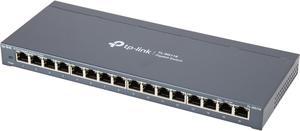
TP-Link 16 Port Gigabit Ethernet Network Switch, Desktop/ Wall-Mount, Fanless, Sturdy Metal w/ Shielded Ports, Traffic Optimization, Unmanaged, Limited Lifetime Protection (TL-SG116)
- Brand: TP-Link
- Format: Desktop
- Standards: IEEE 802.3i, IEEE802.3u, IEEE802.3ab, IEEE802.3x, IEEE802.1p
- Network Management Type: Unmanaged
- Model #: TL-SG116
- Item #: N82E16833704458
- Return Policy: Standard Return Policy
$82.99
Free Shipping
Don't know how folks get along without these. wi-fi only goes so far when satellite internet is all you have. sometimes must have that wired connection!