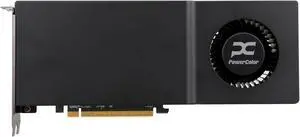
Low power draw (300w max) along with 2 space width makes this an easy card to double up in a chassis for use with larger models.


16 GB of ECC VRAM allows for larger LLMs and context windows Needs only 70w of total board power (no external power connector required) Low cost compared to what Nvidia is offering

I was an early adopter and grabbed a b70 on day 1, it was horrible. It barely worked, pcie 5.0 would not negotiate, drivers timed out, power would drop out, performance was barely above b580 in games, the only thing that was fast was some edge case pytorch training. Even the vllm performance was not great and very limited models supported. After a few months, now in the gamer drivers in windows we get fan control and overclocking, gaming performance really is about on target with a rx 6800 xt or 9060 xt, DCS world runs great, COD Warzone with FG on 1080p XESS Native = 250+ fps. I'm sure not all issues are fixed especially on the model side with llamacpp and vllm but this is now good enough and well beyond day 1. Sure my 7900 xtx smokes it in all gaming aspects but this gpu really is faster than a 4090 in some pytorch training scenarios and 35% faster than a 5080 in bert tokenization. One of the biggest issues for daily life was the fan control on the day 1 intel version of the b70 I had. The gpu was idling 60-70c. The asrock version has the same vapor chamber as the radeon ai pro r9700 which is definitely a better GPU for AI/Training/Inference and about twice as fast gaming. Now with fan control the gpu idles at 28-30c in windows and gaming hits 58-60c with a relatively inaudible (with headphones) fan speed. 270k tuned at 185w tpp pro b70 games and workloads less than 200w Doesnt heat up the room

The PNY RTX PRO 5000 is worth every penny. It is lightning fast and handles enormous datasets with ease. It was delivered on time and expertly wrapped to avoid damage en route.

- Easy to setup - Plenty of Support - Works on Ubuntu/Win11 easily Ollama/LM Studio - Gemma 4:26b - Flux 2