
Your Browsing History
- Shop Category






Featured Brands







Shop Gaming Laptops by Screen Size


Shop Gaming Laptops By GPU & CPU



Popular Gaming Laptop Brands


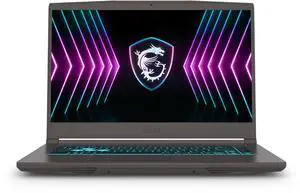
- GPU/VPU: GeForce RTX 4050 Laptop GPU
- Processor Name: Intel Core 7 240H
- Memory: 16GB
- SSD: 1TB NVMe
- Model #: Thin 15 B2RVE-3248CA
- Item #: N82E16834156908
- Return Policy: 15-Day Return Policy
- $1,699.00
- $1,199.00 –
- Save: 29%
- $15.00 Shipping
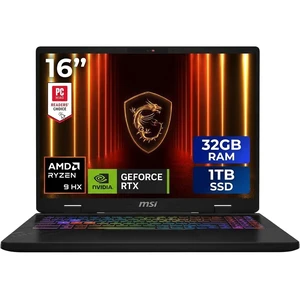
MSI CROSSHAIR A16 Gaming Laptop - 16" QHD+ 240hz - AMD Ryzen 9-8940HX - GeForce RTX 5060 - 32GB DDR5 RAM - 1TB SSD (D8WFKG-015US)
- GPU/VPU: GeForce RTX 5060 Laptop GPU
- Processor Name: AMD Ryzen 9 8940HX
- Memory: 32GB
- SSD: 1TB NVMe SSD Gen4x4
- Model #: Crosshair A16 HX D8WFKG-015US
- Item #: N82E16834156876
- Return Policy: 15-Day Return Policy
- $2,519.99
- $2,299.99 –
- Save: 8%
- $15.00 Shipping
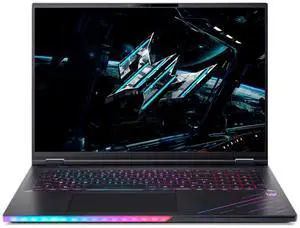
Free gifts w/ purchase, limited offer
- GPU/VPU: GeForce RTX 5080 Laptop GPU
- Processor Name: Intel Core Ultra 9 275HX
- Memory: 64GB DDR5
- SSD: 2TB NVMe
- Model #: NH.QVYAA.002
- Item #: N82E16834360447
- Return Policy: 15-Day Return Policy
- $5,499.99
- $4,499.99 –
- Save: 18%
- $15.00 Shipping
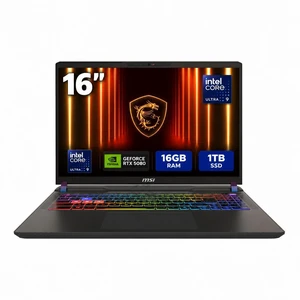
MSI Vector - LCD 16" QHD+ GeForce RTX 5080 Laptop GPU - Intel Core Ultra 9 275HX - 16GB Memory - 1 TB SSD - Windows 11 Home Gaming Laptop - 240 Hz (Vector 16 HX AI A2XWIG-050US )
Free gifts w/ purchase, limited offer
- GPU/VPU: GeForce RTX 5080 Laptop GPU
- Processor Name: Intel Core Ultra 9 275HX
- Memory: 16GB
- SSD: 1TB
- Model #: Vector 16 HX AI A2XWIG-050US
- Item #: N82E16834156737
- Return Policy: 15-Day Return Policy
- $4,299.99
- $3,959.99 –
- Save: 7%
- $49.99 Shipping
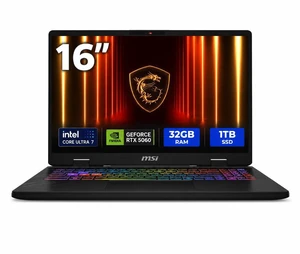
MSI CROSSHAIR A16 Gaming Laptop - 16" QHD+ 240hz - Intel Core Ultra 7 255HX - GeForce RTX 5060 - 32GB DDR5 RAM - 1TB SSD (Crosshair 16 HX AI D2XWFKG-076US )
OUT OF STOCK
- GPU/VPU: GeForce RTX 5060 Laptop GPU
- Processor Name: Intel Core Ultra 7 255HX
- Memory: 32GB DDR5
- SSD: 1TB
- Model #: Crosshair 16 HX AI D2XWFKG-076US
- Item #: N82E16834156931
- Return Policy: 15-Day Return Policy
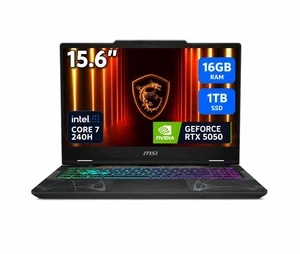
MSI Cyborg 15 - 15.6" FHD 144 Hz - Intel Core 7 240H - GeForce RTX 5050 - 16GB DDR5 5600 RAM - 1TB NVMe SSD - Windows 11 Home (Cyborg 15 B2RWEKG-292US)
- GPU/VPU: GeForce RTX 5050 Laptop GPU
- Processor Name: Intel Core 7 240H
- Memory: 16GB
- SSD: 1TB NVMe SSD Gen4x4
- Model #: Cyborg 15 B2RWEKG-292US
- Item #: N82E16834156927
- Return Policy: 15-Day Return Policy
- $2,199.99
- $1,999.99 –
- Save: 9%
- $49.99 Shipping
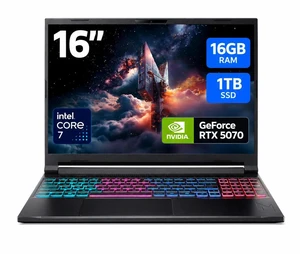
Free Nvidia game w/ purchase, limited offer.
- GPU/VPU: GeForce RTX 5070 Laptop GPU
- Processor Name: Intel Core 7 240H
- Memory: 16GB DDR5
- SSD: 1TB PCIe
- Model #: NH.U23AA.002
- Item #: 1TS-000X-064P0
- Return Policy: 15-Day Return Policy
- $2,799.99
- $2,599.99 –
- Save: 7%
- $49.99 Shipping
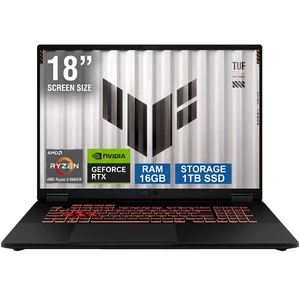
Free Nvidia game w/ purchase, limited offer.
- GPU/VPU: GeForce RTX 5070 Laptop GPU
- Processor Name: AMD Ryzen 9 8940HX
- Memory: 16GB
- SSD: 1TB PCIe
- Model #: FA808PP-NB94
- Item #: N82E16834236759
- Return Policy: 15-Day Return Policy
- $3,799.99
- $3,499.99 –
- Save: 7%
- $69.99 Shipping
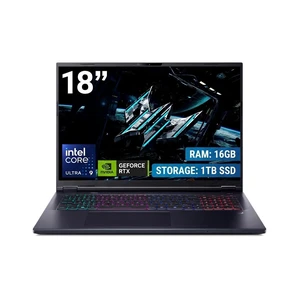
Acer Predator Helios Neo 18 AI - 18.0" Intel Core Ultra 9 275HX - GeForce RTX 5070 Ti Laptop GPU - 2.10 GHz - 16GB Memory - 1 TB PCIe SSD - Windows 11 Home Gaming Laptop - 240 Hz IPS (PHN18-72-92Y3 )
Free gifts w/ purchase, limited offer
- GPU/VPU: GeForce RTX 5070 Ti Laptop GPU
- Processor Name: Intel Core Ultra 9 275HX
- Memory: 16GB DDR5
- SSD: 1TB PCIe
- Model #: NH.U0HAA.002
- Item #: N82E16834360388
- Return Policy: 15-Day Return Policy
- $3,899.99
- $3,599.99 –
- Save: 7%
- $39.99 Shipping
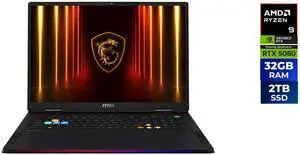
Free Nvidia game w/ purchase, limited offer.
- GPU/VPU: GeForce RTX 5080 Laptop GPU
- Processor Name: AMD Ryzen 9 9955HX3D
- Memory: 32GB DDR5
- SSD: 2TB NVMe
- Model #: Raider A18 HX A9WIG-272US
- Item #: N82E16834156934
- Return Policy: 15-Day Return Policy
- $4,457.99 –
- More options from $4,157.44 - $5,372.03
- $15.00 Shipping
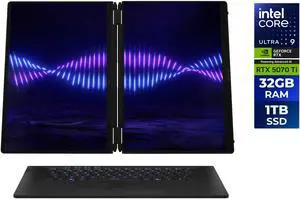
Free gifts w/ purchase, limited offer
- GPU/VPU: GeForce RTX 5070 Ti Laptop GPU
- Processor Name: Intel Core Ultra 9 386H
- Memory: 32GB LPDDR5X
- SSD: 1TB PCIe
- Model #: GX651AR-DB96
- Item #: N82E16834236757
- Return Policy: 15-Day Return Policy
- $6,599.99 –
- $59.99 Shipping
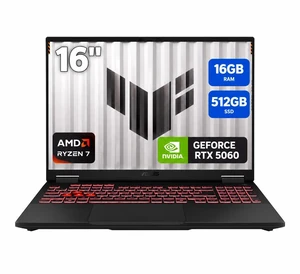
- GPU/VPU: GeForce RTX 5060 Laptop GPU
- Processor Name: AMD Ryzen 7 260
- Memory: 16GB
- SSD: 512GB PCIe
- Model #: FA608UMI-NB73
- Item #: N82E16834236758
- Return Policy: 15-Day Return Policy
- $2,999.99
- $2,699.99 –
- Save: 10%
- $49.99 Shipping
Related searches
- Overview
- Graphics and Hardware
- Display
- Narrowing Your Search
- FAQ
Gaming laptops now pack full-size NVIDIA GeForce GTX video cards and a high resolution display into a portable clamshell form factor, providing power on par with a high-end desktop computer. Ideal for gamers who like to go places, a gaming laptop offers a visually stunning digital experience you can take with you.
Strap on a special-fitted gaming backpack for laptops, keyboard, mouse, gaming pads, and other accessories and you are good to game anywhere. With VR-ready laptops entering the mainstream gamers will need room for VR headsets, too.
Most gamers buy in the $1,000-2,000 range, but a fully decked-out rig can exceed $5,000. Many find decent value in gaming laptops under $1,000—and cost even less if you know what you need and what you can live without.
Remember, as with any tech purchase, the best laptop for gaming is one that fits your budget and delivers value at that specific price point. We’ll learn how to gauge value specific to the gamer here.
Bestselling Gaming Laptop Reviews:
Anonymous
8/12/2026 9:05:04 AM
Awesome laptop
“ 10/10 would recommend for a gaming computer or high workload ”
MSI Vector - LCD 16" QHD+ GeForce RTX 5080 Laptop GPU - Intel Core Ultra 9 275HX - 16GB Memory - 1 TB SSD - Windows 11 Home - Gaming Laptop - 240 Hz (Vector 16 HX AI A2XWIG-050US )Curtis R.
6/6/2026 9:51:52 PM
Update the UEFI/BIOS first
“ When I got the machine, it was packaged nicely and my setup came together quickly with a gaming half-keyboard and a gaming mouse. ”
MSI CROSSHAIR A16 Gaming Laptop - 16" QHD+ 240hz - AMD Ryzen 9-8940HX - GeForce RTX 5060 - 32GB DDR5 RAM - 1TB SSD (D8WFKG-015US)Phil A.
4/8/2026 2:03:05 PM
Fantastic Machine
“ I can't believe this all fits in a laptop. ”
MSI Vector - LCD 16" QHD+ GeForce RTX 5080 Laptop GPU - Intel Core Ultra 9 275HX - 16GB Memory - 1 TB SSD - Windows 11 Home - Gaming Laptop - 240 Hz (Vector 16 HX AI A2XWIG-050US )Anonymous
1/23/2026 7:59:34 AM
Second MSI / Returned an Alienware Area 51
“ My last MSI laptop was amazing. ”
MSI Vector - LCD 16" QHD+ GeForce RTX 5080 Laptop GPU - Intel Core Ultra 9 275HX - 16GB Memory - 1 TB SSD - Windows 11 Home - Gaming Laptop - 240 Hz (Vector 16 HX AI A2XWIG-050US )Philip J.
11/19/2025 8:31:12 AM
5080 for this price, I couldn't resist.
“ This is a great laptop and I don't regret buying this beast. ”
MSI Vector - LCD 16" QHD+ GeForce RTX 5080 Laptop GPU - Intel Core Ultra 9 275HX - 16GB Memory - 1 TB SSD - Windows 11 Home - Gaming Laptop - 240 Hz (Vector 16 HX AI A2XWIG-050US )Henry K.
6/1/2025 7:36:06 PM
Nice little laptop.
“ Nice little laptop, I did bump up the ram to 96gb and two 4TB ssds and W11 Pro. ”
MSI Vector - LCD 16" QHD+ GeForce RTX 5080 Laptop GPU - Intel Core Ultra 9 275HX - 16GB Memory - 1 TB SSD - Windows 11 Home - Gaming Laptop - 240 Hz (Vector 16 HX AI A2XWIG-050US )