

Make informed decisions with expert advice. Learn More

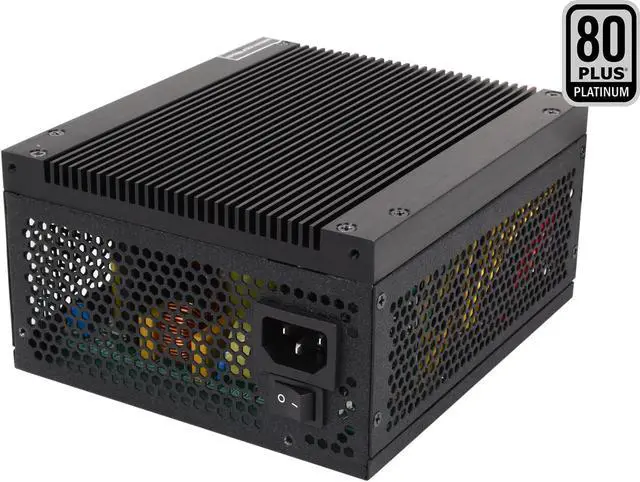
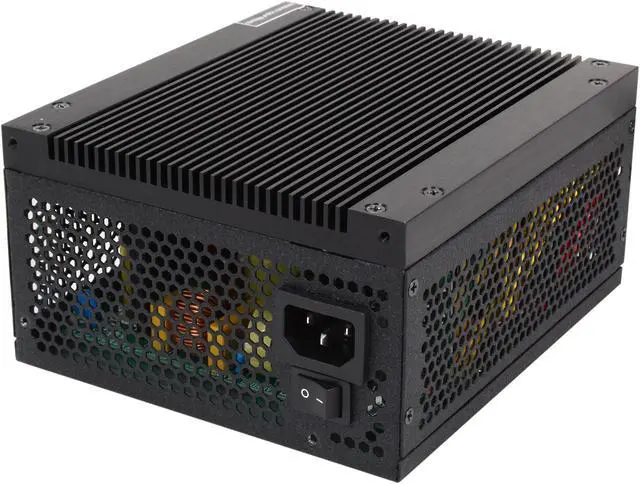
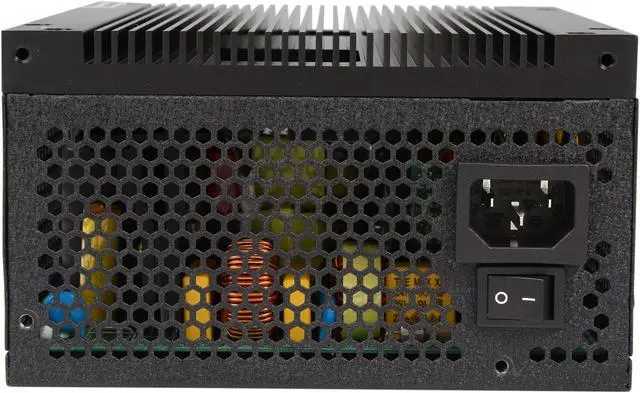
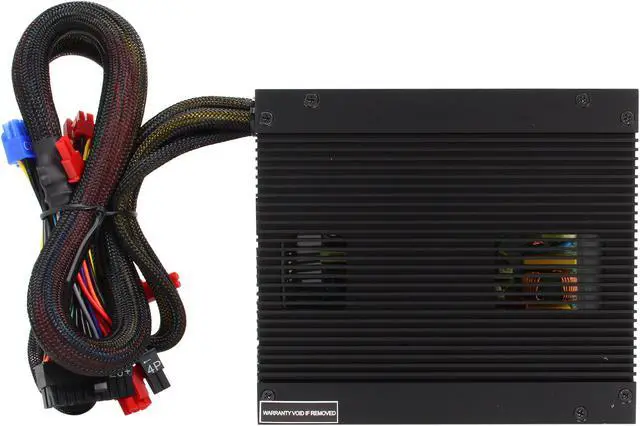
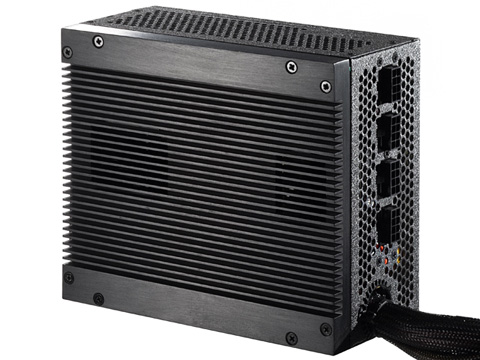
High-end PSUs usually come with high output capability, and therefore high heat generation and high noise level. It's not true when it comes to the Rosewill SilentNight PSU. On top of all the features you would demand from premium grade PSUs - such as modular cable configuration, generous +12V output and comprehensive protection - the SilentNight-500 employs a fanless design ensuring a completely quiet operation - your games, movies and music come to new life with every whisper and detail enjoyed the way it should be. A large heatsink with dense fins quickly and efficiently dissipate heat, while highly reliable Japanese capacitors and 80 PLUS Platinum Certification lower the heat generation and enable its fanless design. Make the Rosewill SilentNight-500 yours today, and step into a new level of peace of mind.
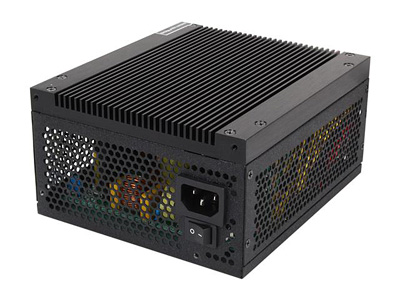
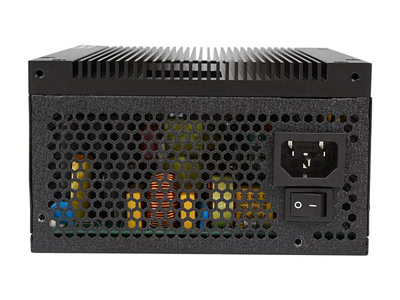
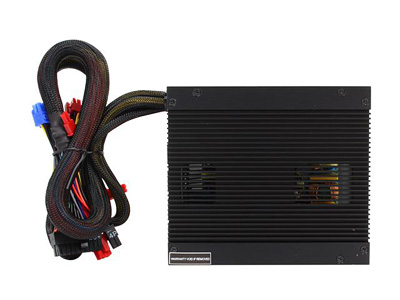
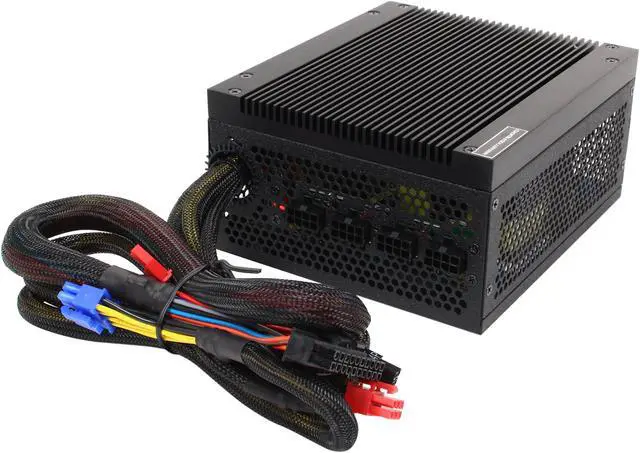
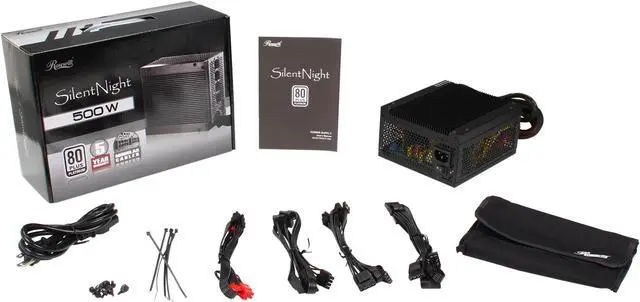
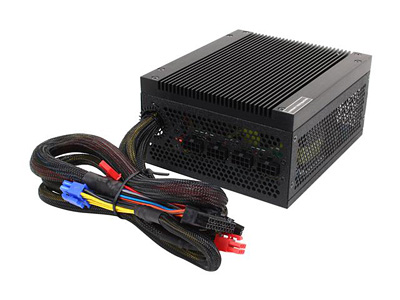
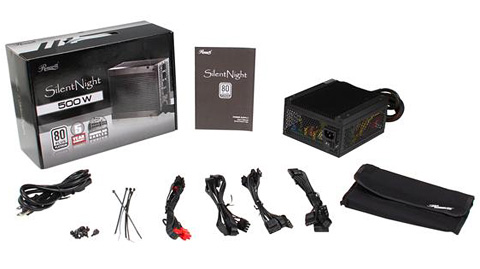
Pros: If you are building a silent computer and want the best, this is it. That is in terms of components, efficiency, voltage regulation, and ripple levels. See “other thoughts” for testing. It has a 5 year warranty printed on the box but newegg lists the warranty as 7 years on the website. Looks nice. Matte finish. Solidly heavy. Well packaged and protected (also, box has a carry handle). Anchors a Rosewill high-end PSU product line. In addition to the 3 permanent nylon-sleeved cables listed in the next section, there are four modular connectors (quite nice for a 500W supply). Modular cables include: a cable with two 6/8 pin video card connectors, a cable with 4x SATA, a cable with 2x SATA plus 2x peripheral power connectors, a cable with 3x peripheral power and 1x floppy power connector. There is only one competing fan-less power supply in this wattage range that I am aware of but it has two fewer video card connectors and is more expensive. (That one also has a 7 year warranty.) With this Rosewill PSU you can potentially hook up two high-end graphics cards and access nearly the full power available from the 12V rail.
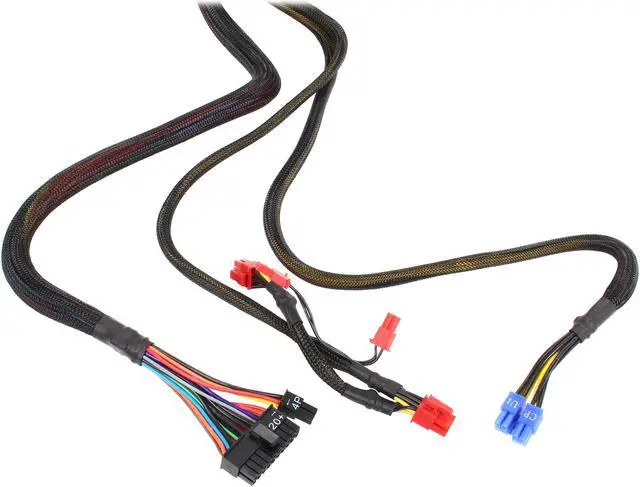
Cons: 170 mm deep. A few smaller cases support only 160 mm. Partially modular (the main motherboard cable, one dual ATX, one cable with two 6/8 pin video card connectors – are permanently attached but of good length). These cables are clearly visible in the third product image. I don’t find either to be a problem with a typical build but some folks might. It would be smart to have a little bit of airflow blown into the computer case to keep the rest of your components happy by pushing any heat out of the case through the PSU. I didn’t see over-temp protection listed on the PSU specs.
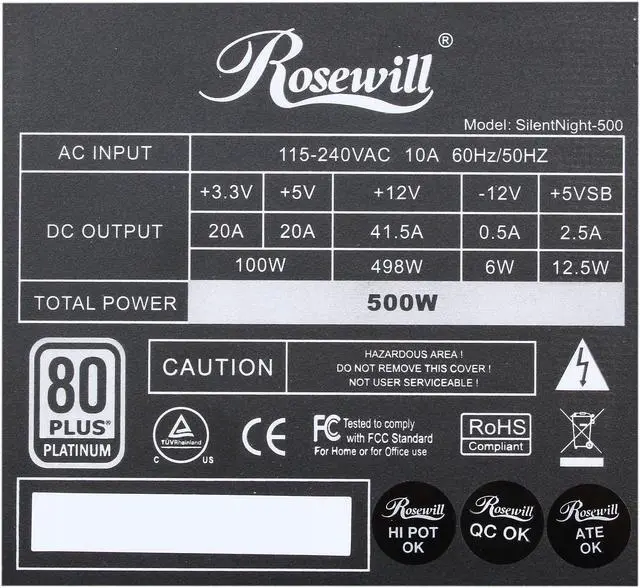
Overall Review: Don’t skimp on your power supply. The poorly designed ones go down frequently. Often they take other components with them. If you are looking at this price range you already know this. Also, an inefficient PSU can make your room really hot in the summer. EFFICIENCY: I had access to a bit of test equipment so I did a few tests. This PSU is labeled as “80 Plus Platinum” which means 90% efficiency at 20% load, 92% at 50% load, and 89% at 100% load. 50% is considered typical load. The PSU has a single +12 V rail. It is rated for 500W continuous at 50° C. I measured input power while slowly increasing load to very close to 500W output and got about 550W input (90.5% efficiency). Close to 300W load drew around 325W (92%). Power supply was sitting in a fan-less case, load was on for 20 min to allow PSU temp to stabilize. OVERLOAD: It is supposed to have over-voltage, under-voltage, over-current, over-power, and short-circuit protection. I increased the load to above 650W and it nicely shut down. It did not burn out. VOLTAGE: During load increase all the voltages varied less than 2-3%. This is really good, especially as you get close to the max load. RIPPLE: I used 300W load and got under 20 mV ripple on all the output voltages on the oscilloscope. This is good. 120 mV is considered max allowable. DESIGN and COMPONENTS: Took it apart and found quality components in addition to gigantic/heavy heat sinks. The filtering stage has two coils but assumes you will use surge protector between your plug and the computer. I saw one beefy rectifying bridge, an active PFC circuit with NCP1653A controller, Japanese capacitors for the PFC and the secondary, the switching section is controlled by a Super Flower controller which also monitors the outputs, the single +12V rail produces +5V and +3.3V using two DC-DC converters. (Super Flower has long history of good PSU designs & components.) Nice job Newegg/Rosewill.