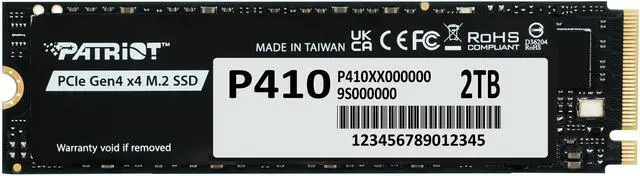
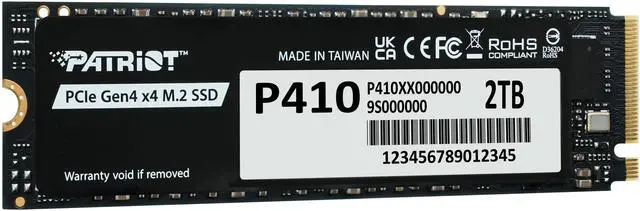
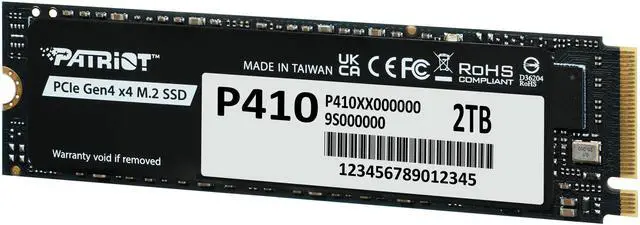
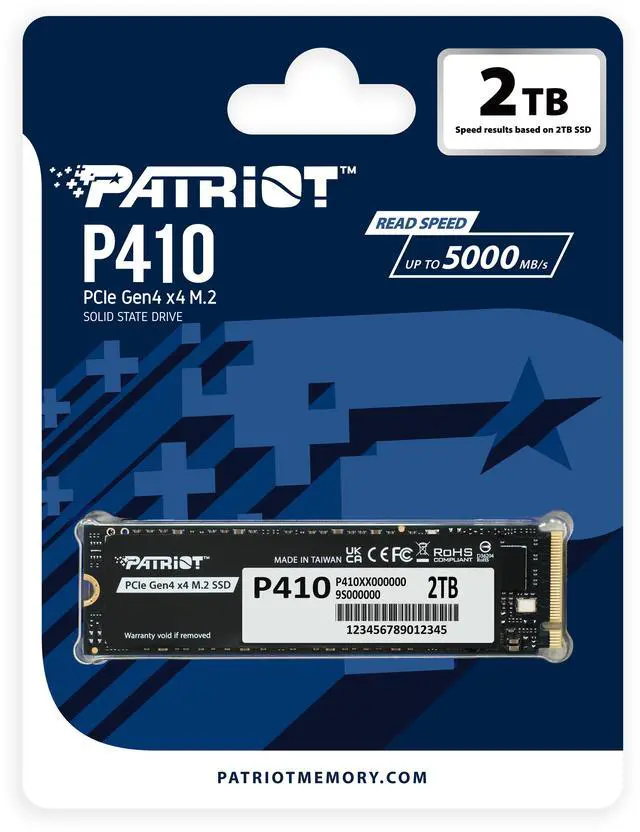
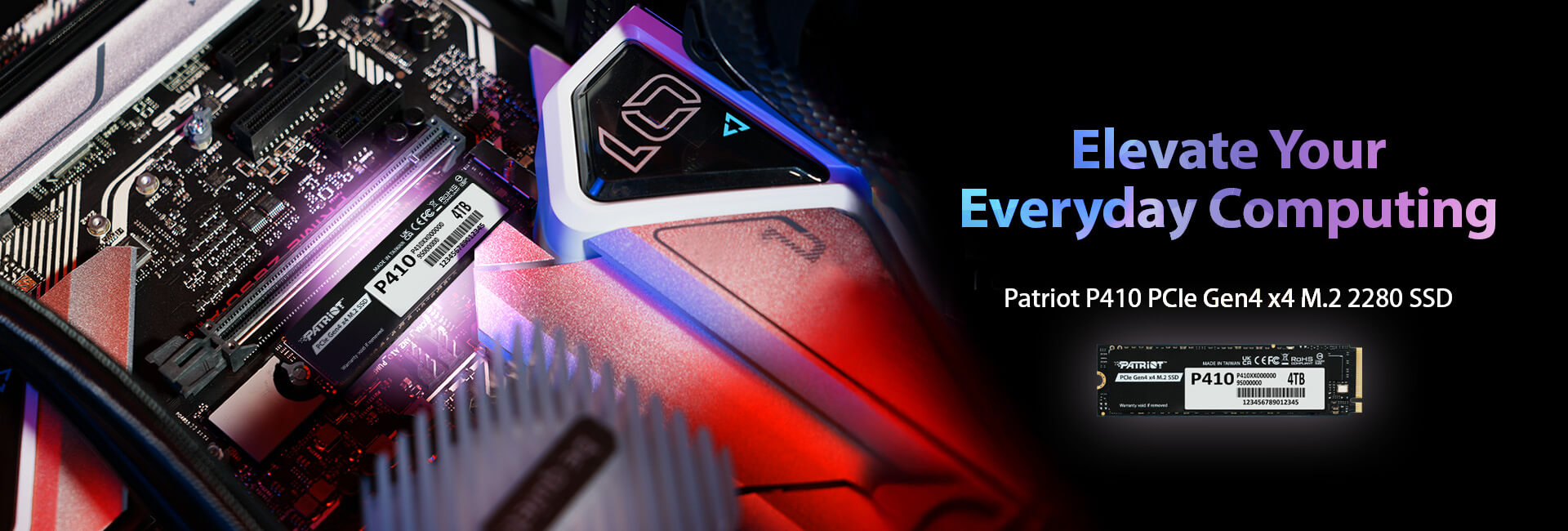
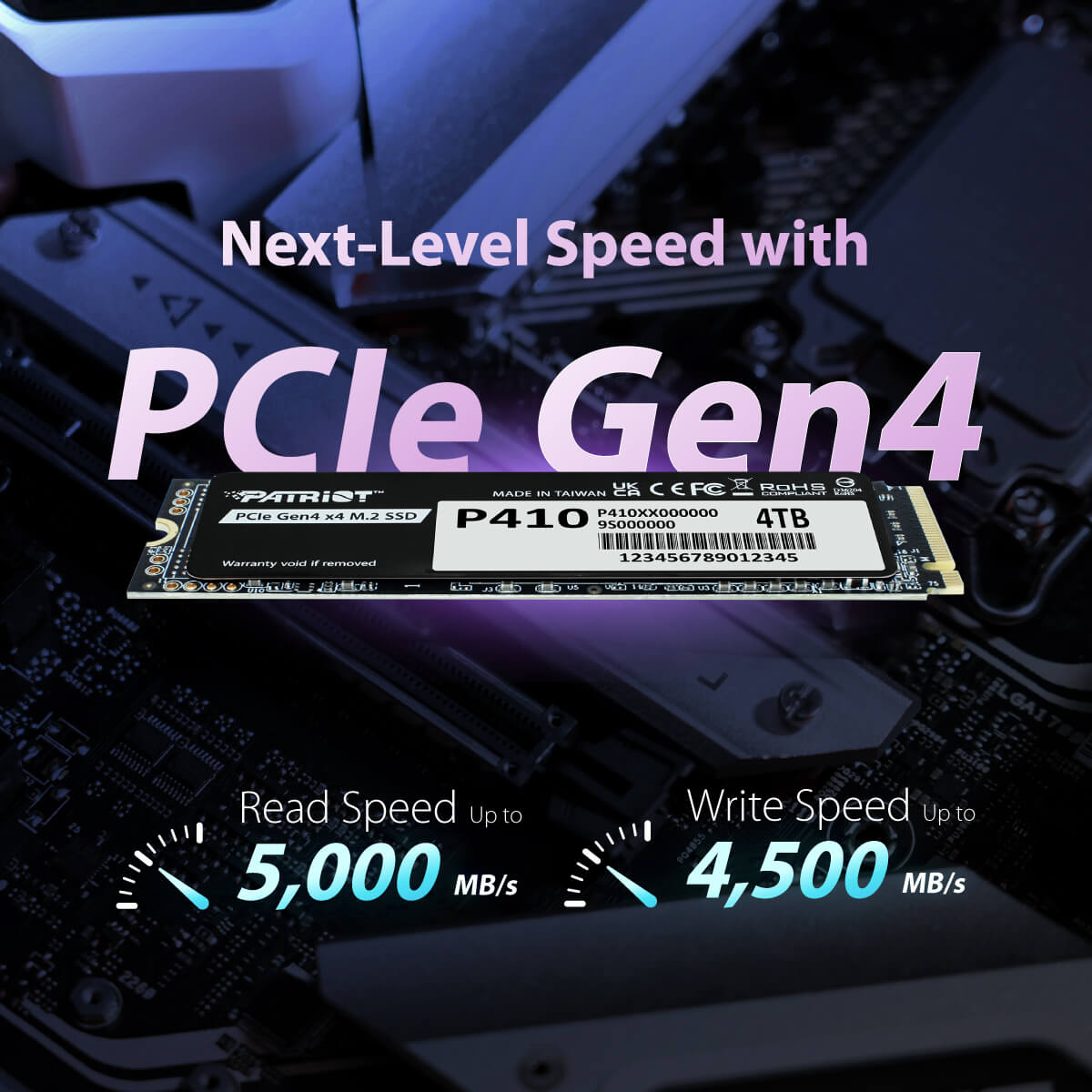
The Patriot P410 is a 2TB M.2 2280 PCIe 4.0 x4 NVMe SSD with sequential speeds up to 5,000MB/s read and 4,500MB/s write, suited to consumers upgrading a compatible PC for fast everyday storage.
Recommended For
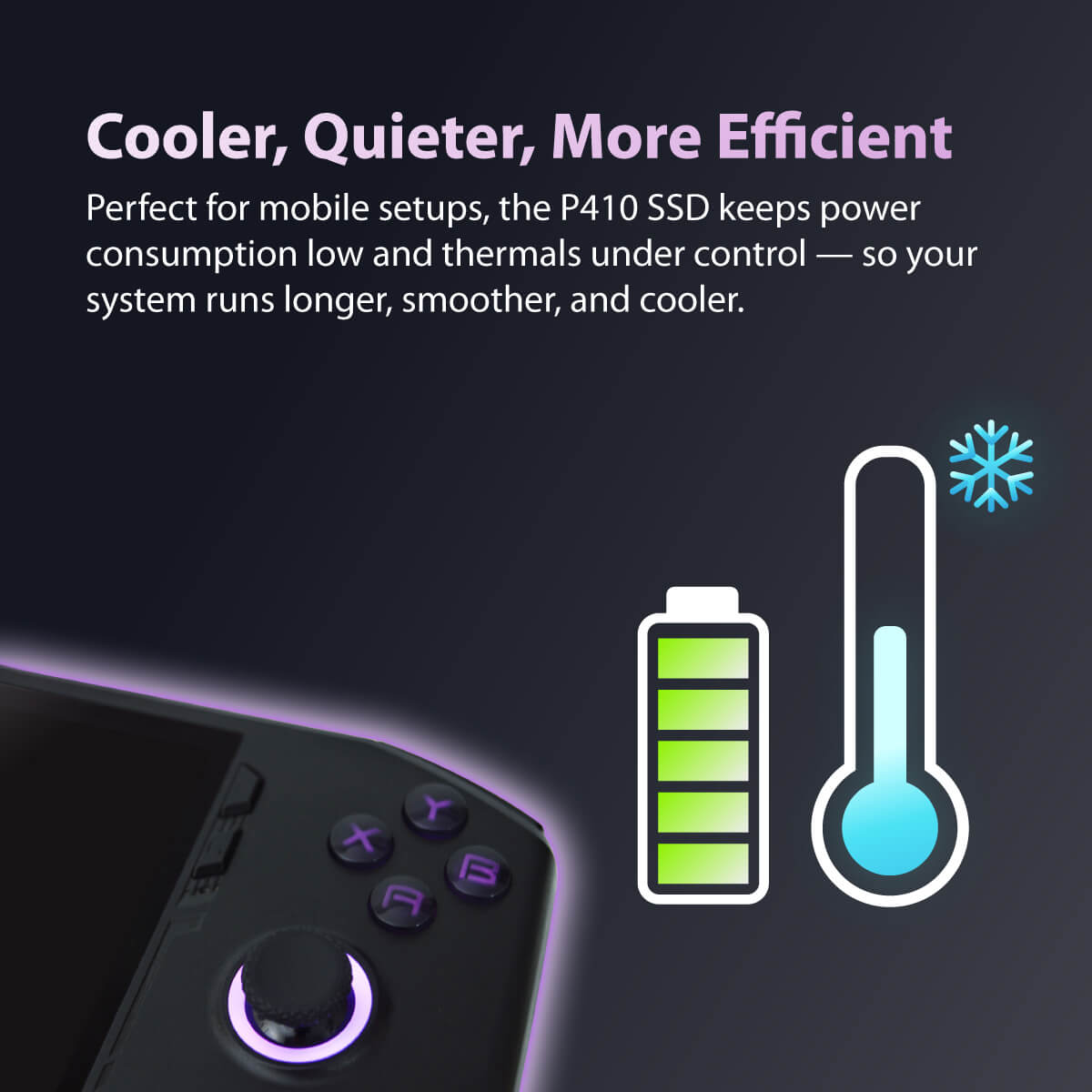
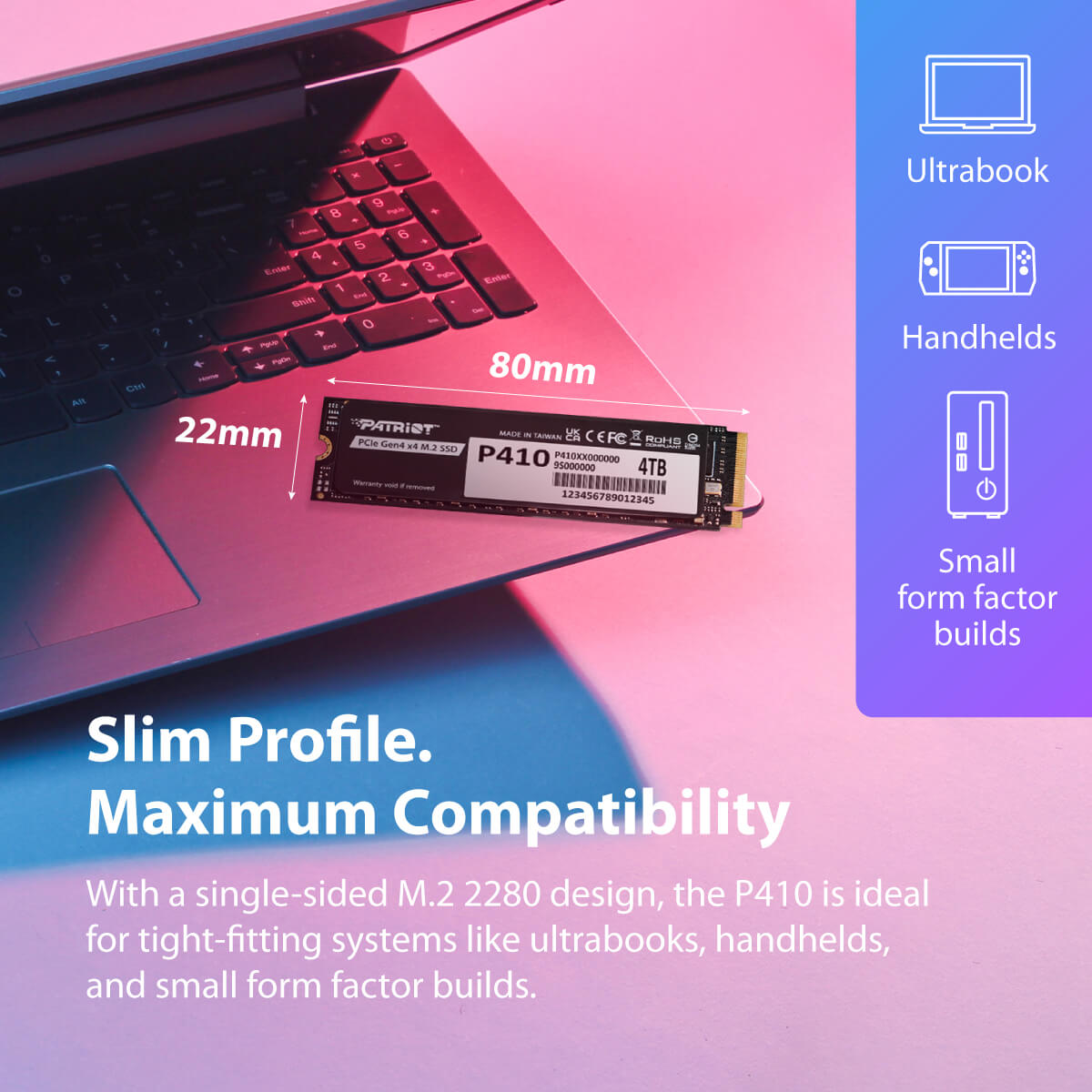
- Laptop, handheld, and compact-PC owners who need a slim M.2 2280 drive for everyday apps, file access, and game loading; Patriot specifically positions the P410 for space-constrained systems.
- PC gamers adding a 2TB library drive for installed games and stored files, especially when large transfers are occasional rather than continuous; a community discussion describes the P410 as a better fit for secondary game and file storage.
- Everyday laptop or desktop users upgrading to NVMe storage for startup, application launches, browsing, and routine file access rather than frequent, prolonged write-heavy work.
Real-World Use Scenarios
- When a gaming PC is running out of room, use the P410 as added storage for a larger installed game library; it can reduce how often you need to uninstall games, though it does not increase in-game frame rates.
- For a compatible desktop or laptop with an available M.2 2280 slot, use the P410 to expand internal storage without adding an external drive; check the device’s M.2 and PCIe compatibility before buying.
- Use it as a secondary drive for games and frequently accessed files when the main drive is nearly full; this keeps more content on the PC while leaving the existing system drive in place.
- For routine Windows use, browsing, and office apps, the P410 can serve as an internal system drive in a compatible PC; everyday tasks generally do not depend on reaching the drive’s advertised maximum transfer rate.
Spec Summary
| Attribute | Value |
|---|
| Best For | Consumer internal storage for desktops, laptops, and Sony PlayStation 5 |
|---|
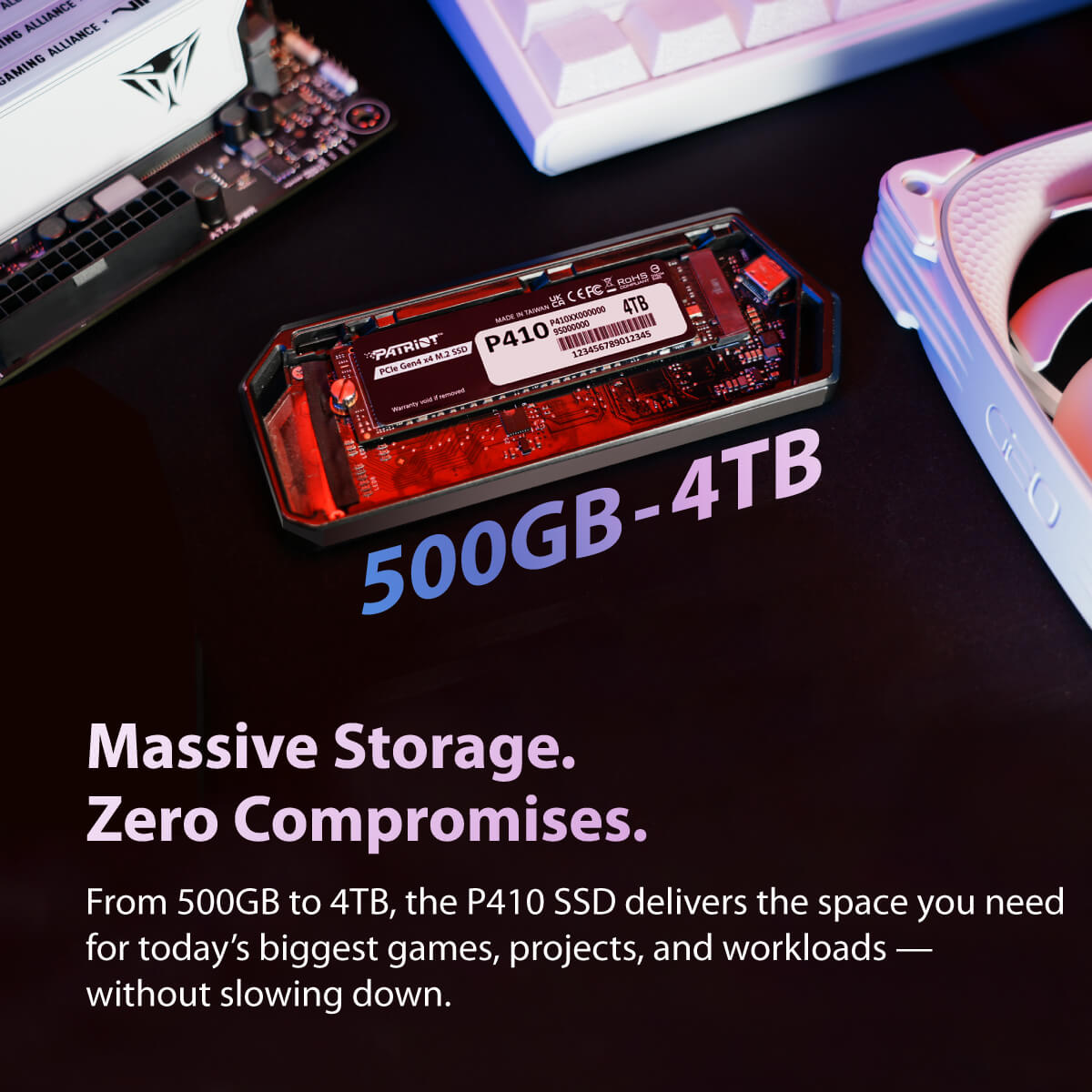
| Capacity | 2 TB |
|---|
| Interface And Form Factor | M.2 2280 SSD using PCIe Gen4 x4 with NVMe 1.4 |
|---|
| Read Write Performance | Sequential speeds up to 5,000 MB/s read and 4,500 MB/s write |
|---|
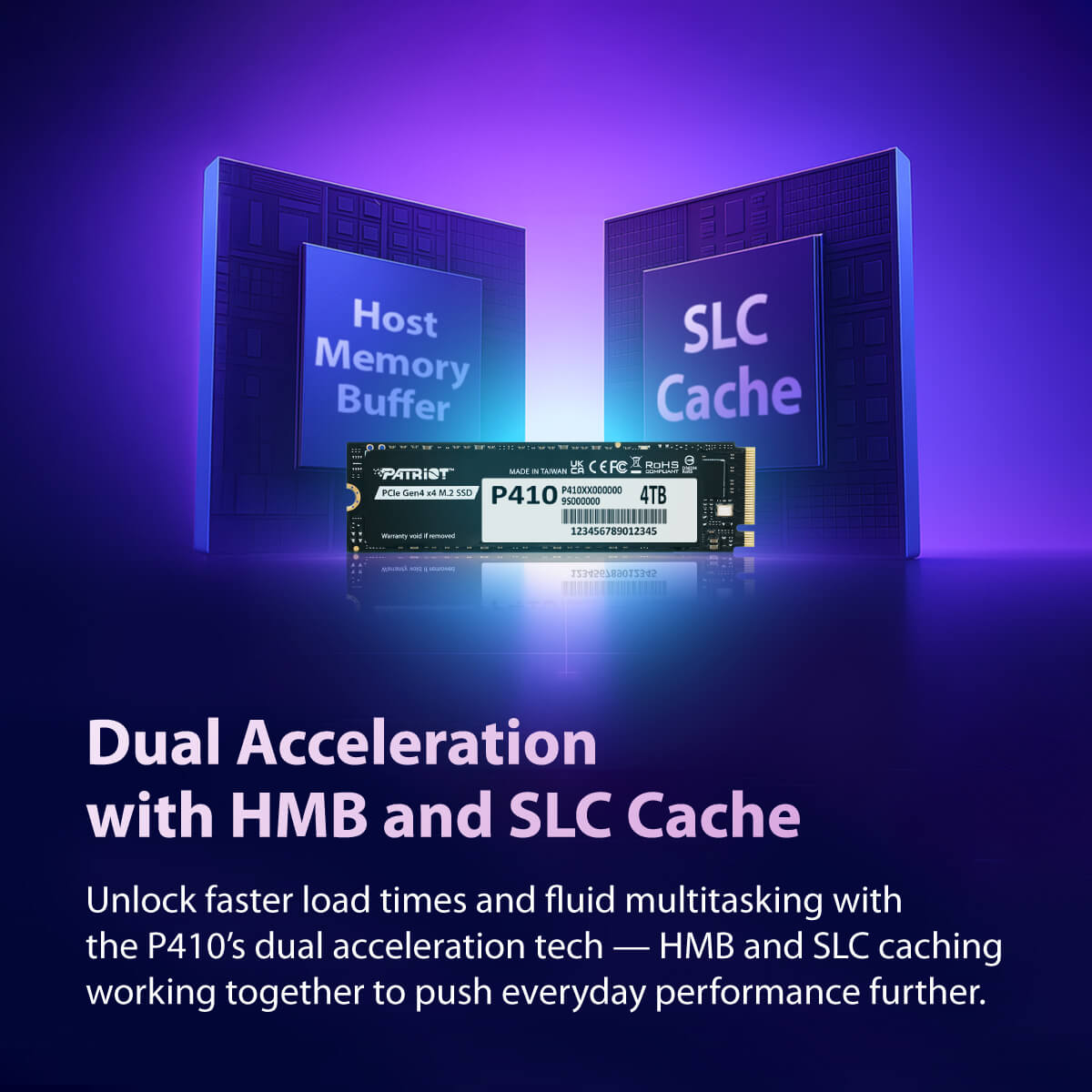
| Cache And Data Integrity | DRAM-less design with Host Memory Buffer support and SmartECC |
|---|
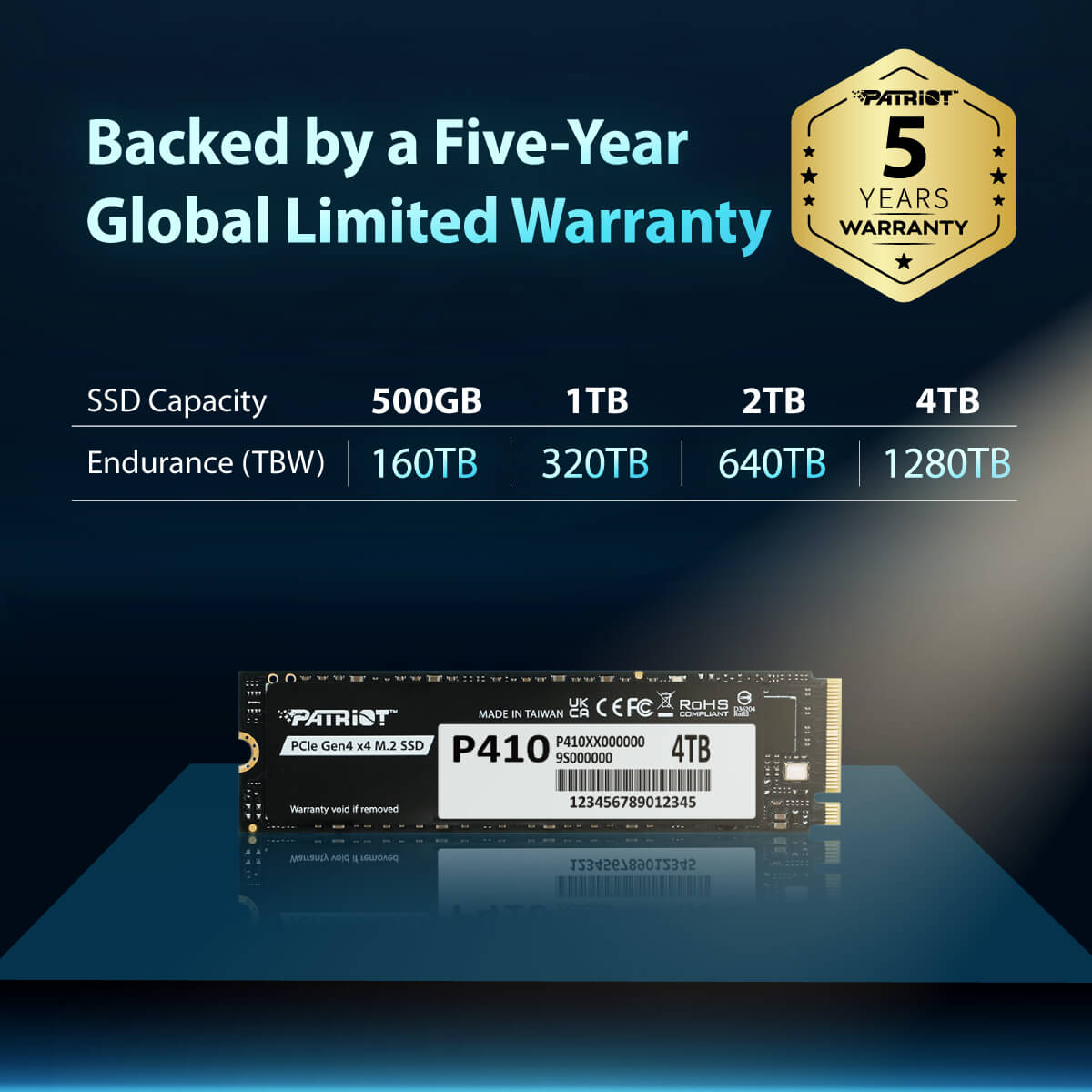
| Endurance | Rated for 640 TB written |
|---|
| Thermal Management | Ships without a heatsink; includes a slim Graphene heatshield and thermal throttling technology |
|---|
| Operating Temperature | 0°C to 70°C |
|---|
| Operating System Compatibility | Supports Windows 7*, 8.0*, 8.1, 10, and 11 |
|---|
| Model Identifiers | Patriot P410, model and part number P410P2TBM28H |
|---|
Reference Q&A
Q: Patriot P410 2TB or WD Black SN770 2TB—which should I get?
A: Choose the P410 for a 2TB PCIe 4.0 M.2 2280 drive positioned for everyday use in laptops and compact systems. Choose the SN770 if its slightly higher manufacturer-rated sequential speeds matter to you: up to 5,150/4,850 MB/s read/write, versus 5,000/4,500 MB/s for the P410. Both use Host Memory Buffer rather than onboard DRAM, and actual performance depends on the system and workload.
Q: Is the P410 2TB enough, or should I get a WD Black SN850X 2TB?
A: Choose the P410 for everyday storage when its rated speeds of up to 5,000 MB/s read and 4,500 MB/s write meet your needs. Choose the SN850X if you want higher rated sequential throughput for performance-focused workloads: WD lists up to 7,300/6,600 MB/s for its 2TB model. The SN850X is positioned as a high-performance drive, while Patriot positions the P410 for everyday use in laptops and compact systems.
Q: Should I choose the P410 or a faster SSD for a gaming PC?
A: The P410 is a reasonable fit if you want 2TB of PCIe 4.0 storage and its rated speeds are sufficient for your build. Consider a higher-performance option such as the WD Black SN850X if faster sequential transfers are a priority; its 2TB model is rated for up to 7,300 MB/s read and 6,600 MB/s write, compared with the P410's 5,000/4,500 MB/s. These are manufacturer maximums, not guarantees of faster game loading in every system.
Q: Will this SSD fit my laptop or desktop?
A: It fits systems with an M.2 2280 slot that supports PCIe/NVMe. Check the computer or motherboard specifications first: an M.2 slot may support SATA only, and the system must also support the drive’s capacity. Retailer Q&A pages show that M.2 compatibility and physical fit are common upgrade questions.
Q: Does this SSD need a separate heatsink?
A: The P410 is listed without a conventional heatsink, but it has a slim graphene heatshield and thermal-throttling technology. Whether additional cooling is needed depends on the system: check its installation guidance and clearance, and use a supplied M.2 thermal cover or pad if applicable.
Q: Is this suitable as a primary drive for Windows, apps, and games?
A: It is a 2TB NVMe PCIe 4.0 x4 SSD and is suitable for everyday system, application, and game storage in a compatible computer. The listed sequential speeds—up to 5,000 MB/s read and 4,500 MB/s write—are maximum figures, not guaranteed speeds in every system or workload. It uses Host Memory Buffer rather than onboard DRAM, and its rated endurance is 640 TBW.
Q: Is the Patriot P410 2TB suitable for gaming?
A: It is a reasonable fit for a PC gaming build if you need a 2TB M.2 NVMe drive. Its listed maximum sequential speeds are 5,000 MB/s read and 4,500 MB/s write. Reddit discussion treats it as a budget gaming option, but suitability still depends on your motherboard supporting an M.2 2280 PCIe 4.0 x4 drive.
Q: Is the Patriot P410 2TB worth buying as a budget SSD?
A: It may be worth considering when its price is competitive with other 2TB PCIe 4.0 drives. Reddit discussions compare it as a lower-cost option, while noting that alternatives may offer higher performance or different features. Compare current prices and specifications before choosing.
Q: What is the Patriot P410’s main trade-off for large file transfers?
A: The listed design has no onboard DRAM and uses Host Memory Buffer (HMB). Reddit users raise concerns about responsiveness during large writes and file extraction, but those reports do not establish that every P410 will have the same issue. For frequent, sustained write-heavy work, compare drives with different cache designs.