






| Products | |||
|---|---|---|---|
| Build Essentials |



| Products | |||
|---|---|---|---|
| Build Essentials |
We want to ensure your holiday shopping this year is hassle-free. That’s why we’re automatically extending our return policies on almost every product! For purchases placed between November 1st, 2026 and December 31, 2026 you will have until January 31, 2027 to return your product.
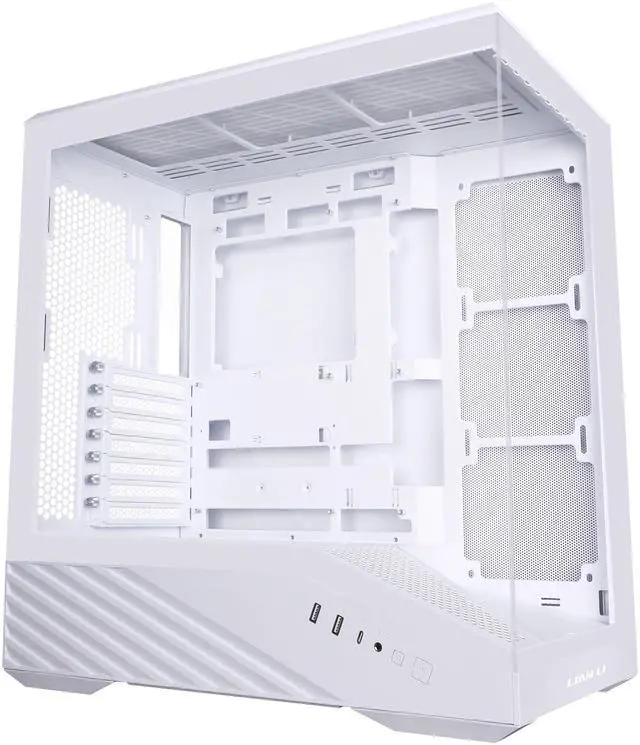
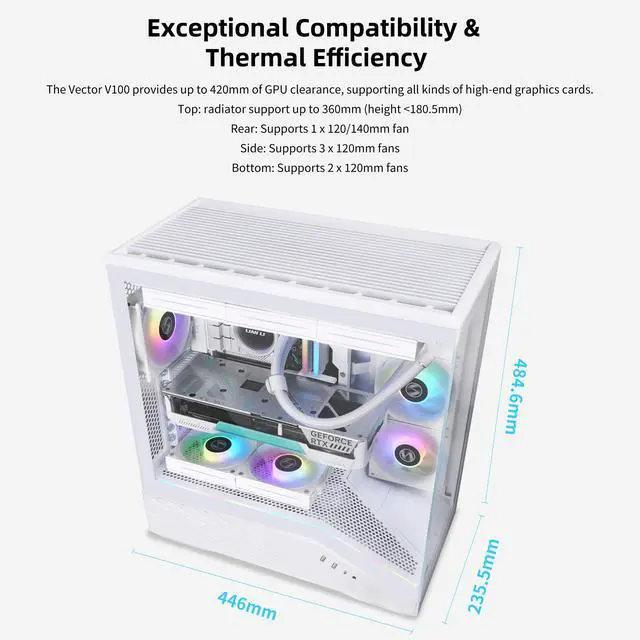
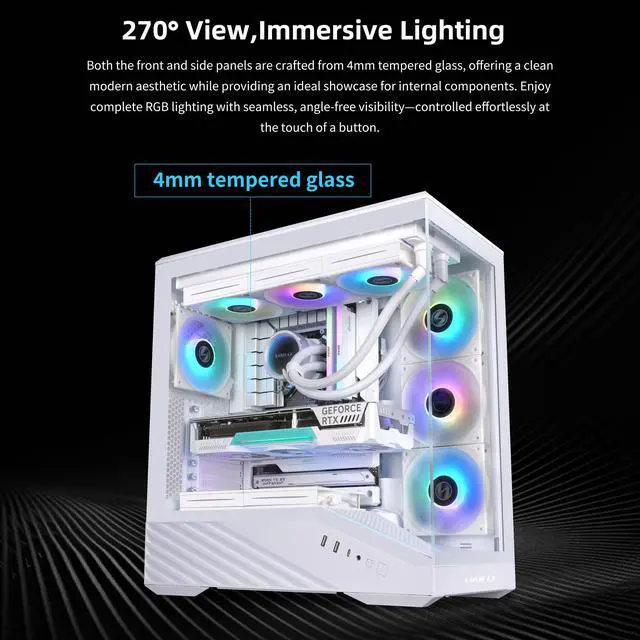
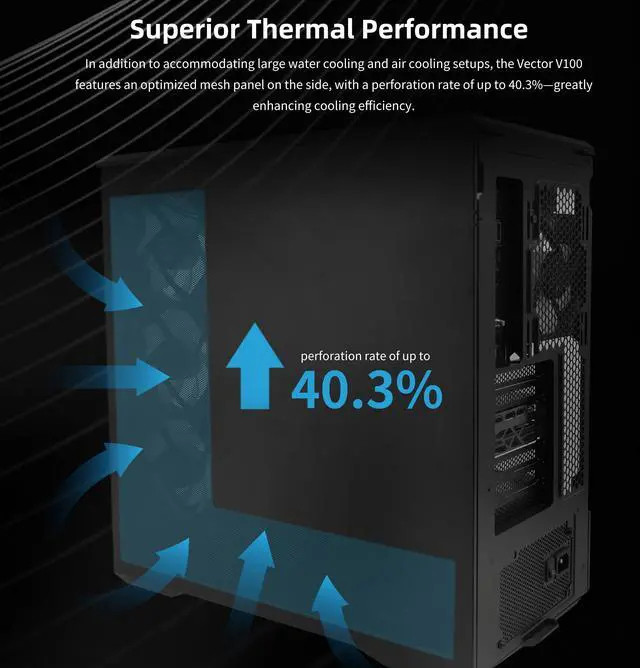
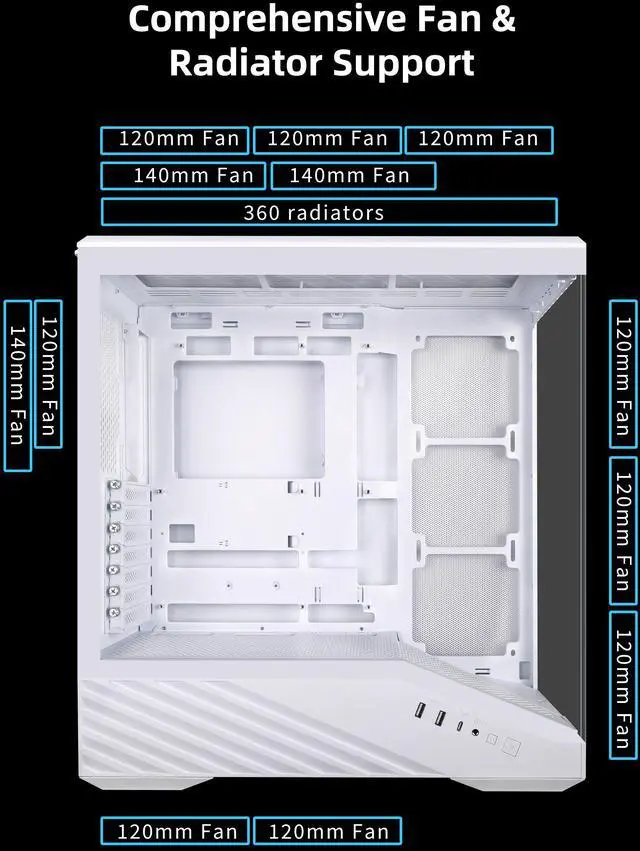
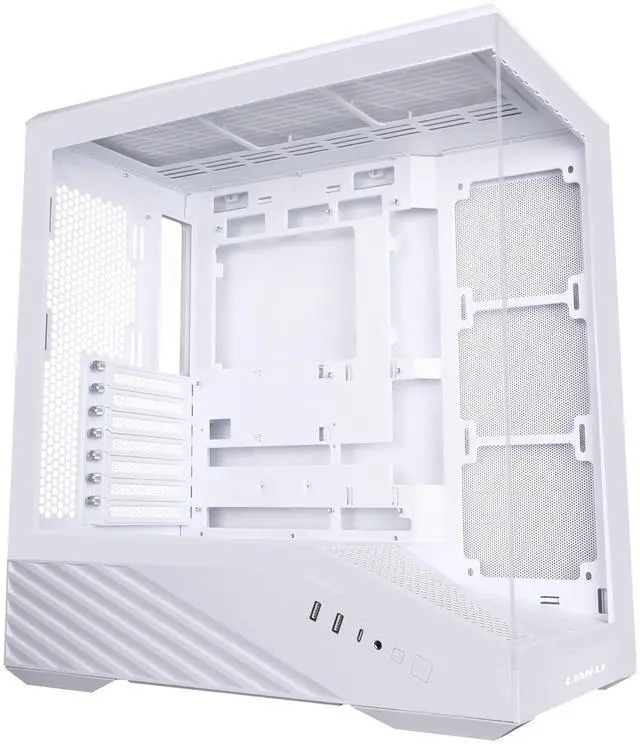
The Lian Li V100W is a white ATX mid-tower PC case built for showcase gaming or creator builds, with frameless tempered glass, a display platform, support for GPUs up to 420 mm, and top radiator support up to 360 mm.
Q: Should I choose the Lian Li V100 or the Lian Li LANCOOL 216?
A: Choose the Lian Li V100 if you want a glass-forward showcase build, support for back-connect ATX or Micro-ATX motherboards, and extra GPU clearance up to 420 mm. Choose the LANCOOL 216 if you want a more airflow-first layout out of the box, since it ships with large pre-installed fans and is positioned by Lian Li around cooling-focused usability. The main trade-off is that the V100 gives you a cleaner display-oriented interior, while the LANCOOL 216 reduces the amount of fan shopping and setup needed for a performance-focused build.
Q: Is the Lian Li V100 better than the O11 Dynamic Mini V2 for an ATX build?
A: For a standard ATX build, the V100 is usually the more straightforward choice because it is a full ATX mid-tower with 420 mm GPU clearance, 178 mm CPU cooler clearance, and a layout built around larger hardware without moving into a compact footprint. The O11 Dynamic Mini V2 is the better fit when saving desk space matters more, but its 400 mm GPU limit and 160 mm CPU cooler limit make it the more size-conscious option. In short: pick the V100 for easier fitment and a more relaxed build path; pick the O11 Dynamic Mini V2 when you want a smaller chassis and accept tighter clearances.
Q: Should I get the Lian Li V100 or the Lian Li A3-mATX?
A: Get the V100 if your priority is full-size hardware compatibility, a tempered-glass showcase layout, and room for very long GPUs and tall air coolers. Get the A3-mATX if your priority is reducing case size while still fitting strong components. Reviews and community discussion around the A3-mATX consistently frame it as a compact, value-focused enclosure that works well when space efficiency matters. The trade-off is simple: the V100 is better for easier ATX-class building and display aesthetics, while the A3-mATX is better for smaller-footprint builds that accept more planning around component placement.
Q: Is the Lian Li V100 a better choice than the O11 Vision if I care about easier cooling planning?
A: Yes, in many mainstream builds the V100 is the simpler choice if you want a showcase case without stepping into a more radiator-heavy dual-chamber layout. The V100 supports a 360 mm top radiator and conventional fan placement, while the O11 Vision is positioned around a panoramic glass design with support for multiple large radiators and a more specialized cooling layout. Choose the V100 if you want a cleaner path to a single-AIO or air-cooled build with fewer layout decisions. Choose the O11 Vision if your goal is a more elaborate showcase build with expanded liquid-cooling flexibility.
Q: Will this case fit a large modern GPU and a 360mm AIO?
A: Yes for most high-end builds. The V100W supports GPUs up to 420 mm and a top-mounted radiator up to 360 mm, so it is a strong fit for long current-generation graphics cards and common 360 mm liquid coolers. The main check is total build clearance after fans and radiator are installed, especially if you are using extra-thick components.
Q: Does it come with fans, or do I need to buy cooling separately?
A: You should plan to buy fans separately. This V100W listing specifies no pre-installed fans, so it is better for builders who want to choose their own cooling layout and noise-performance balance. The trade-off is a lower starting cost and more customization, but less out-of-box readiness than cases that already include multiple fans.
Q: Who is this case best for?
A: It is best for builders who want a showcase-style ATX case with strong component clearance, tempered-glass visibility, and room for custom cooling. It makes the most sense for gaming or enthusiast builds where appearance matters, especially if you want to display components or collectibles. It is less ideal for buyers who want a minimal, closed-off case or the simplest possible prebuilt-style setup.
Q: Is this a good choice if I want a clean build and easy access during assembly?
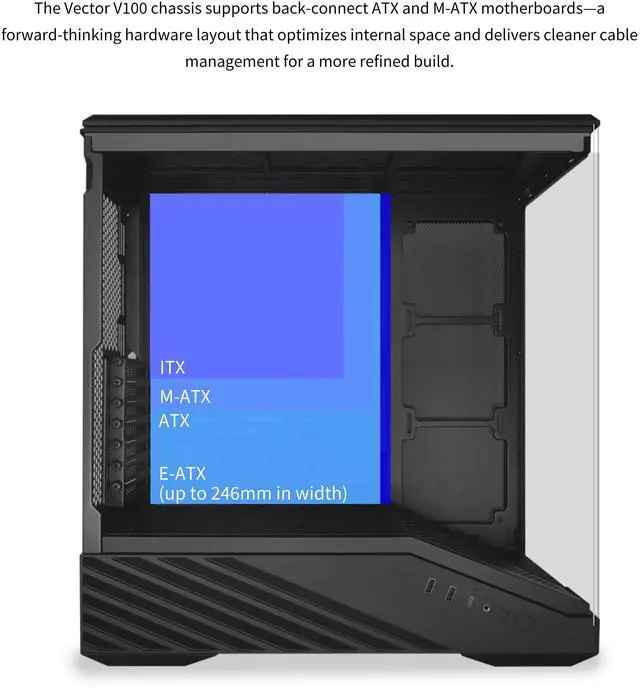
A: Yes. The V100W is a good fit for builders who value easy access and a tidy presentation because it has tool-less side panel removal, side I/O placement, and support for back-connect ATX and Micro-ATX motherboards. That makes cable management and visual cleanliness easier than on more basic ATX cases, though your motherboard choice will determine how much you benefit from rear-connector support.
Q: How does it compare with cases like the HYTE Y60 or other panoramic glass alternatives?
A: The V100W is the more practical choice if you want maximum GPU clearance and standard-layout flexibility at a lower-complexity setup. Compared with panoramic glass cases like the HYTE Y60, it offers more stated GPU room on paper and support for back-connect motherboards, while still keeping a showcase look. The trade-off is that this version ships without fans, so buyers focused on out-of-box cooling value may prefer alternatives that include multiple fans.


