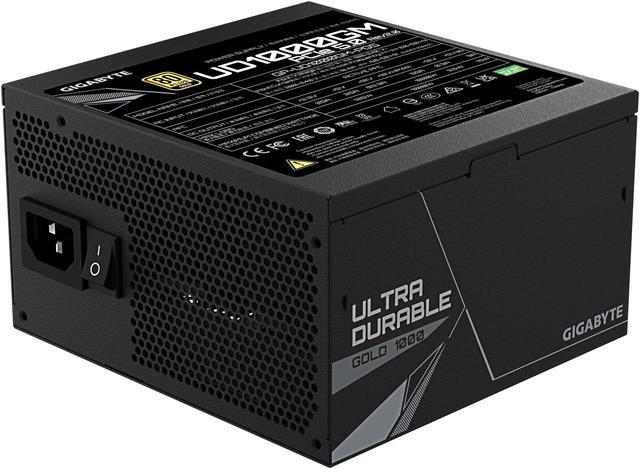
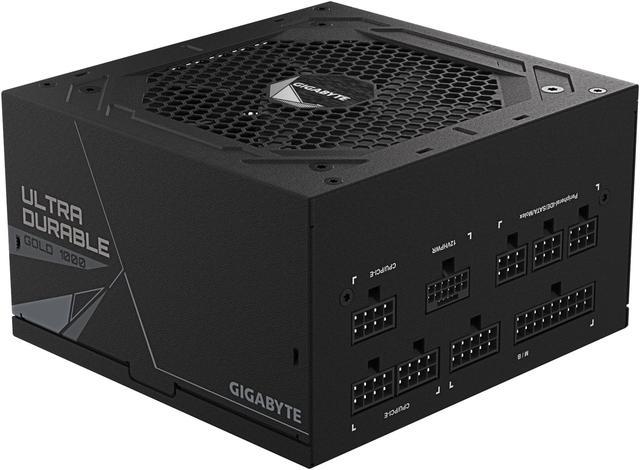
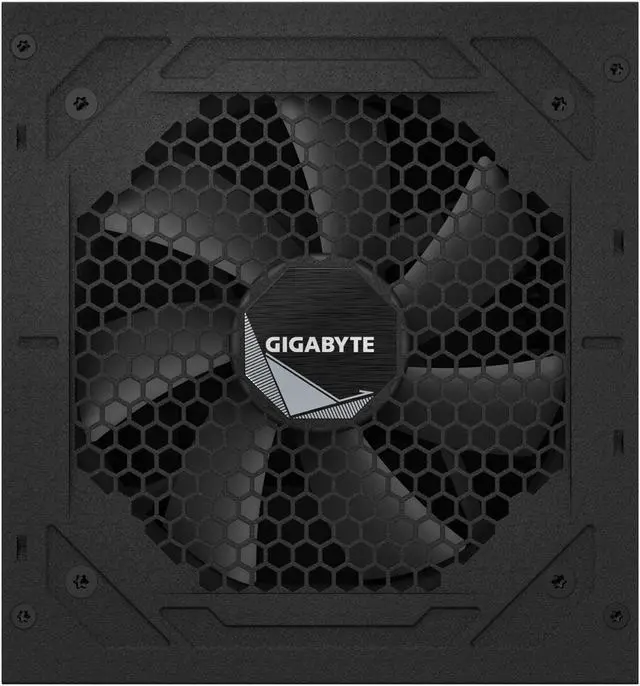
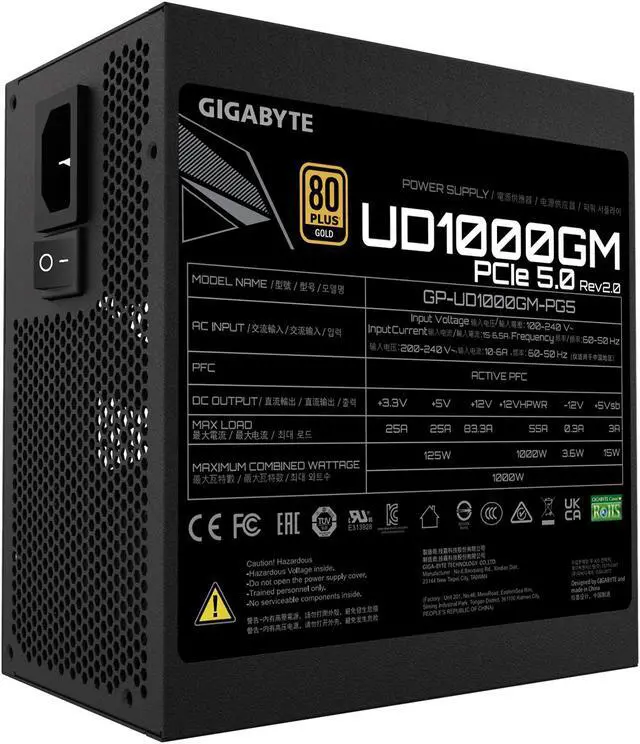
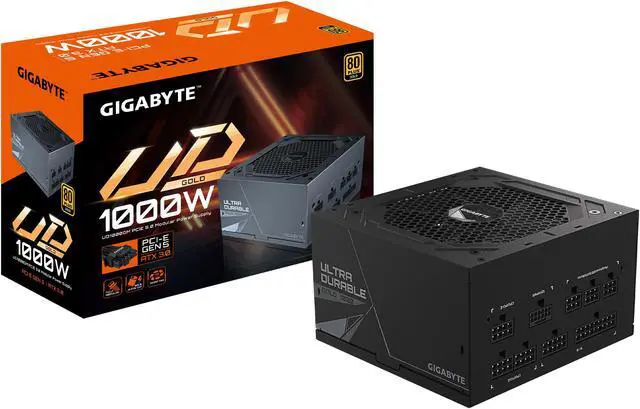
The GIGABYTE GP-UD1000GM PG5 Rev2.0 is a 1000W, 80 PLUS Gold, fully modular ATX power supply with ATX 3.0 certification and a native PCIe 5.0 16-pin connector. It suits high-performance gaming PCs and workstations using modern, power-hungry graphics cards.
Recommended For
- High-end gaming PC builders using a power-hungry PCIe 5.0 graphics card who want a native 16-pin GPU cable, ATX 3.0 support, and 1000W of capacity without using an adapter.
- DIY PC builders who want a compact, standard ATX power supply for a high-wattage build and need to reduce cable clutter through fully modular connections.
- Value-focused buyers assembling a premium gaming or workstation PC who want 1000W, 80 Plus Gold efficiency, native PCIe 5 support, and a long warranty without selecting a flagship-priced PSU.
- Users upgrading an existing ATX gaming system for a newer high-end GPU who prefer a 140 mm-long PSU that is easier to fit than many larger 1000W models.
Real-World Use Scenarios
- When building a high-end gaming PC with a PCIe 5.0 graphics card, the user can connect the GPU with the PSU’s native 16-pin cable instead of relying on a separate adapter, which can simplify cable routing and reduce cable clutter.
- For a performance gaming or workstation build using a high-end CPU and GPU, the 1000W capacity provides enough headroom for demanding components and short-term power spikes, although the system should still be checked against the graphics card manufacturer’s recommended PSU rating.
- When installing the PSU in a compact or cable-constrained ATX case, the 140mm-long chassis and fully modular cabling can make installation easier by leaving more room for cable routing and allowing unused cables to be omitted.
- During everyday desktop use, browsing, and light workloads, the PSU may operate with little or no fan noise because its semi-passive fan control keeps the fan stopped at low loads; fan noise becomes more noticeable as gaming or rendering loads increase.
- For a user upgrading from an older power supply to a modern high-end GPU, the native PCIe 5.0 connection and ATX 3.0 positioning can reduce the need for legacy adapter cables, but independent testing found that the unit did not pass every ATX 3.0 transient-response test, so it is better suited to value-focused builds than to buyers seeking the strongest-tested platform.
Spec Summary
| Attribute | Value |
|---|
| Best For | Gaming PCs using PCIe 5.0 graphics cards, with 1000W capacity, ATX compatibility, and fully modular cabling for flexible builds |
|---|
| Power And Efficiency | 1000W power supply with a single +12V rail, active PFC, 90% efficiency at typical load, and 80 PLUS Gold certification |
|---|
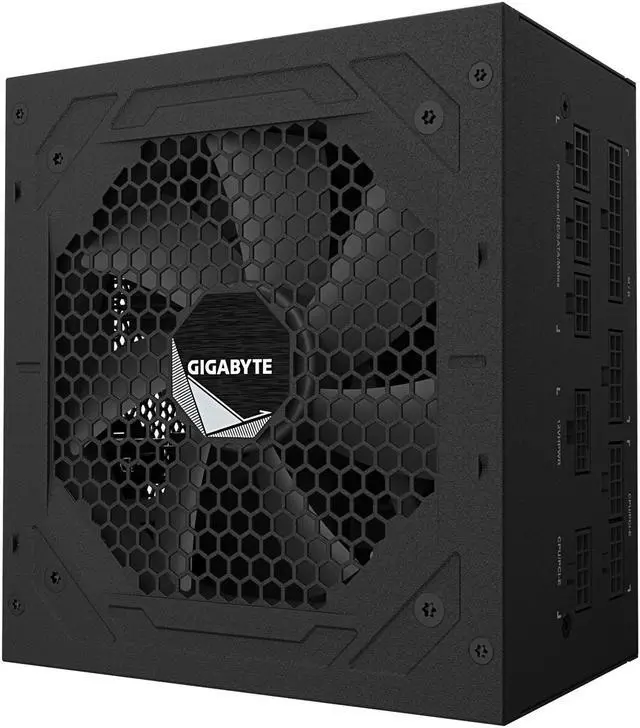
| Form Factor And Cooling | ATX12V design measuring 140 x 150 x 86mm, cooled by one 120mm hydraulic-bearing fan with air cooling |
|---|
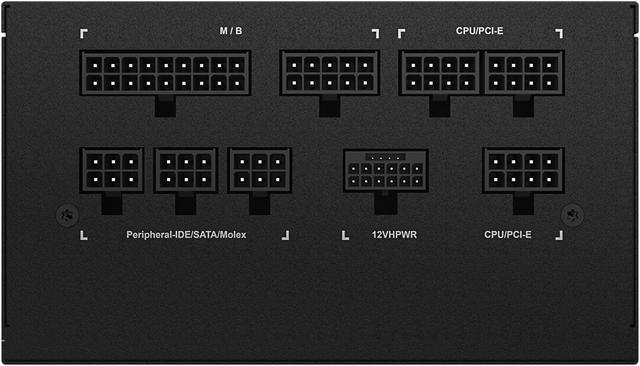
| Modular Design And Connectors | Fully modular PSU with one 20+4-pin ATX connector, two 4+4-pin EPS/ATX 12V connectors, four 6+2-pin PCIe connectors, one 16-pin PCIe connector, eight SATA connectors, three peripheral 4-pin connectors, and one floppy 4-pin connector |
|---|
| Input And Protection | Accepts 100–240V AC input at 50/60Hz with 15A–6.5A input current, active PFC, and OVP, OPP, SCP, UVP, OCP, and OTP protection |
|---|
| Reliability And Certifications | Rated for over 100,000 hours MTBF and certified to BSMI, CE, CCC, FCC, TUV, RCM, CB, EAC, KCC, and UL standards |
|---|
| Cable Design | Black flat cables for organized routing in compatible PC builds |
|---|
| Model Identifiers | GIGABYTE GP-UD1000GM PG5 REV2.0 |
|---|
Reference Q&A
Q: Should I buy the Gigabyte UD1000GM PG5 or the UD850GM PG5?
A: Choose the UD1000GM PG5 if you are building with a high-power graphics card, want more upgrade headroom, or expect sustained system loads above 850W. Both models are fully modular, 80 PLUS Gold, ATX 3.0, and include a native 16-pin PCIe cable, but the UD1000GM PG5 provides 1000W instead of 850W. Choose the UD850GM PG5 when the system’s estimated power draw is comfortably below 850W and the lower-capacity model is meaningfully less expensive.
Q: Is the Gigabyte UD1000GM PG5 better than the older Gigabyte UD1000GM?
A: The UD1000GM PG5 is the better choice for a new high-end gaming PC because it adds ATX 3.0 positioning and a native 16-pin PCIe connector for compatible graphics cards. The older UD1000GM is an ATX 12V v2.31 model with six 6+2-pin PCIe connectors and no native 16-pin connector listed in its official specifications. Choose the older model only when it is substantially cheaper and the graphics card uses conventional 6+2-pin power cables.
Q: Gigabyte UD1000GM PG5 or Corsair RM1000e: which 1000W PSU should I choose?
A: Choose the Corsair RM1000e when you prioritize the newer ATX 3.1 and PCIe 5.1 standards, strong measured voltage regulation, ripple suppression, and quiet operation at light-to-moderate loads. Choose the Gigabyte UD1000GM PG5 when its price is lower, you prefer its stated 10-year warranty, or you need four 6+2-pin PCIe connectors in addition to its native 16-pin connector. Both units are compact 140mm-deep, fully modular, 1000W, 80 PLUS Gold power supplies.
Q: Do I need the Gigabyte UD1300GM PG5 instead of the UD1000GM PG5?
A: Choose the UD1300GM PG5 for systems with unusually high sustained power demand, multiple power-hungry graphics cards, heavy overclocking, or a planned upgrade that could exceed the practical headroom of a 1000W unit. The UD1300GM PG5 provides 1300W, eight 6+2-pin PCIe connectors, twelve SATA connectors, and a larger 160mm chassis. Choose the UD1000GM PG5 for a conventional single-GPU build because it provides 1000W of capacity in a shorter 140mm chassis and is easier to fit in compact ATX cases.
Q: Does this power supply include a direct cable for PCIe 5.0 graphics cards?
A: Yes. The GP-UD1000GM PG5 Rev2.0 includes one 16-pin PCIe power connector with a 12+4-pin configuration, supporting compatible PCIe 5.0 graphics cards without relying solely on a separate adapter. Confirm that the graphics card’s required connector and power rating match the PSU cable.
Q: Will this 1000W PSU fit in my computer case?
A: It uses the standard ATX form factor and has listed dimensions of 140 x 150 x 86 mm, with a maximum PSU length of 150 mm. It should be evaluated against the case’s PSU-length limit and available cable-management space before purchase, particularly in compact cases.
Q: Does it come with all the cables needed for a typical gaming PC build?
A: Yes. It is fully modular and includes one 20+4-pin motherboard cable, two 4+4-pin CPU/EPS cables, four 6+2-pin PCIe cables, one 16-pin PCIe cable, eight SATA power connectors, three peripheral connectors, and one floppy connector. Use only the cables supplied with this PSU; modular PSU cables are not universally interchangeable.
Q: Is 1000W enough for a high-performance gaming PC?
A: The 1000W capacity is intended for high-power gaming systems and provides substantial headroom for a powerful graphics card, processor, storage, and other components. Actual suitability depends on the combined power requirements and peak-power behavior of the installed hardware, so the graphics card and CPU manufacturer recommendations should be checked before purchase.
Q: What are the main trade-offs of choosing this power supply?
A: Its main advantages are 1000W capacity, ATX 3.0 support, PCIe 5.0 connectivity, 80 Plus Gold efficiency, full modular cabling, and a relatively compact 150 mm maximum length. Trade-offs include the need to verify case clearance, cable requirements, and total system power demand; a 1000W PSU may be unnecessary for lower-power systems.
Q: Is the GIGABYTE GP-UD1000GM PG5 Rev2.0 a good choice for an RTX 4090 or RTX 4080-class GPU?
A: It is a technically compatible choice for high-end GPUs because it provides 1000W, ATX 3.0 support, and a native 16-pin PCIe 5.0 connector. However, community discussions generally place it below higher-tier Corsair, be quiet!, and similar alternatives, so it is most suitable when priced noticeably lower or when its included 16-pin cable is useful.
Q: Is this PSU worth keeping instead of replacing it with a Corsair RM1000x SHIFT or another higher-tier model?
A: It can be kept if the system is stable and the price was favorable, but it is positioned as a mid-tier rather than premium unit in the cited discussions. Replacing it may be reasonable if a quieter PSU, stronger transient performance, or a higher-tier platform is more important than avoiding the cost and installation effort.
Q: Do I need the full 1000W, or would an 850W or 650W PSU be enough?
A: The 1000W capacity is appropriate for power-hungry systems such as those using an RTX 4090-class GPU, but it can be excessive for lower-power builds. Reddit discussions specifically note that systems using an RTX 4060 Ti and a mainstream CPU may not need 1000W; the correct capacity depends on the GPU, CPU, planned upgrades, and required headroom.
Q: What is the practical difference between the PG5 version and the regular GIGABYTE UD1000GM?
A: The PG5 version adds Intel ATX 3.0 support and a native 12+4-pin, 16-pin PCIe 5.0 connector. It also retains four conventional 6+2-pin PCIe connectors, so it can power GPUs that use standard 8-pin connectors. The PG5 version is more useful for newer high-end graphics cards, while the difference matters less for GPUs that do not use the 16-pin connector.
Q: Should I be concerned about noise or reported startup problems with this PSU?
A: Noise is a legitimate trade-off to consider: a technical YouTube review characterized its noise output as relatively high and identified several performance limitations. Reddit also contains individual reports of clicking noises and intermittent boot behavior, but those posts do not establish how common the issues are or prove that the PSU caused every problem. Buyers who prioritize low noise or maximum platform performance should compare higher-tier alternatives.