
Your Browsing History


Featured Brands












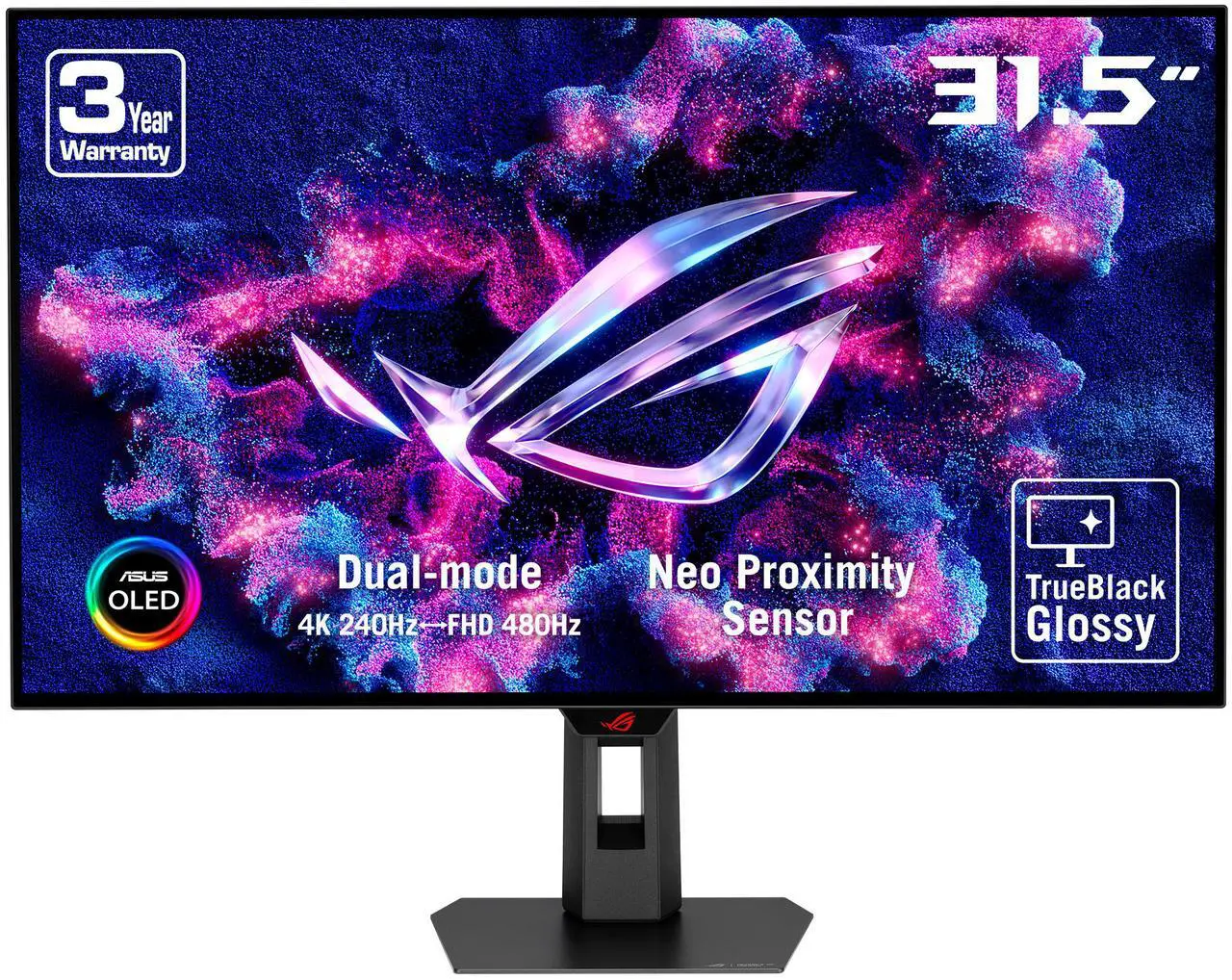


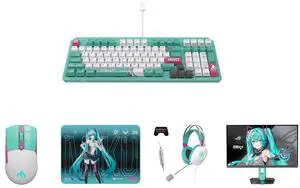
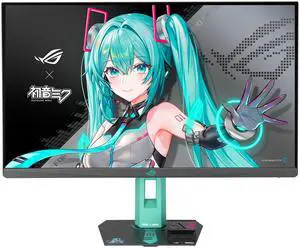
ASUS ROG Strix 27" QHD 2K 1440P 260Hz IPS with AMD FreeSync Premium & G-Sync Compatible 0.3ms Fast IPS Hatsune Miku Edition Gaming Computer Monitor with Height Adjustable, Swivel, Pivot & Tilt Stand
- Screen Size: 27"
- Refresh Rate: 260Hz
- Resolution: 2560 x 1440 (2K)
- Response Time: 1ms(GTG), 0.3ms(min.)
- Model #: XG27ACMEG-G
- Item #: N82E16824281388
- Return Policy: 15-Day Return Policy
- $580.99 –
- More options from $580.99 - $1,145.12
- $17.95 Shipping
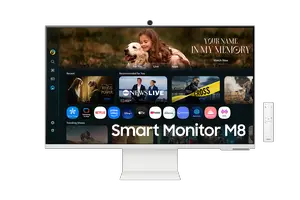
- Resolution: 3840 x 2160 (4K)
- Refresh Rate: 60Hz
- Display Colors: Max 1B
- Brand: SAMSUNG
- Model #: LS32FM801UNXZA
- Item #: N82E16824027389
- Return Policy: Standard Return Policy
- $899.99
- $698.00 –
- Save: 22%
- More options from $698.00 - $722.99
- Free Shipping
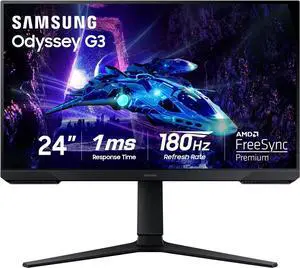
Samsung Odyssey G3 24" Full HD 180Hz with AMD FreeSync Premium 1ms HDR10 Gaming Computer Monitor with Height Adjustable, Swivel, Pivot & Tilt Stand LS24DG302ENXZA
- Screen Size: 24"
- Refresh Rate: 180Hz
- Resolution: 1920 x 1080
- Response Time: 1 ms
- Model #: LS24DG302ENXZA
- Item #: N82E16824027338
- Return Policy: 15-Day Return Policy
- $249.99
- $119.99 –
- Save: 52%
- More options from $119.99 - $297.99
- $14.83 Shipping
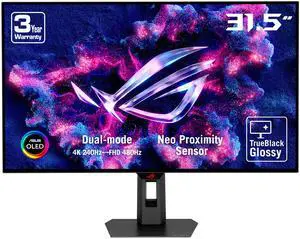
ASUS ROG Strix 32" Dual Mode UHD 4K 240Hz FHD 480Hz with AMD FreeSync Premium Pro & G-Sync Compatible 0.03ms HDR400 USB-C KVM OLED Gaming Computer Monitor
- Screen Size: 32"
- Refresh Rate: 240Hz
- Resolution: 3840 x 2160 (4K)
- Response Time: 0.03 ms
- Model #: XG32UCWMG
- Item #: N82E16824281378
- Return Policy: 15-Day Return Policy
- $1,499.99 –
- More options from $1,499.99 - $1,616.21
- $69.99 Shipping
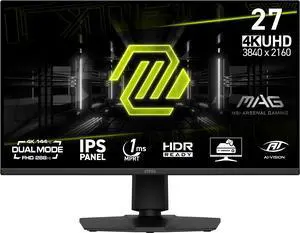
MSI 27" Dual Mode UHD 4K 144Hz Full HD 288Hz IPS with Adaptive-Sync 1ms HDR400 Ai Crosshair Gaming Computer Monitor with Height Adjustable, Swivel, Pivot & Tilt Stand MAG 275UPD E14
+ $50 off w/ promo code CPGWF259, limited offer
- Screen Size: 27"
- Refresh Rate: 144Hz UHD / 288Hz FHD
- Resolution: 3840 x 2160 (4K)
- Response Time: 1 ms
- Model #: MAG 275UPD E14
- Item #: N82E16824475509
- Return Policy: 15-Day Return Policy
- $409.99
- $349.99 –
- Save: 14%
- More options from $349.99 - $499.05
- Free Shipping
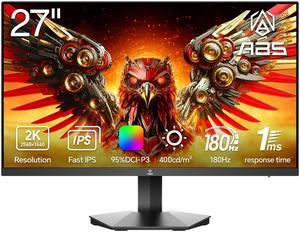
ABS 27" QHD 2K 1440P 180Hz Fast IPS with AMD FreeSync (AMD Adaptive Sync) 1ms HDR400, DCI-P3 95% Gaming Computer Monitor GQ271NE
- Screen Size: 27"
- Refresh Rate: 180Hz
- Resolution: 2560 x 1440 (2K)
- Response Time: 1 ms
- Model #: GQ271NE
- Item #: N82E16824942001
- Return Policy: 15-Day Return Policy
- $369.99
- $179.99 –
- Save: 51%
- $14.83 Shipping
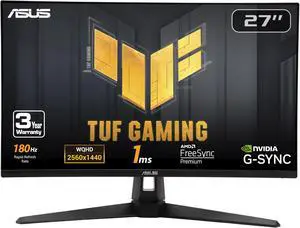
ASUS TUF Gaming 27" QHD 2K 1440P 180Hz IPS AMD FreeSync Premium & G-SYNC Compatible 1ms Built-in Speakers Gaming Computer Monitor with Swivel & Tilt Stand VG27AQ3A
- Screen Size: 27"
- Refresh Rate: 180Hz
- Resolution: 2560 x 1440 (2K)
- Response Time: 1 ms
- Model #: 90LM0940-B019B0
- Item #: N82E16824281271
- Return Policy: 15-Day Return Policy
- $299.99
- $229.99 –
- Save: 23%
- More options from $229.99 - $591.76
- $14.83 Shipping
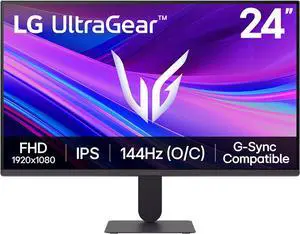
- Screen Size: 24" (23.8" viewable)
- Refresh Rate: 144 Hz (OC)
- Resolution: 1920 x 1080
- Response Time: 5ms (GtG at Faster)
- Model #: 24G411A-B
- Item #: N82E16824026515
- Return Policy: 15-Day Return Policy
- $148.99 –
- More options from $145.99 - $203.99
- $4.99 Shipping
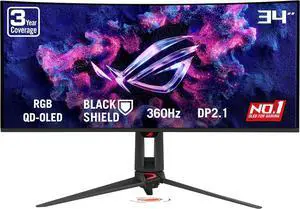
ASUS ROG SWIFT 34 inch QHD 2K 1440P 360Hz AMD FreeSync Premium Pro & G-SYNC Compatible HDR500 AUTO KVM USB-C Curved OLED Gaming Computer Monitor with Height Adjustable, Swivel & Tilt Stand PG34WCDN
- Screen Size: 34"
- Refresh Rate: 360Hz
- Resolution: 3440 x 1440
- Response Time: 0.03 ms
- Model #: PG34WCDN
- Item #: N82E16824281410
- Return Policy: 15-Day Return Policy
- $1,899.99 –
- $99.99 Shipping
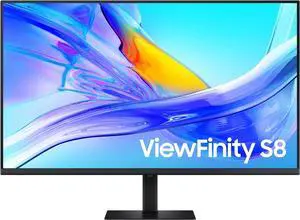
Samsung ViewFinity S80UD 37" 4K HDR Monitor with KVM, 5ms, HDR 10, USB Type C, Height Adjustable Stand, 16:9
- Resolution: 3840 x 2160 (4K)
- Refresh Rate: 60Hz
- Display Colors: 1.07 Billion
- Brand: SAMSUNG
- Model #: LS37D802UANXZA
- Item #: N82E16824027381
- Return Policy: Standard Return Policy
- $749.99
- $528.00 –
- Save: 29%
- More options from $528.00 - $974.99
- Free Shipping
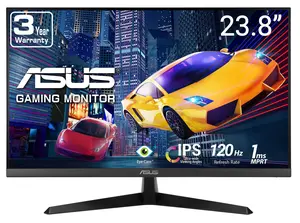
ASUS 24 (23.8" viewable) Full HD 1080P 120hz IPS with Adaptive Sync, 1ms low blue light Eye Care Gaming Computer Monitor VY249HGR
- Screen Size: 24"
- Refresh Rate: 120Hz
- Resolution: 1920 x 1080
- Response Time: 1 ms (MPRT)
- Model #: 90LM06A3-B02AB0
- Item #: N82E16824281334
- Return Policy: 15-Day Return Policy
- $179.99
- $99.99 –
- Save: 44%
- More options from $99.99 - $328.27
- $13.27 Shipping
Related searches
- Overview
- Monitor Resolution
- Other Specs
- Make a Statement
- Monitor FAQ's
Computer Monitors
A crucial part of every system build, investing in a well-made computer monitor insures that you will see the results of all that recently-purchased computer hardware. Perhaps you spent days, weeks, and months choosing the right CPU and the best graphics card to play the games at the resolutions you want. However, if you blew your budget on all the horsepower and left none for the display, then you’re not going to really appreciate the intensity of all those pixels that your computer is rendering at incredible speeds. With games getting more graphically intense, you need to make sure your display can keep up so that you’re not stuck squinting at screen tears and dead pixels.
You’ve probably seen terms like HD and Full HD on the boxes of monitors and TVs, but what does that actually mean? As you may have guessed, HD simply refers to “High Definition”, which is just a quick way to refer to high quality video output. If you see the term “Full HD” on a monitor box, that’s just a shorthand to denote its resolution, which would be 1920 by 1080, also called 1080p. The reason why it’s specified as “Full HD” is because there are also some TVs and monitors that output at 720p (high definition but not quite as high as 1080p), which is 1280 by 720 pixels. 1080p is considered the current standard for monitors, and all of the popular manufacturers including Dell, Acer, Samsung, LG, BenQ and Viewsonic offer a variety of 1080p monitors in their product line ups.
When it comes to resolution, 4k is all the buzz right now. Game developers and graphics card manufacturers are focused on making and running games at 4k resolutions, which is twice the horizontal and vertical resolution of 1080p. Officially labeled as 4K UHD, the total pixel resolution is 3840 by 2160. That’s why there had to be a new term to define the resolution scale, because 4k is so much clearer and more vibrant than 1080p. In fact, many people would call it hyper-realistic, because of how many pixels are crammed into the display area. To make it easier to distinguish between the two resolution types, 1080p is often just referred to as 2k resolution.
As you can imagine, the more pixels there are to display, the more important it is that your monitor has a high refresh rate, especially when it comes to gaming. Typically, the standard has been 120 hertz refresh rate in gaming monitors, but Asus’ 27 inch MG279Q monitor features a 144 hertz refresh rate. The quicker a monitor can refresh the display, the more smooth the visual experience will be. The refresh rate in the monitor works in tandem with a low response time (which just specifies how quickly the monitor can send and receive new information) in order to make a seamless visual transition. Sometimes, if the response rate is not quick enough, some residual pixels can remain on the screen as the monitor is trying to refresh new ones. This is called ‘ghosting’. Although it’s standard to have a 4 millisecond response time on many gaming monitors, Samsung, LG, BenQ, Viewsonic, and more all offer 2k and 4k monitors that have 1 millisecond response times.
As far as the internal specs are concerned, response time and refresh rate are the main factors that contribute to a smooth, immersive viewing experience, but the physical panel type of the monitor can also play into this. First there’s the matter of how the monitor lights up: either with LCD or LED. The main difference lies in the material that is used to light the liquid crystals in the display. In LCD, it’s cold cathode fluorescent lamps (CCFL’s) and in LEDs, it’s tiny light emitting and low-energy consuming diodes. This is the preferred type in most monitors, because it consumes less power and produces less harsh light so that darker colors appear more vivid. Additionally, LED monitors can be much thinner than LCD ones.
Newer LCD monitors have improved with the implementation of IPS (In-plane switching) panels. For some it’s a matter of preference, but where the IPS panels have shown their strength is in accurate color reproduction, great for content creators who want to do photo editing or graphic design. The panel type you choose depends more on preference than anything else. Samsung is well known for championing the IPS panel in their monitors, and many people enjoy using them for gaming as well.
For some people, it’s not just the monitor specs that are important. Having a monitor that is fast, intuitive, and also looks nice on their desk is an essential part of a computer build that is designed to make a statement. Asus’ Predator X34 certainly shows off with its 34-inch curved IPS panel that also features Nvidia’s Gsync technology, which matches the gaming framerates with the monitor’s native refresh rate to prevent screen tearing. For those who want the style without the price tag, Samsung offers a 29 inch curved monitor with a 4 millisecond response time.
As touch navigation becomes more normalized due to mobile browsing, you may want to also consider a touch monitor for maximum accessibility. Planar offers a 22 inch optical touch screen monitor that is also extremely portable due to its USB connection type. For something you can use in meetings for presentations, Dell offers a capacitive touch screen monitor that also features an IPS panel.
When you’ve picked out the perfect display, don’t forget the essential accessories to go with it. For a 2 or 3-screen set up, Ergotron, Rosewill, and SIIG offer a variety of both stationary and swivel monitor mounts for both the wall and your desk. Soon, you’ll have your own personal command center that you’ll never want to leave. So, ready to get started?
What does 2k and 4k resolution mean?
They are a shorthand to describe how many pixels in total are displayed on the monitor. For 2k, that’s 1920 x 1080 in a 16:9 widescreen aspect ratio. For 4k, it’s 3840 by 2160 in a 16:9 widescreen aspect ratio.
What’s the difference between LCD and LED monitors?
Since monitors have to be lit in order for the viewer to see anything, the difference between the two types is in what is used to light up the crystals within the display. For LCD, that’s cold cathode fluorescent lamps (CCFL’s) and in LEDs, it’s tiny light emitting and low-energy consuming diodes. LED monitors tend to be thinner and more power-efficient, but improvements in the panel types have made LCDs more competitive.
Bestselling Monitor Reviews:
Jonathan C.
4/21/2026 12:09:43 PM
Great Monitor, huge and very easy to setup
“ Worked right out of the box and colors look great and the monitor is smooth and fast during gaming. ”
MSI 32 inch UHD 4K 240Hz with AMD FreeSync Premium Pro & Nvidia G-Sync compatible 0.03ms 90W USB-C OLED Gaming Computer Monitor with Height Adjustable & Swivel Stand MPG 321URX QD-OLEDNate H.
4/21/2026 8:10:47 AM
4k oled
“ Great monitor I do wish I would've just stuck with a 27 for competitive gaming but it's great for single player immersion ”
MSI 32 inch UHD 4K 240Hz G-Sync Compatible 0.03ms HDR400 USB-C KVM RGB Ai Vision OLED Gaming Computer Monitor with Height Adjustable, Swivel, Pivot & Tilt stand for PC & Console Gaming MPG 321CURX QD-OLEDTexasFry
4/18/2026 4:55:51 PM
Undeniably best in the business of gaming
“ Now this is my first OLED monitor and its blown me away at how in-depth and amazing an OLED will change my gaming experience and this monitor will never let me look at IPS the same, matter of fact my second monitor is in danger now for part time labor without pay. ”
ASUS ROG SWIFT 34 inch QHD 2K 1440P 360Hz AMD FreeSync Premium Pro & G-SYNC Compatible 0.03ms HDR500 AUTO KVM TANDEM ROG BLACK SHIELD USB-C OLED Curved Gaming Computer Monitor with Height Adjustable, Swivel & Tilt Stand PG34WCDNEthan
4/13/2026 11:28:37 PM
Great Upgrade From 60hz
“ Great picture quality for an IPS panel - Immersive & speedy for first-person games - HDR support is pretty & vivid with games that support it well Great monitor for the price with minor gripes that would most likely still be gripes even with a higher priced monitor. ”
MSI 27 inch WQHD 2K 1440P 240Hz IPS with AMD FreeSync Premium 0.5ms HDR Ready Computer Gaming Monitor MAG 274QF X24Rip90s A.
4/7/2026 11:16:28 PM
Great monitor, everything I expected
“ Infinite Contrast: 3rd Gen QD-OLED panel provides true blacks and incredible color "pop" compared to LCD. ”
MSI 27 inch WQHD 2K 1440P 500Hz 0.03ms G-SYNC Compatible HDR500 USB-C OLED Gaming Computer Monitor for both PC and Console Gaming MPG 271QR QD-OLED X50Travis H.
4/2/2026 8:20:39 AM
Wow. So good.
“ This is a fantastic deal for a glossy screen oled. And it looks amazing. Very highly suggest buying this monitor if you're looking into 1440p gaming ”
GIGABYTE 27 inch UHD 4K 240Hz with AMD FreeSync Premium Pro &, G-SYNC Compatible HDR400 USB-C KVM OLED Gaming Computer Monitor with Height adjustable, pivot, tilt and swivel stand MO27U2Nicholas B.
3/30/2026 7:31:10 PM
Exceptionally nice, but keep a few things in mind...
“ Everything looks drop-dead gorgeous on this monitor. I play plenty of games, but I'm not super-competitive, so I'm not chasing 200hz+ refresh rate monitors. ”
MSI 32 inch UHD 4K 165Hz Nvidia G-Sync Compatible 0.03ms HDR 400 USB-C 1700R Curved OLED Gaming Computer Monitor with Height Adjustable, Swivel & Tilt Stand for both PC and Console Gaming MAG 321CUP QD-OLEDX_abigmonkey_X
3/18/2026 12:03:32 PM
Fantastic oled monitor
“ Very highly suggest buying this monitor if you're looking into 1440p gaming ”
ASUS ROG Strix 27 inch QHD 2K 1440P 240Hz with AMD FreeSync Premium & G-Sync Compatible 0.03ms Glossy OLED Gaming Computer Monitor XG27AQDMGZ