


Shipped by Newegg




We want to ensure your holiday shopping this year is hassle-free. That’s why we’re automatically extending our return policies on almost every product! For purchases placed between November 1st, 2025 and December 31, 2025 you will have until January 31, 2026 to return your product.
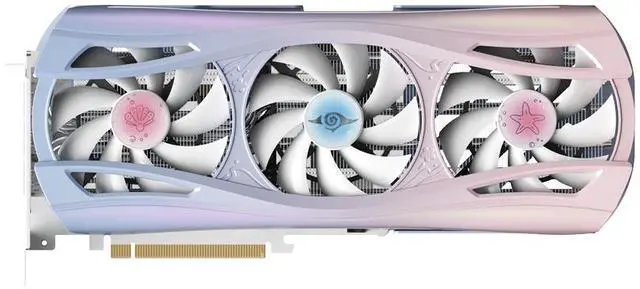
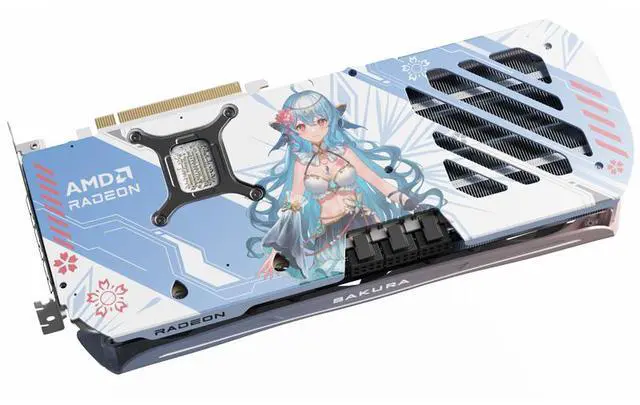
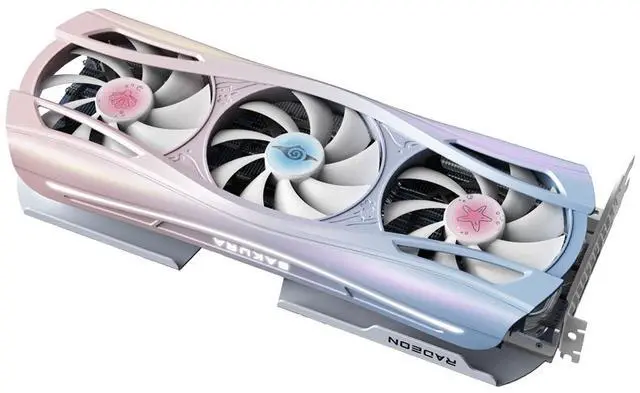
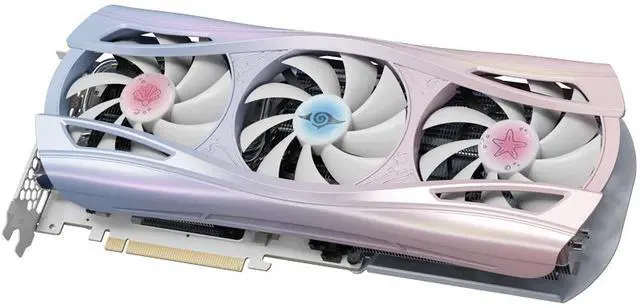
The Yeston Radeon RX 9070 XT is a 16GB GDDR6 PCIe 5.0 graphics card with 4096 stream processors, triple-fan cooling, and four-display output, making it a strong fit for gamers and creators who want high-resolution performance, multi-monitor flexibility, and a desktop build with adequate power delivery.
| Attribute | Value |
|---|---|
| Best For | High-resolution gaming and graphics workloads on PCIe 5.0 systems; 16GB GDDR6 and 4096 stream processors support multi-monitor setups and displays up to 7680 x 4320 (8K) |
| Model Identifiers | Yeston RX9070XT — AMD Radeon RX 9070 XT from the AMD Radeon RX 9000 Series |
| GPU And VRAM | Radeon RX 9070 XT with 4096 stream processors, 16GB GDDR6 on a 256-bit memory interface with 20 Gbps effective memory clock |
| Interface And Expansion | PCI Express 5.0 x16 interface |
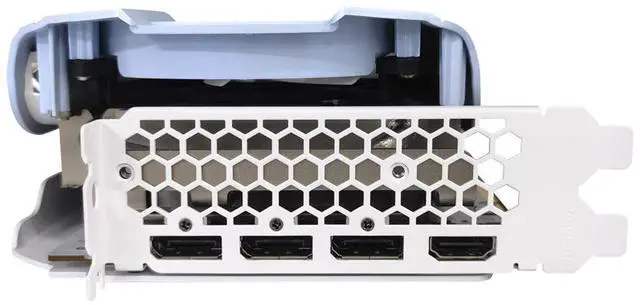
| Display Outputs | 1 x HDMI and 3 x DisplayPort outputs; supports up to 7680 x 4320 resolution |
| APIs And Compatibility | Supports DirectX 12 and OpenGL 4.6 |
| Cooling And Power | Triple-fan cooler with 3 x 8-pin power connectors |
Q: Should I buy the Radeon RX 9070 XT or the GeForce RTX 5070 Ti?
A: Choose the Radeon RX 9070 XT if you want high-end rasterized gaming performance with 16GB of VRAM and you are mainly focused on 1440p or mixed 1440p/4K gaming value. Across major review roundups, the RX 9070 XT typically lands close to the RTX 5070 Ti in conventional gaming, but the RTX 5070 Ti keeps an advantage in heavier ray tracing and path-traced workloads while also using less power in many tests. The RX 9070 XT is the more practical pick when native gaming performance and memory capacity matter more than path tracing or Nvidia-specific features.
Q: Is the Radeon RX 9070 XT worth buying over the Radeon RX 9070?
A: Buy the RX 9070 XT if you want the faster version of AMD's 16GB RDNA 4 card for higher-refresh 1440p gaming or more comfortable 4K gaming. The regular RX 9070 is the better fit if you want to stay in the same generation and feature set while reducing cost and power draw. Review coverage consistently positions the RX 9070 XT as the stronger performance-first option, while the RX 9070 is the better value-oriented choice when 1440p is the main target.
Q: Should I choose the Radeon RX 9070 XT or the GeForce RTX 5070?
A: Choose the RX 9070 XT if your priority is moving up to a clearly higher gaming performance tier and keeping 16GB of VRAM. Multiple reviews place the RX 9070 XT well ahead of the RTX 5070 in standard gaming performance, which makes it the better choice for buyers targeting demanding 1440p settings or stepping into 4K. The RTX 5070 remains the better fit if Nvidia-specific features, lower power use, or stronger path-tracing behavior are more important than raw frame rates.
Q: Is the Radeon RX 9070 XT a better upgrade than the Radeon RX 7900 XT?
A: The RX 9070 XT is usually the better upgrade path if you want newer-generation AMD features, stronger ray tracing progress, and a more current platform position while staying in the 16GB performance class. The RX 7900 XT can still make sense if found at a clearly lower street price, but review coverage generally treats the RX 9070 XT as the more balanced modern choice for current games. This makes the RX 9070 XT the safer pick for buyers who care about generation-to-generation improvements rather than just raw legacy positioning.
Q: Will this RX 9070 XT work with my current PC, or do I need upgrades?
A: It will fit and run only if your system meets three practical requirements: a full-size PCIe x16 slot, enough physical case clearance for a triple-fan card, and a power supply with three 8-pin PCIe connectors. PCIe 5.0 is listed for this model, but GPUs are generally backward-compatible with older PCIe x16 slots; the bigger decision issue is power and space, not DDR4 vs DDR5 system memory. This card is best suited for modern mid-tower or larger builds, not compact cases or low-wattage systems.
Q: Is a 750W power supply enough for this card?
A: Usually, no. For this Yeston model, the safer assumption is that you should use an 800W to 850W quality PSU, especially because the card uses three 8-pin power connectors. A 750W unit may work in some builds, but it leaves less margin for CPU power draw, transient spikes, and overall system stability. This card is a better fit for buyers who already have, or are willing to buy, a stronger PSU.
Q: Who is this graphics card a good fit for?
A: This card is best for buyers building a gaming or creator desktop who want a high-end AMD GPU with 16GB of VRAM, triple-fan cooling, and support for up to four displays. It is not a good fit for casual users, office-only PCs, small-form-factor builds, or buyers trying to avoid a PSU upgrade. In short, it suits enthusiasts who prioritize GPU performance and have a case and power supply ready for a large, power-hungry card.
Q: Is this a good choice for a compact or travel-friendly PC build?
A: Generally no. Retail Q&A for comparable RX 9070 XT models shows that buyers frequently run into fit issues because these cards are long, triple-fan designs. The Yeston card is also a triple-fan model with three 8-pin connectors, which makes it more suitable for standard desktop towers than compact or portable builds. If small size, easier cable routing, or lower power draw matters more than peak performance, a smaller GPU class is the better choice.
Q: What are the main trade-offs versus a smaller or lower-tier graphics card?
A: The trade-off is straightforward: this class of card gives you more performance headroom, 16GB of VRAM, and broader multi-monitor capability, but in return it usually needs more case space, more cooling, and a stronger power supply. Compared with smaller or cheaper alternatives, it is a better fit for demanding gaming and heavier GPU workloads, but a worse fit if your priorities are budget, quiet low-power operation, or easy drop-in compatibility.
Q: Who is the Yeston RX 9070 XT a good fit for?
A: It is best suited to buyers who specifically want an RX 9070 XT-class GPU with a Yeston design, triple-fan cooling, and full 16GB GDDR6 memory capacity. It makes the most sense for gaming-focused desktop builds that can support a large triple-fan card and provide three 8-pin PCIe power leads. It is less suitable for small-form-factor builds or buyers who want a widely reviewed, easy-to-compare board partner model.
Q: Is the Yeston RX 9070 XT worth buying if I mainly care about performance rather than brand familiarity?
A: Yes, if the price is competitive and you are comfortable buying a less commonly reviewed board partner. The core product proposition is straightforward: Radeon RX 9070 XT GPU, 16GB GDDR6 on a 256-bit bus, and triple-fan cooling. The main trade-off is not the core spec set, but the lower amount of model-specific review coverage and long-term ownership feedback compared with larger AMD board partners.
Q: What are the main trade-offs of choosing this Yeston RX 9070 XT instead of a more established AIB model?
A: The likely advantages are distinctive design and a full-spec RX 9070 XT configuration with triple-fan cooling. The trade-offs are lower review volume, fewer direct comparisons for this exact card, and potentially less buyer confidence around support, acoustics, or thermals before purchase. If you prefer predictable buying decisions backed by many independent tests, a more common board partner may be easier to validate.
Q: Do I need to check power supply and case compatibility before buying this card?
A: Yes. This card uses a triple-fan cooler and requires 3 x 8-pin PCIe power connectors, so it is best matched with a power supply that already supports that cabling without adapters. You should also confirm your case has enough physical clearance for a large multi-fan GPU. This is an important buying check because compatibility is a more immediate constraint than the GPU chipset itself.
Q: Is this a safe choice if I want lots of owner feedback on noise, temperatures, and reliability before I buy?
A: Not the safest choice for that specific goal. Community discussion shows broad interest in RX 9070 XT thermals, noise, and coil whine, but there is much less model-specific discussion for this exact Yeston card than for mainstream Sapphire, XFX, ASUS, or PowerColor alternatives. Buyers who want strong pre-purchase validation may prefer a model with deeper owner and reviewer coverage.