


Shipped by Newegg




We want to ensure your holiday shopping this year is hassle-free. That’s why we’re automatically extending our return policies on almost every product! For purchases placed between November 1st, 2026 and December 31, 2026 you will have until January 31, 2027 to return your product.
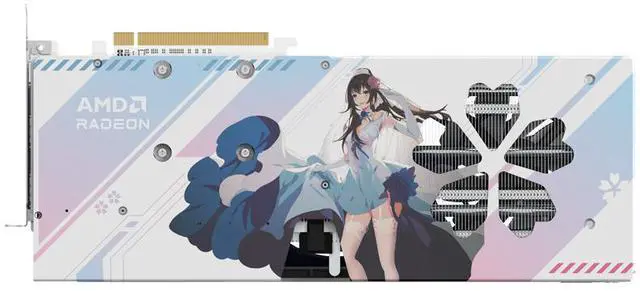
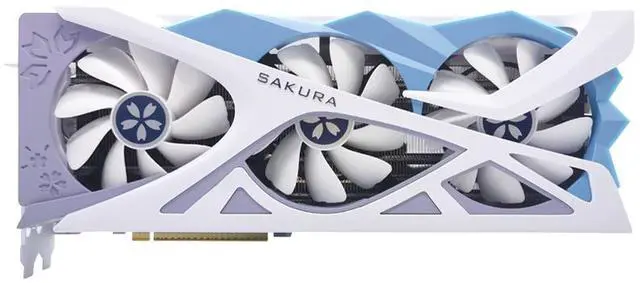
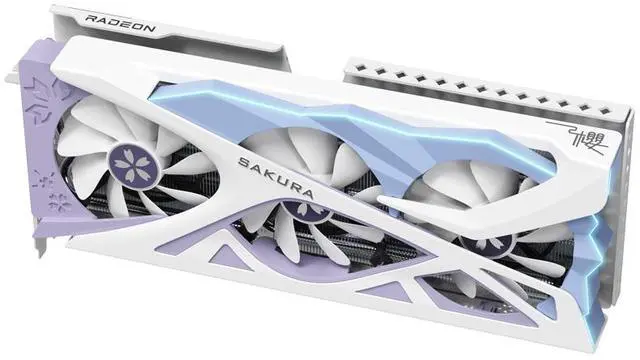
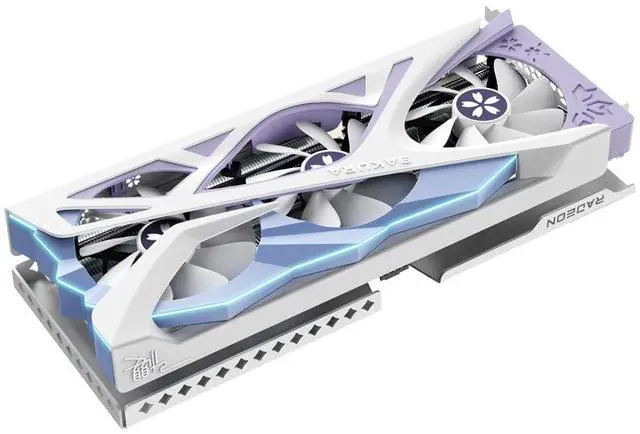
The Yeston Radeon RX 9060 XT is a 16GB GDDR6 PCIe 5.0 graphics card built for gamers and creators who want modern AMD Radeon RX 9000-series features, triple-fan cooling, and high-resolution display support, especially for smooth 1440p-focused builds and roomy multitasking workloads.
| Attribute | Value |
|---|---|
| Best For | Desktop systems and gamers seeking an AMD Radeon RX 9060 XT with 16GB GDDR6, PCI Express 5.0 connectivity and multi‑display support up to 7680×4320 (8K) |
| Model Identifiers | Yeston RX9060XT — Radeon RX 9060 XT from the AMD Radeon RX 9000 Series |
| GPU And Compute | Radeon RX 9060 XT GPU with 2048 stream processors |
| Memory Configuration | 16GB GDDR6 on a 128‑bit memory bus with 20000 MHz effective memory clock (20 Gbps) |
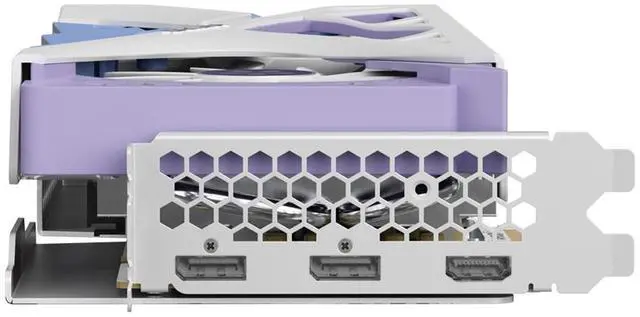
| Display Outputs And Resolution | 1× HDMI 2.1b and 2× DisplayPort 2.1a outputs; supports up to 7680×4320 resolution |
| Interface And Power | PCI Express 5.0 interface; single 8‑pin power connector required |
| Cooling | Triple‑fan cooler for active air cooling of the card |
| APIs And Compatibility | Supports DirectX 12 and OpenGL 4.6 |
Q: Should I buy the Radeon RX 9060 XT 16GB or the GeForce RTX 5060 Ti 16GB?
A: Choose the RX 9060 XT 16GB if your priority is strong mainstream gaming performance with 16GB of VRAM at a typically lower class price point. AMD positions the RX 9060 XT 16GB for Ultra/High settings and 1440p gaming, while reviews indicate it stays close to the RTX 5060 Ti 16GB in conventional gaming but gives up some advantage in NVIDIA-specific features such as DLSS 4 and broader AI-assisted rendering support. The RTX 5060 Ti 16GB is the better fit if you specifically value DLSS 4 features and the NVIDIA software stack. The RX 9060 XT 16GB is the better fit when you want 16GB memory capacity and competitive raster performance without moving up to a higher-priced NVIDIA option.
Q: Is the RX 9060 XT 16GB a better buy than the RX 7600 XT 16GB?
A: Yes, the RX 9060 XT 16GB is the more practical upgrade for buyers choosing between these two 16GB Radeon cards. AMD's own comparison material positions the RX 9060 XT 16GB well ahead of the RX 7600 XT 16GB in newer 1440p gaming and ray tracing tests, and the newer card also adds RDNA 4-era features such as FSR 4 support. The RX 7600 XT 16GB still makes sense for lower-cost 1080p builds, but the RX 9060 XT 16GB is the better choice if you want a clearer step up in game performance and a newer feature set.
Q: Should I choose the RX 9060 XT 16GB or the RX 7800 XT for 1440p gaming?
A: Choose the RX 7800 XT if your main goal is higher raw 1440p performance. Choose the RX 9060 XT 16GB if you want a newer Radeon generation, lower product tier pricing, and current AMD feature support while still keeping 16GB of VRAM. Community discussions around this comparison usually treat the RX 7800 XT as the faster card overall, while the RX 9060 XT 16GB is the more feature-current and potentially easier-to-justify option when price, power, or availability favor the newer card.
Q: Is the RX 9060 XT 16GB worth it over the RX 9060 XT 8GB?
A: The 16GB version is the better choice for buyers who plan to keep the card for longer, use higher texture settings, or play newer games at 1440p. AMD positions the 16GB model for Ultra/High settings, while the 8GB model is positioned more conservatively for High/Medium settings. Review coverage of 8GB versus 16GB cards in this class also shows that extra VRAM can reduce performance drop-offs in heavier settings and newer titles. The 8GB version remains a valid value option for tighter 1080p-focused builds, but the 16GB version is the safer pick for broader game compatibility over time.
Q: Should I buy the RX 9060 XT 16GB or Intel Arc B580?
A: Choose the RX 9060 XT 16GB if you want more VRAM, a more established Radeon gaming position, and a cleaner step into 1440p-focused settings. Choose the Arc B580 if your budget is lower and you are comfortable with Intel Arc as a value-oriented alternative. Intel officially markets the Arc B580 as a 1440p card with 12GB memory, but the RX 9060 XT 16GB carries more memory headroom and is positioned by AMD as a stronger mainstream gaming option with Ultra/High settings support. This comparison usually comes down to budget first, then memory capacity and software preference.
Q: Will this graphics card work in most desktop PCs, or do I need to check compatibility first?
A: You should check compatibility first. The Yeston RX 9060 XT uses a full-size triple-fan design, installs in a PCI Express x16 slot, and requires one 8-pin PCIe power connector. In practice, the main decision points are case clearance, power supply cabling, and having a standard desktop motherboard with a usable PCIe x16 slot. It is a better fit for standard mid-tower or larger desktops than for compact prebuilts or small-form-factor cases.
Q: Is this a good fit for 1440p gaming, and who is it best suited for?
A: Yes, this class of card is mainly suited to mainstream-to-upper-midrange PC gamers, especially buyers targeting 1080p ultra settings or 1440p gaming with a 16GB VRAM buffer. The 16GB memory makes it more appealing for newer games and heavier texture settings than 8GB alternatives. It is less suited to buyers who want a small, quiet, low-profile GPU for compact builds.
Q: Is the 16GB memory actually a reason to choose this over an 8GB alternative?
A: For many buyers, yes. If you play newer AAA games, use high-resolution textures, keep cards for several years, or sometimes connect to 1440p or higher-resolution displays, 16GB is a practical advantage over 8GB. An 8GB card can still be fine for lighter games and stricter budgets, but 16GB gives more headroom and is the safer choice for longer-term gaming use.
Q: What are the main trade-offs versus a smaller or cheaper graphics card?
A: The trade-off is straightforward: this card gives you more VRAM and a larger triple-fan cooler, but it is less convenient for compact cases and may be more than some buyers need for basic 1080p gaming. Compared with a smaller or cheaper model, it is usually the better choice for longer-term gaming value, but not the best choice if your priority is minimum size, lowest power demand, or the lowest upfront cost.
Q: Are the display outputs enough for a modern gaming or work setup?
A: For most users, yes. This card has one HDMI 2.1b port and two DisplayPort 2.1a ports, which is enough for common setups such as one TV or monitor over HDMI plus one or two high-refresh DisplayPort monitors. The main limitation is that it has three total display outputs, so it is less flexible than cards with four ports if you plan to run many displays at once.
Q: Is the Yeston RX 9060 XT 16GB a sensible buy for 1080p or entry-level 1440p gaming?
A: Yes, it looks most suitable for buyers targeting strong 1080p gaming and workable entry-level 1440p use. Reddit discussion around RX 9060 XT 16GB models repeatedly treats the card as a value-focused option for 1080p, with some users also considering it for 1440p if expectations are moderate. Based on the product data, the 16GB VRAM helps with newer games and texture-heavy settings, but the 128-bit memory bus suggests it is not the best fit for buyers expecting high-end 1440p or 4K performance.
Q: Who is the Yeston RX 9060 XT 16GB best suited for?
A: It is best suited for mainstream PC gamers who want a modern AMD card with 16GB of VRAM, standard display outputs, and a relatively simple power requirement. The single 8-pin connector and triple-fan cooler make it easier to fit into a typical gaming build than more power-hungry upgrades. It is a better fit for buyers prioritizing value and VRAM capacity than for buyers chasing top-tier ray tracing or premium creator features.
Q: What are the main trade-offs of choosing this card over a higher-tier GPU like the RX 9070 XT?
A: The main trade-off is performance headroom. Community discussion around the RX 9060 XT often compares it with faster cards and frames it as the better value choice when budget matters, but not the better choice for buyers who want more long-term 1440p performance or a larger margin for demanding settings. In practical terms, this Yeston card offers 16GB VRAM and straightforward power delivery, but its 2048 stream processors and 128-bit memory interface indicate a more midrange positioning than higher-tier alternatives.
Q: Is the Yeston version worth considering if similar RX 9060 XT cards have the same core specs?
A: Yes, if the Yeston model is priced competitively and you are comfortable with the brand. Reddit discussions about RX 9060 XT variants repeatedly ask whether different board versions matter when the listed GPU specifications are similar. For this model, the decision is likely to come down to cooler design, physical appearance, local support, and price rather than a major difference in core performance, since the underlying GPU and memory configuration are the same category of product.