


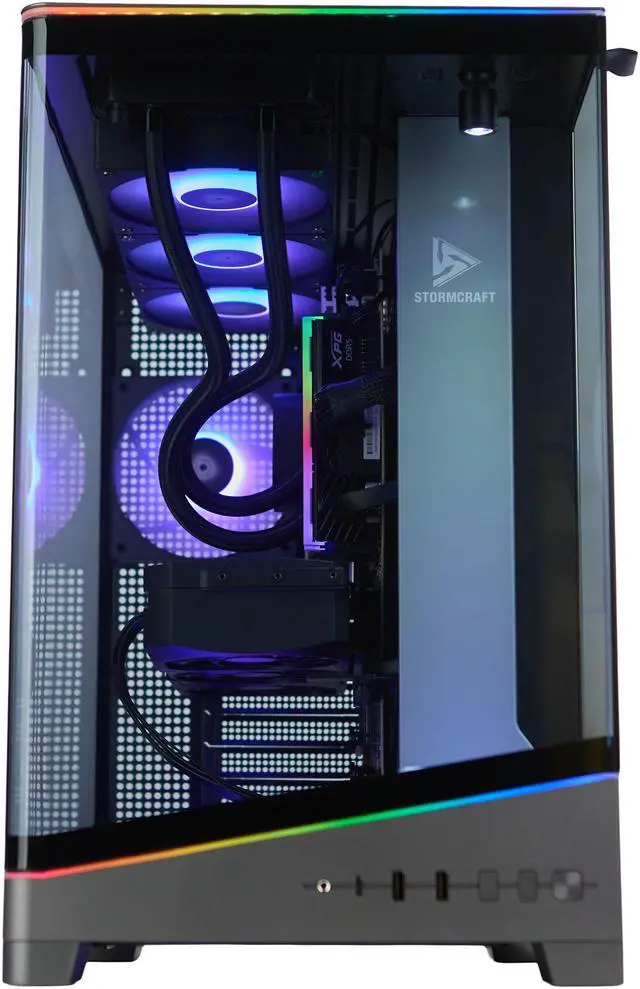
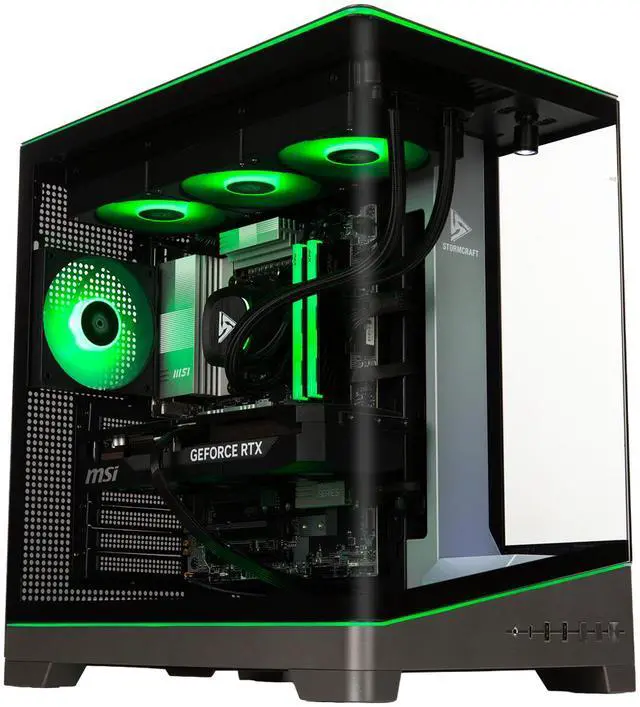
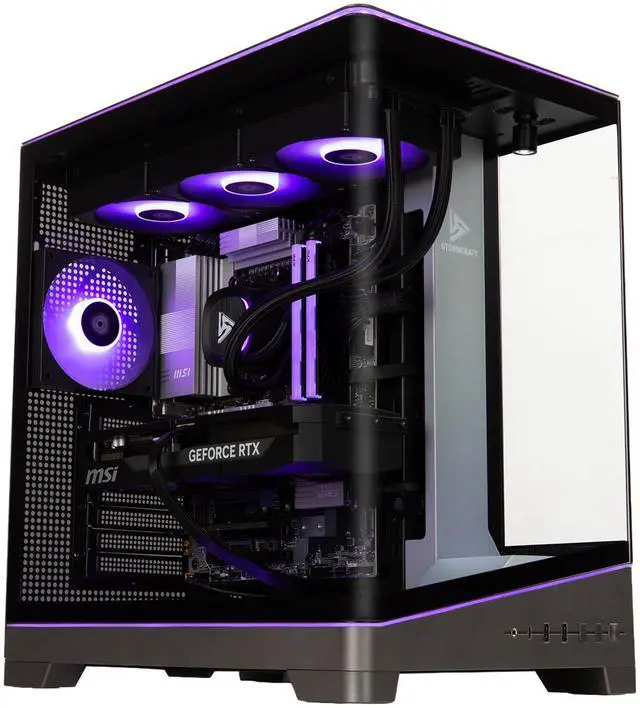
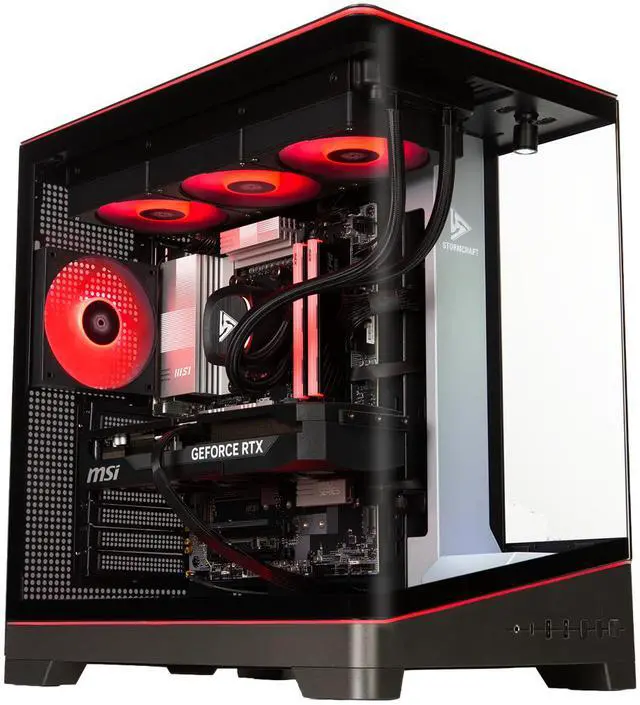




We want to ensure your holiday shopping this year is hassle-free. That’s why we’re automatically extending our return policies on almost every product! For purchases placed between November 1st, 2026 and December 31, 2026 you will have until January 31, 2027 to return your product.
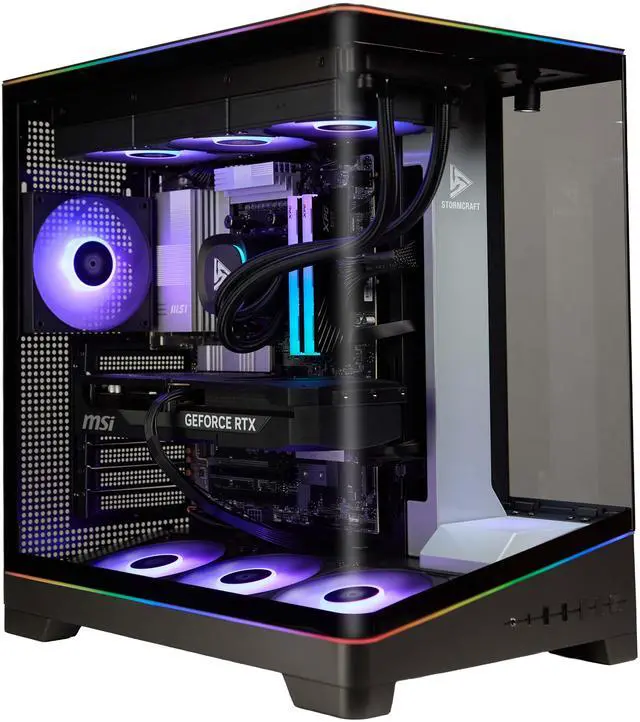
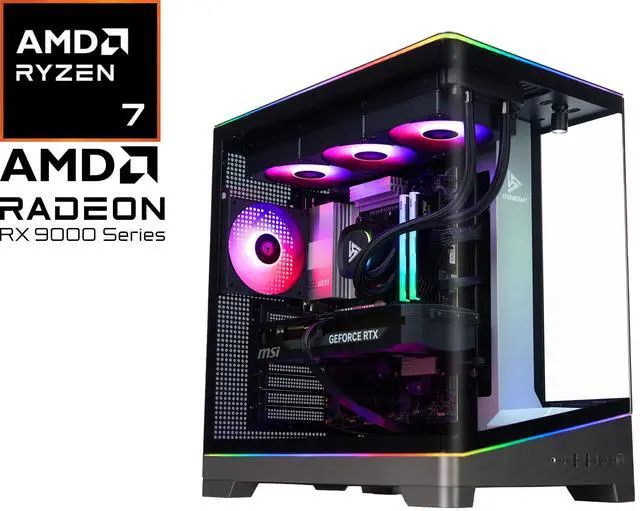
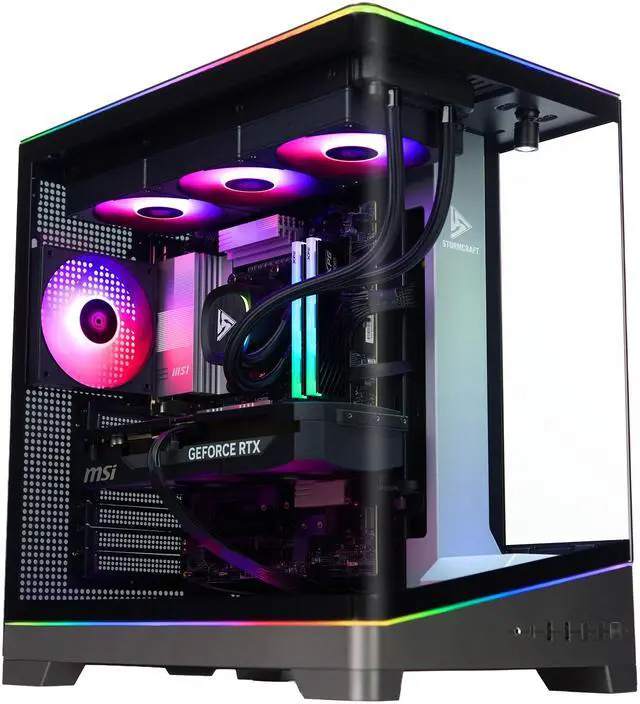
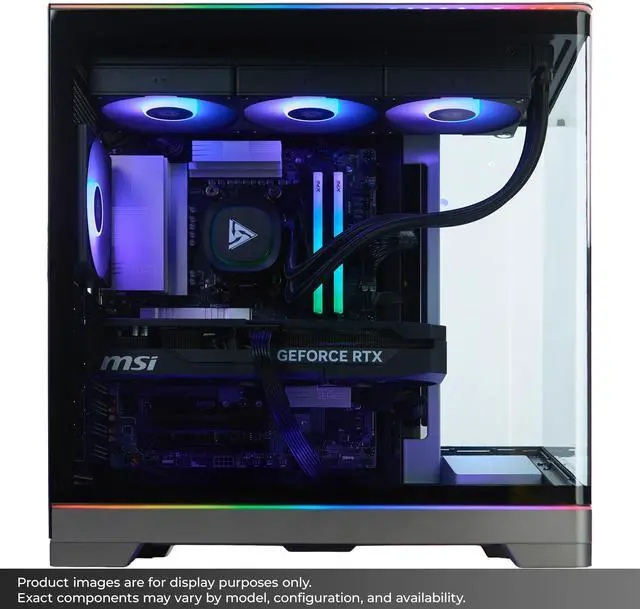
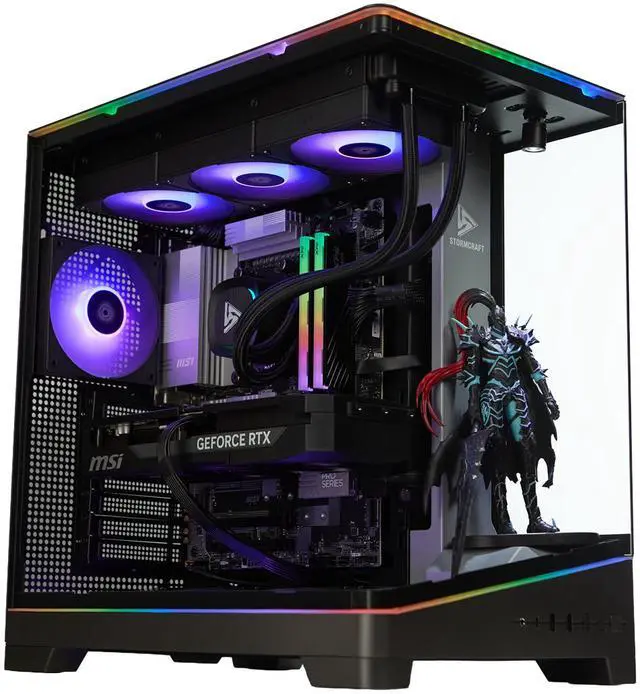
The STORMCRAFT VALKYRIE VA780XDCB is a prebuilt gaming desktop with a Ryzen 7 7800X3D, Radeon RX 9070 XT, 32GB DDR5, and 1TB Gen4 NVMe storage, making it a strong fit for gamers who want high-end 1440p play, VR readiness, and a ready-to-use Windows 11 setup.
| Attribute | Value |
|---|---|
| Best For | Gaming and entertainment desktop with an AMD Ryzen 7 7800X3D CPU and AMD Radeon RX 9070 XT GPU; VR-ready and includes keyboard and mouse |
| Processor And Core Count | AMD Ryzen 7 7800X3D (AM5) — 8-core, 64-bit processor |
| GPU And Interface | AMD Radeon RX 9070 XT graphics with PCI Express x16 interface |
| Memory Configuration | 32GB DDR5 (2 × 16GB) at DDR5-6000; maximum supported memory listed as 32GB |
| Storage And Expansion | 1TB NVMe SSD (Gen 4.0) for system and games; no HDD or optical drive reported |
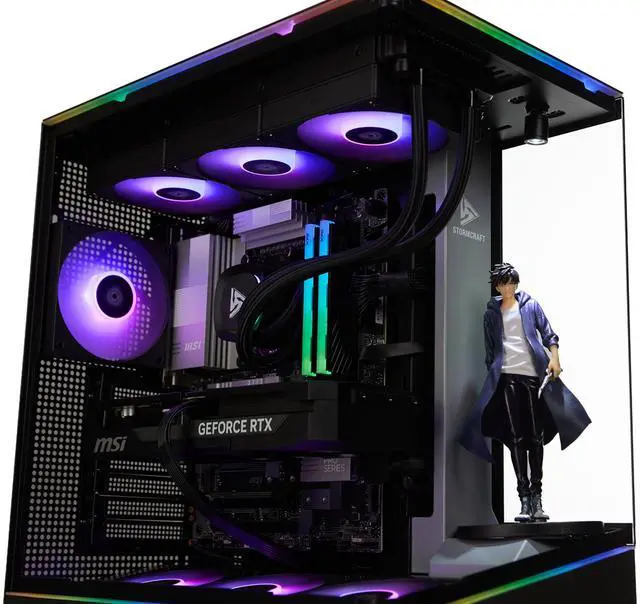
| Cooling And Thermal | Liquid cooling with a top-mounted 360mm radiator installed; top position supports up to 360mm radiators |
| Power And PSU | 850W power supply |
| Motherboard And Chipset | B850 chipset motherboard |
| Peripherals Included | Included keyboard (standard) and included mouse |
| Operating System And Software | Windows 11 |
| Virtual Reality Readiness | Virtual reality ready |
| Monitor | Monitor not included |
| Model Identifiers | Stormcraft VALKYRIE VA780XDCB-97BN1 (Part No. VA780XDCB-97BN1) |
Q: Should I choose this RX 9070 XT gaming PC or a similar prebuilt with an RTX 5070 Ti?
A: Choose this STORMCRAFT system if your priority is strong rasterized gaming performance with a Ryzen 7 7800X3D-class gaming CPU and 16GB of Radeon RX 9070 XT graphics memory. A similar RTX 5070 Ti prebuilt is the better fit if you care more about ray tracing efficiency, Nvidia-specific creator features, or lower GPU power draw. For typical 1440p and 4K gaming, these systems are usually in the same performance tier, so the decision often comes down to game mix, feature preference, and total system price.
Q: Is this RX 9070 XT prebuilt worth it over an RX 9070 version?
A: This configuration makes more sense if you want higher GPU headroom for 1440p ultra settings, heavier ray tracing, or longer usefulness before your next upgrade. An RX 9070 version is the more balanced choice for buyers focused on lowering total cost while staying in the same general performance class. The trade-off is simple: the RX 9070 XT usually adds measurable frame-rate margin, while the non-XT option is often the better value if the price gap is large.
Q: Should I buy this Ryzen 7 7800X3D prebuilt or wait for a 9800X3D version?
A: Buy this 7800X3D system if you want a gaming-first desktop now and the price is meaningfully lower than a 9800X3D configuration. The 7800X3D remains a high-end gaming CPU and pairs appropriately with an RX 9070 XT for 1440p and 4K play. A 9800X3D version is the better choice if you want the fastest CPU-side gaming performance available, especially for high-refresh competitive gaming or if you plan to keep the system through a future GPU upgrade.
Q: Is this a good upgrade from an older RX 7800 XT gaming desktop?
A: Yes, this is a practical upgrade if you are moving from an older RX 7800 XT-class system and want a newer GPU tier plus a Ryzen 7 7800X3D gaming platform. The biggest gains will usually come from higher frame rates at 1440p, more comfortable 4K settings, and improved support for newer graphics features. It is most worthwhile if your current desktop also has a weaker CPU, less memory, or a smaller SSD, because this STORMCRAFT build also upgrades the full platform to 32GB DDR5 and a Gen4 NVMe drive.
Q: Should I get this gaming desktop or a gaming laptop for travel and space-saving use?
A: Choose this desktop if gaming performance, cooling capacity, upgrade flexibility, and long-session noise control matter more than portability. Its Ryzen 7 7800X3D, 360mm liquid cooling, 850W power supply, and desktop-class RX 9070 XT are aimed at sustained gaming performance. A gaming laptop is the better choice if you need one system for travel, dorm use, or limited desk space. The trade-off is that laptops are easier to move, while this desktop is the stronger fit for stationary gaming and future component changes.
Q: Is this PC a good fit for high-refresh 1440p gaming?
A: Yes. Based on its Ryzen 7 7800X3D, Radeon RX 9070 XT 16GB, and 32GB DDR5 memory, this system is well suited to high-refresh 1440p gaming and is also strong for many 4K gaming workloads. It makes the most sense for buyers who want a gaming-first desktop rather than a budget or office-first PC.
Q: Is 1TB of storage enough, or should I expect to upgrade later?
A: 1TB is enough for Windows, everyday apps, and a moderate game library, but many gaming desktop shoppers eventually want more storage. If you install several large modern games, 1TB can fill up quickly, so this model is a better fit if you are comfortable adding another SSD later or managing storage actively.
Q: Is this desktop good for streaming, multitasking, and general productivity too?
A: Yes. The 8-core Ryzen 7 7800X3D, 32GB RAM, and NVMe SSD make it easily capable of gaming, streaming, heavy multitasking, and typical productivity work. The main trade-off is value: it is more performance than most office-only users need, so it is best for people who want a gaming PC that also handles work and content tasks well.
Q: Does the liquid cooling make this a better buy than an air-cooled gaming desktop?
A: Usually yes for this class of prebuilt, but mostly for thermals and acoustic headroom rather than dramatic performance gains. A 360mm AIO is a strong cooling setup for a high-end gaming tower, but it does not automatically guarantee a quieter system because fan tuning and component choices still matter. Buyers who care about noise should treat cooling size as a positive, not a guarantee.
Q: Who is this PC actually suitable for, and who should skip it?
A: This PC is suitable for buyers who want a high-end gaming desktop with current-generation parts, strong multitasking performance, Wi-Fi/Bluetooth readiness, and included peripherals for a simple setup. It is less suitable for shoppers who mainly need a basic home or office PC, want very large storage out of the box, or prefer guaranteed fixed component brands, since the listing says component brands may vary.
Q: Is this a good buy if I want a high-end prebuilt for gaming without building my own PC?
A: Yes, if your priority is strong gaming performance in a prebuilt. The Ryzen 7 7800X3D and Radeon RX 9070 XT are a performance-focused pairing, and 32GB DDR5 plus a 360mm AIO are appropriate for a premium gaming system. The main trade-off is that prebuilts can use mixed component brands, so buyers who care about the exact SSD, RAM, motherboard, or GPU cooler model may prefer building their own or confirming the parts list before purchase.
Q: Who is this PC most suitable for?
A: It is best suited to buyers who mainly want a gaming desktop, especially for high-refresh 1440p or entry-level 4K gaming, and who also want a ready-to-use Windows 11 system. It is less specifically optimized for creator workloads because the listing emphasizes gaming-first parts and does not specify higher-capacity storage or workstation-oriented component selection.
Q: Is the 1TB SSD enough, or should I expect to add more storage?
A: 1TB is workable for a gaming PC, but many buyers will eventually want more. It is enough for Windows, everyday apps, and a reasonable game library, but modern AAA games can fill a 1TB drive quickly. This system makes sense if you are comfortable managing installs or planning a later SSD upgrade.
Q: What are the main trade-offs of choosing this prebuilt instead of a custom build?
A: The main advantages are convenience, assembly, included Windows, and bundled keyboard and mouse. The trade-offs are lower parts transparency and less control over component brands, since the listing says component brands may vary. That matters most if you care about the exact motherboard features, SSD model, memory kit, or GPU cooler design.