






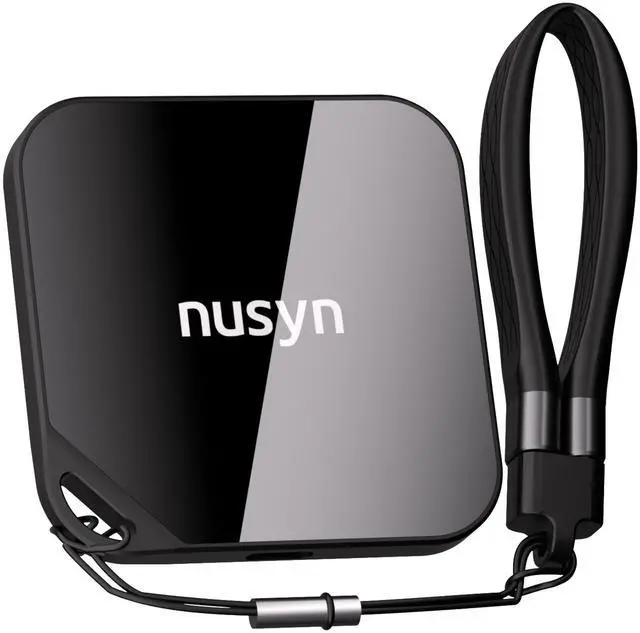
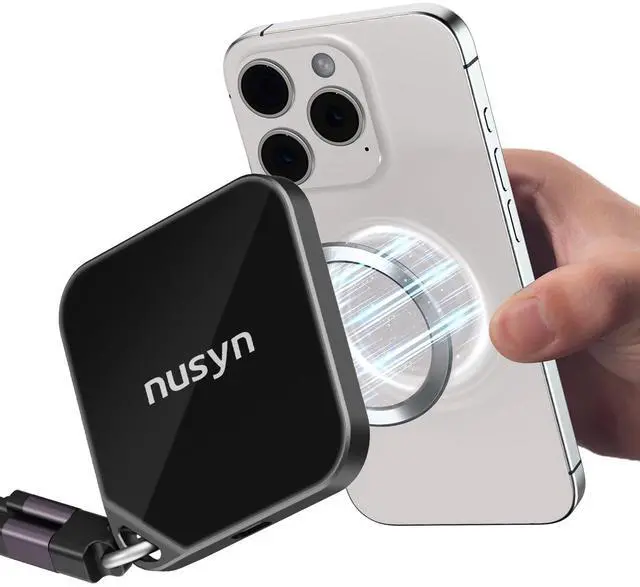
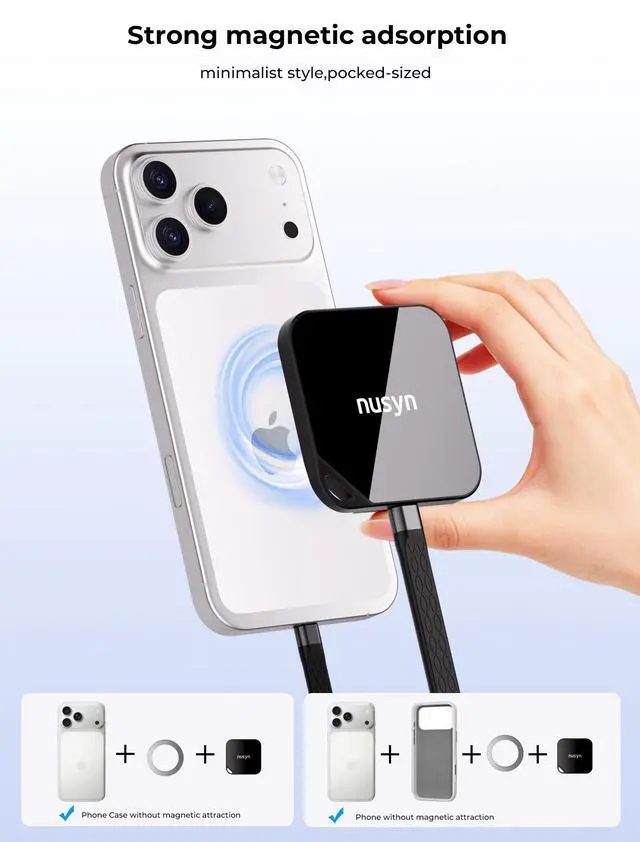
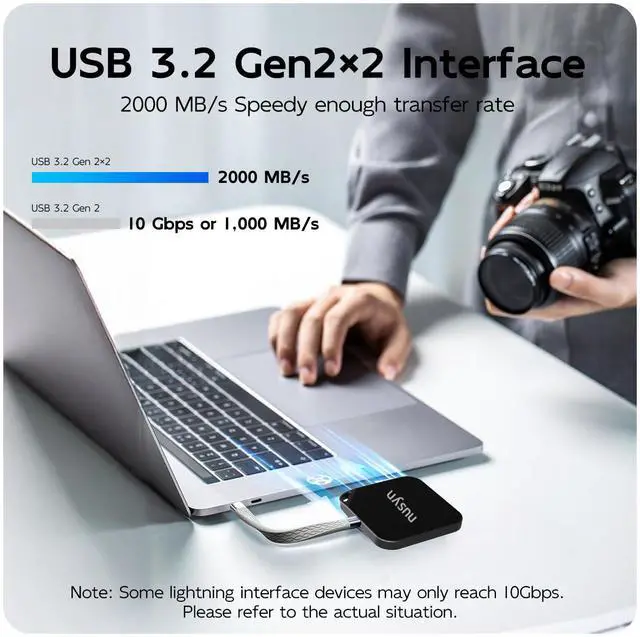


The Nusyn NSP33 is a 2TB magnetic portable SSD with USB-C and USB 3.2 Gen 2x2 performance up to 2000MB/s read, built for creators, iPhone 15/16/17 Pro users, and anyone who wants fast external storage that attaches neatly to compatible phones for direct recording and mobile workflows.
| Attribute | Value |
|---|---|
| Best For | Mobile content creation, video recording, and general file storage; suited to use with iPhone 15 and above, tablets, desktop/laptop computers, smartphones, and gaming consoles |
| Capacity | 2 TB solid-state storage |
| Interface And Speeds | USB Type-C using USB 3.2 Gen 2x2 interface; sequential speeds up to 2000 MB/s read and up to 1800 MB/s write (host device must support USB 3.2 Gen 2x2 to reach peak rates) |
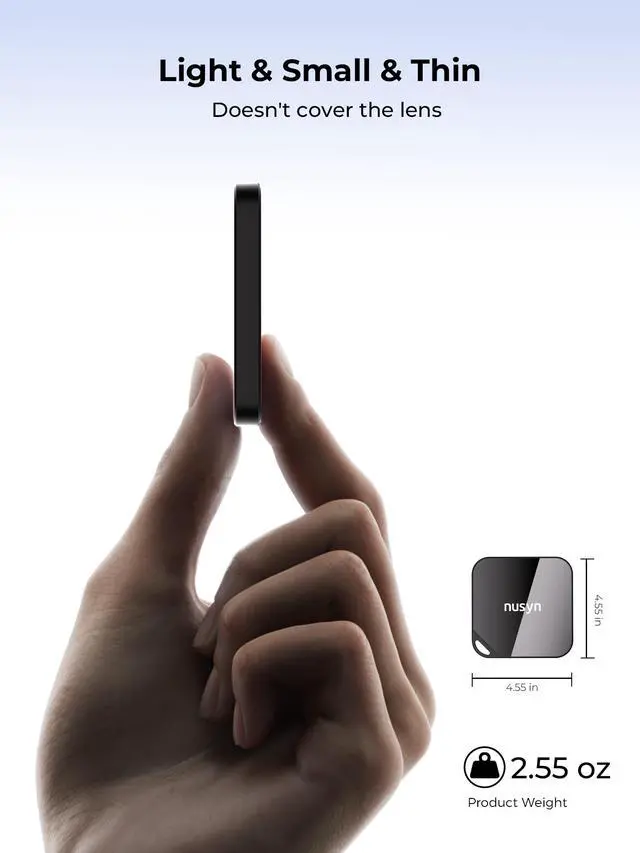
| Physical Dimensions & Weight | Compact black portable enclosure, 63 x 63 x 6.85 mm, 70 g; compact form factor and portable |
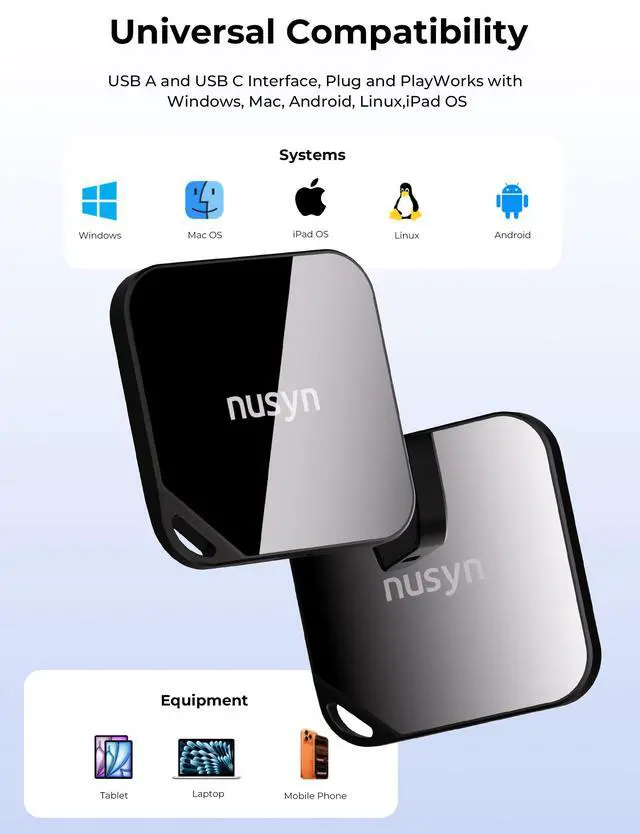
| Compatibility & System Requirements | Compatible with iPhone 15 and above, desktop computers, tablets, smartphones, laptops, and gaming consoles |
| Package Contents | Includes the portable SSD, a USB-C to C data cable, and a user manual (single-unit package) |
| Model Identifiers | NUSYN NSP33, Part Number NSP33BLM2T (manufacturer: NUSYN) |
| Additional Features & Installation | Portable external drive; installs as an external hard drive; no batteries required |
Q: Should I buy the Nusyn NSP33 2TB or a 10Gbps portable SSD for iPhone ProRes recording?
A: Choose the Nusyn NSP33 2TB if you want one drive for both iPhone recording and faster transfers on PCs or other hosts that support USB 3.2 Gen 2x2. For iPhone ProRes capture, a 10Gbps SSD is already sufficient because Apple specifies a USB 3 connection at 10Gbps or higher for direct external ProRes recording. A 10Gbps model is the more practical choice if your main use is iPhone-only recording or Mac use, while the Nusyn model makes more sense if you also expect to use a 20Gbps-capable Windows PC and want higher peak transfer speed there. ([support.apple.com](https://support.apple.com/guide/iphone/record-prores-video-iphde02c478d/ios?utm_source=openai))
Q: Is the Nusyn NSP33 2TB worth it over an older 10Gbps portable SSD I already own?
A: Upgrade to the Nusyn NSP33 mainly if you need its magnetic phone-friendly form factor or if you have a host that supports 20Gbps USB 3.2 Gen 2x2. Reviews of other 20Gbps portable SSDs consistently show that Gen 2x2 can deliver much higher peak throughput than older 10Gbps models when the port supports it. If your current drive already handles your iPhone recording and your main computer is a Mac, the practical benefit may be limited because Macs generally do not support USB 3.2 Gen 2x2 and commonly fall back to 10Gbps-class operation. ([pcworld.com](https://www.pcworld.com/article/2079244/samsung-t9-20gbps-usb-ssd-review.html?utm_source=openai))
Q: Should I choose the Nusyn NSP33 2TB for portability or a larger performance-first external SSD?
A: Choose the Nusyn NSP33 when compact size, phone attachment, and direct mobile capture matter more than the highest possible desktop transfer speeds. A larger performance-first external SSD becomes the better choice when your workflow is mostly laptop or desktop based and you want faster options such as USB4 or Thunderbolt-class storage, which can exceed the 20Gbps ceiling of USB 3.2 Gen 2x2. In short: Nusyn is the better match for mobile-first shooting and carry-everywhere use, while larger desktop-oriented SSDs fit heavier edit and ingest workflows. ([tomsguide.com](https://www.tomsguide.com/best-picks/best-external-hard-drives?utm_source=openai))
Q: Is this a good SSD for iPhone ProRes recording on the go?
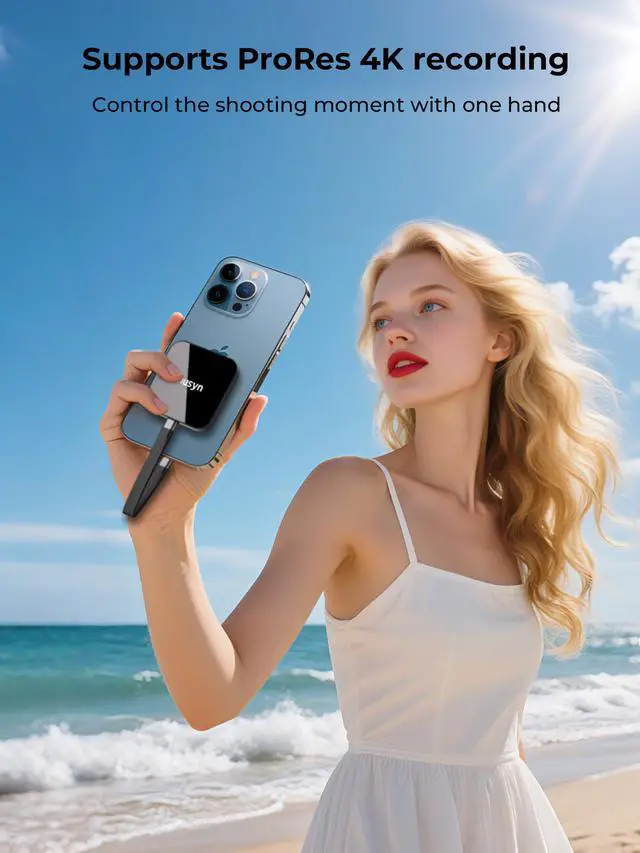
A: Yes, if your main use case is shooting directly from a USB-C iPhone and keeping the drive attached to the phone. The magnetic form factor is the main advantage over standard portable SSDs because it is easier to keep mounted while recording. Based on the product data, the NSP33 supports direct 4K 60fps ProRes recording on iPhone 15 Pro and newer Pro models. The main trade-off is that its advertised 2000MB/s speed depends on USB 3.2 Gen 2x2 host support, so iPhone use is more about recording convenience than reaching the full headline transfer speed.
Q: Will it work at full 2000MB/s on Mac, iPhone, and other USB-C devices?
A: Not always. This SSD is rated for up to 2000MB/s over USB 3.2 Gen 2x2, but actual speed depends on whether the host device supports that 20Gbps standard. The product listing itself warns that performance may vary on Mac and other systems without Gen 2x2 support. For buyers, that means the drive makes the most sense if you want the magnetic iPhone-friendly design first; the full speed benefit is only realized on compatible PCs or other supported hosts.
Q: Who is this SSD best suited for?
A: It is best suited for mobile creators, especially iPhone Pro users who want external storage for video capture without carrying a separate mount. It also fits users who move files between phone, tablet, and computer because it is USB-C and preformatted in exFAT. It is less ideal for buyers who prioritize rugged protection, waterproofing, or broad compatibility with older Lightning iPhones, since comparable retail Q&A pages repeatedly focus on USB-C-only support and device compatibility limits.
Q: Is it better than a regular portable SSD like Samsung T9, Crucial X10 Pro, or SanDisk Extreme Pro?
A: It is better only if magnetic phone mounting and direct iPhone recording matter more to you than ruggedness, ecosystem features, or a longer track record. Compared with mainstream portable SSDs, the NSP33 is easier to use as a phone-mounted recording drive. The trade-off is that standard SSDs such as Samsung T9, Crucial X10 Pro, and SanDisk Extreme Pro are more established general-purpose options and may be the safer pick for laptop-first backup, travel, or all-around use.
Q: Is this a good choice for everyday office files and travel backup?
A: It can work well for that, but it is a niche-first product. The compact size, exFAT formatting, and USB-C compatibility make it convenient for moving files between Windows, macOS, Android, and tablets. However, if your main use is routine backup, documents, and travel storage rather than phone-mounted recording, a conventional portable SSD may be a simpler choice because you may not benefit much from the magnetic design.
Q: Is the Nusyn NSP33 a good fit for iPhone ProRes recording?
A: Yes, if your main use case is recording directly from an iPhone 15/16/17 Pro or Pro Max to external storage. The product is built around that use case: magnetic attachment, USB-C, exFAT formatting, and claimed support for 4K 60fps ProRes recording. It is less compelling if you do not shoot large video files, because the main benefit is convenient on-phone storage during filming rather than general-purpose desktop storage.
Q: Who should buy the Nusyn NSP33 instead of a regular portable SSD?
A: The NSP33 makes the most sense for mobile creators who want a compact drive that stays attached to the phone while filming or transferring files. Its magnetic form factor is more useful than a standard portable SSD when cable movement, handheld shooting, or gimbal use matters. If you mainly need extra storage for a desk setup or laptop, a regular non-magnetic SSD is usually the more practical choice.
Q: What are the main trade-offs of the Nusyn NSP33?
A: The trade-offs are convenience versus maximum compatibility and flexibility. The magnetic design is easier to use on a phone, but it is more specialized than a standard SSD. Its top advertised speed depends on USB 3.2 Gen 2x2 support, so some Macs and other devices may run slower. It is also a single-port drive, so users who need simultaneous power, audio accessories, or hub-style expansion may prefer a system built around a hub instead.
Q: Is the Nusyn NSP33 worth buying for travel and quick file offloads?
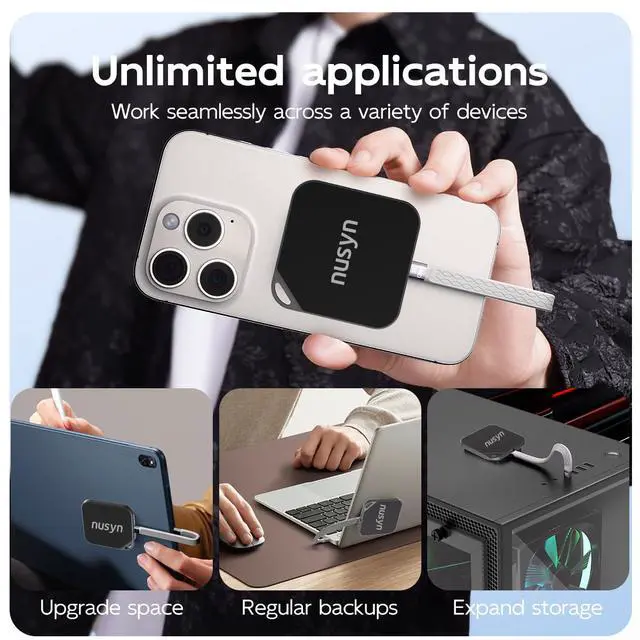
A: It can be a good travel option if you want one small drive for phone capture and later transfer to a tablet or computer. The 2TB capacity, slim size, and exFAT formatting are useful for cross-device offloads. It is a stronger buy for people moving large media files than for light everyday backups, because its value comes from portability and direct USB-C workflow rather than lowest cost per terabyte.