











Motherboards
Graphics Cards
Power Supplies





We want to ensure your holiday shopping this year is hassle-free. That’s why we’re automatically extending our return policies on almost every product! For purchases placed between November 1st, 2026 and December 31, 2026 you will have until January 31, 2027 to return your product.
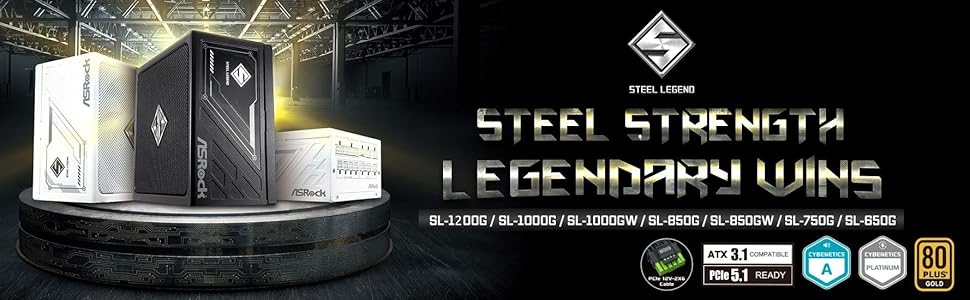
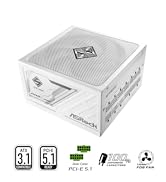
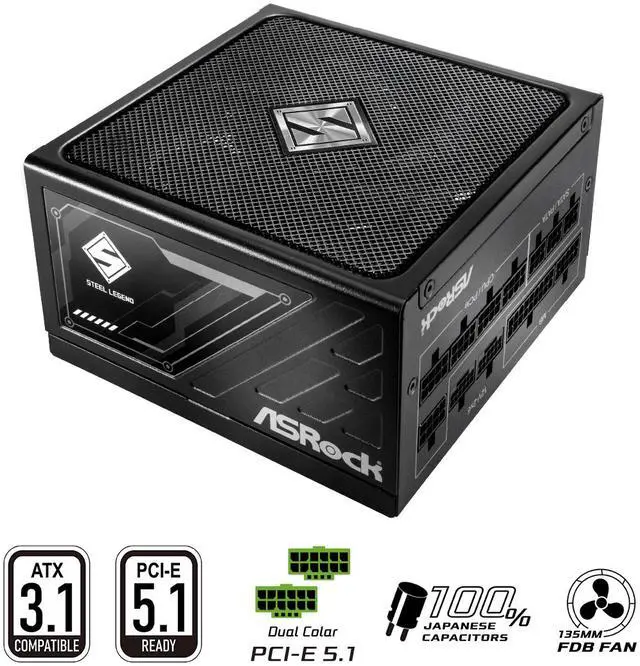
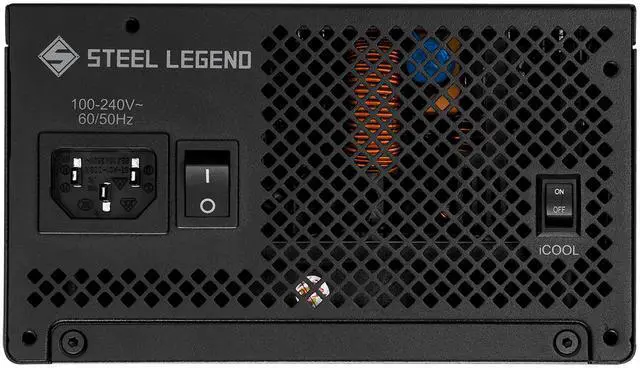
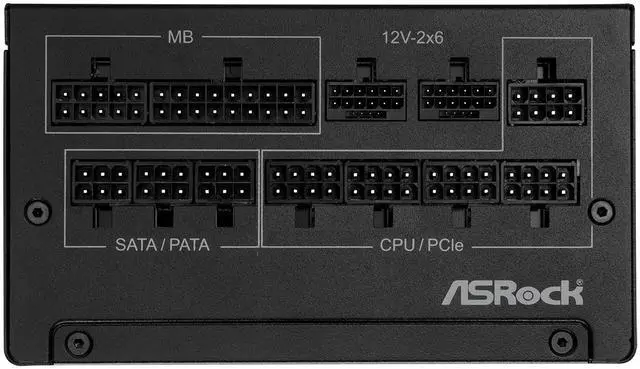
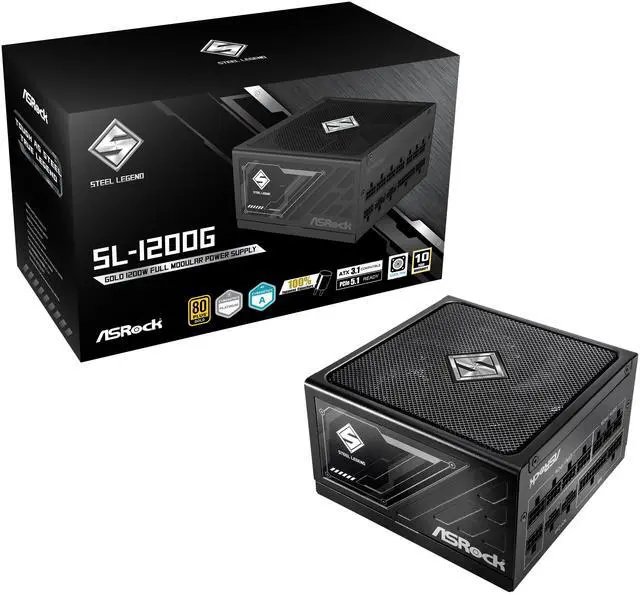
The ASRock Steel Legend SL-1200G is a 1200W full-modular ATX power supply built for high-performance gaming and creator PCs that need modern GPU support, including ATX 3.1, PCIe 5.1, and a native 12V-2x6 connector.
| Attribute | Value |
|---|---|
| Best For | Full-modular 1200W power supply for personal computers that use standard ATX and PCI Express connections |
| Capacity | 1200 W maximum / output wattage |
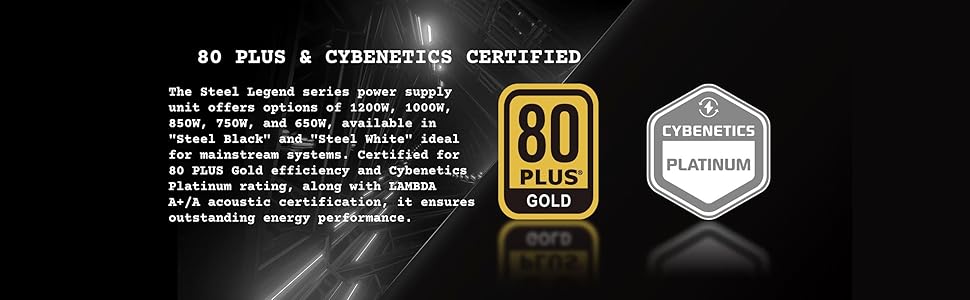
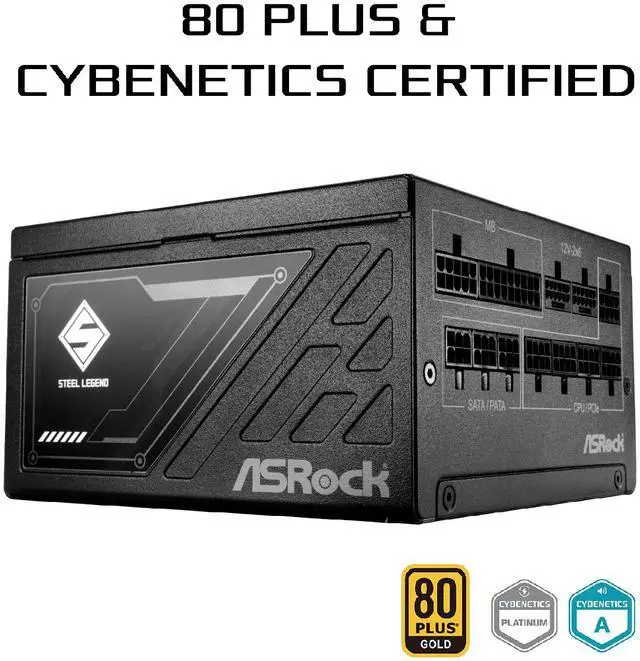
| Efficiency And Certifications | 80 PLUS GOLD certified |
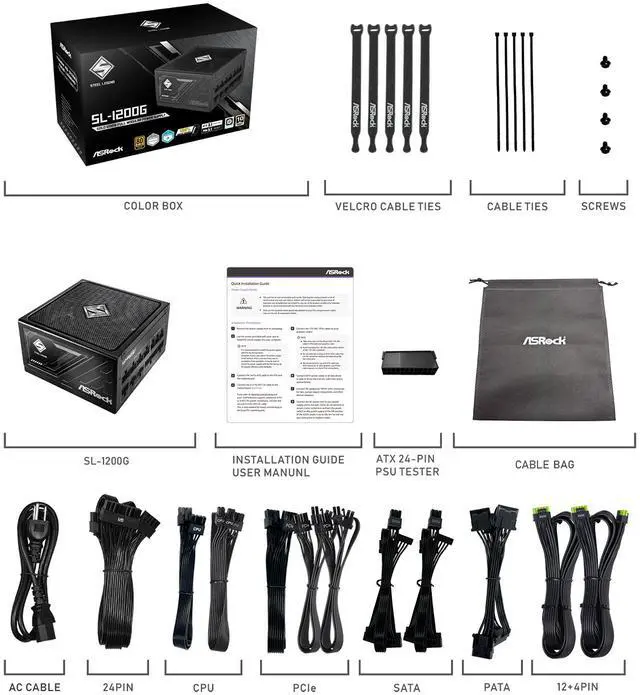
| Modular And Connectors | Full-modular design with ATX (main) and PCI Express cabling; uses 6+2-pin PCIe connectors and lists 2 PSU connector quantity |
| Cooling And Fans | Air-cooled design with a single internal fan |
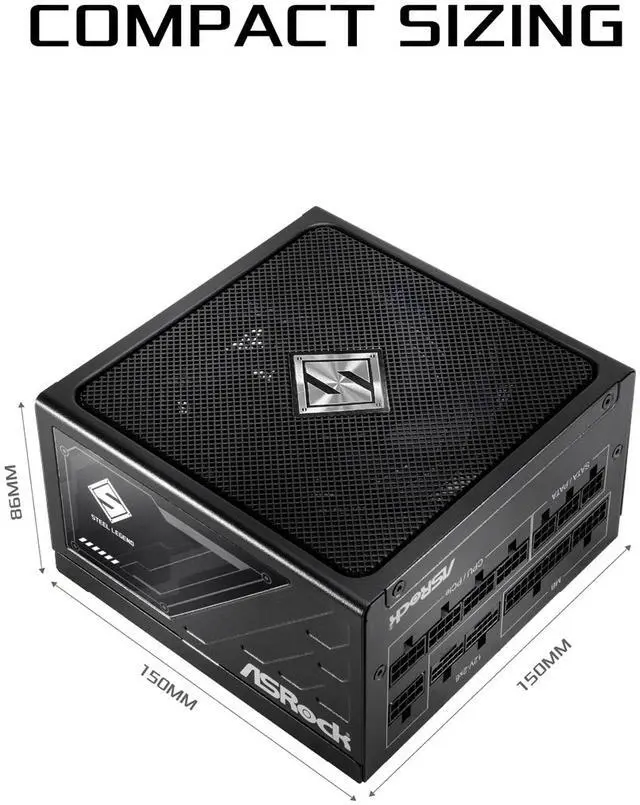
| Physical Dimensions & Weight | Item dimensions 5.9 x 5.9 x 3.39 inches (L x W x H); package dimensions 13.1064 x 18.5928 x 30.9118 cm; package weight 4.518 kilograms |
| Compatibility & Platform | Compatible with personal computers (standard ATX/PCIe connections) |
| Package & Quantity | Sold as a single unit (package quantity 1, number of items 1); no batteries required or included |
| Model Identifiers | ASRock SL-1200G (Model Name / Part Number), model number 90-UXS120-GFUAAA; style name 1200G; manufacturer ASRock |
Q: Should I buy the ASRock SL-1200G or a 1000W ATX 3.1 PSU?
A: Choose the ASRock SL-1200G if you are building around a very high-draw GPU, want more upgrade headroom, or expect combined heavy CPU and GPU loads. ASRock positions the Steel Legend PSU line across 650W to 1200W, and the 1200W model adds extra margin while keeping the same modern platform features: ATX 3.1, PCIe 5.1 readiness, full modular cabling, and native 12V-2x6 support. A 1000W ATX 3.1 unit is usually the more practical choice for high-end gaming systems that are not pushing extreme peak power, so the trade-off is mainly headroom versus size, cost, and over-specing.
Q: Is the ASRock SL-1200G a better fit than an older ATX 3.0 or non-12V-2x6 power supply?
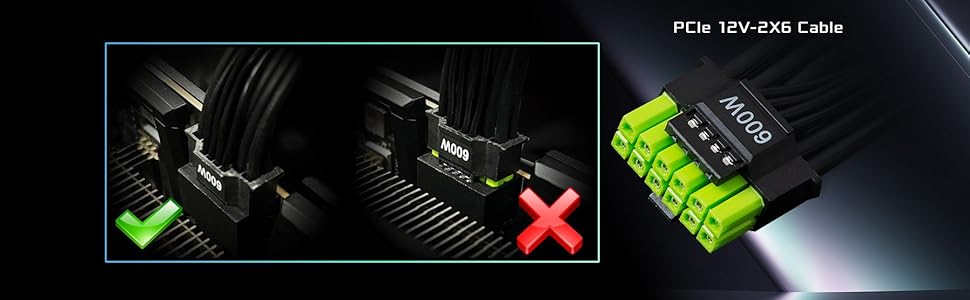
A: The SL-1200G is the better fit if you want a PSU designed around current high-power GPU cabling and the newer ATX 3.1 / PCIe 5.1 standard. Its native 12V-2x6 connectors and dual-color cable design make it more aligned with current build guidance than older units that rely on earlier 12VHPWR implementations or adapter-based setups. An older high-quality PSU can still be usable, but the main trade-off is convenience and connector standardization rather than raw wattage alone.
Q: ASRock SL-1200G vs Corsair RM1200x SHIFT: which one makes more sense?
A: Pick the ASRock SL-1200G if your priority is straightforward compliance with current PSU and GPU standards, including ATX 3.1, PCIe 5.1 readiness, and dual native 12V-2x6 outputs on a conventional full-modular layout. Pick the Corsair RM1200x SHIFT if your case and cable-routing setup specifically benefit from Corsair's side-mounted connector design. In other words, the ASRock model is the simpler fit for buyers optimizing around wattage headroom and modern GPU support, while the Corsair model is more about chassis-specific cable management.
Q: Should I step up from an 850W PSU to the ASRock SL-1200G?
A: Move to the SL-1200G if your next build includes a flagship-class GPU, a high-core-count CPU, or you want more room for transient spikes and future upgrades. Stay with 850W if your system is firmly in the mainstream-to-upper-midrange range and does not approach the power envelope of current halo GPUs. The practical trade-off is that 1200W is less about efficiency gains on its own and more about reducing power-limit pressure in top-end builds.
Q: ASRock SL-1200G vs MSI MAG A1250GL: which should I choose for a high-end build?
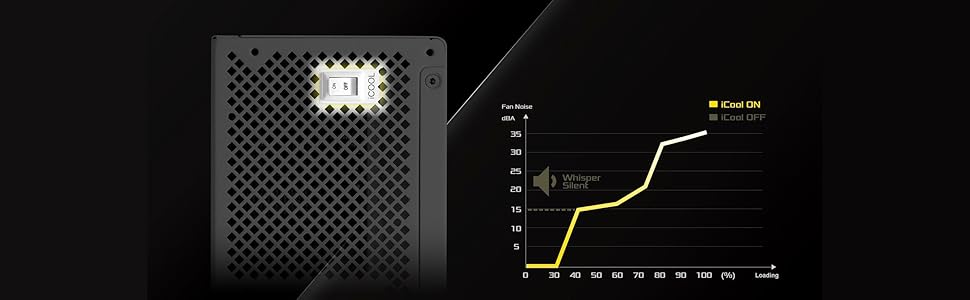
A: Choose the ASRock SL-1200G if 1200W is already enough for your build and you want a unit reviewed as a modern ATX 3.1 design with dual 600W 12V-2x6 connectors, Japanese capacitors, and a selectable semi-passive mode. Choose a 1250W class model like the MSI MAG A1250GL if you specifically want a small additional wattage buffer above 1200W. The buying decision usually comes down to whether your build actually needs the extra 50W, because both products target the same general high-end ATX 3.1 / PCIe 5.x segment.
Q: Is this a good choice for a high-end RTX 40 or 50 series gaming PC?
A: Yes, if you want a high-capacity PSU for a flagship GPU and power-hungry CPU. The ASRock SL-1200G provides 1200W, supports ATX 3.1 and PCIe 5.1, and includes a native 12V-2x6 cable, which aligns with the main compatibility questions shoppers ask on competing retail listings. It is a better fit for high-end single-GPU builds than mainstream systems, but it may be more wattage than most mid-range PCs need.
Q: Who should buy a 1200W power supply like the ASRock SL-1200G?
A: This model is best for enthusiasts building a premium gaming or workstation PC with a top-tier GPU, upgrade headroom, or heavy transient power demands. It is less suitable for budget or mid-range builds that typically do not benefit from 1200W capacity. The main decision pattern on comparable retail pages is not whether 1200W works, but whether the buyer actually needs that much power.
Q: What are the trade-offs versus a similar 1000W or 1200W competitor PSU?
A: The ASRock SL-1200G's main strengths are modern connector support, full modular cabling, Japanese capacitors, and a 10-year warranty. The trade-off is that it is a Gold-rated 1200W unit rather than a higher-efficiency Platinum model, so buyers comparing it with premium alternatives may prioritize price and modern GPU readiness over peak efficiency. It makes the most sense when you want ATX 3.1 and native 12V-2x6 support without stepping up to a more expensive flagship PSU.
Q: Is this PSU a good pick if I want cleaner cable management and newer GPU cabling?
A: Yes. Buyers commonly ask about modularity and next-generation GPU cable support on competing PSU listings, and the SL-1200G addresses both. It is fully modular and includes a native dual-color 12V-2x6 cable, which is helpful for cleaner routing and easier confirmation that the connector is fully seated. That makes it a practical option for modern builds where cable layout and GPU power connection are important.
Q: Is this overkill for a typical mid-range gaming or office PC?
A: Usually yes. A 1200W ATX 3.1 unit is aimed more at high-end gaming, creator, or workstation builds than everyday office or mainstream gaming systems. If your build uses a mid-range GPU and standard desktop CPU, this PSU offers more headroom than most buyers need, so the decision should depend on future GPU upgrades, not just current power draw.
Q: Is the ASRock SL-1200G a sensible buy for a high-end gaming or workstation PC?
A: Yes, if you are building a high-power system and want extra headroom. The SL-1200G is a 1200W ATX 3.1, PCIe 5.1-ready PSU with a native 12V-2x6 cable, so it fits modern GPUs better than older ATX 2.x units. It makes the most sense for upper-end builds rather than typical mid-range PCs, where 1200W may be more than you need.
Q: Who is the ASRock SL-1200G best suited for?
A: It is best suited for buyers who specifically want a modern, high-capacity PSU for flagship-class GPUs, power-hungry CPUs, or upgrade headroom. It is less suitable for mainstream gaming builds, because its 1200W capacity is likely unnecessary unless you are intentionally sizing for very high transient loads or future upgrades.
Q: Is the main trade-off that ASRock is newer in power supplies than more established PSU brands?
A: Yes. The recurring hesitation in discussion is not the feature set, but brand track record in PSUs. On paper, the SL-1200G checks the expected boxes for a modern high-wattage unit, but cautious buyers may still prefer brands with a longer PSU-specific reputation if proven long-term reliability is their top priority.
Q: Is the ASRock SL-1200G worth considering over an older ATX 2.x PSU for a new GPU build?
A: Yes, if you are buying for a current-generation build. Its ATX 3.1 support and native 12V-2x6 connection make it a cleaner choice for newer GPUs than reusing an older PSU with adapters. The trade-off is that you may pay for capacity you do not fully use if your system does not actually need 1200W.