
Your Browsing History

Meet Your Seller

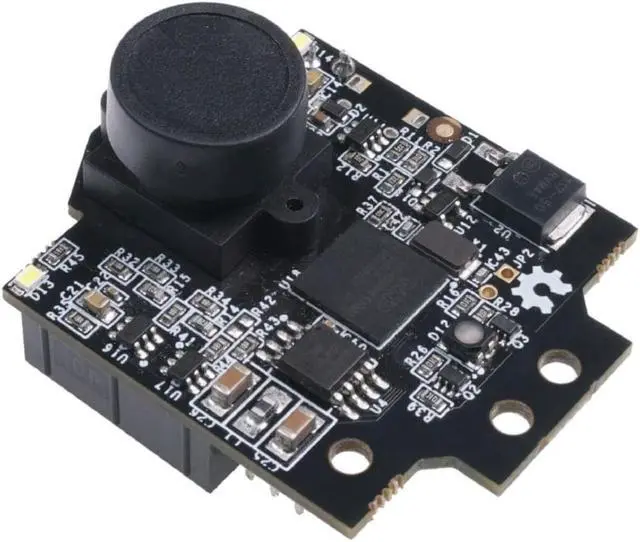
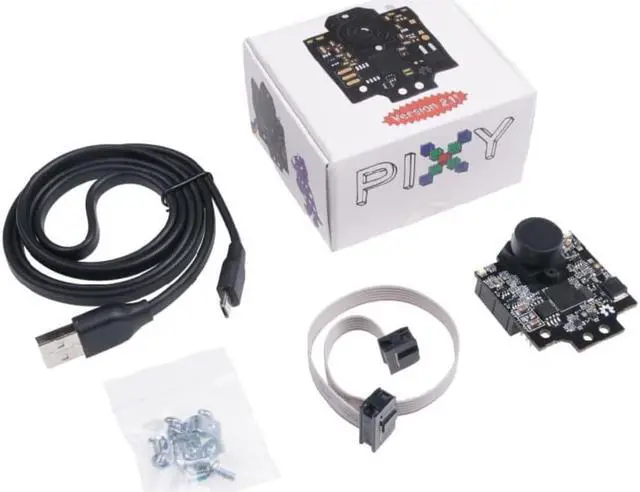
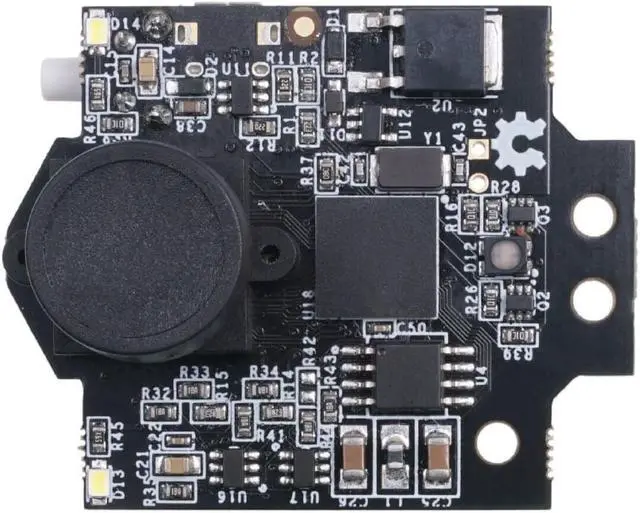
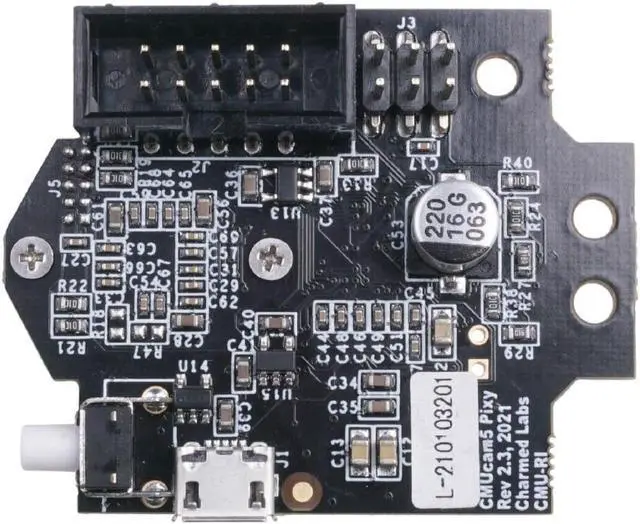
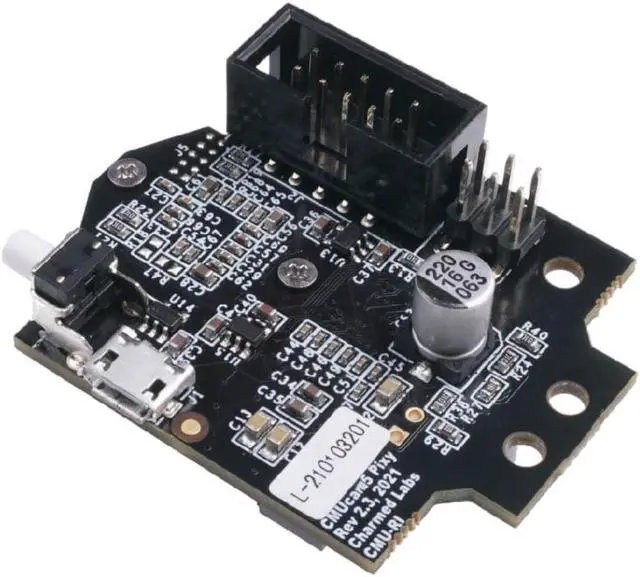
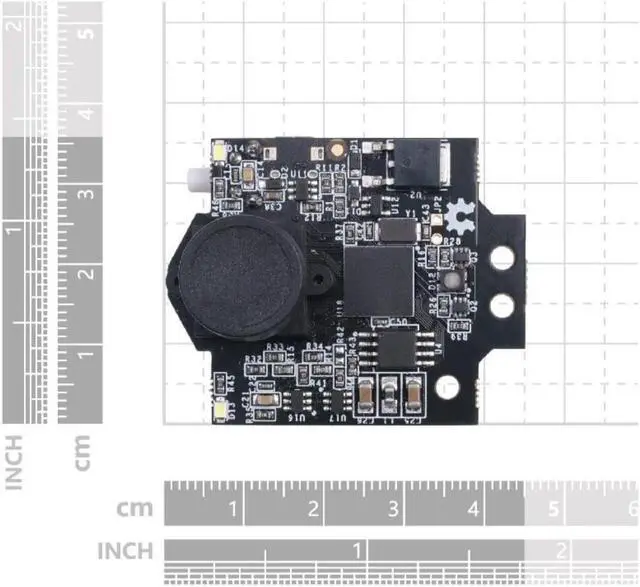


NGW-1pc Pixy2 CMUcam5 - Smart Vision Sensor
- Strong Performance: Process at 60 frames per second, find hundreds of objects simultaneously, can remember seven color signatures internally, can support multiple Pixy2 vision sensors to one microcontroller
- Easy and simple to operate: Teach Pixy2 an Object at the Push of a Button and can only receive the objects you are interested in
- Smart new algorithms: detect objects, track lines, even read barcodes without the help of a host computer, and detect intersections and "road signs
- Strong Compatibility: include software libraries for Arduino, Raspberry Pi, support SPI, I2C, UART, USB, or analog/digital output, and Configuration utility runs on Windows, macOS, and Linux
- Fully Open source: All software/firmware is open-source GNU-licensed and all hardware documentation is provided.
+
+
Overview
Specs
Reviews
Pixy2 CMUCam5 is a complete vision system with a powerful image sensor and microprocessor. It includes learning algorithms and the detection of colors, lines, intersections, and small barcodes. It includes all the techniques required for visual identity. You can teach it what to look for, and program it to send only the information you're looking for, so your microcontroller isn't overwhelmed with data.
Pixy2 is a plug-and-play smart vision system for Arduino-compatible devices, Raspberry Pi, or other microcontrollers/computer systems. It can export its information in a variety of useful ways - UART serial, SPI, I2C, digital output, or analog output - so your microcontroller or microcomputer can easily communicate while doing other tasks.
Compared to the original Pixy, Pixy2 is smaller, faster, and more powerful. Like its predecessor, the Pixy2 can learn to detect objects you teach it, with the push of a button. You can train with PC-based software, but also with stand-alone programs that rely on camera buttons.
Additionally, Pixy2 has new algorithms for detecting and tracking lines, which can be used with line-following robots. The new algorithm can also detect intersections and "road signs. " Road signs can tell your robot what to do, such as turn left, turn right, slow down, etc. Pixy2 does all of this at 60 frames per second, so your robot can be fast too. Pixy2 is also teachable, so you can set it to only send you the images you explicitly tell it to look for. It's simple and fast and has an open-source application called PixyMon.
To learn more about projects where Pixy2 smart vision sensors are applied to various scenarios, you can visit the Pixy Project Gallery.
How does Pixy2 detect images?
Pixy2 uses hue and saturation as the primary means of image detection - not plain RGB. This means that lighting or exposure won't affect the Pixy2's ability to detect objects - a frustrating issue for many image sensors. This is also a huge improvement over previous versions of Pixy CMUCam, adding more flexibility in lighting and exposure changes.
Technical
Processor NXP LPC4330, 204 MHz, Dual-core
Image sensor Aptina MT9M114, 1296×976 resolution with integrated image flow processor
Lens field-of-view 60 degrees horizontal, 40 degrees vertical
Power consumption 140 mA typical
Power input USB input (5V) or unregulated input (6V to 10V)
RAM 264K bytes
Flash 2M bytes
Available data outputs UART serial, SPI, I2C, USB, digital, analog
Application
Small mobile intelligent robot with image recognition
Image Recognition project
Object Tracking project
Barcode Reading
Hardware Overview
Physical
Dimensions 42mm x38mm x15mm
Weight G. W 20g
Battery Exclude
Part List
Pixy2 CMUcam5 ImageSensor 1
FC-10P to FC-6P Cable 1
Screw Package 1
Pixy2 is a plug-and-play smart vision system for Arduino-compatible devices, Raspberry Pi, or other microcontrollers/computer systems. It can export its information in a variety of useful ways - UART serial, SPI, I2C, digital output, or analog output - so your microcontroller or microcomputer can easily communicate while doing other tasks.
Compared to the original Pixy, Pixy2 is smaller, faster, and more powerful. Like its predecessor, the Pixy2 can learn to detect objects you teach it, with the push of a button. You can train with PC-based software, but also with stand-alone programs that rely on camera buttons.
Additionally, Pixy2 has new algorithms for detecting and tracking lines, which can be used with line-following robots. The new algorithm can also detect intersections and "road signs. " Road signs can tell your robot what to do, such as turn left, turn right, slow down, etc. Pixy2 does all of this at 60 frames per second, so your robot can be fast too. Pixy2 is also teachable, so you can set it to only send you the images you explicitly tell it to look for. It's simple and fast and has an open-source application called PixyMon.
To learn more about projects where Pixy2 smart vision sensors are applied to various scenarios, you can visit the Pixy Project Gallery.
How does Pixy2 detect images?
Pixy2 uses hue and saturation as the primary means of image detection - not plain RGB. This means that lighting or exposure won't affect the Pixy2's ability to detect objects - a frustrating issue for many image sensors. This is also a huge improvement over previous versions of Pixy CMUCam, adding more flexibility in lighting and exposure changes.
Technical
Details
Processor NXP LPC4330, 204 MHz, Dual-core
Image sensor Aptina MT9M114, 1296×976 resolution with integrated image flow processor
Lens field-of-view 60 degrees horizontal, 40 degrees vertical
Power consumption 140 mA typical
Power input USB input (5V) or unregulated input (6V to 10V)
RAM 264K bytes
Flash 2M bytes
Available data outputs UART serial, SPI, I2C, USB, digital, analog
Application
Small mobile intelligent robot with image recognition
Image Recognition project
Object Tracking project
Barcode Reading
Hardware Overview
Physical
Details
Dimensions 42mm x38mm x15mm
Weight G. W 20g
Battery Exclude
Part List
Pixy2 CMUcam5 ImageSensor 1
FC-10P to FC-6P Cable 1
Screw Package 1
Warranty & Returns
Warranty, Returns, And Additional Information
Warranty
- Please contact the Seller directly for warranty information. Warranty information may also be found on the Manufacturer's website.
- CONTACT
Return Policies
- Return for refund within: 30 days
- Return for replacement within: 60 days
- This item is covered by NGW Electronic Return Policy
Manufacturer Contact Info
- For a directory of all our manufacturers, please click below.
- Manufacturers Directory
LOADING...