


Best Sellers
 Hot Seller
- $392.22
- + $10.99 Shipping



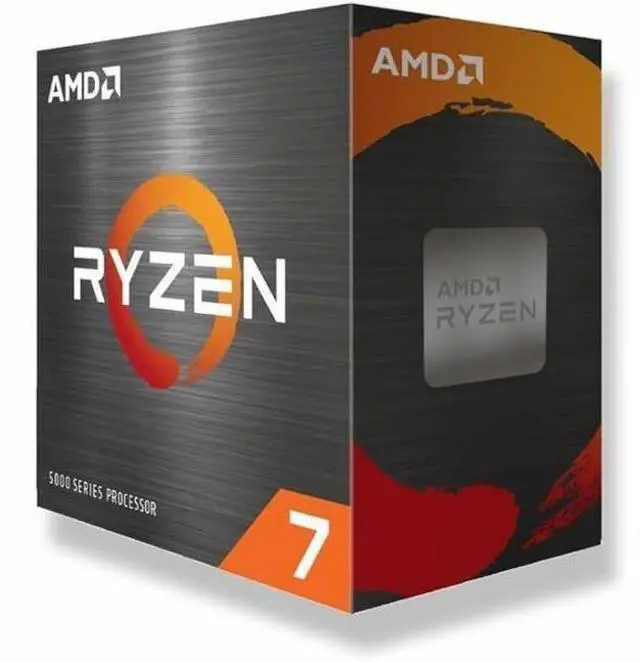
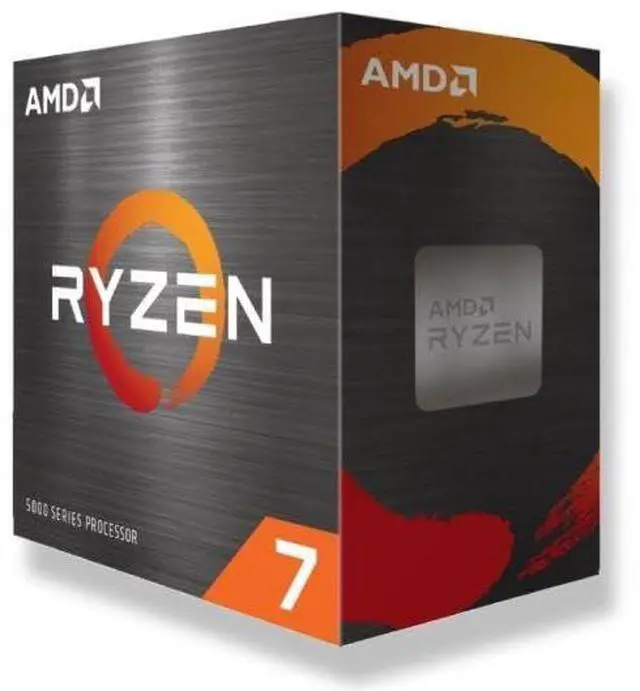


AMD Ryzen 7 5800XT 8-Core Processor - 32 MB L3 Cache - 4 MB L2 Cache - 512 KB L1 Cache - 64-bit Processing - 4.80 GHz Overclocking Speed - 7 nm - Socket AM4 No Graphics - 105 W - 16 Threads
- 32 MB L3 Cache
- 4 MB L2 Cache
- 512 KB L1 Cache
- 64-bit Processing
- 4.80 GHz Overclocking Speed
- 7 nm
- Socket AM4 No Graphics
- 105 W
- 16 Threads
+
+
Overview
Specs
Reviews (1)
AMD Ryzen™ Processors for DesktopsFor incredible gaming, professional-grade productivity, and breakthrough AI experiences. More from the Manufacturer
Warranty & Returns
Warranty, Returns, And Additional Information
Warranty
- Limited Warranty period (parts): 3 years
- Limited Warranty period (labor): 3 years
- Read full details
Return Policies
- Return for refund within: 30 days
- Return for replacement within: 30 days
- This item is covered by Newegg.ca's Standard Return Policy.
- Read full return policy for details.
Manufacturer Contact Info
- Manufacturer Product Page
- Manufacturer Website
- Support Phone: 1-877-284-1566
- Support Website
- View other products from AMD
LOADING...
LOADING...
The AMD Ryzen 7 5800XT is an 8-core, 16-thread AM4 desktop processor with boost speeds up to 4.8 GHz, suited to users upgrading or building a compatible desktop for gaming and multitasking who have a separate graphics card.
Recommended For
- AM4 desktop owners upgrading from an older Ryzen CPU who want to keep their motherboard and DDR4 memory; check the motherboard’s BIOS support before buying.
- AM4 gamers building or refreshing a PC around a discrete graphics card who want a capable Zen 3 CPU and are not specifically chasing the highest gaming performance available on the platform.
- PC users who want one AM4 processor for gaming plus CPU-heavy multitasking, such as running several work apps alongside games; its 8 cores and 16 threads suit this mixed-use role.
- Budget-conscious builders who already have compatible AM4 parts and want to avoid replacing their board and DDR4 memory for an in-socket CPU upgrade.
Real-World Use Scenarios
- Refreshing an existing AM4 desktop: users with a compatible motherboard can move to the 5800XT while keeping their DDR4 platform, avoiding a full motherboard-and-memory change; check BIOS support and use a separate graphics card.
- Playing current PC games on an AM4 system: testing found the 5800XT handled a range of recent games well, including Battlefield 6, Arc Raiders, and Cyberpunk 2077; actual frame rates will also depend on the graphics card, resolution, and settings.
- Gaming while running other desktop tasks: the 8-core processor suits a mixed-use PC where a game is running alongside voice chat, browsers, or other apps, though the gaming benefit over an existing 6-core Ryzen 5000 CPU may be modest in many titles.
- Rendering or exporting creative projects: users doing CPU-based rendering, compression, or video-export work can make use of its multiple cores and threads; results vary by application, and GPU acceleration can affect editing and export times.
- Building a desktop around this CPU: plan for a discrete graphics card because the processor has no integrated graphics; confirm your motherboard supports it and budget for a suitable CPU cooler.
Spec Summary
| Attribute | Value |
|---|---|
| Best For | Desktop builds using a Socket AM4 motherboard and a separate graphics solution |
| Cores And Threads | 8 cores and 16 threads |
| Clock Speeds | 3.8 GHz operating frequency with boost speeds up to 4.8 GHz |
| Cache And TDP | 4 MB L2 cache and 32 MB L3 cache (36 MB combined); 105 W TDP |
| Socket And Platform | Socket AM4 processor based on the Zen 3 architecture and Vermeer code name; compatible with AMD A520, B450, B550, X470, and X570 chipsets |
| Memory Support | Supports up to 128 GB of DDR4 memory, with listed configurations up to DDR4-3200; ECC support requires a compatible motherboard |
| Expansion And Graphics | PCI Express 4.0 / 3.0 support with up to 24 total and 20 usable lanes; no integrated graphics |
| Process And Instruction Support | 7 nm manufacturing process and 64-bit instruction set; supports AES, AMD-V, AVX, AVX2, FMA3, MMX-plus, SHA, SSE-family instructions, and x86-64 |
| Software And Technologies | Supports RHEL, Ubuntu, Windows 10, and Windows 11 in x86 64-bit versions; includes AMD StoreMI Technology, Ryzen Master Utility, and Ryzen VR-Ready Premium |
| Cooling | Cooling device not included; processor only |
| Model Identifiers | AMD Ryzen 7 5800XT, Ryzen 7 5000 Series; model 100-100001582WOF |
Reference Q&A
Q: Ryzen 7 5800XT or 5800X3D for gaming?
A: Choose the Ryzen 7 5800X3D if gaming performance on AM4 is your priority: in TechSpot’s 1080p tests, it averaged 24–29% faster than the 5800XT, depending on image-quality settings. Choose the 5800XT for a standard 8-core, 16-thread AM4 processor when gaming is mixed with general productivity and the 5800X3D’s gaming-focused performance is not the priority.
Q: Is the Ryzen 7 5800XT much faster than the 5800X?
A: The 5800XT is a small step up, not a major performance upgrade: both are Zen 3 AM4 processors with 8 cores, 16 threads, and 32 MB of L3 cache, while the XT boosts up to 4.8 GHz versus 4.7 GHz for the 5800X. TechSpot found the 5800XT only about 3% faster on average in its gaming comparison, so choose it when its price is close or you are buying new; a 5800X already in your system is generally not a compelling reason to replace it with a 5800XT.
Q: Should I get the Ryzen 7 5700X or 5800XT?
A: Choose the 5800XT when you want the higher listed boost clock and are comfortable with a 105 W TDP; choose the 5700X when lower rated power is more important. Both are AM4 Zen 3 CPUs with 8 cores, 16 threads, and 32 MB of L3 cache. The 5700X is rated at 65 W and boosts up to 4.6 GHz, while the 5800XT is rated at 105 W and boosts up to 4.8 GHz; actual performance differences depend on the workload, cooling, and system configuration.
Q: Is the 5800XT worth it over the Ryzen 5 5600X?
A: Choose the 5800XT if you want 8 cores and 16 threads for workloads that can use extra cores, as well as a higher boost clock. The 5600X has 6 cores and 12 threads and may be the practical choice for gaming-focused builds where its lower cost matters: in TechSpot’s recent 1080p tests, the 5800XT’s lead over the 5600X was modest in several games. The benefit varies by game and settings, so the 5800XT is not automatically a large gaming upgrade.
Q: Will this processor work with my motherboard?
A: It uses the AM4 socket and is listed for A520, B450, B550, X470, and X570 chipsets. Check the motherboard maker’s CPU support list for your exact model and BIOS version before buying; some boards may need a BIOS update.
Q: Does this processor have built-in graphics?
A: No. The Ryzen 7 5800XT has no integrated graphics, so a desktop build needs a separate graphics card to produce video output.
Q: Is this processor suitable for gaming and multitasking?
A: Its 8 cores, 16 threads, and boost speed of up to 4.8 GHz make it suitable for gaming and multitasking in a desktop build. Gaming performance also depends on the graphics card, memory, cooling, and game settings.
Q: Does it include a CPU cooler?
A: No. The provided product information says a cooling device is not included, so plan to get a compatible CPU cooler separately.
Q: Is the Ryzen 7 5800XT worth buying as an AM4 upgrade?
A: It can make sense if you already have a compatible AM4 motherboard and the 5800XT costs less than the alternatives you’re considering. Reddit discussions weigh the upgrade against price and options such as the 5700X or 5800X3D, so value depends on your specific deal and use case.
Q: Is the 5800XT a worthwhile gaming upgrade from a Ryzen 5 5600X?
A: Reddit discussions describe the gaming improvement over a 5600X as small, so it may not be a compelling upgrade for gaming alone. Its 8 cores and 16 threads may matter more if you also have workloads that benefit from additional cores.
Q: Should I choose the 5800XT or the 5800X3D for gaming?
A: If gaming is the priority, Reddit discussions favor the 5800X3D for its gaming performance, while the 5800XT may be the more practical choice when it is substantially cheaper. Compare the actual prices before deciding.
Q: Will the 5800XT work in my existing AM4 system?
A: It uses the AM4 socket and is listed as compatible with A520, B450, B550, X470, and X570 chipsets. Check your exact motherboard’s CPU support and BIOS requirements before installing; the processor has no integrated graphics, so a discrete graphics card is needed for display output.