


- $264.99
- Free 30-day Returns
$224.99
Add to PC build list
Sold by Newegg
Shipped by Newegg
Add to Wish List(Found on 170 wish lists)
Best Sellers
- $302.40
- + FREE SHIPPING


Get Educated
Make informed decisions with expert advice. Learn More

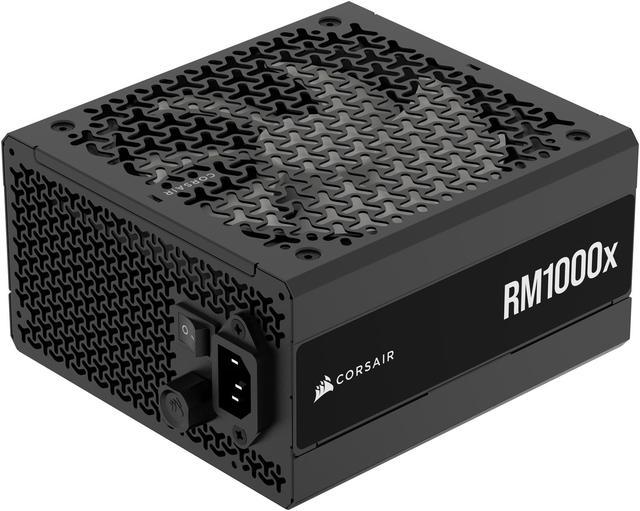
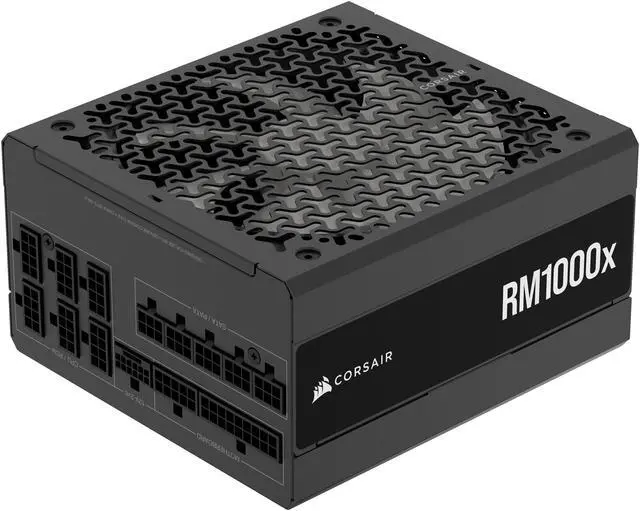
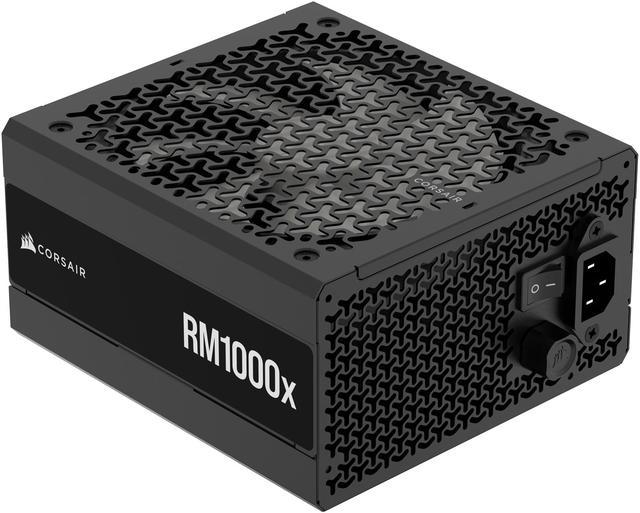
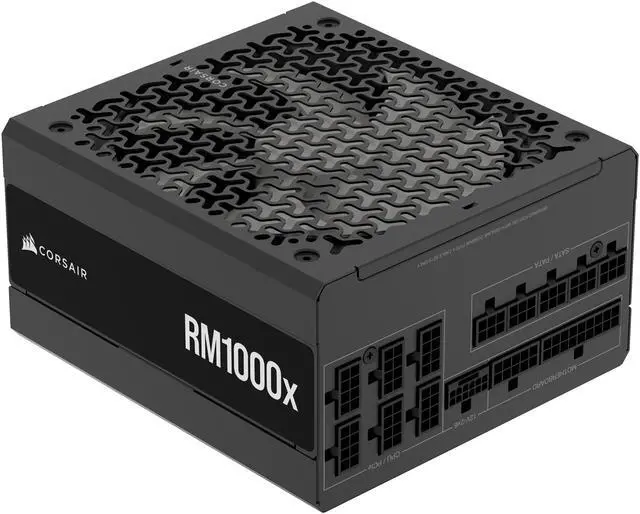
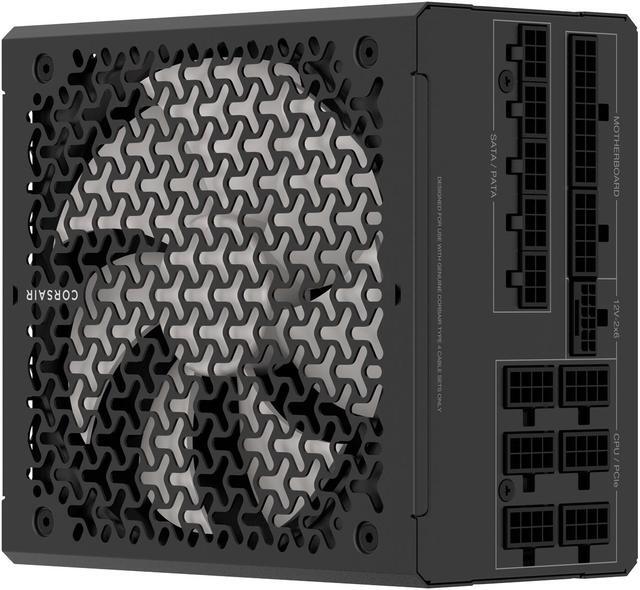
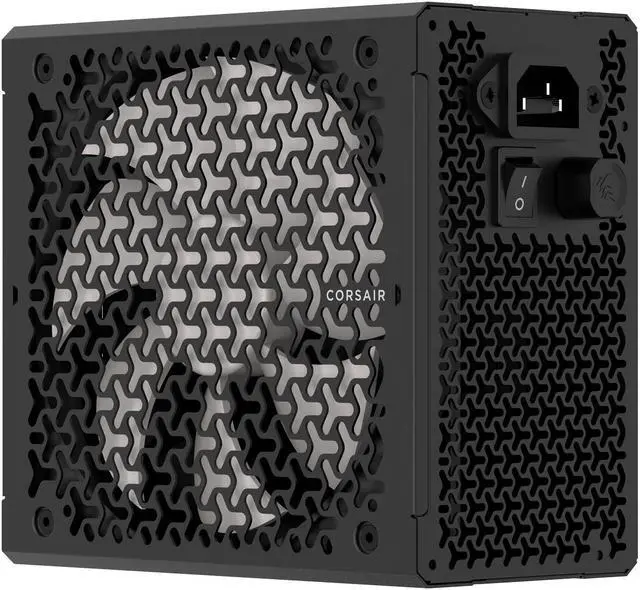
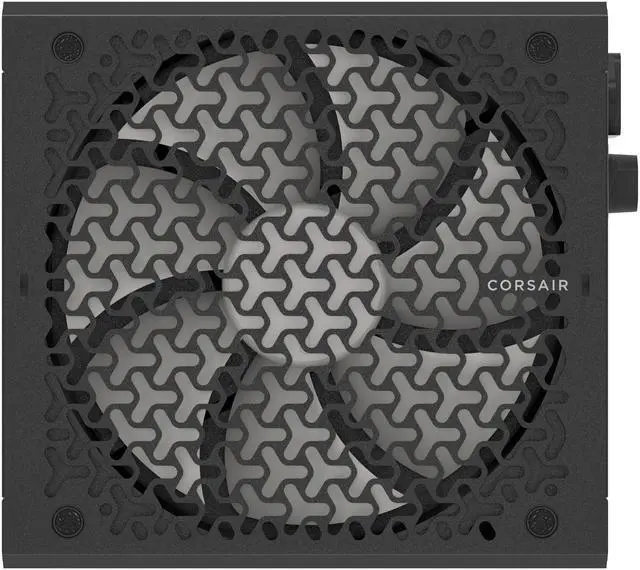
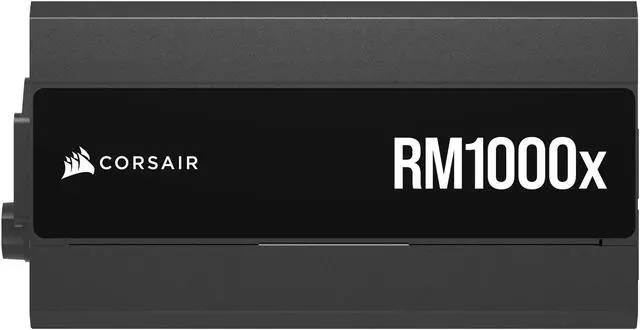
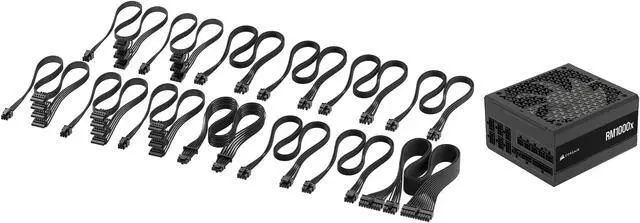


CORSAIR RMx Series RM1000x ATX Power Supply - Fully Modular - ATX 3.1 - PCIe 5.1 - Cybenetics Gold - Low-Noise - Japanese Capacitors - 1000 Watts
- Fully modular
- Cybenetics Gold-certified
- ATX 3.1 Compliant
- Supports PCIe 5.1
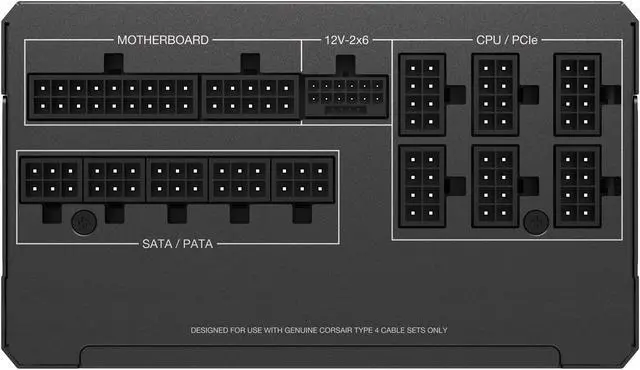
- Native 12V-2x6 connector
- Ultra-flexible embossed cables with low-profile combs
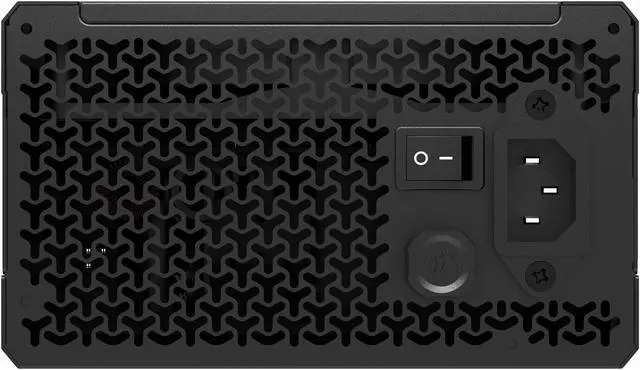
- Fan speed adjustment knob
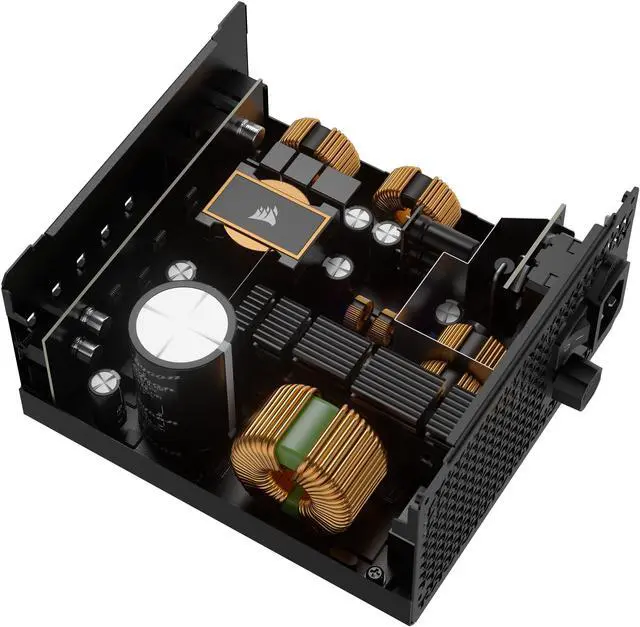
- 100% Japanese 105°C-rated electrolytic capacitors
- 50°C Maximum operating temperature
- Low-noise 140mm FDB fan
- Zero RPM fan mode

Combo Up Savings Up To $2300
The more you add, the more you'll save!+
+
Overview
Specs
Reviews (1,069)
RMX SERIES, RM1000X, 1000 WATT, ATX 3.1, CYBENETICS GOLD CERTIFIED, FULLY MODULA
Warranty & Returns
Warranty, Returns, And Additional Information
Return Policies
- Return for refund within: 30 days
- Return for replacement within: 30 days
- This item is covered by Newegg.ca's Standard Return Policy.
- Read full return policy for details.
Manufacturer Contact Info
- Manufacturer Product Page
- Manufacturer Website
- Support Phone: 1-888-222-4346
- Support Website
- View other products from Corsair
LOADING...
LOADING...
The CORSAIR RMx Series RM1000x is a 1000W fully modular ATX 3.1 power supply built for high-performance gaming PCs and workstation builds that need PCIe 5.1 support, a native 12V-2x6 connection, and low-noise operation.
Recommended For
- Builders pairing a high-end GPU with a modern gaming CPU who want one native 12V-2x6 cable instead of adapter-heavy wiring, especially for RTX 40/50-class upgrades and ATX 3.1-ready builds.
- Quiet-PC builders who care about low idle noise but still want the option to raise PSU airflow manually in warm rooms or airflow-restricted cases.
- Users planning to keep the same PSU across multiple upgrade cycles and wanting a long-warranty unit with current connector standards rather than replacing the PSU at the next GPU refresh.
- Workstation or mixed-use desktop owners running long sessions in hotter environments who value continuous 50C-rated operation, full modular cabling, and extra headroom over minimum-cost sizing.
Real-World Use Scenarios
- Building a high-end gaming PC with a modern GPU that uses 12V-2x6: users can connect the card directly without a separate adapter, and the PSU is commonly positioned as a straightforward fit for RTX 40/50-class builds with headroom for transient spikes.
- Putting together a quiet gaming or workstation build: at light to moderate loads, users can expect the PSU to stay effectively unobtrusive, with Zero RPM behavior and low measured noise aligning with frequent community feedback that it is hard to hear in normal use.
- Running a powerful CPU and GPU for long gaming sessions, rendering, or mixed creator workloads: users are likely to get stable operation without the PSU feeling stressed, since reviews and official positioning both frame this model for sustained high-load systems rather than midrange builds.
- Upgrading an older enthusiast PC to a new graphics card: this PSU fits buyers who want to replace an older unit mainly to get current ATX 3.1 behavior and a native next-gen GPU cable, while keeping a familiar full-size ATX layout and modular cabling approach.
- Cable-managing a clean mid-tower or showcase build: builders can usually route only the leads they need and get an easier install than with older stiffer PSU cables, which matters most in tempered-glass builds where excess cable bulk is visible.
- Using a PC that sleeps and wakes frequently for home office, streaming, or daily multitasking: users should see normal support for modern standby-style behavior while still having enough power budget for a gaming-capable system, making it practical for one PC that handles both work and play.
Spec Summary
| Attribute | Value |
|---|---|
| Best For | High-power ATX 3.1 desktop builds that need up to 1000 W from a fully modular supply |
| Electrical & Output | 1000 W maximum output; universal AC input 100–240 V, 47–63 Hz with listed current rating 25 A; DC rail ratings listed as +3.3V@20A, +5V@20A, [email protected], +5Vsb@3A |
| Connectors & Cables | Fully modular cable set including 1×24‑pin ATX, 1×12VHPWR (12+4), 4×PCIe 8‑pin (6+2), 2×EPS/CPU 8‑pin (4+4), 12×SATA and 6×PATA; cable lengths specified (ATX ~610 mm ±10 mm, EPS ~750 mm ±10 mm, PCIe ~650 mm ±10 mm, 12VHPWR ~650 mm ±10 mm, SATA cables: 3 cables each with 4 SATA at ~850 mm ±10 mm, PATA cables ~750 mm ±10 mm) |
| Modular & Form Factor | Full modular ATX 3.1–compatible power supply, designed as a standard ATX PSU with a maximum chassis length of 160 mm |
| Cooling & Fan | Air-cooled design with one 140 mm fan |
| Standards & Efficiency | Cybenetics Gold efficiency certification and ATX 3.1 compatibility |
| Physical & Packaging | Unit weight ~6.88 lb with maximum PSU length 160 mm; package dimensions 13.4 × 21.8 × 30.9 cm and package weight 3.81 kg (package quantity 1) |
| Model Identifiers | CORSAIR RMx Series model RM1000x, part/model number CP-9020271-NA (style RMx 2024 - ATX 3.1) |
| Package Contents | Includes RM1000x power supply, DC cable kit, power cord, mounting screws and cable ties (single-item package) |
| Compatibility & Miscellaneous | External data lists Compatible Devices: Monitor; no batteries required or included |
Reference Q&A
Q: Should I buy the Corsair RM1000x or RM850x for a high-end gaming PC?
A: Choose the RM1000x if your build uses a power-hungry GPU, you want more wattage headroom for transient spikes, or you may upgrade later to a higher-end graphics card. Choose the RM850x if your system is already well within 850W and you want the same current RMx platform features in a lower-capacity version. Both 2024 RMx models use ATX 3.1, include a native 12V-2x6 cable, and target low-noise operation, so the main decision is power headroom rather than platform quality.
Q: Is the Corsair RM1000x a better choice than the RM1000e?
A: The RM1000x is the better fit if you want Corsair's more premium RM-series positioning, quieter-focused design, and the current ATX 3.1 RMx feature set including a native 12V-2x6 cable. The RM1000e is usually the value-oriented alternative when price matters more than refinement. Community discussions commonly frame RMx as the quieter and more premium option, while RM1000e is the practical pick for users who just need 1000W capacity at lower cost.
Q: Should I choose the Corsair RM1000x or HX1000i?
A: Choose the RM1000x if you want a high-quality 1000W PSU with modern ATX 3.1 support and a straightforward low-noise design. Choose the HX1000i if you specifically want Corsair's higher-tier HX positioning and are willing to pay more for a flagship-oriented model. In practical buying terms, RM1000x is the stronger value choice for most gaming builds, while HX1000i makes more sense for buyers prioritizing the higher-end product tier over price.
Q: Is the 2024 Corsair RM1000x worth buying over an older RM1000x?
A: The 2024 RM1000x is the better choice if you want current PSU standards and cleaner compatibility with new GPUs. Corsair's update adds ATX 3.1 compliance, a native 12V-2x6 connector, and a manual fan-speed control feature, while keeping the RMx line's fully modular, low-noise positioning. An older RM1000x still makes sense if you already own it and your system does not need the newer connector standard, but for a new purchase the 2024 version is the more forward-compatible option.
Q: Is the CORSAIR RM1000x a good fit for a high-end gaming PC with an RTX 4080, 4090, or similar GPU?
A: Yes for most single-GPU high-end builds. This RM1000x is a 1000W ATX 3.1 power supply with a native 12V-2x6 connector, so it is well suited to modern high-power graphics cards without needing a separate GPU adapter. It is a strong fit for buyers building around one flagship GPU and a performance CPU, especially if they want current-gen connector support and extra wattage headroom.
Q: Will the PSU fan always spin, or is it normal for the RM1000x to stay silent at low load?
A: It is normal for the fan to stop at low load. The RM1000x supports Zero RPM fan mode, so in light use, BIOS, or low-temperature conditions the fan may not spin continuously. This makes it a good choice for buyers who care about low idle noise, but it also means silent operation is expected rather than a fault.
Q: Who is the RM1000x best for, and who should skip it?
A: It is best for enthusiast gaming or workstation builders who want a quiet, fully modular 1000W PSU with native support for current GPUs and room for future upgrades. It is less suitable for budget or lower-power systems that do not need 1000W, because those buyers may pay more and use only a small fraction of its capacity.
Q: What are the main trade-offs versus another modern 1000W ATX 3.1 PSU?
A: The main advantages are native 12V-2x6 support, full modular cabling, low-noise operation, and a compact 160 mm length that is easier to fit than some older 1000W units. The main trade-off is that it is still a premium 1000W PSU, so buyers comparing it with other ATX 3.1 models should mainly decide based on noise preference, cable layout, case clearance, and whether they actually need this wattage.
Q: Is the Corsair RM1000x (ATX 3.1) worth buying for a new high-end gaming PC?
A: Yes, if you want a 1000W PSU for a modern high-end build. Reddit discussions repeatedly focus on its native 12V-2x6 cable, ATX 3.1 support, modular cables, and low-noise design as the main reasons to choose it for current or next-gen GPUs. The main trade-off is that it is a Gold-rated unit rather than a higher-efficiency Platinum model, so it makes the most sense when you value connector readiness, quiet operation, and cable convenience over chasing the highest efficiency tier.
Q: Who is the RM1000x best suited for?
A: It is best suited for builders using power-hungry GPUs, newer PCIe 5.x graphics cards, or systems where 1000W headroom is intentional rather than excessive. Its native 12V-2x6 connector, two EPS CPU cables, four 8-pin PCIe cables, and full modular design fit enthusiast gaming or workstation-class builds better than budget or midrange systems. It is less compelling for lower-power PCs that do not need 1000W capacity.
Q: Is the RM1000x a good choice if I want native support for newer GPUs without adapters?
A: Yes. This is one of the clearest reasons to choose it. Reddit threads repeatedly compare the RM1000x against older or alternative PSUs specifically because it includes a native 12V-2x6 cable and ATX 3.1 support. If avoiding GPU power adapters is a buying priority, the RM1000x is a straightforward fit.
Q: What are the main trade-offs of choosing the RM1000x over similar 1000W PSUs?
A: The main trade-offs are efficiency tier, warranty length versus some rivals, and possible user sensitivity to noise behavior. Community comparisons often frame the RM1000x as strong on connector support, cable set, and quiet-focused features, but note that some competing models offer Platinum efficiency or longer warranties. A smaller number of Reddit posts also mention coil whine or fan-behavior concerns, so it is a strong mainstream enthusiast option, but not automatically the best pick for buyers who prioritize maximum efficiency or the longest warranty above all else.
Q: Is the RM1000x a good choice for a quiet PC build?
A: Usually yes, especially if low PSU noise matters to you. The product is built around quiet-operation features such as Zero RPM mode, a 140mm FDB fan, and a manual fan-speed knob, and Reddit discussions repeatedly focus on those controls. The trade-off is that silent-focused behavior is not the same as guaranteed silence in every setup, and a few users report coil whine or questions about fan behavior, so it is better described as quiet-oriented rather than noise-proof.