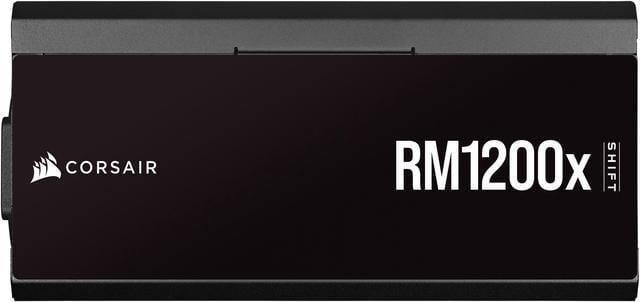
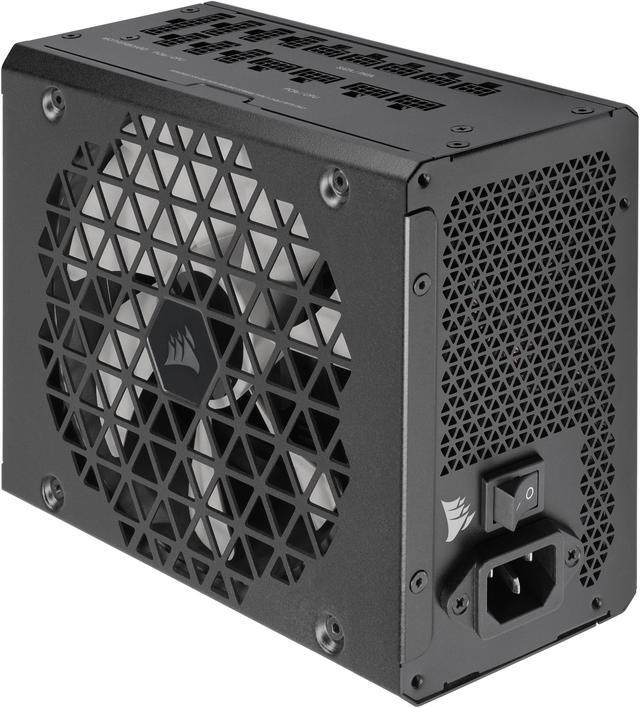
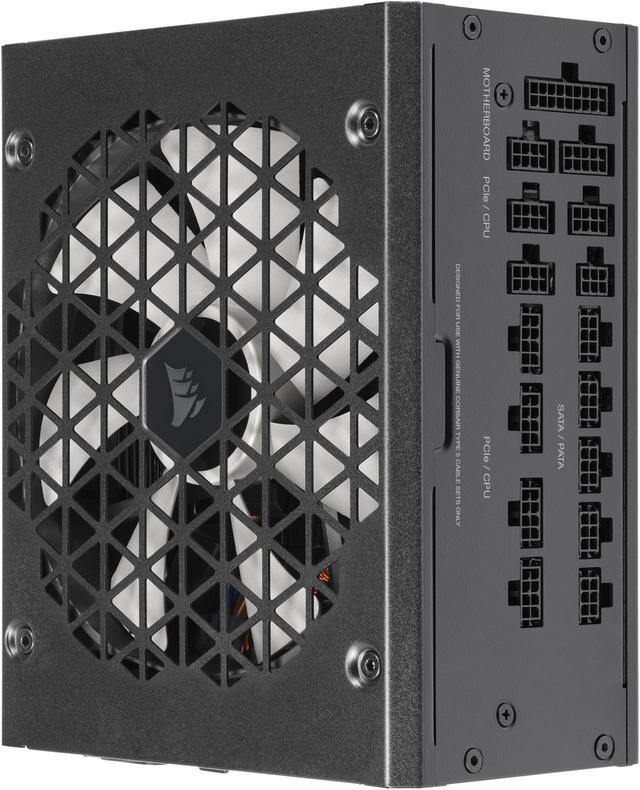
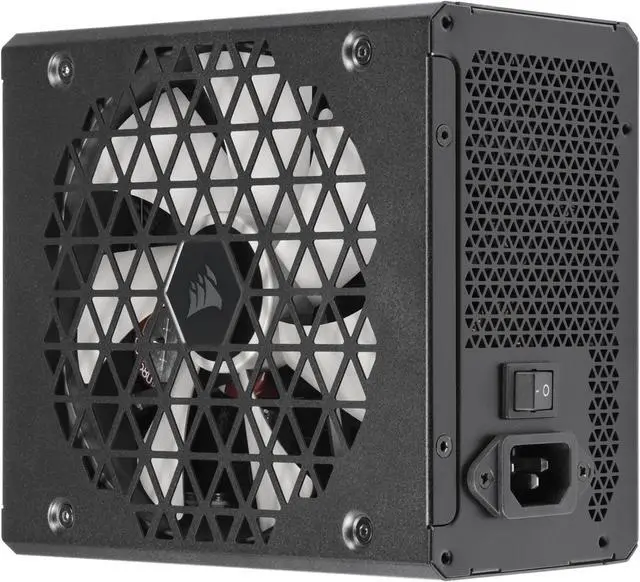
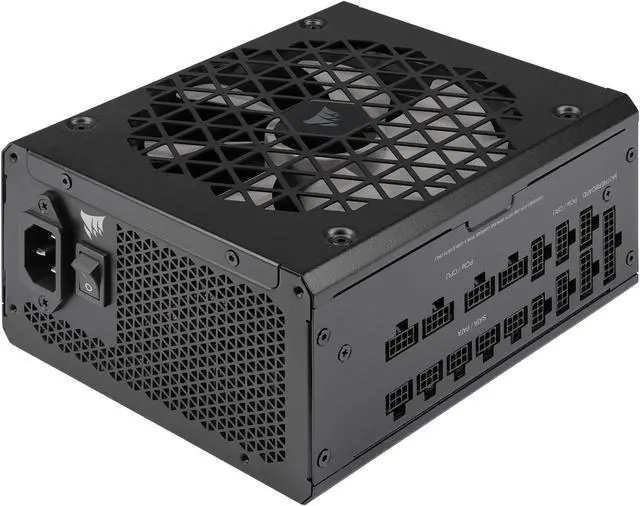
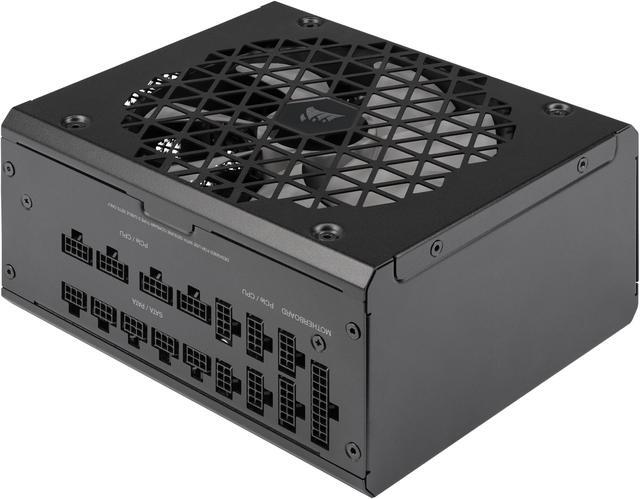
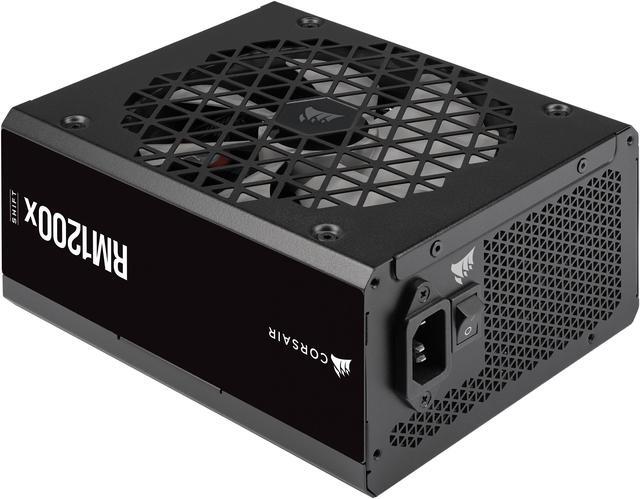
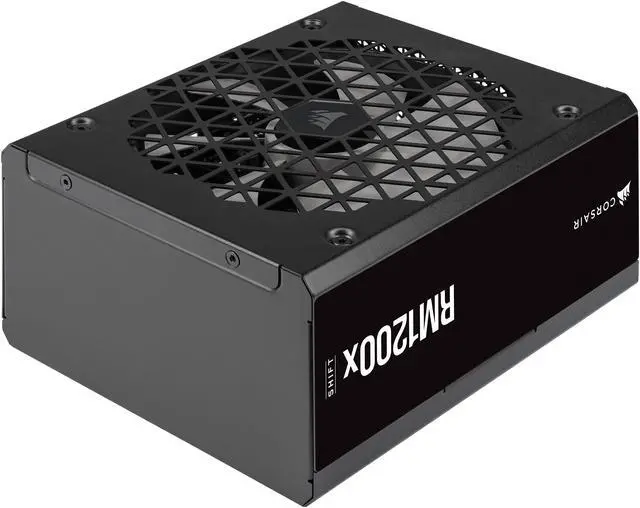
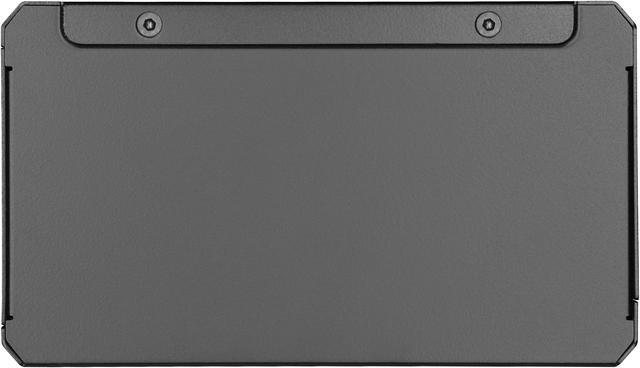
The CORSAIR RM1200x Shift is a 1200W fully modular ATX 3.1 power supply built for high-end gaming PCs and workstation builds that need strong 12V output, PCIe 5.1 readiness, and cleaner cable management in spacious modern cases.
Recommended For
- Builders using a compatible mid/full tower with at least 30 mm side clearance who want easier PSU cable access during the build and later upgrades; the side-mounted modular panel is repeatedly highlighted by Corsair and reviewers as the main real-world benefit.
- High-end gaming or workstation users planning a very power-hungry single-GPU system and wanting native support for modern GPU power standards rather than older adapter-heavy setups.
- Enthusiasts who reopen their PC often for GPU swaps, cable changes, storage additions, or custom loop maintenance; reviewers specifically call out the side-access layout as more convenient for regular tinkering.
- Users who want a quieter high-watt PSU for a desk-side gaming or creator PC, especially at low to moderate loads where zero-RPM behavior and low-noise testing are part of the product’s appeal.
Real-World Use Scenarios
- Building a high-end gaming PC with an RTX 4090/5090-class GPU and a power-hungry CPU: users typically choose this PSU for the headroom, native 12VHPWR/12V-2x6-era support, and ATX 3.x compliance; in practice, the expected result is stable operation under heavy gaming or GPU load without relying on adapter-heavy cabling.
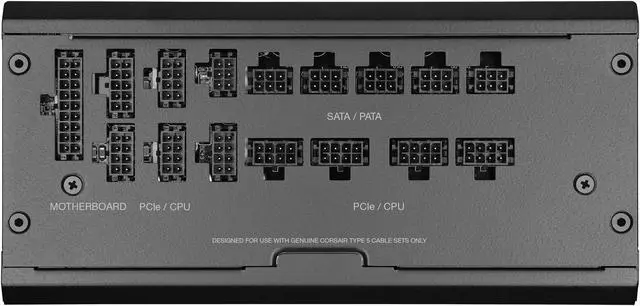
- Using a modern case with good side clearance behind the PSU shroud: builders are usually trying to make cable routing easier and keep the back side of the case less cramped; the likely experience is quicker cable installation and easier access when adding or removing GPU, SATA, or CPU power cables later.
- Upgrading or servicing a system that gets frequent part swaps: the user is trying to avoid pulling the PSU or fighting tight front-facing modular ports; in real use, the side-mounted connectors make cable changes more accessible, especially in roomy dual-chamber or builder-friendly mid/full towers.
- Running a workstation or gaming PC that spends long periods at idle or moderate load: users are usually trying to keep everyday noise down; the expected outcome is a quieter desktop experience during light tasks because the fan can stay off at lower loads and only ramp when the system is pushed harder.
- Installing it in an older or tighter case with little space beside the PSU bay: the user is trying to get the cable-management benefits, but the likely real-world result depends heavily on side clearance; if the case lacks room near the connector side, fitment can be awkward or may require removing drive cages or choosing another PSU layout.
Spec Summary
| Attribute | Value |
|---|
| Best For | High-power ATX gaming and workstation builds that need up to 1200 W, full-modular cabling, PCIe 5 (12VHPWR) GPU support and multi-GPU configurations |
|---|
| Capacity / Power | 1200 W maximum continuous output |
|---|
| Efficiency And Certifications | 80 PLUS Gold efficiency with Cybenetics Gold certification and rated efficiency >87% |
|---|
| Form Factor And Standards | ATX 3.1 form factor (ATX 3.x family) with support for PCIe 5 12VHPWR connections and full-modular layout |
|---|
| Connectors And Cables | Modular cabling including 1×24-pin ATX, 2×EPS (4+4), multiple 6+2-pin PCIe connectors (internal lists 8× PCIe), plus 1×PCIe 5 (12+4-pin) 12VHPWR; 16× SATA and 8× PATA peripheral connectors (cable lengths provided in cable spec) |
|---|
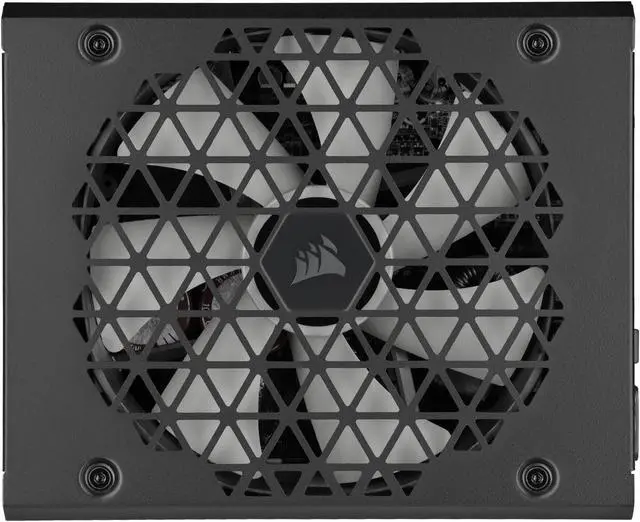
| Cooling And Noise | Single 140 mm fluid-dynamic-bearing fan with Zero RPM fan mode for near-silent operation at low/medium loads; Cybenetics A- noise rating |
|---|
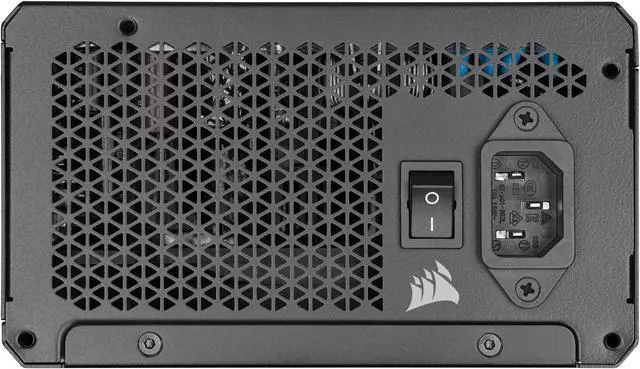
| Electrical Input And Output | Universal input 100–240 VAC (200–240 V variant for China/Korea), 47–63 Hz; input current 15A–7.5A (100–240 V) / 10A (200–240 V); rail outputs: +12V@100A, +5V@20A, +3.3V@20A, +5Vsb@3A |
|---|
| Reliability And Warranty | 10-year warranty; MTBF >100,000 hours; 105°C-rated Japanese electrolytic capacitors for long-term reliability |
|---|
| Physical Dimensions And Weight | 7.09 × 5.91 × 5.08 inches; 4.4 lb item weight |
|---|
| Package Contents | Includes modular power cables and connectors: 1×24-pin ATX, 2×ATX12V/EPS (4+4), 1×PCIe 5 (12+4) 12VHPWR, multiple 6+2 PCIe cables, 16× SATA connectors and 8× PATA connectors (see cable spec for individual cable lengths) |
|---|
| Features And Compatibility | Fully modular PSU; Modern Standby compatible; multi-GPU and GeForce RTX 50 series ready; designed for use in Personal Computer systems |
|---|
| Model Identifiers | CORSAIR RMx SHIFT Series RM1200x — Model CP-9020254-NA / CP-9020254-NA (RM1200x SHIFT); color: Black |
|---|
Reference Q&A
Q: Should I buy the Corsair RM1200x Shift or the RM1000x Shift?
A: Choose the RM1200x Shift if you are building around a flagship GPU, expect high transient power spikes, or want more headroom for future upgrades. Choose the RM1000x Shift if your system is a single-GPU build that stays comfortably below 1000W and you want the same side-mounted cable layout, ATX 3.1 support, and modular design at a lower wattage. The main trade-off is capacity, not platform features, because both models are positioned similarly within the RMx Shift family.
Q: Is the Corsair RM1200x Shift worth it over a standard front-connector 1200W PSU?
A: The RM1200x Shift is the better choice if your case has enough PSU-side clearance and you want easier cable access during building or upgrades. Its side-mounted connectors are the main differentiator, and that layout is consistently highlighted by Corsair and reviewers as the practical benefit. A traditional 1200W PSU makes more sense if your case has limited space beside the power supply or if you prefer maximum cross-case compatibility. The buying decision usually comes down to case fit first, then cable-management preference.
Q: Corsair RM1200x Shift vs HX1200i: which one should I choose?
A: Choose the RM1200x Shift if you want a high-capacity PSU with simpler product positioning: 80 Plus Gold efficiency, side-mounted modular connectors, and ATX 3.1 support aimed at modern gaming and workstation builds. Choose the HX1200i if you are specifically looking for a higher-tier Corsair option with Platinum-class positioning and the HX/i-series feature set. In practice, the RM1200x Shift is the more straightforward fit for builders who prioritize cable access and strong mainstream high-wattage performance, while the HX1200i is the step-up choice for buyers prioritizing efficiency tier and premium segmentation.
Q: Is the RM1200x Shift a better buy than an older RM1200x or earlier ATX 3.0 stock?
A: The RM1200x Shift is the better choice when you want the newer Shift platform benefits: side-mounted connectors and current Corsair positioning around ATX 3.1 compliance for modern PCIe 5.x systems. An older RM1200x or early RM1200x Shift stock can still be suitable for many builds, but buyers comparing new purchases usually prefer the current ATX 3.1-certified version to reduce confusion around cable standard labeling and to align with newer GPU-focused power guidance. The practical trade-off is that the Shift design adds convenience, but you should still confirm case clearance before choosing it.
Q: Will the RM1200x Shift fit in my case?
A: Only if your case has side access for the PSU connectors and enough clearance beside the power supply. The main buying trade-off of the RM1200x Shift is its side-mounted modular interface: it can make cabling easier in compatible cases, but it is less universal than a standard rear-connector PSU. A practical rule is to look for at least 30 mm of clearance on the connector side; CORSAIR also notes that 1000W and 1200W SHIFT models are 180 mm long, so case PSU-length support matters too.
Q: Is the RM1200x Shift a good choice for RTX 4090 or RTX 5090 class GPUs?
A: Yes, it is a strong fit for very high-end single-GPU builds if your case supports the SHIFT layout. The decision reason is simple: it is a 1200 W ATX 3.1 unit with a native 12V-2x6 / PCIe 5.x GPU power connection and is designed to handle modern transient spikes better than older ATX designs. The main caution is not power capacity, but cable and case compatibility.
Q: Is it quiet enough for a low-noise or workstation PC?
A: Yes, for most users it is a good quiet-build option. The RM1200x Shift includes a 140 mm fluid dynamic bearing fan and supports Zero RPM mode, so the fan shuts off at low to medium loads. That makes it better suited to quiet gaming or workstation systems than budget PSUs that keep the fan running all the time. Under heavier sustained loads, it will still behave like a high-power air-cooled PSU, so silence is load-dependent.
Q: Who should buy the RM1200x Shift, and who should skip it?
A: Buy it if you want a premium 1200 W PSU for a high-end build and your case is confirmed compatible with side-mounted connectors. Skip it if you want the safest plug-and-play compatibility across many different cases, or if your system does not need anywhere near 1200 W. Its real value is easier cable access plus modern ATX 3.1 support; its main trade-off is that it is more case-dependent than a conventional modular PSU.
Q: Is the RM1200x Shift better than a standard non-SHIFT 1200W PSU?
A: It is better only if the side-connector design solves a real build problem for you. Compared with a standard 1200 W modular PSU, the RM1200x Shift offers easier cable access and a modern ATX 3.1 feature set, but it gives up some case flexibility. If your case is tight around the PSU chamber or you reuse parts across multiple cases, a conventional rear-connector PSU is usually the safer choice.
Q: Is the Corsair RM1200x Shift worth buying for a high-end gaming or workstation build?
A: Yes, if you want a 1200W PSU for a modern high-power build and your case supports the Shift cable layout. Reddit and YouTube discussion repeatedly frame it as a practical choice for RTX 4090/5090-class systems because it combines 1200W capacity, ATX 3.x support, a native 12VHPWR-style GPU cable, and easier cable access. The main condition is case compatibility: the side-mounted connector design is helpful in roomy cases but can be a bad fit in tighter layouts.
Q: Who is the RM1200x Shift best suited for?
A: It is best suited for builders using a modern ATX case with enough side clearance, especially high-end gaming or creator systems that benefit from 1200W headroom and cleaner cable routing. It makes the most sense for users building with power-hungry GPUs, multiple PCIe power leads, or frequent upgrades. It is less suitable for compact cases, older layouts, or builds that do not need this much wattage.
Q: What is the main trade-off of the RM1200x Shift compared with a standard PSU?
A: The main trade-off is compatibility. The side-mounted connector panel can make cable management easier, but it also means the PSU depends more on case clearance and internal layout than a standard rear-connector PSU. In compatible cases, that layout is a clear convenience benefit. In incompatible or cramped cases, it can create routing problems or make the unit a poor choice even if the wattage and features are otherwise right.
Q: Is the RM1200x Shift a good fit if I care about quiet operation?
A: Generally yes, for users who want a quiet high-capacity PSU. Its feature set includes Zero RPM fan mode and a low-noise focus, which aligns with discussion that treats it as quiet in normal use. The trade-off is that, like many high-power PSUs, individual units can still vary and some users report coil whine or noise-related complaints, so it is better viewed as usually quiet rather than guaranteed silent.