
Your Browsing History

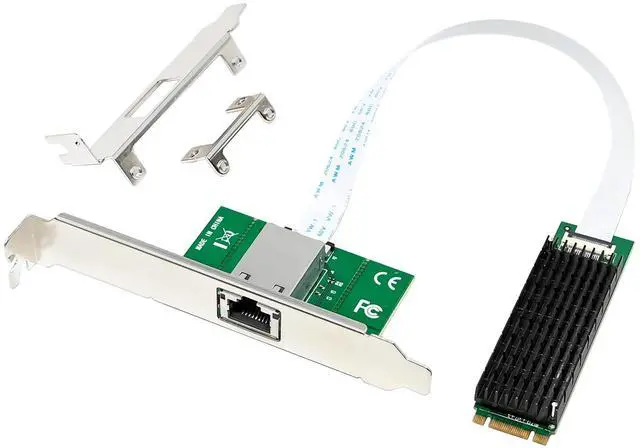
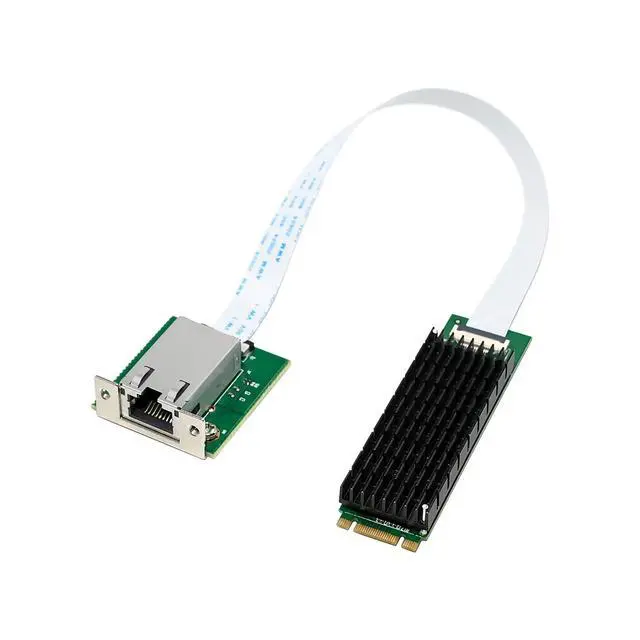
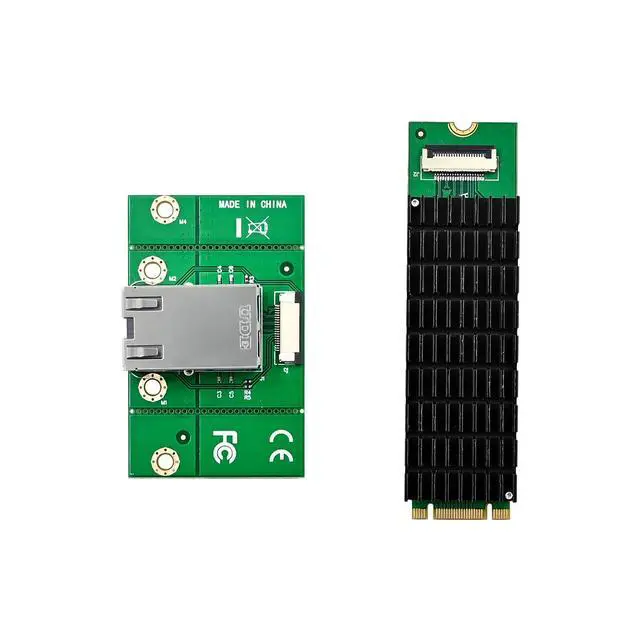
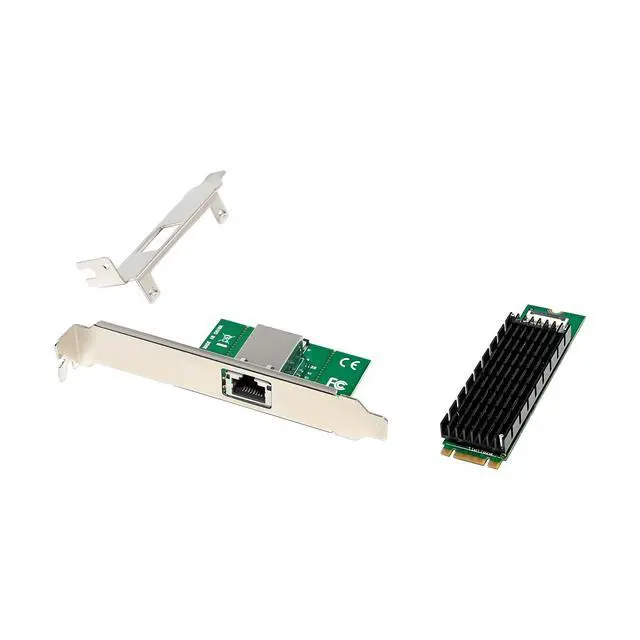
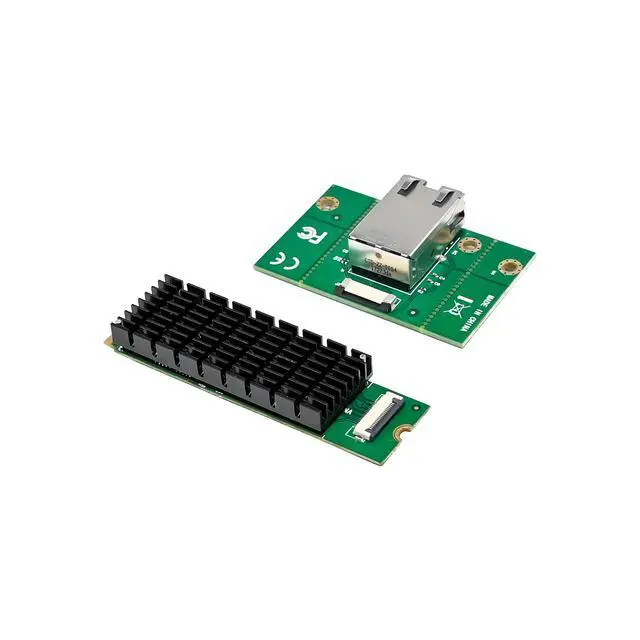
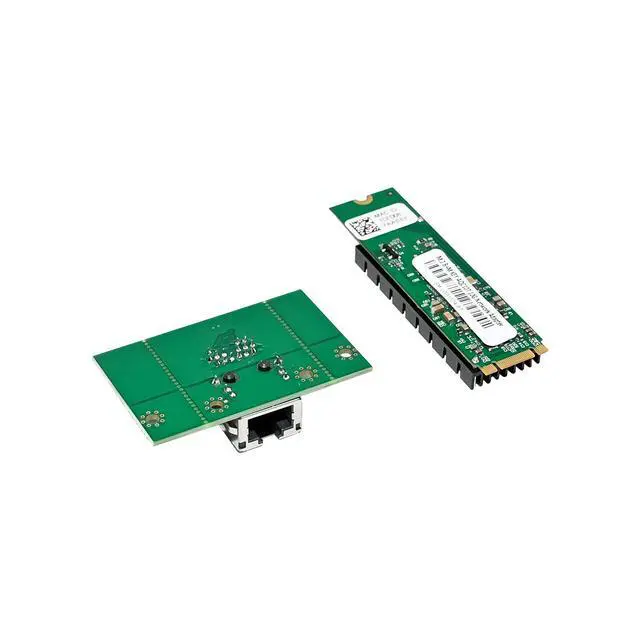
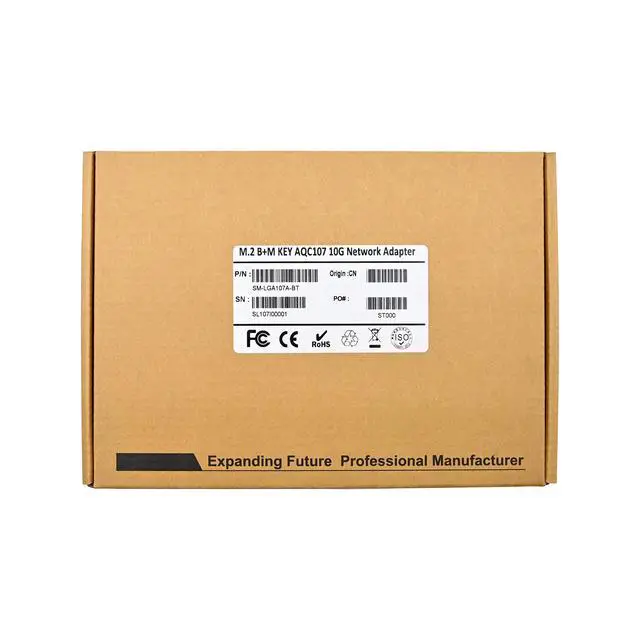



Interface: M.2 B+M KEY with PCI Express protocol
Compliant with PCIE Express Revision 3.0 and downstream with PCI Express Reivison2.0
Supports line rate of 8.0GT/s and 5.0GT/s per lane
Supports communication and management function
Integrated Aquantia AQrate PHY featuring NBASE-T technology
Supports PHY specifications with 10GBASE-T/5GBASE-T/2.5GBASE-T/1000BASE-T /100BASE-T.
On-chip high resolution cable analyzer for advanced cable diagnostics
Energy Efficient Ethernet (EEE) Support
Supports IEEE1588v2 Precision Time Protocol
Support large send offload, Receive Side Scaling (RSS), Direct Cache Access (DCA) and Header checksum for increased network performance and lower host CPU utilization
Supports IPv4, IPv6 and IPv6/UDP checksum offload
Supports Jumbo frame (up to 16kbytes)
Quality of Service (QoS)
Supports up to eight traffic classes and Data Center Bridging (DCB)
Support Operation Systems: WinddowsWin7/Win8/Win8.1/Win10/ Server2012 / Server2016/ Linux
Features table
Model Name: M.2 AQC107 10GbE Ethernet card
Interface: M.2 B+M KEY
Bus Width: Support PCI Express Gen3x2 or Gen2x2
Media Type: Copper:
100 meters over Cat 6a at 10Gbps
100 meters over Cat 5e (or better) at 5Gbps/2.5Gbps/1Gbps/ 100Mbps (requires no change to existing infrastructure or cabling)
Network protocol: IEEE802.3an, IEEE802.3bz, IEEE802.3ae, IEEE1588v2, IEEE802.3ab, IEEE802.3z, IEEE802.3u.
Jumbo frames: 16Kbytes
IPv4/IPv6 Flow Control support
Typical Power 3.8W at 10Gbps,3.0W at 5Gbps
Boot Options UEFI and PXE
Operating Temperature: 0~108(32F~226.4F)
Storage Temperature: -50~150(-67F~302F)
Operating Systems: Window:Win7/Win8/Win8.1/Win10
Window Server: Win-server2008 R2/Win-server2012-R2/ Win-server2016 /Win-server2019
Linux kernel:2.6.32/3.x/4.x or higher
Linux CentOS/RHEL6.5/7.X or higher
Ubuntu:14.x/15.x/16.x or higher
VMware: ESX/ESXi 4.x/5.x/6.x or higher
Package content
1 x M.2 AQC107 10GbE Ethernet card
1 x Users Manual
1 x CD
1 x profile bracket
1 x FPC flex cable
Accessories
System Requirements
Linux Kernels3.10 and above
Win7/ Win8/Win8.1/Win10/Server2012/ Server2016 32 or 64bits
One available M.2 M KEY with PCI Express protocol slot
Cabling Requirements:
Transmission bandwidth Twisted pair type Transmission distance
10Gbps Cat 6a or better 100 meters
5Gbps Cat5e or better 100 meters
2.5Gbps Cat5e or better 100 meters
1000Mbps Cat5e or better 100 meters
100Mbps Cat5e or better 100meters
Hardware installation
1.Turn off the computer and unplug the power cord
2.Line up and insert the M.2 adapter (B+M KEY) into the M.2 M KEY slot on the system board, make sure to match up the gap in the card edge connector, with the notch in the slot.
3.Securely fasten the card to the motherboard. Note: Different systems may have different methods for installing M.2 adapter, so please refer to documentation for your system board for more specific installation instruction for your particular application.
4.Insert the FPC cable into the FPC connector, and press the buckle to secure it.
5.Locate an open expansion card slot and remove the metal cover plate on the rear of the system case/chassis
6.Place the expansion card bracket from the m.2 adapter in the opening and fasten the cards bracket to the rear of the case
7.Replace the computer cover, then plug in the power cord
8.Power on the computer
Install Drivers
Windows Operating Systems
You must have administrative rights to the operating system to install the drivers.
1.insert the CD driver bound with M.2 AQ107 10GbE Ethernet card driver into your CD-ROM drive:
2.if the Found New Hardware Wizard screen is displayed, click Cancel
3.Open the location of the driver file and select the driver file according to the system type.
For Windows 32bit
Type Driver\AQC107\Windows\WindowsInstaller\ Aquantia_AQtion_x32_Win_ver2.1.17.0.msi
For Windows 64bit
Type Driver\AQC107\Windows\WindowsInstaller\ Aquantia_AQtion_x64_Win_ver2.1.17.0.msi
4.Double click it
5.Follow the instructions in the install wizard to finish it
Installing Linux Drivers from Source Code
1.Download and expand the base driver tar file.
2.Compile the driver module
3.Install the module using the modprobe command
4.Assign an IP address using the ifconfig command
Support
More information and settings, please refer to the Adapter User Guides or you can contact us.