




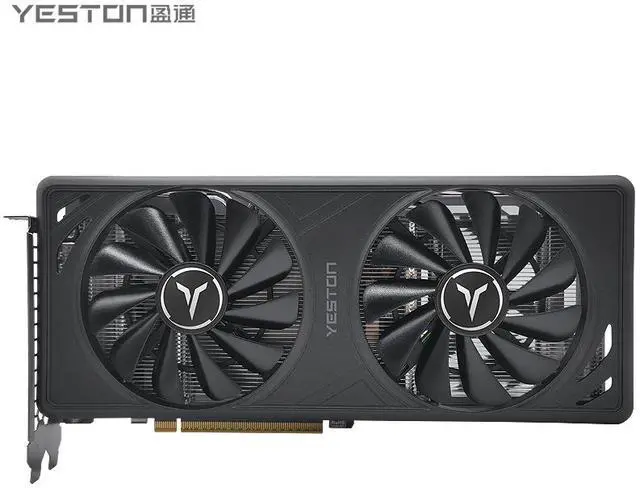
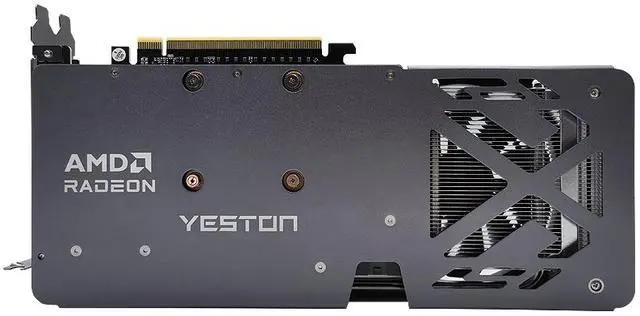
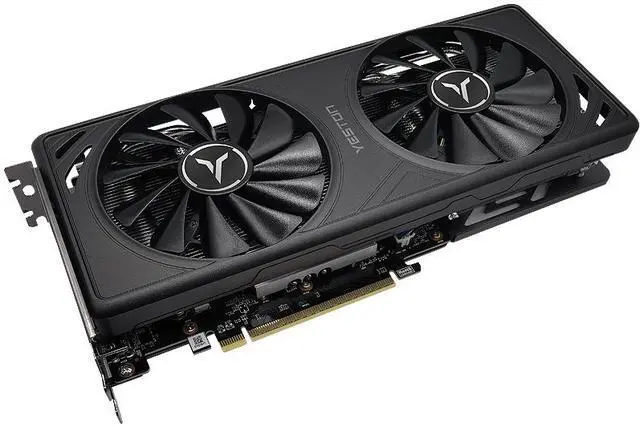
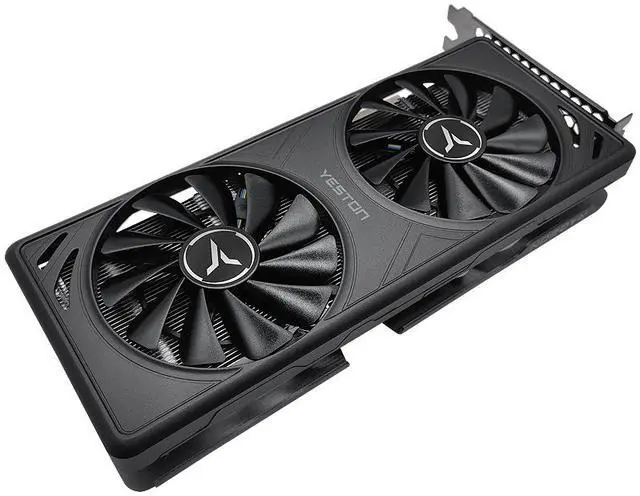


Yeston GAEA Radeon RX 9060 XT 8GB GDDR6 PCI Express 5.0 x16 Graphics Card RX9060XT
- 8GB 128-Bit GDDR6
- Core Clock 2530/3130MHz
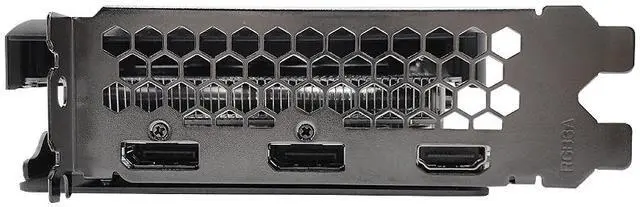
- 1 x HDMI 2 x DisplayPort
- 2048
- PCI Express 5.0 x16
Specs
Reviews
Learn more about the YESTON RX9060XT
| Brand | Yeston |
|---|---|
| Series | GAEA |
| Model | RX9060XT |
| Part Number | YT RX-96XT-8D6-GA-11PCI |
| Interface | PCI Express 5.0 x16 |
|---|
| Chipset Manufacturer | AMD |
|---|---|
| GPU Series | AMD Radeon RX 9000 Series |
| GPU | Radeon RX 9060 XT |
| Core Clock | 2530/3130MHz |
| Stream Processors | 2048 |
| Effective Memory Clock | 20000 MHz (20 Gbps) |
|---|---|
| Memory Size | 8GB |
| Memory Interface | 128-Bit |
| Memory Type | GDDR6 |
| DirectX | DirectX 12 Ultimate |
|---|---|
| OpenGL | OpenGL 4.6 |
| Multi-Monitor Support | 3 |
|---|---|
| HDMI | 1 x HDMI |
| DisplayPort | 2 x DisplayPort |
| Color | Black |
|---|---|
| Max Resolution | 7680 x 4320 |
| Cooler | Double Fans |
| Recommended PSU Wattage | 650W |
| Power Connector | 8-Pin |
| Max GPU Length | 281 mm |
|---|---|
| Card Dimensions (L x H) | 281(L)x140(W)x40(H)mm |
| Package Contents | Graphics card |
|---|
| First Listed on Newegg | August 11, 2026 |
|---|
Warranty & Returns
Warranty, Returns, And Additional Information
Warranty
- Limited Warranty period (parts): 1 year
- Limited Warranty period (labor): 1 year
- Read full details
Return Policies
- Return for refund until: January 31, 2027
- Return for replacement until: January 31, 2027
- This item is covered by Newegg.ca's Extended Holiday Return Policy.
- 15% restocking fee may apply.
- Read full return policy for details.
We want to ensure your holiday shopping this year is hassle-free. That’s why we’re automatically extending our return policies on almost every product! For purchases placed between November 1st, 2026 and December 31, 2026 you will have until January 31, 2027 to return your product.
Manufacturer Contact Info
LOADING...
The Yeston Radeon RX 9060 XT is an 8GB GDDR6 PCIe 5.0 graphics card built for mainstream PC gamers and everyday creators who want modern display support and solid 1080p to entry-level 1440p performance in a dual-fan design.
Recommended For
- 1080p PC gamers upgrading from older midrange cards who want current-gen features without moving to a higher price tier. AMD positioned the RX 9060 XT 8GB around mainstream gaming, and multiple reviews/community discussions frame the 8GB version as most suitable for 1080p rather than heavier 1440p ultra-texture use.
- Budget-focused builders using older PCIe 4.0 systems who still want a new GPU with solid value at 1080p. Coverage around the RX 9060 XT highlights its full x16 PCIe link as a practical fit for older platforms compared with narrower-lane alternatives.
- Esports and multiplayer players targeting high frame rates at 1080p, where texture-memory demands are usually lower than in the newest cinematic AAA games. This aligns with how reviewers and community discussions separate competitive 1080p use from ultra-settings AAA use.
- Shoppers specifically looking for a Yeston partner card for brand styling or cooler design, but whose actual workload still matches a mainstream 1080p gaming GPU. AMD's partner launch materials explicitly included Yeston among RX 9060 XT board partners.
Real-World Use Scenarios
- Playing current AAA games at 1080p with high settings is the most realistic fit for this 8GB RX 9060 XT; users can generally expect smooth everyday play, while the 8GB frame buffer is more likely to require lowered texture settings than the 16GB version in heavier titles.
- Using it for competitive esports games at 1080p is a common real-world scenario; the card is typically better suited to high-refresh multiplayer play than to maxed-out ray-traced AAA gaming.
- Running a 1440p monitor is possible for lighter games or reduced settings, but buyers choosing this 8GB version should expect a more mixed experience than with the 16GB model, especially in newer games with larger VRAM demands.
- Upgrading an older midrange gaming PC to drive a modern HDMI 2.1 or DisplayPort 2.1 monitor is a practical use case; users get current display connectivity and enough gaming performance for mainstream 1080p setups without moving to a larger power-hungry card.
- Using FSR or similar upscaling to hold frame rates in demanding games is a realistic expectation for this class of GPU; in practice, that helps extend playability at higher settings or at 1440p, but it does not fully remove the limits of an 8GB card in the newest heavy titles.
Spec Summary
| Attribute | Value |
|---|---|
| Best For | PC builders and gamers who need a Radeon RX 9060 XT GPU with DirectX 12/OpenGL 4.6 support, 8GB GDDR6 memory and outputs for high-resolution displays up to 7680×4320 on PCIe 5.0 systems |
| Model Identifiers | Yeston RX9060XT — AMD Radeon RX 9060 XT from the AMD Radeon RX 9000 Series (chipset by AMD) |
| Interface And Compatibility | PCI Express 5.0 interface for installation in PCIe 5.0 motherboard slots |
| GPU And Compute | Radeon RX 9060 XT GPU with 2,048 stream processors |
| Memory Configuration | 8GB GDDR6 on a 128-bit memory bus with an effective memory clock of 20000 MHz (20 Gbps) |
| Display Outputs And Resolution | 1× HDMI 2.1a and 2× DisplayPort 2.1, supports up to 7680 × 4320 output |
| Graphics APIs | Supports DirectX 12 and OpenGL 4.6 for modern gaming and graphics applications |
| Cooling And Power | Double-fan (dual-fan) cooler design and a single 8-pin PCIe power connector |
Reference Q&A
Q: Should I buy the Yeston RX 9060 XT 8GB or step up to an RX 9060 XT 16GB?
A: Choose this Yeston RX 9060 XT 8GB if you want the RX 9060 XT architecture and feature set at the lower entry price, especially for mainstream 1080p gaming. Step up to an RX 9060 XT 16GB if you want more headroom for newer games, higher texture settings, or longer-term use. Reviews and community discussion consistently treat the 16GB version as the safer pick when VRAM limits may matter, while the 8GB version remains the value-focused option when budget is the main constraint.
Q: RX 9060 XT 8GB vs RTX 5060: which one makes more sense?
A: This RX 9060 XT 8GB makes more sense if your priority is straightforward raster gaming value and you want a full x16 PCIe interface, which reviewers have noted can help compared with narrower-lane competitors in older PCIe 4.0 systems. The RTX 5060 makes more sense if your buying decision depends more on Nvidia-specific features such as DLSS ecosystem support, CUDA-dependent apps, or ray tracing preferences. For a typical gaming-first build, the RX 9060 XT 8GB is usually the more performance-oriented choice at similar class positioning, while the RTX 5060 is the feature-ecosystem choice.
Q: Is the RX 9060 XT 8GB a better buy than an RX 7600 XT or RX 7600?
A: The RX 9060 XT 8GB is the better buy if you want the newer RDNA 4 generation, newer display support, and a clearer step forward for a fresh build. It is generally the stronger upgrade path over RX 7600-class cards because official AMD positioning and third-party testing place the RX 9060 XT above the previous generation in mainstream gaming. An RX 7600 or RX 7600 XT still makes sense mainly when found at a clearly lower price, but for a new purchase in the same performance tier, the RX 9060 XT is the more current choice.
Q: Should I choose this RX 9060 XT 8GB or move up to an RTX 5060 Ti 16GB?
A: Choose this RX 9060 XT 8GB if you are keeping the budget tighter and want a card aimed at mainstream 1080p gaming without paying for the next tier up. Move to an RTX 5060 Ti 16GB if you specifically want more VRAM plus Nvidia's higher-tier positioning for heavier settings, broader creator-app compatibility, or stronger premium-feature coverage. The trade-off is simple: the RX 9060 XT 8GB is the cost-conscious gaming option, while the RTX 5060 Ti 16GB is the higher-spend option for buyers who know they want more memory and Nvidia's software stack.
Q: Is this Yeston RX 9060 XT 8GB a good fit for 1080p gaming, or should I look for a 16GB alternative?
A: This card is the safer fit for mainstream 1080p gaming than for buyers who want extra VRAM headroom. Its 8GB GDDR6 memory and 128-bit bus are reasonable for esports, lighter AAA settings, and general midrange use, but a 16GB alternative is the better choice if you expect heavier texture packs, longer upgrade life, or more demanding new games. In short: buy this 8GB model for value-oriented 1080p builds; step up to 16GB if memory capacity is a priority.
Q: Will this graphics card work in most desktop PCs?
A: It should work in many standard desktop towers, but buyers need to confirm three things before purchase: a full-size PCIe x16 slot, enough physical room for a dual-fan card, and one available 8-pin PCIe power connector. It is a desktop GPU, not a laptop upgrade, and small-form-factor systems are the main risk for fit problems.
Q: Do I need a special power supply for this card?
A: You do not need a special power supply standard, but you do need the right connector and enough overall PSU capacity. This Yeston model uses a single 8-pin power connector, which is simpler than higher-end cards that may require two connectors. The practical buying check is whether your PSU has one free 8-pin PCIe lead and enough wattage for your full system, especially if you use a power-hungry CPU.
Q: Can this card run 4K displays, and is it a good choice for 4K gaming?
A: Yes for 4K display output, but not necessarily as the best 4K gaming buy. The listed max resolution of 7680 x 4320 and HDMI 2.1a plus DisplayPort 2.1 mean it can connect to high-resolution modern displays. The trade-off is performance class: with 8GB of memory and a 128-bit bus, this is more naturally positioned for 1080p and lighter 1440p use than for demanding 4K gaming at high settings.
Q: Who is this card most suitable for?
A: This card is most suitable for desktop buyers building a modern AMD midrange gaming PC, especially those focused on display connectivity and mainstream gaming rather than maximum VRAM or enthusiast-class performance. It makes the most sense for users who want a newer PCIe 5.0 Radeon card with one HDMI 2.1a port, two DisplayPort 2.1 outputs, and a simpler single-8-pin setup. It is less suitable for shoppers prioritizing compact cases, workstation-heavy GPU memory needs, or higher-end 1440p/4K ambitions.
Q: Is the Yeston Radeon RX 9060 XT 8GB worth buying if I want a lower-cost RX 9060 XT?
A: It can make sense if price is the main reason you are considering it and you specifically want an RX 9060 XT from a smaller board brand. Reddit discussion around Yeston generally treats the brand as legitimate, but the main trade-off on this listing is the 8GB memory configuration. That makes it a more budget-focused choice than the more commonly discussed 16GB RX 9060 XT cards, so it is better suited to buyers who prioritize entry cost over extra VRAM headroom.
Q: Who is this Yeston RX 9060 XT 8GB most suitable for?
A: It is most suitable for buyers who want a basic dual-fan AMD card with modern display outputs and are comfortable with an 8GB VRAM limit. Based on the product data, it fits straightforward gaming or general desktop builds that need one HDMI 2.1a, two DisplayPort 2.1 outputs, and a single 8-pin power connector. It is a less natural fit for shoppers specifically choosing the RX 9060 XT because many Reddit discussions focus on the value of the 16GB versions.
Q: What are the main trade-offs of choosing this 8GB version instead of a 16GB RX 9060 XT?
A: The main trade-off is memory capacity. This card keeps the same general product class but cuts VRAM to 8GB, which reduces headroom versus the 16GB models that dominate most buyer discussions. In practice, that means the 8GB version is the more constrained option for buyers who keep cards for a long time, compare heavily on VRAM, or are choosing between nearby-priced alternatives.
Q: Is Yeston a safe brand choice for an AMD graphics card?
A: If your concern is legitimacy rather than premium positioning, the available Reddit discussion supports Yeston as a real and generally trusted AMD board brand. The caution is that it is a smaller brand, so some buyers may prefer larger vendors for familiarity, regional support, or broader review coverage. This makes Yeston reasonable for buyers comfortable with a less mainstream board partner.