








We want to ensure your holiday shopping this year is hassle-free. That’s why we’re automatically extending our return policies on almost every product! For purchases placed between November 1st, 2026 and December 31, 2026 you will have until January 31, 2027 to return your product.
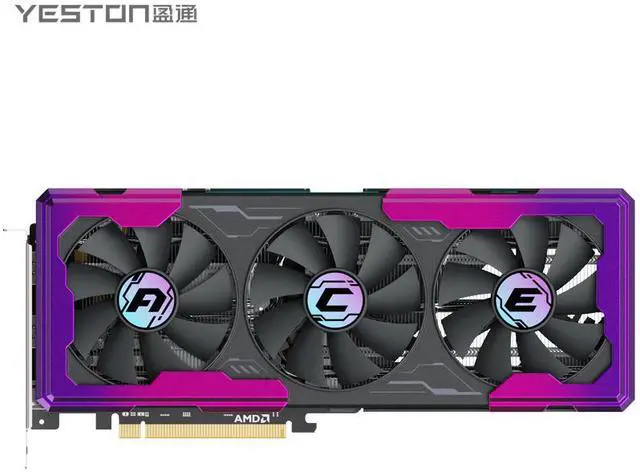
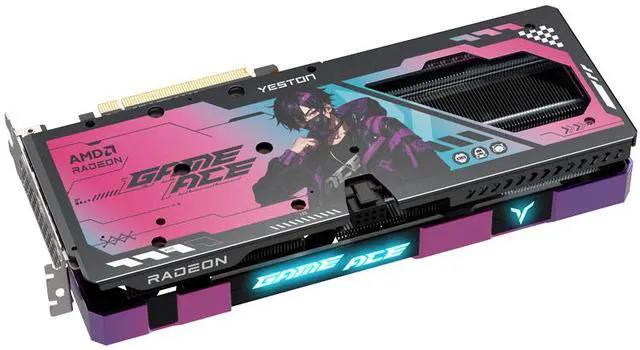
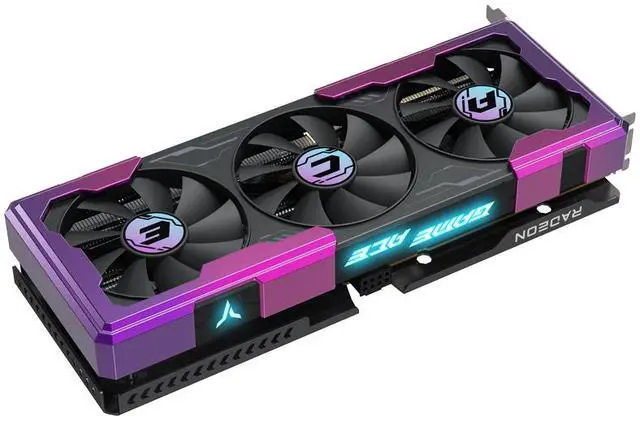
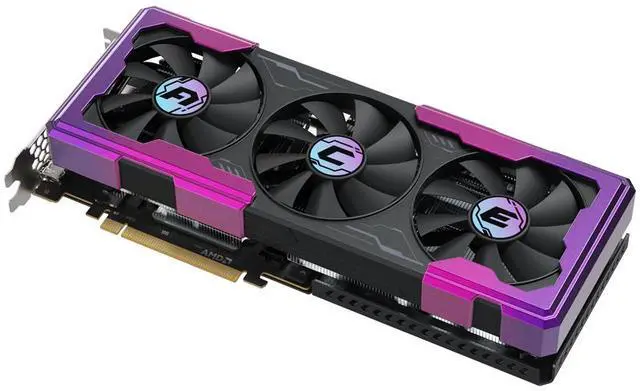
The Yeston Radeon RX 9060 XT is a 16GB GDDR6 PCIe 5.0 graphics card built for gamers and creators who want modern display support, high-resolution output up to 8K, and ample VRAM for current games, content work, and multi-monitor setups.
| Attribute | Value |
|---|---|
| Best For | High-resolution gaming and graphics workflows that benefit from 16GB of GDDR6 memory; pairs with PCI Express 5.0 systems and supports displays up to 7680×4320 |
| Model Identifiers | Yeston RX9060XT — Radeon RX 9060 XT from the AMD Radeon RX 9000 Series (AMD chipset) |
| GPU And Compute | Radeon RX 9060 XT GPU with 2048 stream processors |
| Memory Configuration | 16GB GDDR6 on a 128-bit memory interface with 20000 MHz effective memory clock (20 Gbps) |
| Interface And Slot | PCI Express 5.0 interface |
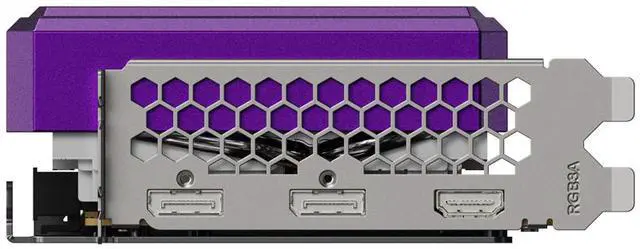
| Display Outputs | 1 x HDMI 2.1b and 2 x DisplayPort 2.1a, supporting up to 7680 x 4320 resolution |
| Cooling And Power | Triple-fan cooler; requires an 8-pin power connector |
| API Support And Compatibility | Supports DirectX 12 and OpenGL 4.6 |
Q: Should I buy the Radeon RX 9060 XT 16GB or the GeForce RTX 5060 Ti 16GB?
A: Choose the RX 9060 XT 16GB if you want a 16GB mainstream gaming card focused on strong 1080p and 1440p raster performance, modern display outputs, and typically better value when pricing is close. Choose the RTX 5060 Ti 16GB if your priority is Nvidia-specific features such as broader DLSS support, stronger ray tracing in many reviewed games, or CUDA-heavy creator workflows. Across major reviews, the RTX 5060 Ti 16GB is usually somewhat faster overall, while the RX 9060 XT 16GB remains a practical alternative when purchase price matters more than peak feature set.
Q: Is the RX 9060 XT 16GB worth it over the RX 9060 XT 8GB?
A: The 16GB version is the safer choice for buyers planning to keep the card longer, play newer games at higher texture settings, or use 1440p more often. The 8GB version can still fit lower-cost 1080p builds, but multiple reviews note that 8GB cards are more likely to run into memory limits in heavier modern titles. If the price gap is reasonable, the 16GB model is usually the better long-term purchase.
Q: Is the RX 9060 XT 16GB a meaningful upgrade from the RX 7600 XT?
A: Yes, for most gamers it is a clear generational upgrade. The RX 9060 XT 16GB keeps the same 16GB capacity but moves to AMD's newer RDNA 4 generation, and both AMD's own positioning and third-party reviews show a noticeable step up in gaming performance. It makes the most sense if you want higher average frame rates at 1440p, improved ray tracing capability, or a longer runway for newer games without moving into a much higher price tier.
Q: Should I step up from the RX 9060 XT 16GB to a higher-tier GPU?
A: Step up only if you are targeting more demanding 1440p settings, heavier ray tracing, or regular 4K gaming. The RX 9060 XT 16GB is positioned as a mainstream card and reviews consistently place it as a strong fit for 1080p and capable 1440p play. A higher-tier card makes sense for users who want more headroom, but for balanced mainstream builds the RX 9060 XT 16GB is often the more proportionate choice.
Q: Is this a good fit for 1440p gaming, or is it mainly a 1080p card?
A: This card is best suited to mainstream to upper-midrange gaming, especially 1080p and 1440p. Its 16GB of GDDR6 helps with newer games and higher texture settings, but the 128-bit memory bus and 2048 stream processors suggest it is not the strongest choice for buyers who mainly want max-settings 4K performance. If your goal is strong 1080p or practical 1440p gaming with more VRAM headroom, it makes sense; if your priority is heavier 4K gaming, a higher-tier GPU is the safer buy.
Q: Who is this GPU most suitable for?
A: This GPU is most suitable for buyers who want a current-generation AMD card with 16GB of VRAM, standard 8-pin power, and a triple-fan cooler for a gaming desktop. It fits users upgrading from older midrange cards, people building a 1080p or 1440p system, and buyers who care more about VRAM capacity and display support than about flagship-class performance. It is less suitable for compact builds, low-wattage power supplies, or shoppers specifically targeting top-end 4K gaming.
Q: What are the main trade-offs versus a GeForce RTX 5060 Ti 16GB-class alternative?
A: The main trade-off is balance. This RX 9060 XT-class card gives you 16GB of VRAM and a full-size desktop graphics card design with standard PCIe power, which can be attractive for buyers focused on gaming value and memory capacity. A competing RTX 5060 Ti 16GB-class card may be the better pick if your software stack depends more heavily on NVIDIA-specific features or creator and AI workflows. If your priority is straightforward gaming with 16GB of VRAM, this type of Radeon card is a reasonable alternative; if your priority is broader software ecosystem support, the NVIDIA option may be safer.
Q: Will this card work with a typical power supply and existing motherboard?
A: For most standard desktop builds, yes. This Yeston model uses PCI Express 5.0 and a single 8-pin power connector, so physical and power compatibility should be simpler than on cards that require newer 12VHPWR connectors or multiple 8-pin leads. It should also be backward-compatible with older PCIe x16 motherboard slots, though you still need enough case clearance for a triple-fan card and a power supply with the required PCIe cable.
Q: Can I connect multiple modern monitors to this card without adapters?
A: Usually yes, if your monitors match the card's outputs. This Yeston card has 1 HDMI 2.1b port and 2 DisplayPort 2.1a outputs, so it is a straightforward fit for one HDMI display plus up to two DisplayPort displays. It is less convenient if you need multiple HDMI-only monitors, because only one native HDMI port is included.
Q: Is the Yeston Radeon RX 9060 XT 16GB worth buying if it is one of the cheaper RX 9060 XT cards?
A: It can be a practical buy if price is the main reason you are considering it. Reddit discussions around the Yeston RX 9060 XT repeatedly frame it as a lower-cost entry into the same RX 9060 XT GPU class, with buyers mainly comparing it against pricier board partners or nearby Nvidia options. Based on the product data, it still gives you the core RX 9060 XT configuration, 16GB of GDDR6, triple-fan cooling, and modern display outputs. The main trade-off is not weaker listed core specs, but thinner review coverage and less brand familiarity than Sapphire, XFX, or ASUS.
Q: Who is the Yeston Radeon RX 9060 XT 16GB most suitable for?
A: It is most suitable for buyers who specifically want a 16GB midrange Radeon card and are comfortable choosing a less common board brand. The listed specs point to a straightforward desktop gaming GPU: 16GB GDDR6 memory, a single 8-pin power connector, triple-fan cooler, and current HDMI 2.1b / DisplayPort 2.1a outputs. Community discussions around RX 9060 XT buying decisions often focus on value-oriented users deciding between this class of card and alternatives with either less VRAM or higher prices.
Q: What are the main trade-offs of buying this Yeston RX 9060 XT instead of a more established RX 9060 XT brand?
A: The main trade-off is confidence, not the basic feature list. On paper, this card covers the expected essentials: the RX 9060 XT GPU, 16GB memory, PCIe 5.0 interface, triple-fan cooling, and modern display connectivity. In Reddit threads, buyers repeatedly ask about Yeston because there are fewer reviews and less long-term owner feedback than for larger brands. If you value abundant reviews, easier comparison data, or stronger resale familiarity, a more established partner may feel safer. If you mainly care about getting the RX 9060 XT feature set at a competitive price, Yeston is a reasonable consideration.
Q: Should I choose the Yeston RX 9060 XT 16GB over an 8GB alternative like an RTX 5060?
A: It is the more logical choice if your decision is centered on getting a 16GB card in this price tier. Reddit comparison threads specifically pair the Yeston RX 9060 XT 16GB against 8GB Nvidia options, which shows that memory capacity is a real decision factor for buyers. Based on the provided product data, this Yeston card offers 16GB of GDDR6 on the RX 9060 XT platform, so the case for it is stronger when you want more VRAM and similar class positioning rather than when you are shopping purely by brand preference.