








We want to ensure your holiday shopping this year is hassle-free. That’s why we’re automatically extending our return policies on almost every product! For purchases placed between November 1st, 2026 and December 31, 2026 you will have until January 31, 2027 to return your product.
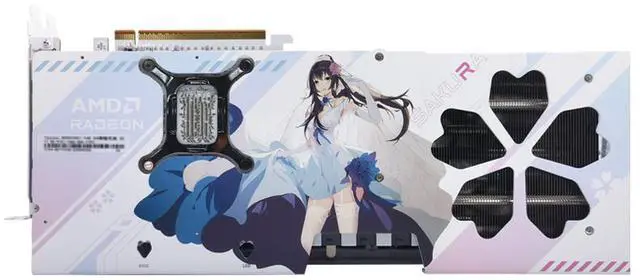
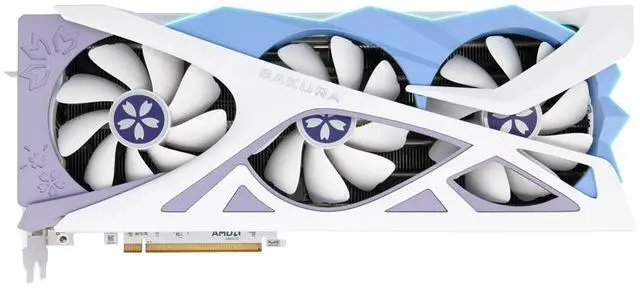
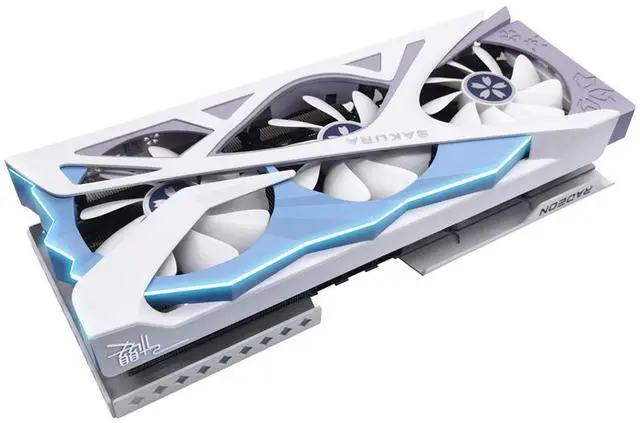
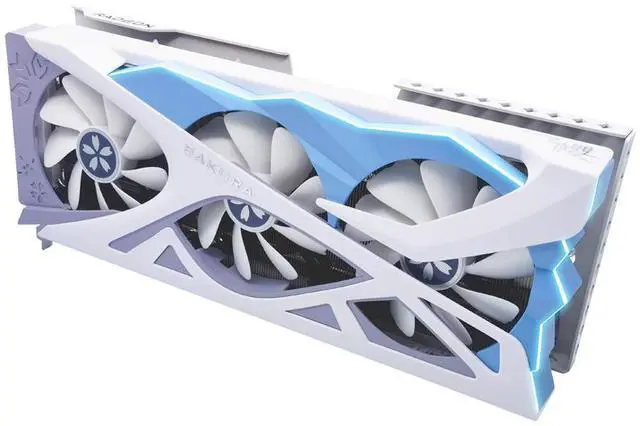
The Yeston Radeon RX 9070 XT is a 16GB GDDR6 PCIe 5.0 graphics card built for high-resolution PC gaming and multi-display setups, making it a strong fit for enthusiasts who want modern AMD GPU performance, triple-fan cooling, and support for up to 8K output.
| Attribute | Value |
|---|---|
| Best For | High-resolution gaming and GPU-accelerated content creation on 4K/8K and multi-monitor setups, enabled by a 16GB GDDR6 Radeon RX 9070 XT on a PCIe 5.0 x16 slot |
| Model Identifiers | Yeston RX9070XT — AMD Radeon RX 9070 XT from the AMD Radeon RX 9000 Series |
| Interface And Bus | PCI Express 5.0 x16 interface for installation in a full-length x16 slot |
| GPU And Memory | AMD GPU with 4096 stream processors and 16GB 256-bit GDDR6 memory, effective memory clock 20000 MHz (20 Gbps) for handling high-resolution textures and GPU compute workloads |
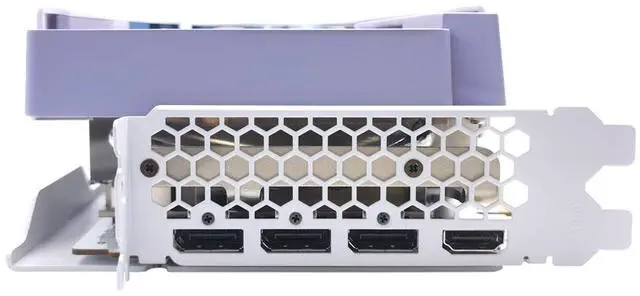
| Display Outputs And Resolution | 1 x HDMI and 3 x DisplayPort outputs supporting up to 7680 x 4320 (8K) for multi-monitor and high-resolution displays |
| API Support | Supports DirectX 12 and OpenGL 4.6 |
| Cooling And Power | Triple-fan cooler; requires three 8-pin PCIe power connectors |
Q: Should I buy the RX 9070 XT or RTX 5070 Ti for 1440p or 4K gaming?
A: Choose the RX 9070 XT if you want very similar class performance in many modern games and your decision depends on value in standard rasterized gaming. Choose the RTX 5070 Ti if ray tracing performance, path tracing, or Nvidia-specific features matter more to you. Across large review samples, the two cards trade wins, but the 5070 Ti tends to hold an advantage in heavier ray-traced workloads while the 9070 XT stays competitive and can lead in several raster-focused titles.
Q: Is the RX 9070 XT worth buying over the RX 9070?
A: Buy the RX 9070 XT if you want more headroom for 1440p ultra settings, stronger 4K performance, or a longer upgrade cycle. Buy the RX 9070 if you are targeting 1440p and want to reduce total system cost without leaving this performance class. The usual trade-off is simple: the XT model gives a meaningful step up, while the non-XT model is the more budget-conscious option for high-refresh 1440p builds.
Q: Is the RX 9070 XT a better choice than the RX 7900 XT?
A: Choose the RX 9070 XT if you want the newer generation card with stronger platform longevity, newer feature support, and generally comparable or better real-world gaming positioning. Choose the RX 7900 XT mainly when its lower street price or 20GB memory capacity is the deciding factor. In buyer discussions and reviews, this comparison usually comes down to whether you prioritize newer architecture and features or extra VRAM and price.
Q: Should I get the RX 9070 XT or RTX 5070?
A: Get the RX 9070 XT if you are shopping for a higher performance tier and want more consistent 1440p ultra or entry 4K capability. Get the RTX 5070 if you want to spend less and stay closer to upper-midrange gaming. This comparison is less about small feature differences and more about class: the 9070 XT is typically the step-up option for buyers who want more performance margin.
Q: Is the RX 9070 XT a good upgrade from older upper-tier AMD cards, or should I keep my current GPU?
A: The RX 9070 XT makes the most sense as an upgrade if you want newer architecture features, stronger ray tracing than older AMD generations, and a fresh warranty cycle. It is a more practical upgrade for users coming from cards below this class than for owners of still-fast high-end Radeon models. If your current card already delivers the frame rates you want, the case for upgrading is usually about features, efficiency, or game-specific improvements rather than a complete tier jump.
Q: Will this Yeston RX 9070 XT work in an older PC, or do I need a PCIe 5.0 motherboard?
A: Yes. It should work in most desktops that have a full-length PCIe x16 slot, even if the motherboard is PCIe 4.0 or PCIe 3.0. PCIe is backward compatible. The practical checks are slot availability, case clearance, power supply capacity, and whether your PSU has three 8-pin PCIe power leads. PCIe 5.0 support is not required just to run the card.
Q: Does this card need a high-wattage power supply?
A: Plan for a strong PSU. This Yeston model uses three 8-pin PCIe power connectors, which puts it in the class of RX 9070 XT cards that typically prompt buyer questions about PSU size and cabling. A quality PSU in the 750W to 850W range is the safer fit for most gaming builds, especially if the CPU is also high power or if you want more upgrade headroom. The key buying check is not just wattage, but having three native 8-pin PCIe connectors available.
Q: Will this Yeston RX 9070 XT fit in most PC cases?
A: Not always. This is a large triple-fan card, and the listed size is about 332 x 138 x 65 mm. That means buyers should treat it as a full-size, thick GPU and verify GPU length clearance, card thickness, front radiator clearance, and nearby drive cage space before buying. It is a better fit for mid-tower or larger cases than for compact builds.
Q: Who is this card most suitable for?
A: This card is best suited for buyers building a performance-focused gaming PC who want a modern AMD GPU with 16GB of VRAM, a 256-bit memory bus, and multi-display output. It makes the most sense for higher-end 1440p use and entry-to-strong 4K use cases, rather than budget builds, compact systems, or low-power office PCs. The trade-off is that you get more graphics headroom, but you also need more case space and more PSU capacity than with smaller mainstream GPUs.
Q: Is this a better choice than a smaller or cheaper graphics card?
A: It is a better choice if your priority is higher gaming performance, 16GB VRAM, and longer-term headroom. It is not the better choice if your priorities are lower cost, lower power draw, easier installation, or a small-form-factor case. In short: choose this class of card when performance is the main goal; choose a smaller or cheaper GPU when total system simplicity, budget, or compact fit matters more.
Q: Is this Yeston RX 9070 XT worth buying if price is close to mainstream RX 9070 XT models?
A: It is mainly worth buying if you want an RX 9070 XT with Yeston styling and the listed core specs match your needs. Based on repeated Reddit and YouTube discussion, the decision usually comes down to price: if this card is priced near other 16GB RX 9070 XT models, it can make sense; if it carries a large visual-design premium, buyers often prefer better-known alternatives with similar class performance. The product data shows standard high-end RX 9070 XT basics rather than a unique functional advantage: 16GB GDDR6, 256-bit memory, triple-fan cooling, and 3 x 8-pin power.
Q: Who is the Yeston RX 9070 XT best suited for?
A: It is best suited for buyers who specifically want a Yeston-branded RX 9070 XT and are comfortable choosing based on design, standard RX 9070 XT performance tier, and a full-size desktop build. The card is less suitable for buyers who want the most established board-partner reputation, the smallest card, or the simplest power setup. Its listed specs point to a typical large desktop GPU: triple fans, PCIe 5.0 x16, 16GB memory, and 3 x 8-pin power connectors.
Q: What are the main trade-offs of choosing this Yeston RX 9070 XT instead of another board partner version?
A: The main trade-offs are size, power cabling, and brand preference rather than a clearly different feature set. This listing uses triple-fan cooling and 3 x 8-pin power, which can make installation and cable management less convenient than some 2 x 8-pin alternatives. Community discussion around RX 9070 XT models also shows that buyers compare cooling, noise, fit, and connector count more than raw specs, because many cards in this class offer similar core capabilities.
Q: Is this a good choice for smaller cases or simple upgrades?
A: Not usually. This card is more suitable for a standard mid-tower or larger build than for a compact or low-hassle upgrade. The listed triple-fan cooler and 3 x 8-pin power requirement suggest that buyers should verify case clearance, PSU cable availability, and airflow before purchase. If you want an easier drop-in upgrade, a shorter or lower-connector RX 9070 XT model may be simpler.
Q: Should I avoid this card if my power supply only has two PCIe 8-pin GPU cables?
A: Yes, in most cases you should avoid it unless your PSU and cabling explicitly support this card's 3 x 8-pin requirement. The product listing clearly specifies 3 x 8-pin power, so this is not the best fit for builds planned around only two native GPU power leads. For buyers trying to minimize PSU compatibility questions, a 2 x 8-pin RX 9070 XT model is usually the safer choice.