


- Free 85-day Returns
$189.99
Add to PC build list
Ships from United States.
Sold by Newegg
Shipped by Newegg


Get Educated
Make informed decisions with expert advice. Learn More
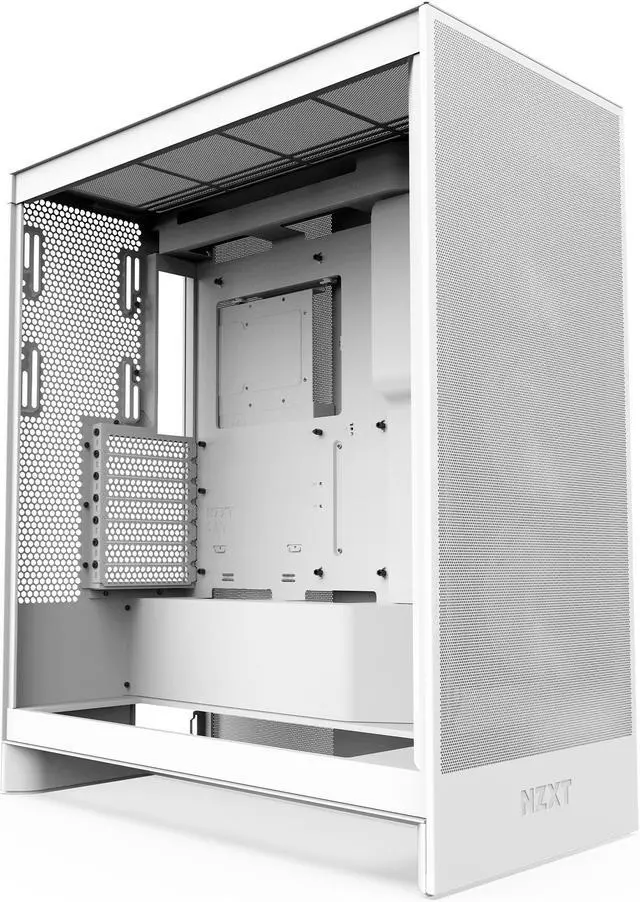
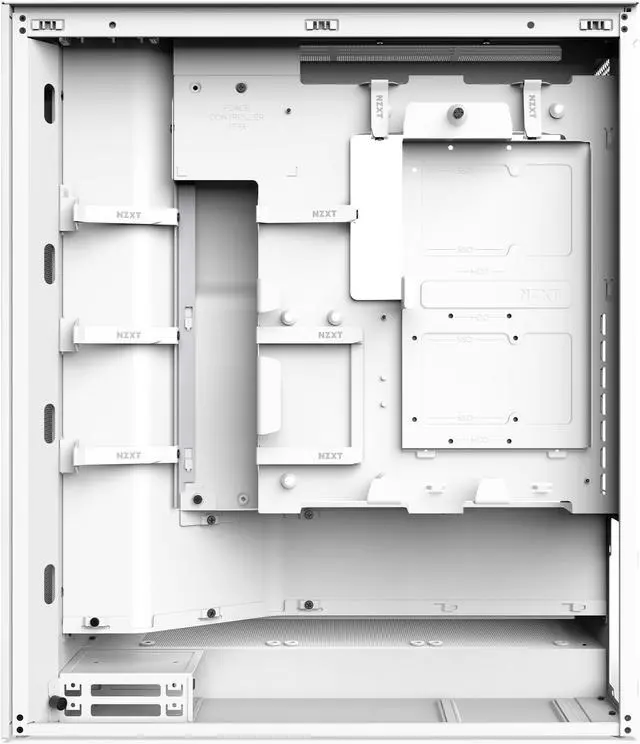
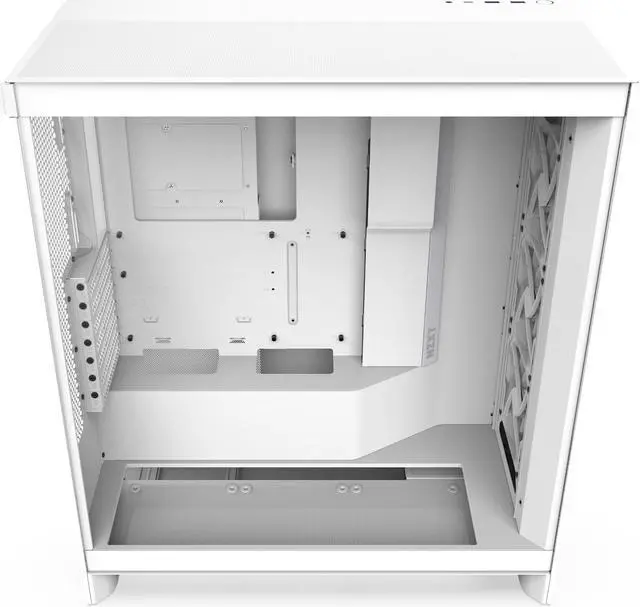
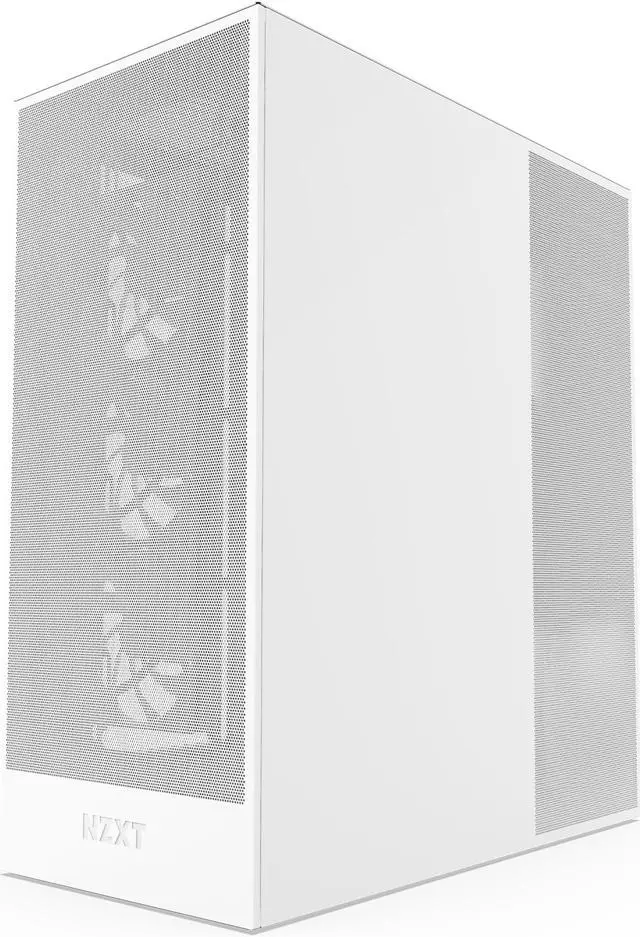
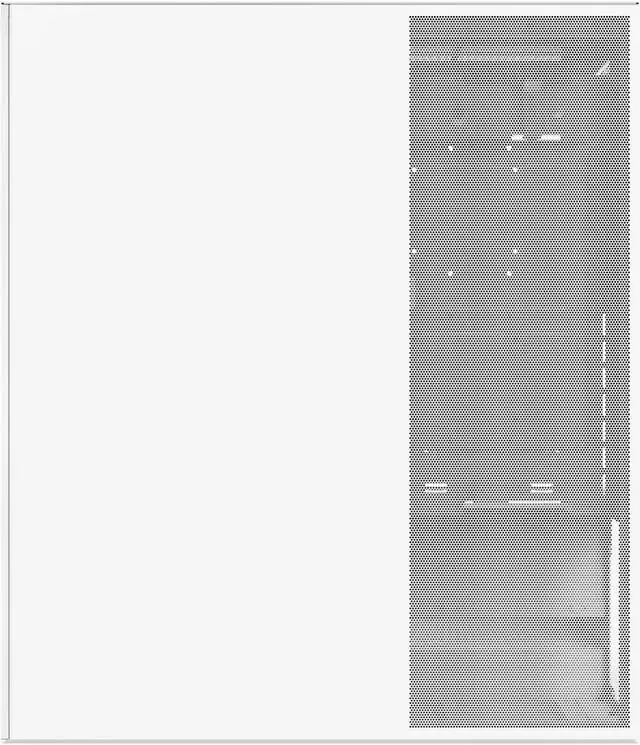
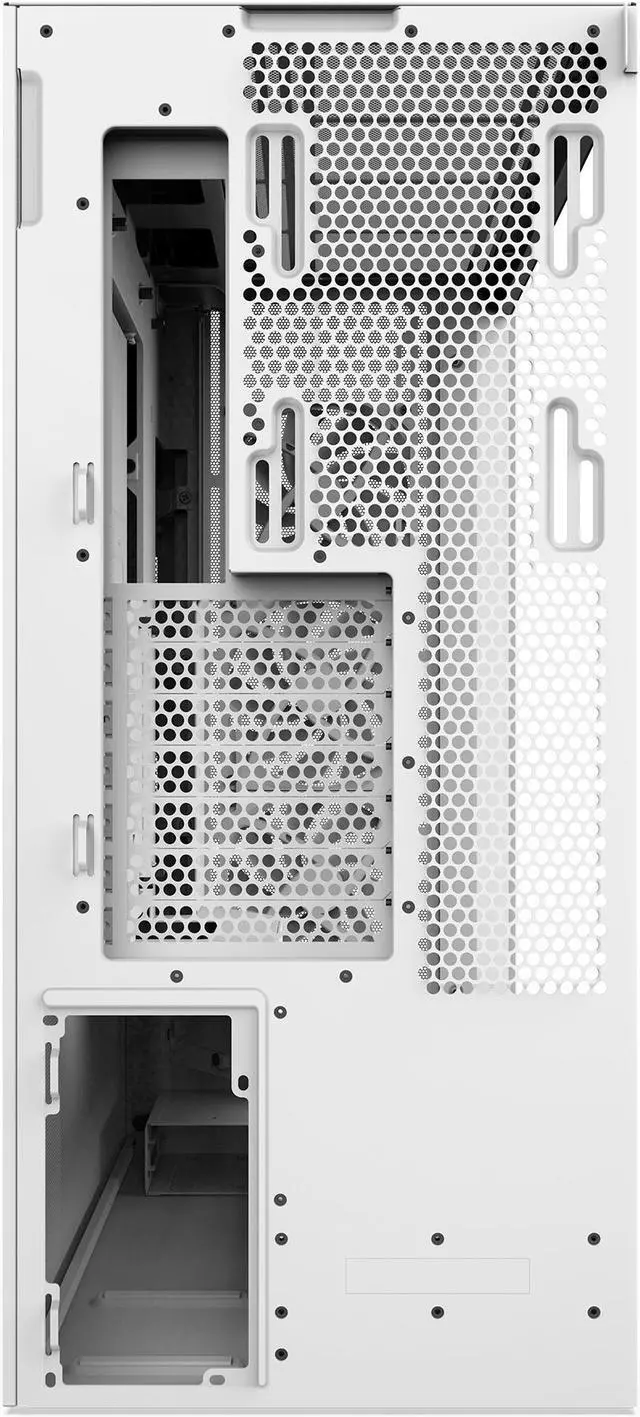
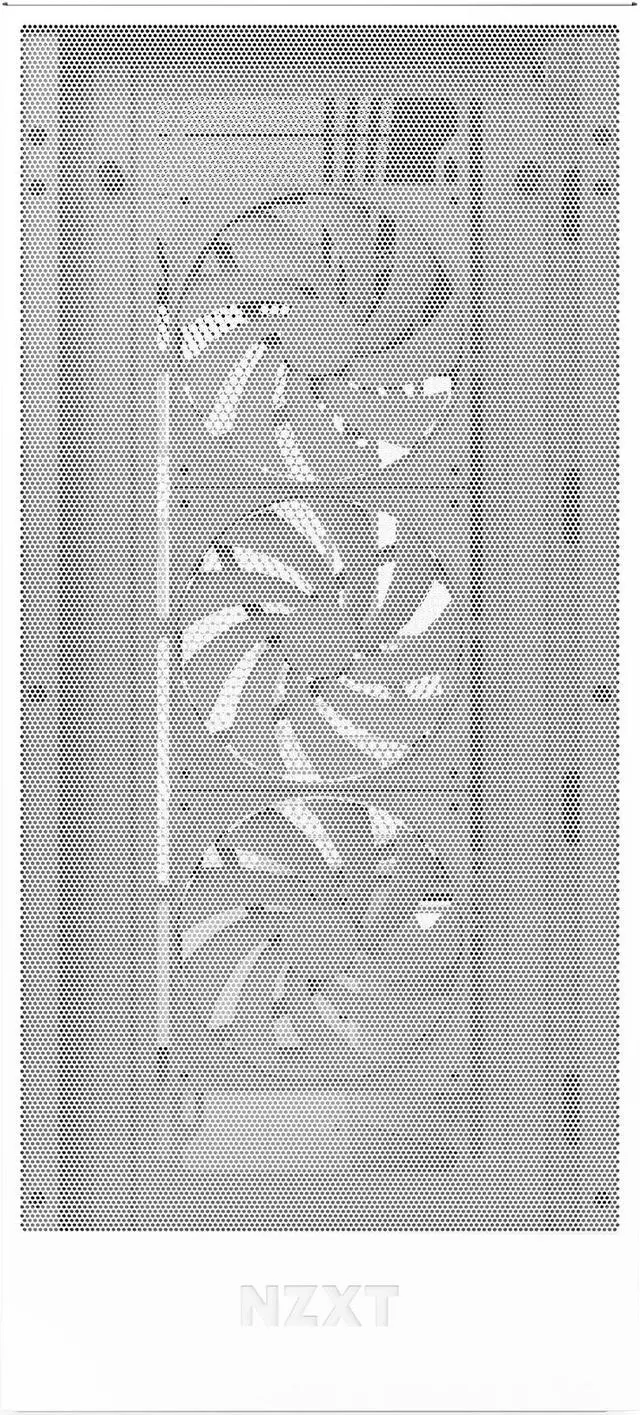
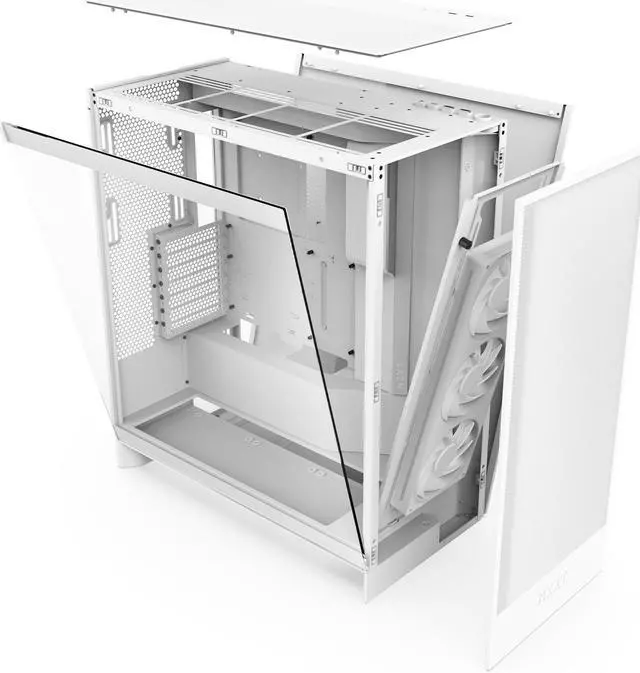
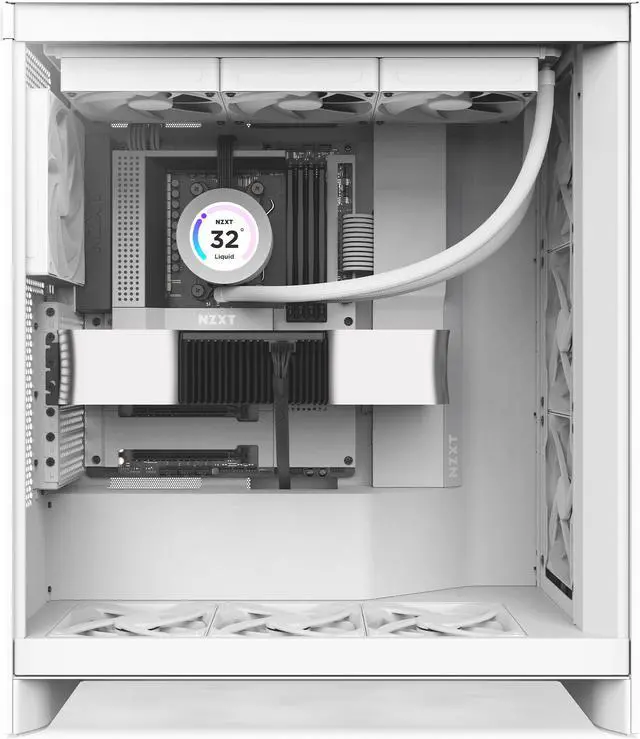
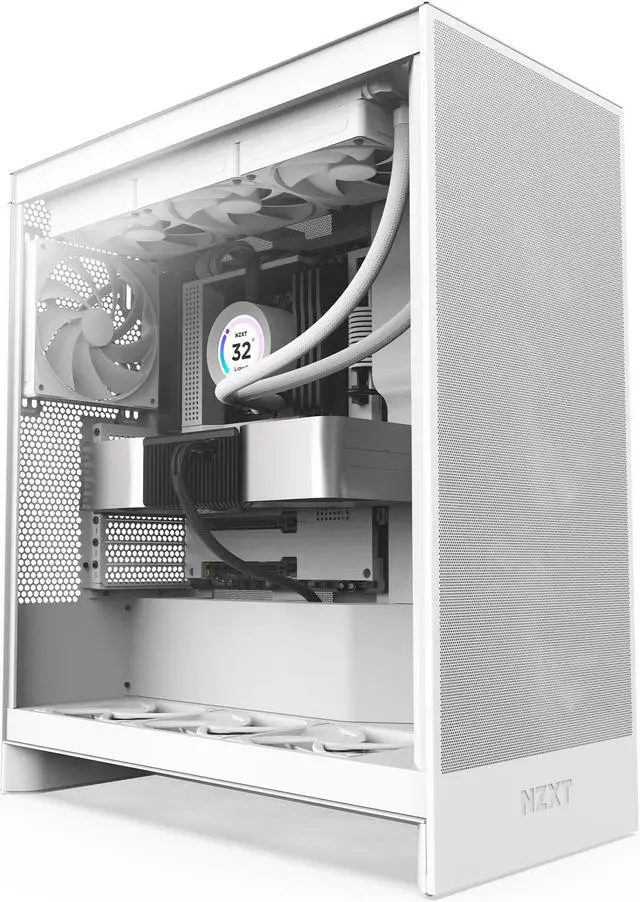
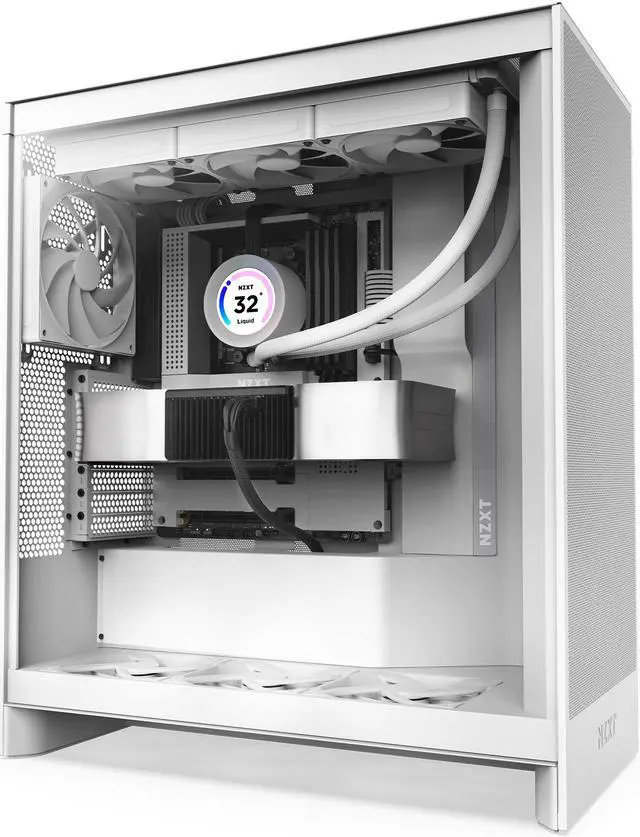


NZXT H7 Flow (2024) Mid-Tower Case - All White-CM-H72FW-01
- SGCC Steel, Ultra-clear Tempered Glass ATX Mid Tower
- 2x USB 3.2 Gen 1 Type-A 1 x USB 3.2 Gen 2 Type-C 1 x Headset Audio Jack Front Ports
- 2 + 2 Internal 3.5" Drive Bays
+
+
Overview
Specs
Reviews (40)
Overhaul your PC cooling experience with the NZXT H7 Flow Tempered Glass ATX Mid-Tower Airflow Computer Case, 2024 edition. This innovative case redefines GPU cooling within a classic mid-tower form factor, featuring a unique vertical PSU layout that accommodates three 120mm bottom fans. This design ensures efficient cooling without increasing the case's footprint, making it ideal for those seeking powerful performance in a compact space. The H7 Flow is engineered for dedicated GPU cooling, supporting three bottom-mounted 120mm fans that provide direct airflow to your GPU. This feature is crucial for maintaining optimal temperatures during intense gaming sessions or demanding computational tasks.
Out-of-the-box, the case comes equipped with three 120mm front-mounted fans, delivering exceptional cooling performance right from the start. Optimized for superior airflow, the H7 Flow incorporates high-performance mesh panels that maximize both intake and exhaust airflow while effectively filtering dust. This design ensures your components remain cool and clean, enhancing the longevity and reliability of your system. For those seeking maximum cooling potential, the H7 Flow supports large radiator configurations, accommodating up to a 420mm radiator in the front and a 360mm radiator on top. This flexibility allows for extensive liquid cooling setups, catering to the needs of high-performance builds.
Cable management is made effortless with an intuitive system featuring wide channels, built-in hooks, and included straps, allowing for easy and tidy routing of cables. The case boasts a 10-fan capacity, with room for three fans on top, three in front, three on the bottom, and one in the rear, providing ample options for customizing your cooling setup. Convenience is key with the top I/O ports, offering easy access to two USB-A and one USB-C ports, perfect for connecting peripherals and devices. Additionally, tool-less panel access to the front, top, and side panels simplifies the process of building and upgrading your system, making it a breeze to maintain and enhance your PC.
The NZXT H7 Flow Tempered Glass ATX Mid-Tower Airflow Computer Case, 2024 edition, is the ultimate choice for enthusiasts seeking a blend of style, performance, and functionality in their PC builds.
Warranty & Returns
Warranty, Returns, And Additional Information
Warranty
- Limited Warranty period (parts): 2 years
- Limited Warranty period (labor): 2 years
- Read full details
Return Policies
- Return for refund until: January 31, 2027
- Return for replacement until: January 31, 2027
- This item is covered by Newegg.ca's Extended Holiday Return Policy.
- Read full return policy for details.
We want to ensure your holiday shopping this year is hassle-free. That’s why we’re automatically extending our return policies on almost every product! For purchases placed between November 1st, 2026 and December 31, 2026 you will have until January 31, 2027 to return your product.
Manufacturer Contact Info
- Manufacturer Product Page
- Manufacturer Website
- Support Phone: 1-800-228-9395
- Support Email: service@nzxt.com
- Support Website
- View other products from NZXT
LOADING...
LOADING...
The NZXT H7 Flow (2024) is a white ATX mid-tower PC case designed for gaming and high-performance builds, with support for E-ATX, GPUs up to 410 mm, CPU coolers up to 185 mm, and radiators up to 420 mm front or 360 mm top.
Recommended For
- PC builders assembling a high-performance gaming system with a large graphics card or high-wattage CPU who want strong airflow and room to add bottom GPU-intake fans.
- First-time or infrequent PC builders who value an easy installation process, tool-less panel access, generous cable-routing space, and straightforward ATX or E-ATX compatibility.
- Enthusiasts planning a custom-cooled build who need support for large front radiators, up to a 360 mm top radiator, multiple fan locations, or future cooling upgrades.
- Users who want a clean white, tempered-glass showcase case for a desktop gaming or workstation build without moving to a full-tower chassis.
Real-World Use Scenarios
- A gamer is building a system with a high-end graphics card and wants to avoid heat buildup around the GPU. With the mesh front panel and optional bottom intake fans, the H7 Flow can direct additional airflow toward the graphics card; reviews generally report solid thermals, with the best results requiring extra fans beyond the three included front fans.
- A first-time builder is assembling an ATX gaming PC and wants the installation process to be straightforward. The removable, tool-less panels, open internal layout, routing points, and cable-management space make it easier to install components and tidy cables without repeatedly fighting the chassis.
- A user is building a performance PC with a hot processor, a large air cooler, or a 360 mm or larger liquid cooler. The H7 Flow provides enough internal clearance for common high-end cooling setups, so the builder can choose between a large air cooler, a top-mounted 360 mm radiator, or a front-mounted radiator without moving to a full tower.
- A builder wants a case that can be upgraded over several years rather than replaced with the next major component change. The H7 Flow's spacious mid-tower layout accommodates ATX, Micro-ATX, Mini-ITX, and compact E-ATX boards, long graphics cards, multiple SSDs, and several hard drives, making future component changes relatively flexible.
- A user wants a clean white PC build that can be displayed on a desk without making cable clutter the visual focus. The tempered-glass side panel and white steel exterior showcase the components, while the rear cable-routing space helps keep the finished system organized; the non-RGB version is better suited to users who prefer to add their own lighting or keep the build understated.
- A content creator, enthusiast, or home-lab user needs more local storage than a typical gaming PC provides. The H7 Flow can house multiple 3.5-inch hard drives and 2.5-inch SSDs while retaining room for standard ATX components, making it practical for media libraries, backups, project files, or secondary storage.
Reference Q&A
Q: Should I buy the NZXT H7 Flow (2024) or the Corsair 4000D Airflow?
A: Choose the NZXT H7 Flow (2024) for larger GPUs, more cooling expansion, and a 360mm top or 420mm front radiator. It supports up to 410mm GPUs, up to 10 fans, and includes three 120mm front fans. Choose the Corsair 4000D Airflow for a more compact case with simpler cooling requirements; it supports up to 360mm front radiators, GPUs up to 360mm, and up to six 120mm fans.
Q: Is the NZXT H7 Flow (2024) worth choosing over the smaller NZXT H5 Flow (2024)?
A: Choose the H7 Flow (2024) for high-performance ATX or E-ATX builds, larger radiators, and more GPU-focused airflow. It supports three bottom 120mm fans, a 360mm top radiator, a 420mm front radiator, and four 2.5-inch drive positions plus two 3.5-inch bays. Choose the H5 Flow (2024) when a more compact layout is preferred; it supports up to two bottom fans, a 240mm top radiator, a 360mm front radiator, and one 3.5-inch drive bay.
Q: Should I upgrade from the NZXT H7 Flow (2022) to the H7 Flow (2024)?
A: Upgrade to the H7 Flow (2024) if you want direct GPU airflow from bottom-mounted fans, three included front fans, and support for larger cooling configurations. The H7 Flow (2022) remains a practical choice if your existing build already has adequate airflow and you do not need bottom fan support. Professional testing indicates that the overall thermal difference is moderate rather than a complete platform change, so the upgrade is most useful when your build benefits from additional GPU-directed airflow or newer radiator support.
Q: Should I choose the NZXT H7 Flow (2024) or the larger NZXT H9 Flow?
A: Choose the H7 Flow (2024) for a standard mid-tower build that needs strong airflow, a 360mm top radiator, and support for large GPUs without the wider dual-chamber footprint. Choose the H9 Flow when the build requires more internal separation, additional storage capacity, larger overall radiator capacity, or maximum GPU clearance. The H9 Flow is substantially wider and supports up to two 420mm radiators, while the H7 Flow supports a 420mm front radiator and a 360mm top radiator.
Q: Will a large graphics card fit in the NZXT H7 Flow (2024)?
A: Yes. The case supports graphics cards up to 410 mm long, making it suitable for most full-size GPUs. Check the card manufacturer's exact length and account for any front-mounted radiator or fans when planning the build.
Q: What radiator and fan sizes does this case support?
A: The H7 Flow supports up to a 420 mm radiator in front, a 360 mm radiator on top, and a 140 mm radiator at the rear. It supports up to 10 fans total, with three 120 mm front fans included. This makes it appropriate for high-performance air- or liquid-cooled builds, but component clearance should be checked when combining a large radiator with a long GPU or tall memory modules.
Q: Which motherboard sizes are compatible with the NZXT H7 Flow (2024)?
A: The case supports E-ATX motherboards up to 27.7 mm, as well as standard ATX, Micro-ATX, and Mini-ITX boards. It is best suited to users building a full-size gaming, workstation, or upgradeable desktop rather than a compact PC.
Q: Does the NZXT H7 Flow (2024) come with fans, and is it ready for a new build?
A: It includes three front-mounted 120 mm F120Q airflow fans, but it is an empty PC case rather than a complete computer. You must add the motherboard, processor, memory, storage, power supply, graphics card if needed, and any additional cooling hardware.
Q: Is the NZXT H7 Flow (2024) suitable for a high-end or upgradeable PC build?
A: Yes. It is suitable for users who want strong airflow, large-component compatibility, and room for future upgrades. The case supports E-ATX through Mini-ITX motherboards, GPUs up to 410 mm, CPU coolers up to 185 mm, power supplies up to 200 mm, four 3.5-inch drive bays, four 2.5-inch drive bays, and extensive fan and radiator options. Its main trade-off is size: at about 19.49 x 8.46 x 17.91 inches, it is less suitable when desk space or compact dimensions are the priority.
Q: Is the NZXT H7 Flow (2024) suitable for a high-performance gaming PC?
A: Yes. It is suitable for high-performance ATX builds because it supports GPUs up to 410 mm, CPU coolers up to 185 mm, front radiators up to 420 mm, top radiators up to 360 mm, and optional bottom GPU-intake fans. The trade-off is that it is relatively large for a mid-tower case.
Q: Do you need to add bottom fans to the NZXT H7 Flow (2024)?
A: Not necessarily. The case supports up to three bottom 120 mm fans, but the benefit depends on the graphics card’s length and position. Bottom fans are more useful when they align directly beneath a large or power-hungry GPU; otherwise, the improvement may be limited.
Q: Is the NZXT H7 Flow (2024) a good choice if cooling and airflow are priorities?
A: Yes. Its perforated front, top, and bottom mounting options provide strong airflow potential, and the case includes three front 120 mm fans. For demanding hardware, users commonly add top or rear exhaust fans, a larger radiator, or bottom intake fans. More fans can also increase noise, cost, and dust maintenance.
Q: Is the NZXT H7 Flow (2024) easy to build in?
A: Generally yes. It supports ATX, E-ATX up to 27.7 mm, Micro-ATX, and Mini-ITX motherboards, provides tool-less panel access and cable-management space, and has generous clearance for GPUs, radiators, and CPU coolers. Its larger footprint makes component installation easier, but it may be excessive for compact builds.