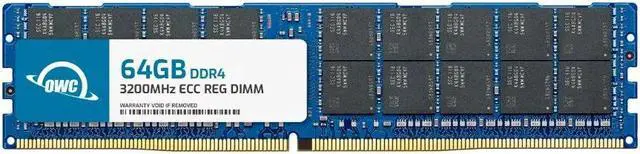
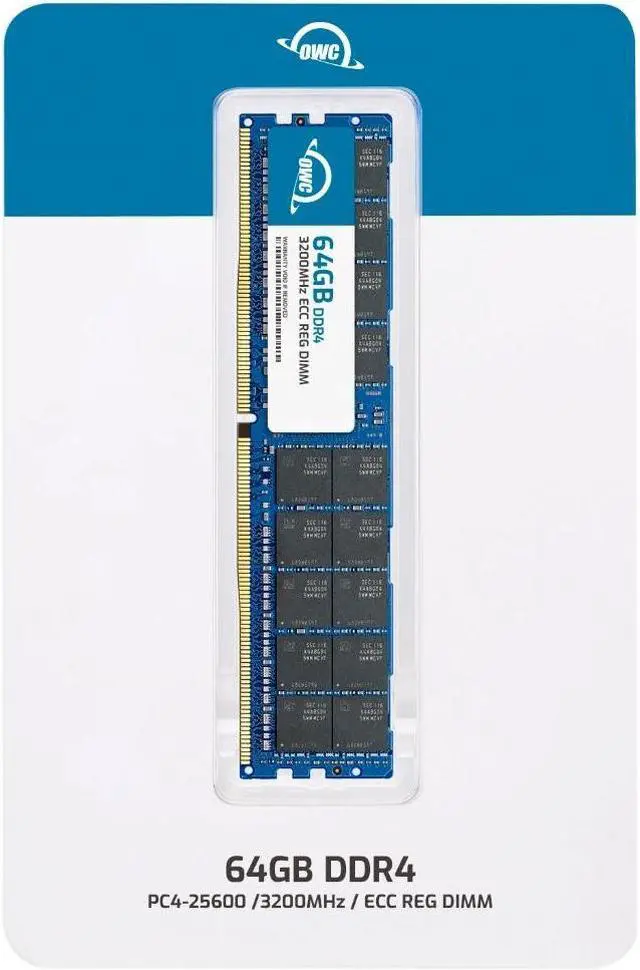
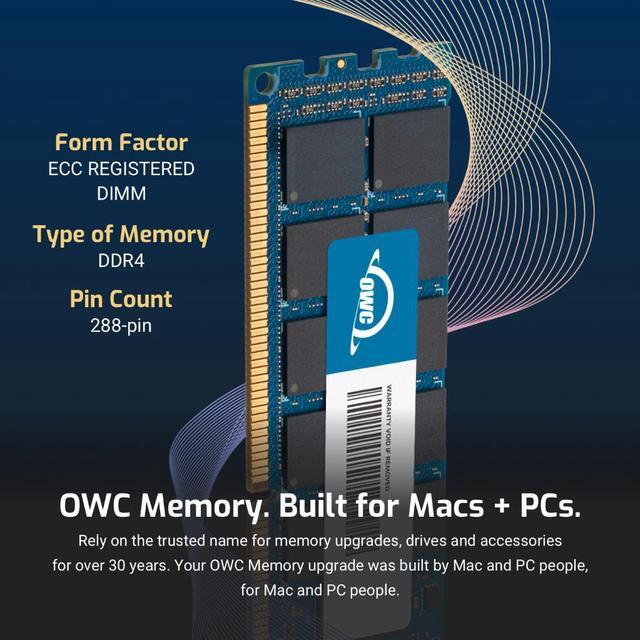
The OWC 64GB DDR4-3200 CL22 ECC Registered RDIMM is a single 288-pin memory module for compatible servers, workstations, and NAS systems that need high-capacity registered memory. Confirm system support for 64GB DDR4-3200 2Rx4 RDIMMs before upgrading; it is not for standard desktops or systems using unbuffered memory.
Recommended For
- Server administrators expanding a compatible DDR4 system with a single 64GB registered ECC DIMM; confirm the server supports 64GB 2Rx4 RDIMMs and its memory-population rules before buying.
- Virtualization and homelab operators adding memory to an RDIMM-compatible DDR4 host for more virtual machines or services, provided the host’s CPU and motherboard support this module type and capacity.
- NAS or storage-server builders using a DDR4 RDIMM platform who need a higher-capacity memory module for storage services and other server tasks; verify the system’s supported DIMM capacity and configuration.
- Workstation users whose DDR4 platform specifically supports registered ECC memory and who need a 64GB module for memory-intensive professional workloads.
Real-World Use Scenarios
- On a compatible virtualization server, adding this module can give a host more memory to allocate across virtual machines, helping when several test, development, or self-hosted services run at once.
- For a small business or home-lab server running several applications or containers, the added capacity can reduce memory pressure as services share the same host; the benefit depends on the system’s total RAM and workload.
- On a compatible database server, adding memory can give the database more room for its working data and cache, which may help avoid memory constraints as databases or user workloads grow.
- When upgrading a DDR4 server or workstation that supports 64GB ECC registered DIMMs, this module can increase installed memory for larger workloads; check the system’s qualified capacity, DIMM layout, and mixing rules before installing it.
- For a server used as a development or security-testing lab, extra memory can support a broader set of virtual machines running side by side, such as separate operating-system and test environments, within the host’s total capacity.