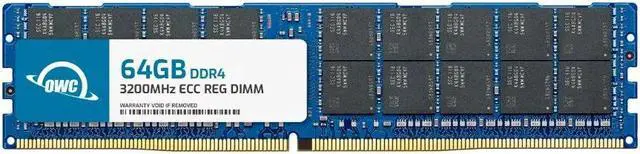
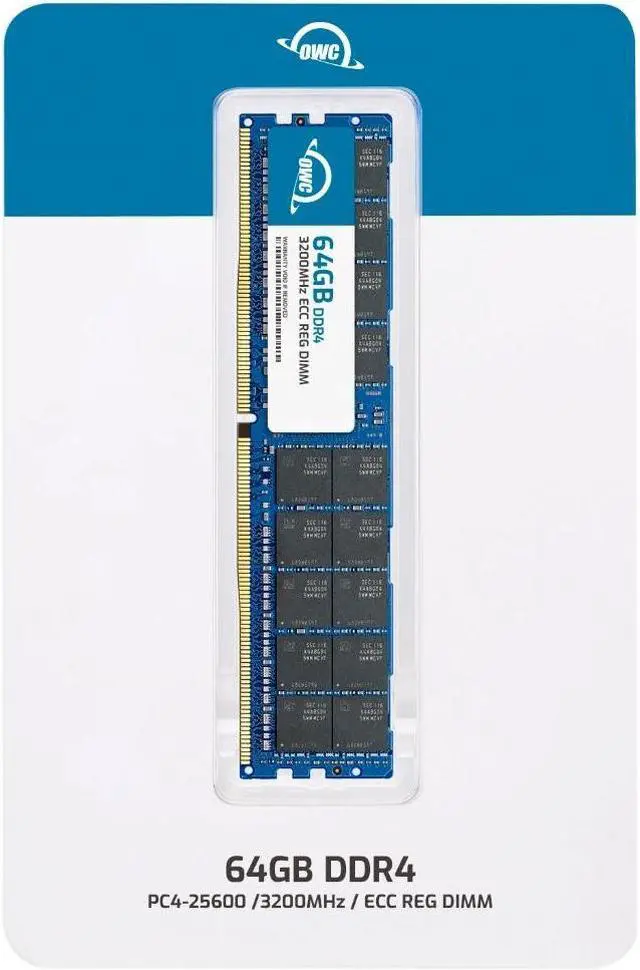
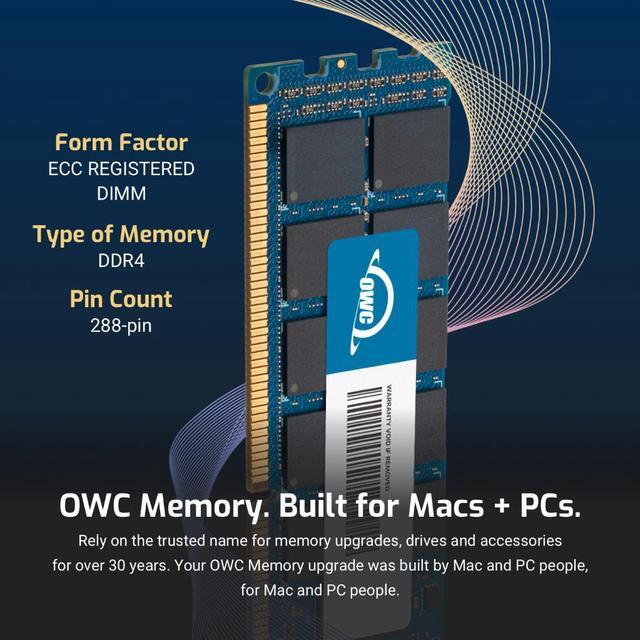
The OWC 64GB DDR4-3200 ECC Registered RDIMM is a 288-pin 2Rx4 memory module for compatible servers and workstations, including systems needing a replacement for Dell part AB214253; it is intended for platforms that support registered ECC memory.
Recommended For
- IT administrators replacing a failed DIMM or expanding memory in a DDR4 server that supports 64GB 2Rx4 ECC Registered RDIMMs; confirm the server model, CPU, and memory-slot rules first.
- Owners of compatible DDR4 workstations using registered memory who need more RAM for memory-intensive work such as virtualization or large data sets—not systems that require unbuffered DIMMs.
- Homelab builders extending a DDR4 server or workstation platform that explicitly supports ECC RDIMMs and has compatible DIMM population rules.
- Dell memory buyers seeking a specification match for part AB214253, provided their particular system supports this capacity, speed, rank, and registered DIMM type.
Real-World Use Scenarios
- On a compatible DDR4 RDIMM server running several virtual machines, adding memory can give the host more room to run those VMs together and reduce memory pressure when RAM is the limiting resource.
- For a compatible server hosting virtual desktops, added memory can help accommodate more active desktop sessions, provided the server’s processor, storage, and existing memory configuration are also adequately sized.
- When a compatible database server is short on RAM, adding memory can provide more capacity for its database workload; the actual benefit depends on the database, server configuration, and workload.
- For a server consolidating applications or services that previously ran on separate machines, added memory can increase the capacity available to the combined workload, if memory is the constraint and the host supports this RDIMM.
- For analytics or other data-heavy server workloads, adding memory to a compatible system can provide more working capacity for data and applications; it will not by itself speed up a workload limited by storage, processor, or network performance.