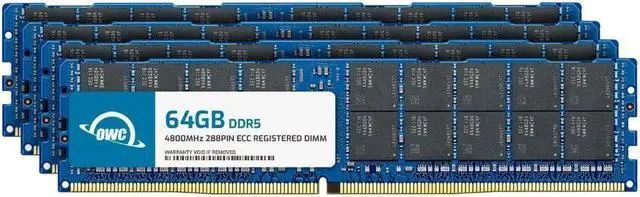
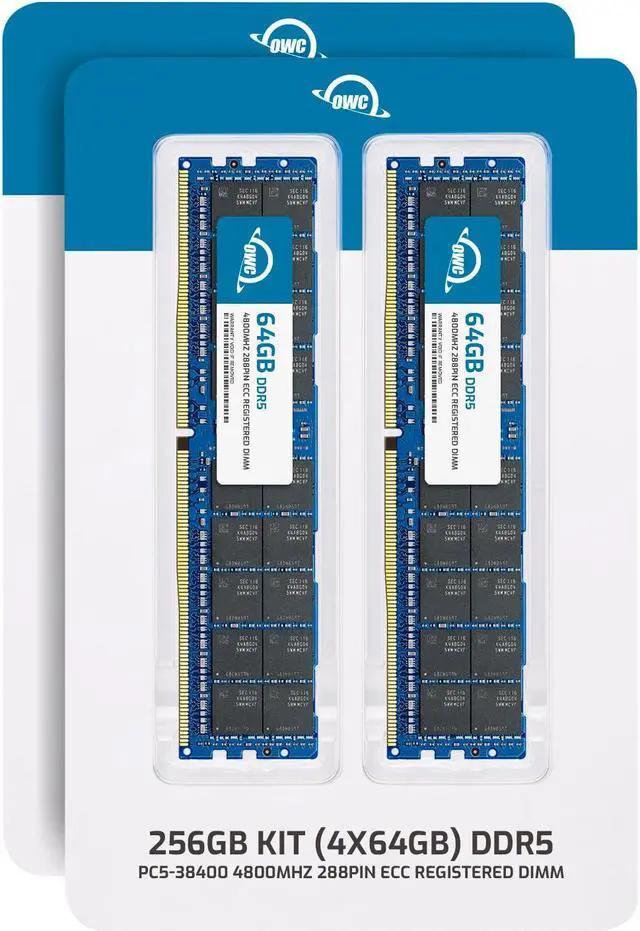
The OWC 256GB DDR5-4800 ECC Registered RDIMM kit is a four-module server memory upgrade for Cisco UCS C220 M7 SFF, C240 M7 SFF, X210c M7, and X410c M7 systems that need compatible registered memory.
Recommended For
- Cisco UCS M7 virtualization administrators expanding host memory for virtual machines; Cisco positions the C220 M7 for virtualization, and this kit is listed for specific C220 M7, C240 M7, X210c M7, and X410c M7 systems. ([cisco.com](https://www.cisco.com/c/en/us/products/collateral/servers-unified-computing/ucs-c-series-rack-servers/ucs-c220-m7-rack-server-ds.html))
- VDI infrastructure teams upgrading supported UCS M7 hosts for virtual desktop deployments; Cisco documents the X210c M7 for VDI workloads and provides VDI sizing guidance. ([cisco.com](https://www.cisco.com/c/en/us/products/collateral/servers-unified-computing/ucs-c-series-rack-servers/ucs-x210c-m7-selection-guide-for-vdi-using-citrix-wp.html))
- Teams running medium-sized or distributed databases and middleware on a listed UCS M7 system, where a server-memory expansion fits the workload; Cisco identifies these as C220 M7 use cases. ([cisco.com](https://www.cisco.com/c/en/us/products/collateral/servers-unified-computing/ucs-c-series-rack-servers/ucs-c220-m7-rack-server-ds.html))
- IT teams maintaining a listed UCS M7 server that needs ECC registered memory and a four-module, 256GB upgrade; Cisco’s M7 memory guide documents supported RDIMM configurations, which should be checked against the server’s CPU and DIMM-population rules. ([cisco.com](https://www.cisco.com/c/dam/en/us/products/collateral/servers-unified-computing/ucs-c-series-rack-servers/c220-c240-x210c-x410c-m7-memory-guide.pdf))
Real-World Use Scenarios
- When a compatible UCS server is running short on memory for virtual machines, adding this kit can provide more room for guest operating systems and applications; the benefit depends on whether memory capacity is the bottleneck.
- For a virtual desktop infrastructure host, additional memory can give more desktops room to run concurrently, provided the server’s CPU, storage, and network capacity are also sufficient.
- For memory-hungry databases or enterprise applications, the added capacity can help accommodate larger working sets in memory; it does not by itself guarantee faster queries or application response.
- When consolidating several server workloads onto one UCS host, the extra memory can make it easier to accommodate more memory-demanding services together, if the existing host is constrained by RAM.
- For collaboration and general business applications hosted on a UCS server, added memory can provide more capacity for concurrent services and users when RAM is the limiting resource.
- For analytics or other large-data workloads, the added memory can give data-processing jobs more working space, but overall results still depend on the application and the server’s processor and storage.