






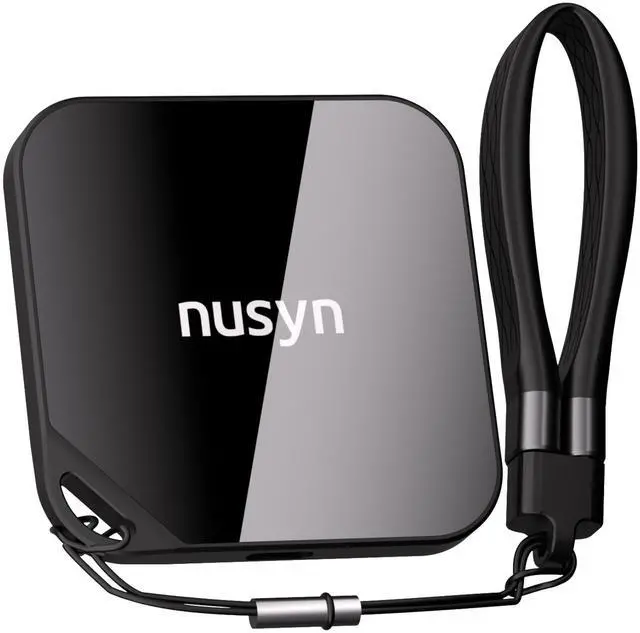
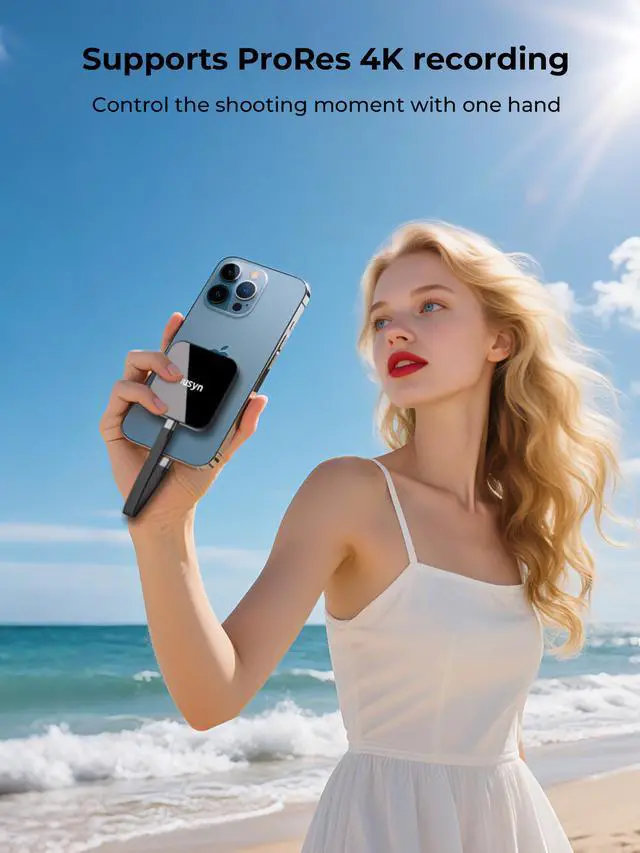


The Nusyn NSP33 is a 1TB magnetic portable SSD built for creators and mobile users who want fast USB-C storage, with up to 2000MB/s read speed and support for direct Apple ProRes 4K recording on iPhone 15 Pro and newer compatible models.
| Attribute | Value |
|---|---|
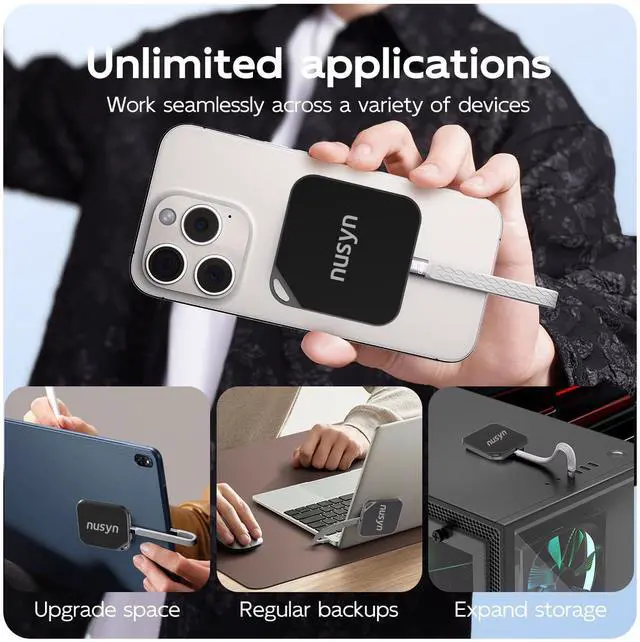
| Best For | Portable external storage for smartphones, tablets, desktop and laptop computers (including iPhone 15 and above) and gaming consoles that need high-speed off-device storage and file transfers |
| Capacity | 1 TB |
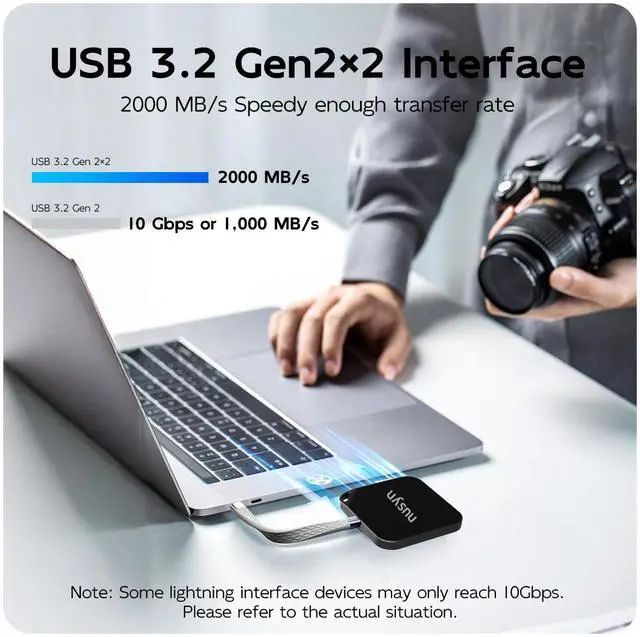
| Interface And Form Factor | USB-C Type‑C connection using USB 3.2 Gen 2x2 (USB connectivity) in a compact external form factor |
| Performance | Up to 2000 MB/s sequential read and up to 1800 MB/s sequential write |
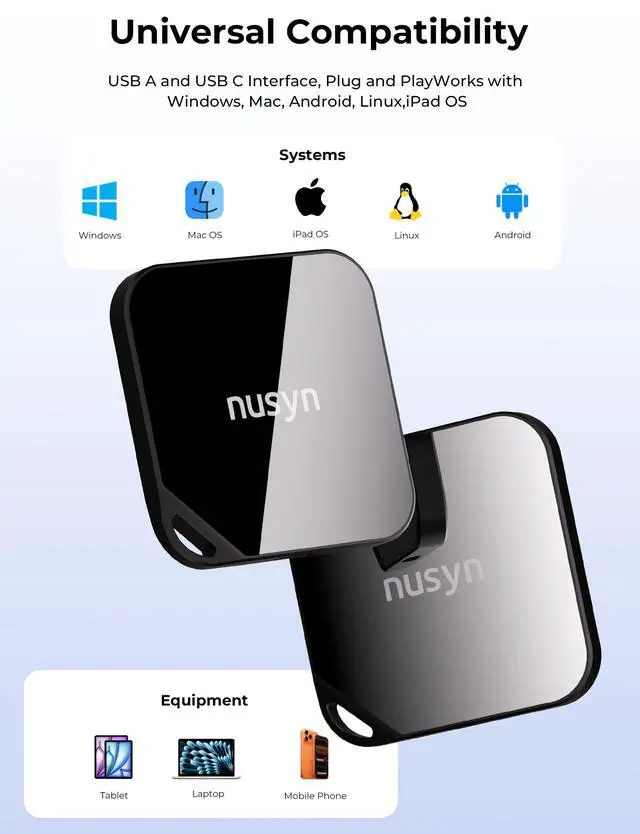
| Compatibility & System Requirements | Compatible with iPhone 15 and above, desktop computers, tablets, smartphones, laptops, and gaming consoles; intended as an external/plug-in drive |
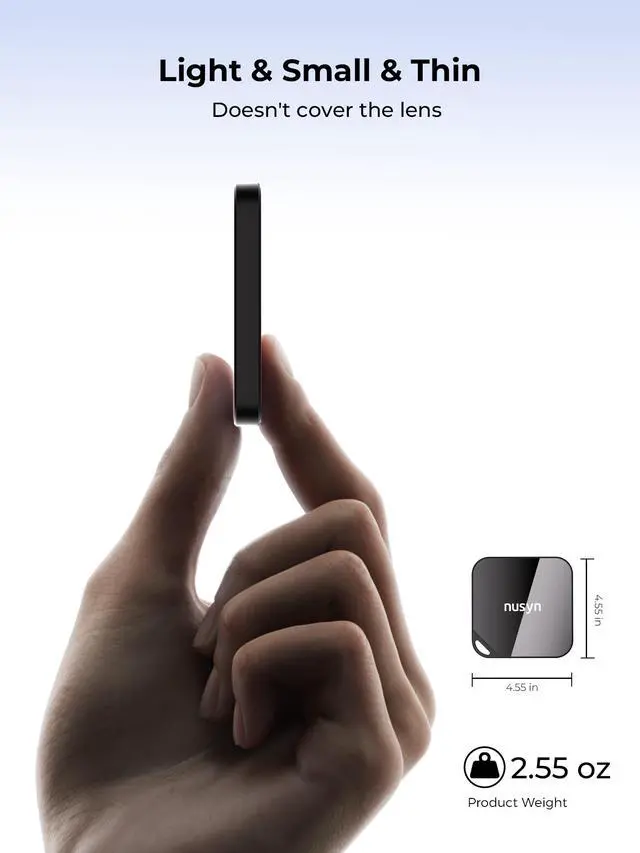
| Physical Dimensions & Weight | Width 63 mm, Height 63 mm, Depth 6.85 mm; Weight 0.15 lb |
| Package Contents | Includes one portable SSD, user manual, and USB-C to USB-C data cable (single-unit package) |
| Additional Features | Data recovery service |
| Model Identifiers | Brand NUSYN; Series NSP33; Model NSP33BLM1T; Part Number NSP33BLM1T; Manufacturer NUSYN; Color Black |
Q: Should I buy this 1TB model or move up to a 2TB portable SSD for iPhone ProRes recording?
A: Choose 1TB if you want a compact capture drive for shorter shoots, daily backups, and mixed phone-plus-laptop use. Move to 2TB if you expect long ProRes sessions, travel shooting, or want to keep footage on the drive before offloading. The decision is usually about recording time and workflow margin rather than speed, because the 1TB Nusyn already targets the throughput needed for direct external recording on supported iPhone Pro models.
Q: Is this drive a better fit than a cheaper 10Gbps portable SSD for phone recording?
A: Choose the Nusyn over a 10Gbps portable SSD if you also want faster transfers on compatible PCs, especially for moving large video projects after shooting. Choose a 10Gbps model if your priority is lower cost and your workflow is mostly iPhone recording plus occasional file copy. For many phone-recording scenarios, 10Gbps-class SSDs already meet the practical requirement, so the upgrade to 20Gbps matters most when your computer can actually use USB 3.2 Gen 2x2.
Q: For portability, is the Nusyn magnetic SSD a better choice than a larger rugged portable SSD?
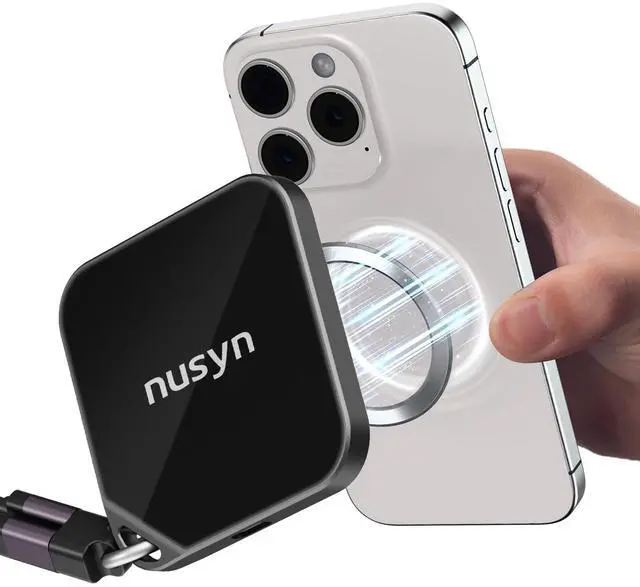
A: Yes, if your priority is keeping the drive attached to the phone for handheld capture, gimbal use, or a lighter mobile rig. A larger rugged SSD is the better choice when durability features like drop resistance and weather sealing matter more than on-phone convenience. The Nusyn is better framed as a creator-first portable SSD, while a larger rugged model is better framed as an all-purpose field drive that also works with phones.
Q: Is this a good SSD for iPhone ProRes recording on the go?
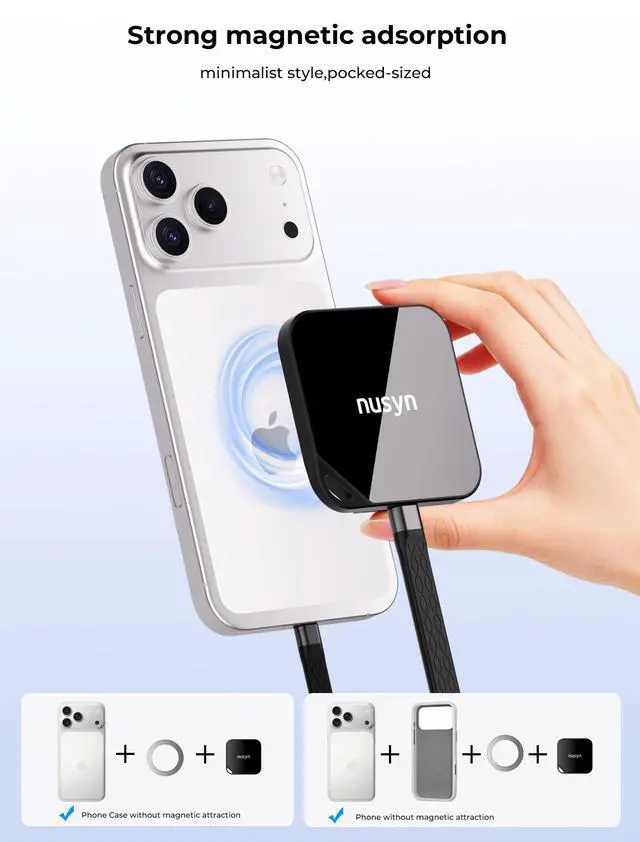
A: Yes, if your main use case is recording ProRes directly from an iPhone 15/16/17 Pro or Pro Max. The Nusyn NSP33 is explicitly positioned for 4K 60fps ProRes capture, attaches magnetically to MagSafe-compatible phones, and uses exFAT for easier cross-device use. The main trade-off is that phone compatibility and reliability can still depend on power delivery and cable quality, which is a common concern across comparable portable SSDs used with phones.
Q: Will it actually reach 2000MB/s on my laptop or desktop?
A: Only if your computer supports USB 3.2 Gen 2x2 over USB-C. That is the most important buying check for this product category. On systems that only support slower USB modes, real-world speed will be lower, so this drive makes the most sense for buyers who know they have a 20Gbps port and want faster transfers than typical 10Gbps portable SSDs.
Q: Who is this SSD best suited for?
A: It is best suited for mobile creators, photographers, and users who move large files between phone, tablet, and computer. Its strongest fit is travel-friendly content capture and fast file offload, especially for iPhone ProRes workflows. It is less compelling for basic office documents, note-taking, or light backups, where a cheaper 10Gbps portable SSD would usually be sufficient.
Q: Is it better than a standard portable SSD like the Samsung T7 or similar 10Gbps models?
A: It is better if you specifically need higher peak speed, magnetic phone mounting, or direct iPhone ProRes capture. It is not automatically better for everyone. Compared with typical 10Gbps drives such as the Samsung T7 class, the NSP33 offers a higher-speed 20Gbps interface, but the advantage matters only on compatible hosts. For casual storage and routine file transfers, a standard 10Gbps SSD is often the better value.
Q: Is this a good plug-and-play SSD for switching between Windows, Mac, Android, and iPhone?
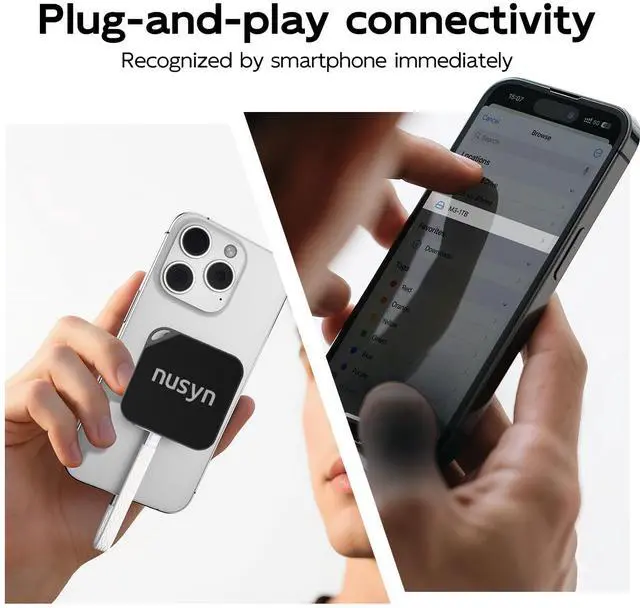
A: Yes, it is a strong fit for mixed-device users because it is preformatted in exFAT and uses USB-C. That makes setup simpler for people moving files across common modern devices. The trade-off is that some advanced users may still want to reformat for a single-platform workflow, and phone use can be more sensitive to cable and power behavior than laptop use.
Q: Is this a good SSD for iPhone ProRes recording on iPhone 15/16/17 Pro?
A: Yes, if your main goal is direct external recording on a recent iPhone Pro. The product is explicitly positioned for iPhone 15/16/17 Pro and Pro Max ProRes HDR recording, and its rated write speed of up to 1800 MB/s is well above the sustained write speeds commonly discussed for 4K60 ProRes workflows. The main buying reason is convenience: magnetic attachment plus direct USB-C recording. The trade-off is that real-world performance depends more on recording stability and cable/phone compatibility than on the headline 2000 MB/s spec.
Q: Who is this SSD most suitable for?
A: It is most suitable for mobile creators who want external recording and a cleaner phone-mounted setup, especially iPhone Pro users shooting ProRes. It also fits buyers who want one exFAT drive they can move between phone, tablet, laptop, and desktop without reformatting. It is less compelling for buyers who only need basic backup storage, because the magnetic design and 20 Gbps interface matter most in creator-focused workflows.
Q: What are the main trade-offs of buying this SSD instead of a regular portable SSD?
A: The main advantage is a more convenient phone-first setup: magnetic attachment and compact size reduce cable clutter when recording on iPhone. The trade-offs are that magnetic convenience does not guarantee the best durability, thermal behavior, or cross-device speed. Also, the advertised 2000 MB/s class speed depends on USB 3.2 Gen 2x2 support, so some Macs and other devices may run slower. If you mainly use a laptop or desktop, a standard non-magnetic SSD may offer similar practical value for less emphasis on phone mounting.
Q: Is a magnetic SSD like this worth buying over just paying for more iPhone storage?
A: It can be worth it if you regularly shoot large video files and want reusable storage across multiple devices. Reddit discussions repeatedly frame external SSDs as a practical alternative to paying for higher internal iPhone storage, especially for ProRes capture. It is less worthwhile if you rarely record large files, because the benefit comes from offloading high-bitrate video rather than everyday phone use.
Q: Is this SSD a good choice if I want full 2000 MB/s performance on every device?
A: No. It is a good fit only if your devices support USB 3.2 Gen 2x2. The product data itself notes that performance may vary on Macs and other systems without Gen 2x2 support. For many buyers, this means the drive still makes sense for iPhone recording and general portable storage, but not as a guaranteed 2000 MB/s drive across all computers.