






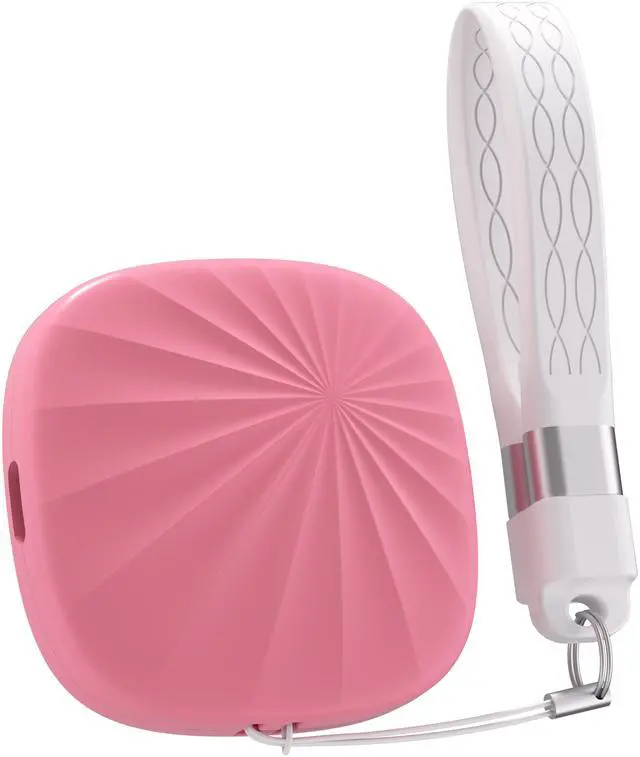

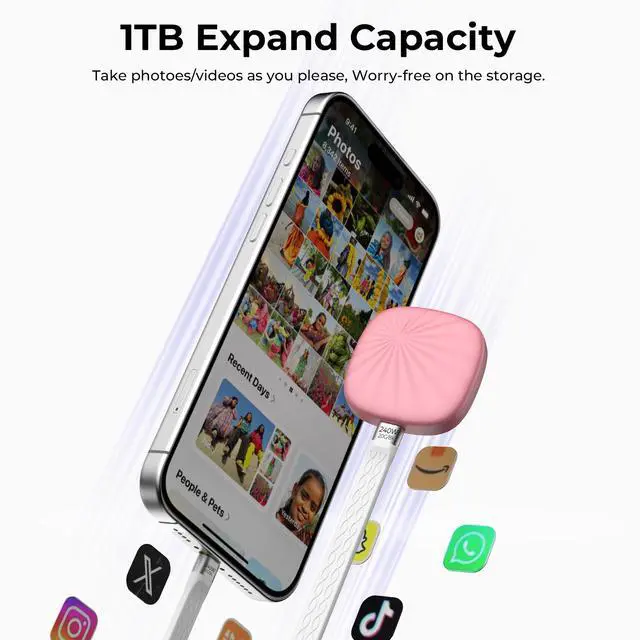
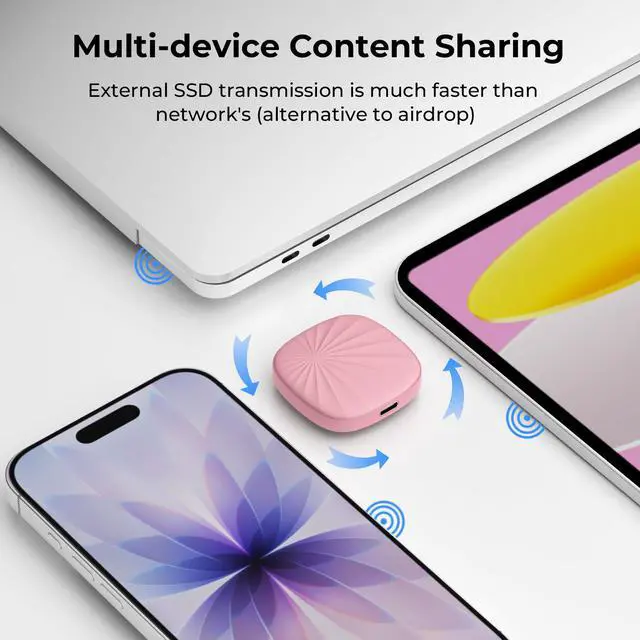
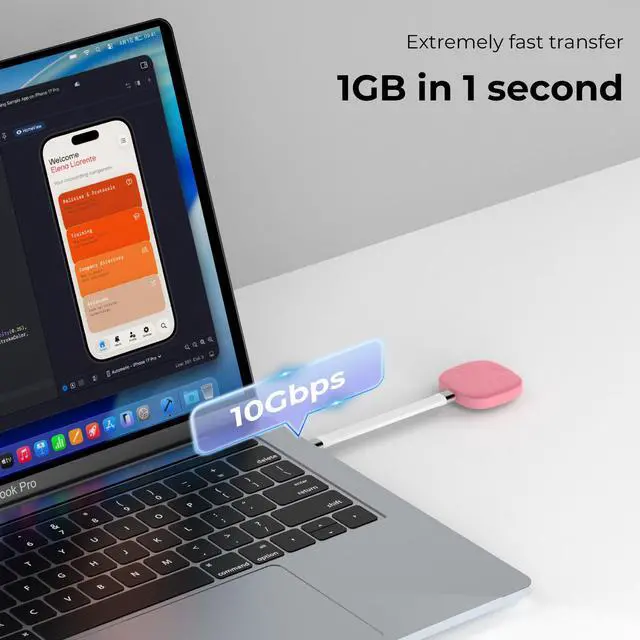


The Nusyn NSP30 1TB is a compact portable SSD with USB 3.2 Gen 2 and USB-C, offering up to 1050 MB/s read speeds for people who want fast file transfers, everyday backups, and easy use across Windows, macOS, Linux, Android, iOS, and USB-C devices including iPhone 15 and newer.
| Attribute | Value |
|---|---|
| Best For | Personal portable external storage for laptops, desktops, tablets, smartphones (including iPhone 15 and above), and gaming consoles |
| Capacity | 1 TB external solid-state storage |
| Interface And Transfer | USB 3.2 Gen 2 Type-C interface with up to 1050 MB/s sequential read and up to 900 MB/s sequential write |
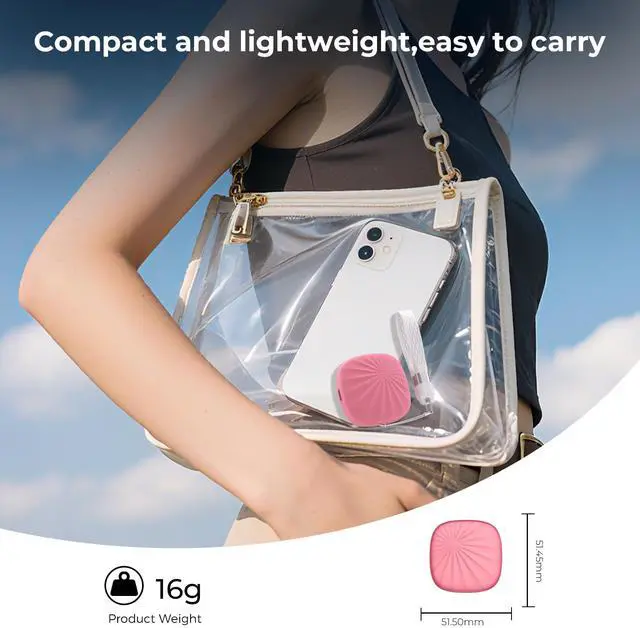
| Physical Dimensions | 2.03 x 2.03 x 0.57 inches (51.5 x 51.5 x 14.53 mm); weight 0.04 lb |
| Package Contents | Single-unit package containing the portable SSD, USB-C data cable, and user manual |
| Compatibility And System Requirements | Compatible with iPhone 15 and above, desktop computers, tablets, smartphones, laptops, and gaming consoles |
| Brand And Model | NUSYN NSP30 series — model NSP30P1T (part number NSP30P1T); alternate model identifier NSP30 |
| Drive Type And Form Factor | External solid-state drive in a compact, portable form factor intended as an external hard drive |
Q: Is the Nusyn NSP30 1TB better than a cheaper USB portable SSD or flash drive for everyday storage?
A: Yes, if your alternative is a slower USB SSD or a standard flash drive, the Nusyn NSP30 makes more sense for frequent large-file transfers. Its stated USB 3.2 Gen 2 interface and up to 1050MB/s class performance place it in the mainstream 10Gbps portable SSD tier, which is the level commonly recommended for backups, media libraries, and moving large photo or video folders. A cheaper drive can still be fine for documents or occasional use, but the NSP30 is the better fit when you want shorter transfer times and more consistent everyday responsiveness.
Q: Is this a good portable SSD for travel, work, and everyday file carrying?
A: Yes, if your priority is a very small, light, plug-and-play SSD for documents, photos, backups, and moving large files between devices. The main trade-off is that this Nusyn model emphasizes compact size and 10Gbps-class speed, but its provided specs do not mention rugged protection, water resistance, or built-in encryption. Buyers who travel in rough conditions may prefer a more rugged alternative, while buyers who mainly want a tiny everyday carry drive may find this type of design more suitable.
Q: Will it work with iPhone, Android, Windows, and Mac without much setup?
A: Generally yes, for modern USB-C devices. Based on the product data, the Nusyn drive is intended for Windows, macOS, Linux, Android, iOS, and specifically iPhone 15 and newer. This makes it a practical choice for mixed-device users. The usual caveat with external SSDs is file formatting: drives meant for broad compatibility are often used in exFAT, while some backup features or specialized workflows may require reformatting.
Q: Is it suitable for phone photo and video offloading?
A: Yes, for users who want extra storage for photos, videos, and manual backups from a USB-C phone or tablet. This is one of the most common reasons people buy portable SSDs. For the Nusyn model, the listed support for Android, iOS, and iPhone 15-and-newer makes that use case plausible. The main limitation is not raw capacity but whether your phone, cable, file app, and format all work together smoothly for your workflow.
Q: What are the trade-offs versus a rugged SSD like the Samsung T7 Shield?
A: The Nusyn drive appears better positioned for buyers who want a tiny, lightweight, colorful portable SSD with mainstream 10Gbps USB performance. A rugged model such as the T7 Shield is usually the safer pick if you care about durability features like water and dust resistance, drop protection, and security extras such as hardware encryption. In short: Nusyn looks more lifestyle-portable, while rugged competitors are better for harsher environments and security-focused buyers.
Q: Who is this SSD best suited for, and who should skip it?
A: It is best suited for users who want a compact USB-C SSD for everyday backups, school or office files, travel carry, and moving media between laptops, phones, and tablets. It is less ideal for buyers who specifically need rugged outdoor protection, bundled backup software, or clearly stated security features. If your main requirement is a simple, small external SSD, it fits well; if your main requirement is durability or advanced data protection, a more specialized model may be a better choice.
Q: Is this a good buy if I just want a small, fast drive for everyday backups and file transfers?
A: Yes, if your priority is a compact USB-C SSD for moving photos, videos, documents, and backups across modern devices. The main trade-off is that it is a basic 10Gbps portable SSD, so it fits everyday storage and transfer use better than buyers who want premium durability features or top-tier sustained performance.
Q: Who is this SSD most suitable for?
A: It is most suitable for users who need portable storage for laptops, tablets, phones, or light content work and want broad USB-C compatibility. It is a practical fit for travel, school, work files, phone backups, and carrying media libraries, but it is less clearly suited to buyers who need rugged outdoor use or proven workstation-class performance.
Q: Will it actually reach 1050MB/s on my setup?
A: Only if the host device, port, and cable all support USB 3.2 Gen 2 10Gbps. In real use, speeds are often lower on older USB ports, mixed adapters, or phone workflows, so the rated speed should be treated as a best-case ceiling rather than a guaranteed everyday result.
Q: Is this a good choice for phone or tablet backup?
A: Yes, it makes sense for phone or tablet backup if your device supports external USB-C storage and you want faster transfers than a flash drive. The main trade-off is that mobile backup speed and reliability depend heavily on the phone, app, file system, and cable, so the experience may be less consistent than on a laptop or desktop.
Q: What are the main trade-offs compared with better-known portable SSDs?
A: The main trade-off is value and portability versus extra assurance. This drive offers the common 10Gbps class, 1TB capacity, and broad device support, but the provided product details do not mention rugged protection, hardware security features, or a long performance track record. Buyers who prioritize durability, reputation, or heavy sustained workloads may prefer a more established model.