


- Free 30-day Returns
$200.89
Ships from Hong Kong.
Best Sellers
- $231.00
- + FREE SHIPPING
 Hot Seller
- $232.03
- + FREE SHIPPING



Meet Your Seller

Get Educated
Make informed decisions with expert advice. Learn More

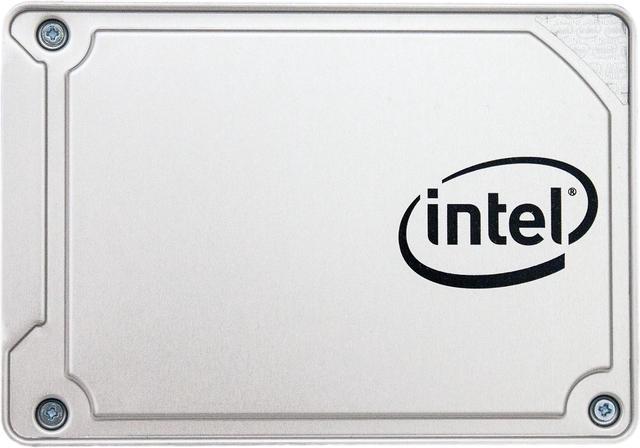
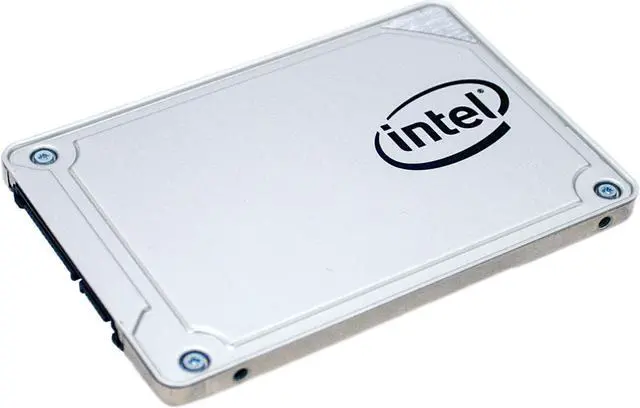
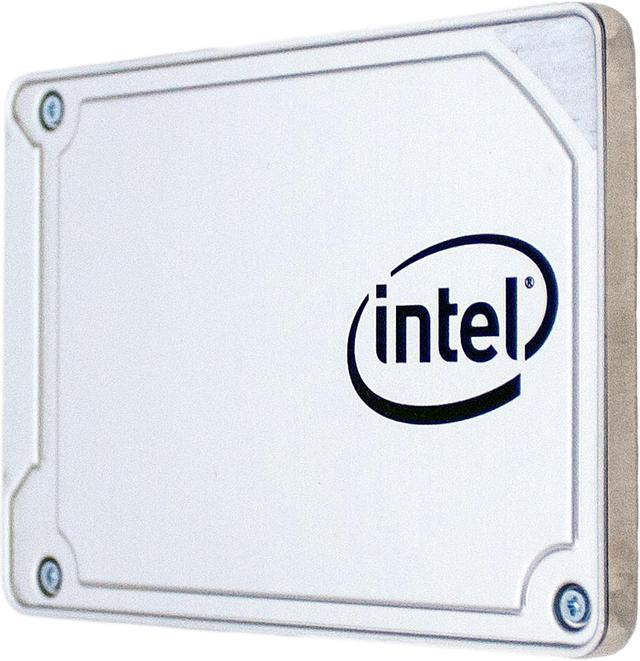
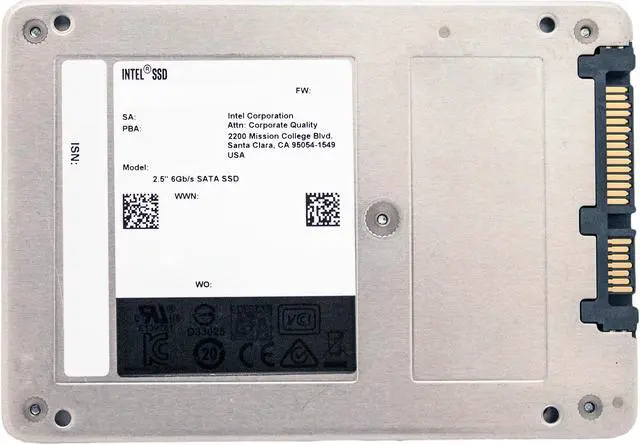
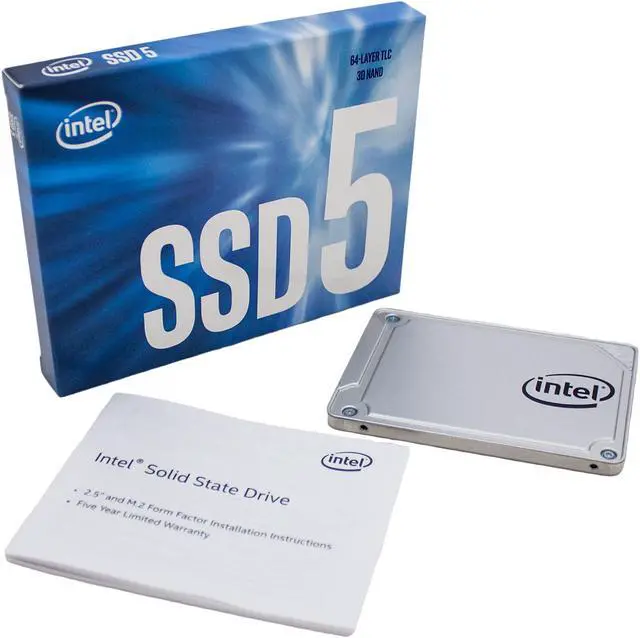


Intel 545s 2.5" 512GB SATA III 64-Layer 3D NAND TLC Internal Solid State Drive (SSD) SSDSC2KW512G8X1
- For those who demand reliable performance and value
- A cost-effective HDD replacement, delivering quicker boot and application-load-file-transfer times
- Features 64-layer Intel 3D NAND technology
- Supports AES 256-bit self-encryption
- Easy to install into any SATA-based computer
+
+
Overview
Specs
Reviews (118)


INNOVATION
For those who demand value and performance, the new Intel® SSD, featuring 64-layer Intel® 3D NAND technology, offers a cost-effective and efficient replacement for traditional hard disk drives (HDD).

PERFORMANCE
Optimize your PC by replacing your HDD with an Intel® 3D NAND SSD. With performance faster than an HDD, you’ll see quicker boot-ups, more responsive applications and faster file-transfers for less waiting and more doing.

QUALITY
Gain confidence with Intel’s industry leading quality and reliability. Intel® 3D NAND SSDs support AES 256-bit self-encryption and are backed by a 5-year limited warranty from the world leader in innovation.

INSTALLATION
The standard 2.5-inch form factor fits easily into most PCs. With Intel® Data Migration Software, copying data from your old drive to the SSD is simple and capacity configurations. Choose from 2.5-inch or M.2 form factors in a variety of capacities — up to 2TB — that are easy to install into any SATA-based PC.
Copyright © 2017 Intel Corporation. All rights reserved. Intel, the Intel logo, Intel. Experience What's Inside and the Intel. Experience What's Inside logo are trademarks of Intel Corporation in the U.S. and/or other countries.
*Other names and brands may be claimed as the property of others.
Intel SSD 545s Series (512GB, 2.5in SATA 6Gb/s, 3D2, TLC)
Warranty & Returns
Warranty, Returns, And Additional Information
Warranty
- Please contact the Seller directly for warranty information. Warranty information may also be found on the Manufacturer's website.
- Read full details
- CONTACT
Return Policies
- Return for refund within: 30 days
- Return for replacement within: 30 days
- This item is covered by LINKNET NETWORK LIMITED Return Policy
Manufacturer Contact Info
- For a directory of all our manufacturers, please click below.
- Manufacturers Directory
LOADING...
LOADING...
The Intel 545s 512GB is a 2.5-inch SATA III internal SSD built for consumers who want a reliable, cost-effective upgrade from a hard drive, with up to 550 MB/s read speeds, 64-layer 3D TLC NAND, and easy compatibility with SATA-based desktops and laptops.
Recommended For
- People upgrading an older desktop or laptop from a hard drive to a 2.5-inch SATA SSD, where faster boot times, quicker app launches, and simple drop-in compatibility matter more than chasing NVMe speeds.
- Home and office users keeping a SATA-only system alive for web work, Office files, light multitasking, and everyday installs, where mainstream SATA responsiveness is the main goal.
- Buyers who specifically need a 7mm 2.5-inch SATA drive for older notebooks, small PCs, or replacement bays that cannot take M.2 NVMe storage.
- Users who want a consumer SATA SSD with hardware encryption support for a personal laptop or office PC, while staying in the familiar SATA upgrade path.
Real-World Use Scenarios
- Replacing a 2.5-inch hard drive in an older laptop or desktop to make everyday use feel faster; boot times, app launches, and file opens are typically much quicker than with an HDD, while staying within the limits of a SATA-only system.
- Using it as a main OS drive for web browsing, office work, video calls, and light multitasking; the experience is generally responsive for daily computing, with SATA SSD performance being more than adequate for mainstream desktop use.
- Installing a few common games on a SATA-based PC to reduce level loads and patch/install wait times versus an HDD; in actual play it helps with loading and system responsiveness, but it will not match NVMe drives for large game transfers or newer high-end storage workloads.
- Storing and transferring photos, documents, and moderate-size media files on a home PC; file copies are much faster than a hard drive for routine work, while sustained heavy transfers are still constrained by the SATA interface.
- Upgrading a business or personal system where hardware encryption support matters; it fits scenarios where the user wants a standard SATA SSD plus AES 256-bit self-encryption for basic data-protection and deployment requirements.
Spec Summary
| Attribute | Value |
|---|---|
| Best For | Consumer desktops and laptops with a 2.5-inch SATA bay that need a 512 GB SATA III internal SSD for faster boot and application load times; suitable for personal, gaming, and business use |
| Capacity | 512 GB solid-state storage |
| Interface And Form Factor | 2.5-inch SATA III (SATA 6.0 Gb/s) internal drive, 7.00 mm height for standard 2.5-inch bays |
| Performance | Max sequential read up to 550 MB/s and max sequential write up to 500 MB/s; read latency 50 µs, write latency 60 µs; external listing also shows a 550 MB/s read speed and a reported maximum random read rate of 205 IOPS |
| Technology & Features | 64-layer 3D TLC NAND (3D TLC) memory with AES 256-bit self-encryption support |
| Power And Environmental | Low power draw (idle 50 mW; active 4.5 W); operating temperature 0°C to +70°C; shock resistance 1500G (0.5 ms); vibration resistance operating 2.17 GRMS (5–700 Hz) and non‑operating 3.13 GRMS (5–800 Hz) |
| Reliability | MTBF 1,600,000 hours |
| Physical Dimensions & Weight | 7.00 mm height; weight 43.00 g |
| Security | Supports AES 256-bit self-encryption |
| Compatibility & Installation | Internal installation; compatible with desktop systems (fits standard 2.5-inch SATA bays) and consumer systems specified for personal, gaming, or business use; no batteries required |
| Model Identifiers | Intel 545s Series model SSDSC2KW512G8X1 (part number SSDSC2KW512G8X1) |
| Regulatory & Safety | California Proposition 65 warning present (on product combined cancer/reproductive) |
Reference Q&A
Q: Should I buy the Intel 545s 512GB or the Crucial MX500 500GB?
A: Choose the Intel 545s if you want a proven SATA SSD with DRAM-backed TLC storage, strong everyday responsiveness, and hardware AES 256-bit encryption in a standard 2.5-inch form factor. Choose the Crucial MX500 if price is similar and you want a very common alternative with broadly comparable real-world SATA performance. Across reviews and community recommendations, these two drives are usually treated as same-class SATA options, so the decision is often driven more by price, availability, and brand preference than by a large speed gap.
Q: Is the Intel 545s 512GB a better buy than a Samsung 860 EVO 500GB?
A: Buy the Intel 545s when you want mainstream SATA SSD performance and the better deal is on the Intel drive. Buy the Samsung 860 EVO when pricing is close and you prefer Samsung's higher-end positioning within SATA SSDs. Review coverage places both drives near the limits of the SATA interface for sequential speeds, so for boot drives, game storage, and general desktop use, the user experience difference is usually modest rather than transformational.
Q: Should I get the 512GB Intel 545s or a lower-capacity SATA SSD?
A: Choose the 512GB Intel 545s if the drive will hold Windows, applications, and several modern games or project files. A lower-capacity SATA SSD works for a basic boot upgrade, but 512GB is the more practical tier for users who want to avoid filling the drive quickly. In this class, moving up in capacity is usually a usability decision more than a speed decision, since SATA itself caps peak throughput well below NVMe levels.
Q: Is the Intel 545s 512GB worth choosing over an older Intel 540s?
A: Yes, the Intel 545s is the more sensible choice over the Intel 540s if both are available at similar pricing. Intel positioned the 545s as the successor, and reviews note that it moved to Intel's 64-layer 3D NAND while targeting the same mainstream SATA upgrade segment. That makes the 545s the better fit for buyers who want the newer generation rather than an older SATA model with a similar use case.
Q: Should I choose the Intel 545s 512GB or an NVMe SSD for a laptop or desktop upgrade?
A: Choose the Intel 545s if your system only supports 2.5-inch SATA drives or if you want a simple drop-in replacement for a hard drive. Choose NVMe if your system has an M.2 PCIe slot and your goal is higher throughput for heavier file transfers, scratch-disk work, or more performance-focused builds. The Intel 545s is appropriate for compatibility-first upgrades, while NVMe is the better path when the platform can use it.
Q: Will this SSD work as an upgrade for an older laptop or desktop that currently uses a 2.5-inch hard drive?
A: Yes, if the computer uses a 2.5-inch SATA drive bay, this Intel 545s is a straightforward upgrade. It is a 2.5-inch SATA III SSD with a 7mm height, which matches the common form factor used in many older laptops and many desktops. For desktops, the main trade-off is physical mounting: some cases need a 2.5-to-3.5-inch bracket even when the SATA connection itself is compatible.
Q: Is this a good choice for everyday use like boot drives, office work, web browsing, and general home PCs?
A: Yes. This drive is well suited for everyday computing and as a hard-drive replacement in older SATA systems. Its rated speeds of up to 550 MB/s read and 500 MB/s write are near the practical ceiling of SATA SSDs, so for booting Windows, launching apps, browsing, and office tasks, the real-world experience should feel much faster than a mechanical HDD. The main trade-off is that it is a SATA SSD, so it is not the right choice for users specifically seeking NVMe-class performance.
Q: Does this SSD come with everything needed for migration, like a SATA cable, USB adapter, or cloning software?
A: Usually no. Based on common retail Q&A patterns for 2.5-inch SATA SSDs, buyers often still need a USB-to-SATA adapter or dock for cloning and may also need a SATA cable or mounting bracket depending on the PC. Cloning software is not consistently included with SATA SSD purchases, so it is safer to treat migration accessories and software as separate items unless the seller explicitly lists them.
Q: Is this better than a newer SATA SSD like a Samsung 870 EVO or Crucial MX500?
A: It is still a reasonable SATA upgrade, but newer mainstream SATA models such as Samsung 870 EVO and Crucial MX500 are typically the safer choice when price is similar because they are more commonly supported in retail channels, more frequently discussed in current Q&A threads, and often easier to buy with clearer accessory and warranty expectations. Choose the Intel 545s if the price is meaningfully lower and you specifically need a basic 2.5-inch SATA replacement; choose a newer alternative if support ecosystem and easier buying confidence matter more.
Q: Is the Intel 545s 512GB still a sensible buy for an older laptop or desktop that only supports SATA?
A: Yes, if your system uses a 2.5-inch SATA drive and you want a straightforward HDD replacement. The Intel 545s is a SATA III TLC SSD rated up to 550 MB/s read and 500 MB/s write, so it is suitable for boot drives, office work, web use, and general everyday upgrades. The main limitation is that it is a SATA SSD, so it will not match NVMe performance in newer systems.
Q: Who is the Intel 545s 512GB best suited for?
A: It is best suited for buyers who need a reliable 2.5-inch SATA SSD for mainstream use rather than maximum speed. That includes older laptops, desktops with only SATA storage bays, and users replacing a hard drive for faster boot and app load times. It is less suitable for users doing heavy sustained writes or building a newer system with NVMe support.
Q: What are the main trade-offs of choosing the Intel 545s 512GB over other SSD options?
A: The main trade-off is compatibility and predictable SATA performance versus higher speed alternatives. Compared with budget DRAM-less SATA SSDs, the 545s is generally a stronger choice for everyday responsiveness. Compared with better-value or newer NVMe drives, it is much slower and may be harder to justify unless your system is limited to SATA. It is a practical upgrade drive, not a performance-focused one.
Q: Is the Intel 545s 512GB a good choice if reliability is the top priority?
A: It is reasonable for normal consumer use, but it should not be treated as the safest choice purely for reliability-critical workloads. Reddit discussions include both positive views of the 545s as a quality SATA SSD and reports of failures after extended use or in RAID/Linux setups. If reliability is your top concern for always-on, RAID, or business-critical storage, a drive with stronger enterprise-oriented support or a newer widely trusted model may be a better fit.