
Your Browsing History


J B.
Joined on 04/05/23
0
0

product reviews
- 1
It's good...BUT!!
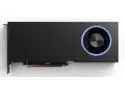
Inte Arc Pro B70 32GB 256-bit GDDR6 PCI Express 5.0 x16, 32 Ray Tracing Units, 32 Xe Cores, AI and Workstation Graphics Card
Pros: I think the pros of this card are fairly obvious. But I wanna try to give the most detailed review of it as I can so that I can inform you just what this card will require from you. So let me start with the pros 1. Obviously the VRAM is massive 32 gigabytes for under $1000 is best deal on the market right now 2. It's compact in its size for a 32 gigabyte card so if you have a smaller machine there's a possibility this card could fit. 3. It's incredibly energy efficient even though the documentation says it can use up to 230 watts I think I've only really hit 180 with it. So you don't need some crazy power supply, 1000w would do just fine. 4. I think this is the most important pro. When you purchase this card you're sending a signal to Intel that they're on the right, and we need this in the market space. Nvidia just dominates and it needs competition, and Intel I believe can provide better software support over AMD. So from that perspective we really as many options as we can right now in the GPU and chip markets.
Cons: This card is not for everybody. And this is probably one of the most important parts of the review because this card has a lot of nuance. You're definitely making some sacrifices. To get the best out of this you're gonna have to do some programming, scouring on Github, and sometimes getting into coding. So it's not like CUDA where you could just sort of plug and play and everything works at it's best 1. While it's a very decent gaming card, I don't think you're getting the best value out of it for gaming, this is definitely geared more toward a workstation card. There are other cards on the market right now around this cards price point that just outperform it in gaming. If you do workloads and gaming then you may consider this card as a decent bridge. 2. The software stack is immature: This is sort of to be expected, it's not in a horrible statebut it's definitely not optimized.. To get this thing running to potential It's probably going to require some blood sweat and tears You're probably gonna have to code some things or go to GitHub and get the latest bleeding edge stuff, and then you have to decide what back end You need to choose on what operating system... There's a lot to this 2a. Intel doesn't really seem to know exactly where it's going with its back end... So right now there's several different options people can try. On Windows the best performance I found is actually through Vulcan.... On Linux the best performance I found was through SYCL... However this is for GGUF models which is the most common model format people run. On Windows Vulcan beats everything else out in tokens per second. But to me that's not the most important thing because on Linux SYCL Is incredible for prompt processing which people often overlook prompt processing can really hang model performance. There are other backends too but they are more specialized to set up. 2.b Speaking of models you are extremely limited if you're trying to unlock truly fast speed for example Open Vino is historically the fastest for Intel but it requires a special kind of model format and it really reduces your selection unless you're willing to go in and do a conversion yourself. Like I said you're gonna have to be familiar with coding and programming. 2c. While there's pretty decent support for models Sometimes you'll find that different quantizations of different models aren't gonna be available to you just yet or they don't run as well, like I said the card is in the middle of its growing pains. 3. You're not going to have access to the latest and greatest features like Turbo Quant, not just yet anyway I think it will come But you have to understand when you purchase this card you're probably gonna be a little bit behind on newly released technology similarly like those that use AMD cards, however the Intel community seems to be very proactive in trying to improve the performance of the B70 so the excitement is there. 4. Trying to run this on VLLM I was not able to get performance that I was incredibly happy with. On smaller models like 8B models it seem to be OK but when I started pushing it to 30B models that I can find that would work, it was difficult to find them in Q4 So you're sort of forced to run these models in FP8 or FP16, the concurrency on VLLM is really strong but it's still lagging behind in some compatibility You're gonna have some rough patches with that 5. The kernels for the card are not optimized as much as they should be just as of yet. I think that's going to come in the future sooner than later, but there's a lot of backends that do not take full advantage of the XMX matrices that Intel provides. While the performance isn't going to be anything like a 5090 no matter how you slice it or dice it, you can think of this card as more of a 4070 with 32GB of VRAM. That's about where I would put it on the scale as far as hardware. Whether it becomes a monster or not will depend on how well Intel will increase the card's efficiency in the future.
Overall Review: Overall the car deserves five stars not because it's without flaws, but because Intel took a shot and it's really a great product for the price in comparison to what is out there on the market right now. You have to put a lot of work into it to get the best out of it so it is a bit of a grind but once you have things set up it's a pretty amazing. Even it's not as optimized as it can be now the community and Intel are working really hard to pull the performance out of this card so I have a really bright outlook for what this card will eventually be. As of now the statement Intel has made that this card is the most token per dollar is accurate.... But you're gonna have to work with it to get there. So understand when you buy this card you're not just throwing it in the machine and flipping the switch and it's a 5090, You're probably gonna get real upset if you have that expectation. With a little bit of work it is a very solid card for AI inference, it's a decent card for gaming but I wouldn't buy it solely for that reason. Ultimately you're buying this because you see the value in what Intel has done here, and every card that you buy from Intel is a vote.... You're signaling to Intel that they're on the right and in return Intel is promising you that you won't regret it. So you have to decide if that promise is worth it to you. I saw it as worth it to me and I give Intel 5 stars because I never went into this with the expectation that it was going to be something it wasn't. But I have high hopes that Intel is really working towards something amazing here. And I want to support them in the industry.
4/28/2026See more detail