


- Free 84-day Returns
$279.99
Add to PC build list
Sold by Newegg
Shipped by Newegg
Add to Wish List(Found on 71 wish lists)
Best Sellers




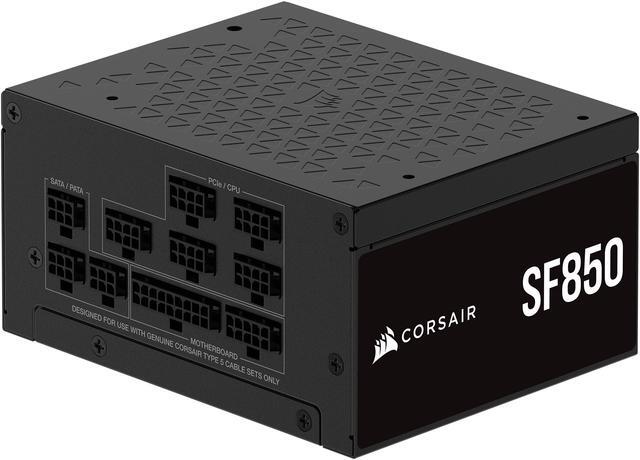
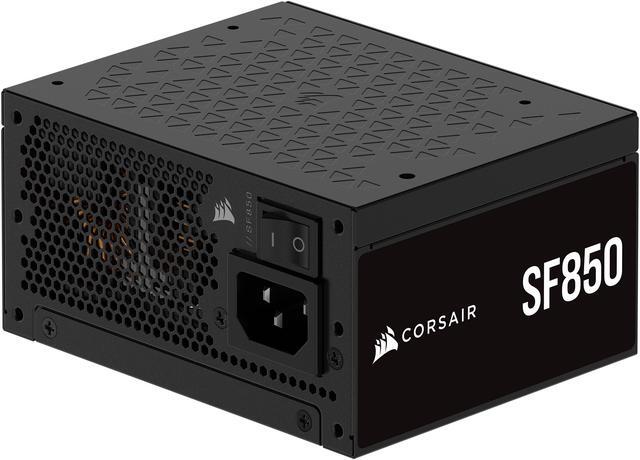
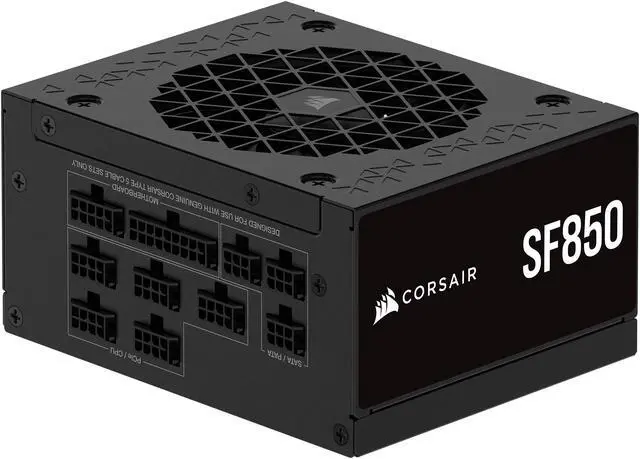
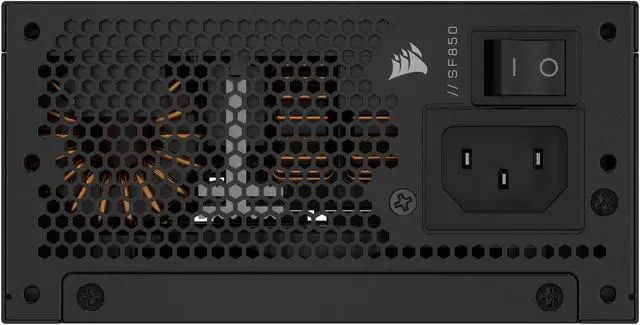
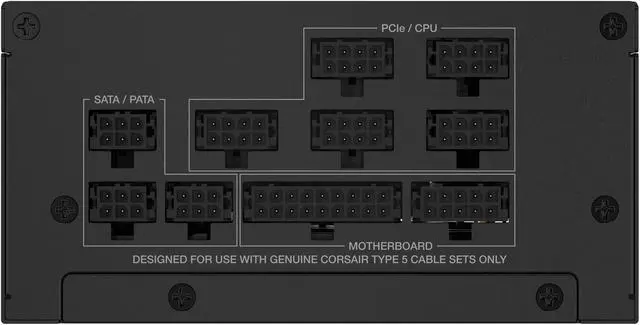
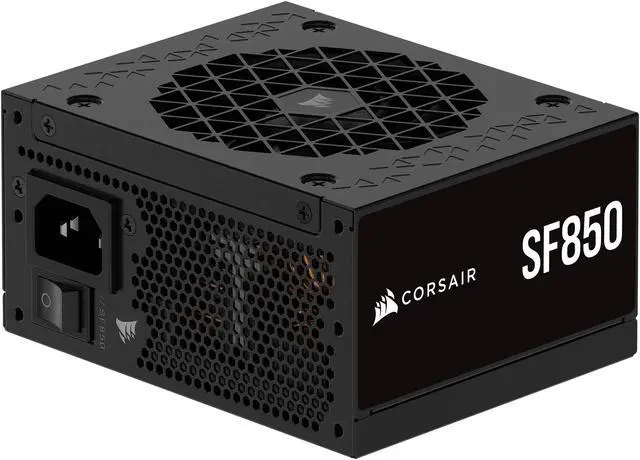
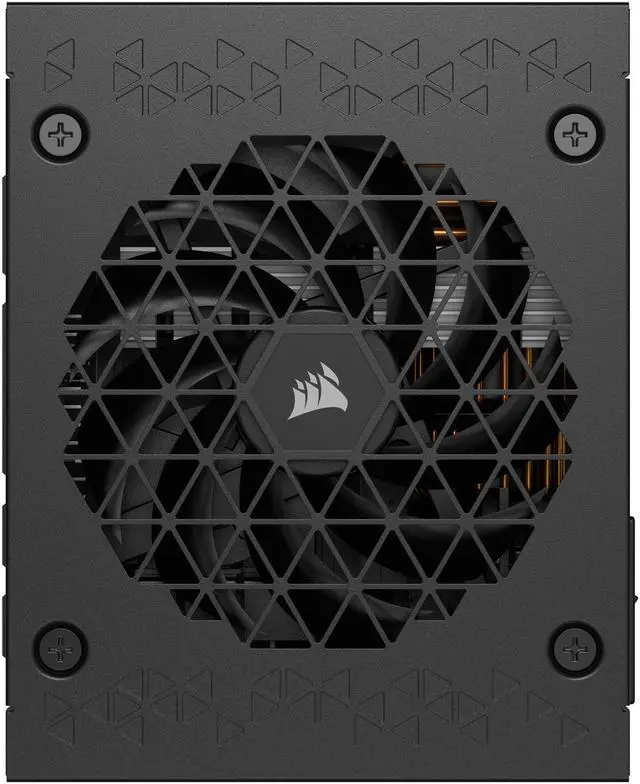


Corsair SF Series (2024) SF850, 80 PLUS Platinum, Fully Modular SFX Power Supply, CP-9020256-NA
- 80 PLUS Platinum rated SFX power
- ATX 3.1 Compliant & PCIe 5.1 ready
- Fully modular, Type-5 Micro-Fit PSU connectors
- 92mm PWM cooling fan
- 105°C Rated Japanese capacitors
- Zero RPM Mode
- 50°C Continuous operating temperature
- SFX-to-ATX bracket
- Seven-year warranty
+
+
Overview
Specs
Reviews (275)
SF SERIES (2024), SF850, 850 WATT, SFX, 80 PLUS PLATINUM, FULLY MODULAR POWER SU
Warranty & Returns
Warranty, Returns, And Additional Information
Warranty
- Limited Warranty period (parts): 7 years
- Limited Warranty period (labor): 7 years
- Read full details
Return Policies
- Return for refund until: January 31, 2027
- Return for replacement until: January 31, 2027
- This item is covered by Newegg.ca's Extended Holiday Return Policy.
- Read full return policy for details.
We want to ensure your holiday shopping this year is hassle-free. That’s why we’re automatically extending our return policies on almost every product! For purchases placed between November 1st, 2026 and December 31, 2026 you will have until January 31, 2027 to return your product.
Manufacturer Contact Info
- Manufacturer Product Page
- Manufacturer Website
- Support Phone: 1-510-657-8747
- Support Website
- View other products from Corsair
LOADING...
LOADING...
The Corsair SF850 (2024) is an 850W 80 PLUS Platinum fully modular SFX power supply built for high-performance small-form-factor PCs, making it a strong fit for compact gaming, creator, and enthusiast builds that need ATX 3.1 and PCIe 5.1 readiness.
Recommended For
- Small-form-factor PC builders using Mini-ITX cases who need high wattage without moving up to an SFX-L or ATX PSU. The SF850 is positioned specifically for compact builds, and community discussion consistently treats the SF line as a go-to option when space is tight.
- Users building compact gaming systems with current high-end GPUs who want native ATX 3.1 / PCIe 5.1 support and better handling for transient power spikes, instead of relying on older SFX platforms or extra adapter clutter.
- SFF builders who care about lower idle-to-mid-load noise in a living-room PC, desk setup, or everyday gaming rig. Review coverage and forum comments repeatedly point to the SF line as a quieter SFX option, with fan-off behavior at lighter loads being a practical reason people choose it.
- Experienced builders planning dense cable-managed ITX systems who value short, compact cabling rather than extra slack. In small cases, the shorter cable runs are a practical fit and reduce excess cable bulk.
Real-World Use Scenarios
- Building a high-end Mini-ITX gaming PC with a modern GPU, the user is trying to fit full-size graphics power into a small case; the likely result is a cleaner SFX build with native 12V-2x6/PCIe 5.1 support and enough headroom for typical high-performance single-GPU setups.
- In a space-constrained SFF case, the user is trying to reduce cable clutter and improve routing around the GPU, radiator, or front panel area; the typical experience is easier cable management than with full-size ATX PSUs, though some builders still report that custom cables help in especially tight layouts.
- For a quiet living-room PC or desk-side gaming system, the user is trying to avoid constant PSU fan noise during lighter workloads; the likely outcome is little to no audible PSU noise at idle or moderate use, with fan activity rising mainly during heavier gaming or stress loads.
- When upgrading an older SFF system to a newer graphics card, the user is trying to avoid adapter-heavy power hookups and transient-spike issues; the expected experience is a more straightforward upgrade path for current GPU platforms because the PSU is positioned for ATX 3.1 and PCIe 5.1-era hardware.
- Using the included SFX-to-ATX bracket in a larger tower, the user is trying to free up space for airflow, pumps, or cable runs rather than fill the PSU bay with a full-size unit; the likely result is a roomier build layout, but stock cable lengths may be less ideal in taller cases.
Spec Summary
| Attribute | Value |
|---|---|
| Best For | Compact SFX/mini-ITX and small-form-factor PC builds that need up to 850 W with ATX 3.1 and PCIe 5.1 compatibility; includes an SFX-to-ATX adapter for installation in standard ATX cases |
| Power And Compatibility | 850 W maximum output with rail distribution +3.3V@20A, +5V@20A, [email protected], +5VSB@3A; listed with ATX 3.1 and PCIe 5.1 compatibility |
| Efficiency And Certification | 80 PLUS Platinum efficiency certification |
| Form Factor And Dimensions | SFX form factor; 4.92 × 3.94 × 2.50 inches (125 mm max depth); weight 2.31 lbs; color black |
| Cooling And Thermal | Air-cooled with a single 92mm PWM fan; upper temperature rating 105°C |
| Connectors And Cables | Fully modular cable set including 1×24‑pin ATX (300mm), 2×EPS/ATX12V 8‑pin (4+4, 400mm), 3×PCIe 8‑pin (6+2, 400mm), 1×PCIe 12+4 (400mm), plus SATA and PATA multi‑connector chains as listed |
| Electrical Input | Universal AC input 100–240 V, 47–63 Hz; input current listed as 10A–5A |
| Packaging And Accessories | Includes SF850 power supply, DC cable kit, SFX‑ATX adapter bracket, power cord, mounting screws, and cable ties; packaged as a single unit with package dimensions and weight provided |
| Model Identifiers | Corsair SF Series — SF850, model CP-9020256-NA |
Reference Q&A
Q: Should I buy the Corsair SF850 (2024) or the Corsair SF750 (2024)?
A: Choose the SF850 (2024) if your build uses a higher-power GPU, you want more headroom for transient spikes, or you may upgrade later without replacing the PSU. Choose the SF750 (2024) if your system is already well within 750W and you want to keep cost and power capacity closer to your actual load. Both are in Corsair's 2024 SFX line with ATX 3.1 and PCIe 5.1 support, so the main decision is power margin rather than platform features.
Q: Is the Corsair SF850 (2024) worth it over the Cooler Master V850 SFX?
A: The SF850 (2024) is the stronger choice if you want a premium SFX unit with Platinum efficiency, Corsair's newer 2024 ATX 3.1 platform, and a reputation for easier cable routing in compact builds. The Cooler Master V850 SFX is the more practical choice when price matters more and you still want 850W SFX capacity with modern GPU power support. In real buying discussions, this comparison usually comes down to paying more for quieter, more refined packaging and cabling versus saving money with similar wattage.
Q: Should I get the Corsair SF850 (2024) or move up to the Corsair SF1000?
A: Choose the SF850 (2024) for most high-end single-GPU SFF builds, especially when you want strong headroom without paying for excess capacity. Move to the SF1000 if you are planning around top-tier GPUs, heavier CPU workloads, or simply want more upgrade flexibility in the same SFX form factor. Since both belong to Corsair's 2024 SF platform, the trade-off is mainly extra wattage and cost rather than a change in size class or core feature set.
Q: Is the Corsair SF850 (2024) a better buy than the older Corsair SF750 generation?
A: The SF850 (2024) is the better fit if you want native ATX 3.1 and PCIe 5.1 readiness, more wattage, and a current platform aimed at newer GPUs without relying on older adapter-based setups. The older SF750 generation still makes sense if you already know 750W is enough and you are comparing based on price rather than feature updates. This is mostly an upgrade in connector standard, power ceiling, and future compatibility, not a shift away from the compact SFX format that made the earlier SF models popular.
Q: For a compact ITX build, should I choose the Corsair SF850 (2024) or a full-size ATX 850W PSU?
A: Choose the SF850 (2024) if case compatibility, cable routing, and preserving space for airflow or longer GPUs matter more than absolute value per watt. Choose a full-size ATX 850W PSU if your case supports ATX comfortably and your priority is usually lower cost or a wider range of PSU options. The SF850 includes an SFX-to-ATX bracket, so it can still work in larger cases, but its main advantage is making small-form-factor builds easier without giving up modern 850W capability.
Q: Will this fit a Mini-ITX or other small-form-factor case?
A: Usually yes, if the case supports the standard SFX power-supply form factor. This SF850 uses the compact SFX size at 125 x 100 x 63.5 mm, so it is a better fit for tight ITX and SFF builds than longer SFX-L or full ATX units. It also includes an SFX-to-ATX bracket, so it can be used in larger ATX cases too. The main check is your case's listed PSU form-factor support and cable-clearance space.
Q: Is the Corsair SF850 a good choice for a high-end gaming ITX build?
A: Yes for most single-GPU high-end ITX builds. An 850 W SFX unit is appropriate for powerful modern CPUs and GPUs, and this model is ATX 3.1 compliant with a PCIe 5.1 / 12V-2x6 cable for newer graphics cards. Its Platinum efficiency and 50°C continuous rating also make it a strong fit for compact cases where heat and power spikes matter. It is less suitable only if your build needs more than 850 W or if your case requires a different PSU size.
Q: Does it support modern GPUs that use a 12VHPWR or 12V-2x6 power connector?
A: Yes. This 2024 SF850 is positioned for modern GPU compatibility: it is ATX 3.1 compliant, PCIe 5.1 ready, and includes a 12V-2x6 cable for current high-power graphics cards. That makes it a better forward-looking option than older SFX units that rely only on multiple 8-pin PCIe leads. Buyers should still confirm their specific GPU power recommendation and connector requirements.
Q: What are the trade-offs versus a cheaper 850W SFX alternative like the Cooler Master V850 SFX Gold?
A: The Corsair SF850's main advantages are higher 80 Plus Platinum efficiency, ATX 3.1 / PCIe 5.1 positioning, and a compact standard-SFX design with Zero RPM low-load operation. A cheaper rival such as the Cooler Master V850 SFX Gold can offer similar wattage and small-form-factor compatibility at a lower price, but with Gold rather than Platinum efficiency. In practice, the Corsair is the better pick if you want stronger efficiency and a more premium SFX platform; the cheaper alternative is the better pick if price matters more than those upgrades.
Q: Is this a quiet PSU for everyday use and gaming?
A: Yes, relatively quiet by SFX standards. The SF850 uses a 92 mm PWM fan and supports Zero RPM mode, so the fan can stay off at low to moderate loads. That makes it a good choice for users who want an SFF build that is quiet at idle and during light work. Under sustained heavy gaming or rendering loads, it will still need active cooling, which is normal for a compact 850 W PSU.
Q: Is the Corsair SF850 (2024) a good choice for a high-end SFF gaming build?
A: Yes for most high-end small-form-factor builds. It is an 850W SFX unit with ATX 3.1 / PCIe 5.1 support, a native 12+4-pin GPU cable, Platinum efficiency, and an included SFX-to-ATX bracket. Reddit discussion around the 2024 SF line commonly treats it as suitable for modern compact gaming systems, especially when buyers want native next-gen GPU support in a true SFX size. The main caveat is cable management, not power delivery.
Q: What are the main trade-offs of buying the Corsair SF850 (2024)?
A: The main trade-offs are short, stiff SFX-length cables and Type-5 connector compatibility. In compact cases, some users like the sleeved cables, but repeated Reddit discussion shows others find them harder to route than softer custom cables. In larger ATX cases, the included cable lengths can be limiting. Buyers who want the smallest PSU footprint and modern GPU support may still prefer it, but cable flexibility is a practical downside.
Q: Who is the Corsair SF850 (2024) best suited for?
A: It is best suited for builders who specifically need a premium SFX power supply for a compact PC and want current connector support without moving up to SFX-L or ATX. Its 125 mm length, fully modular design, Zero RPM mode, and included 12+4-pin cable make it a practical fit for modern ITX and other space-constrained builds. It is less ideal for buyers using a roomy ATX case unless they are comfortable with shorter SFX cables.
Q: Should you buy the Corsair SF850 (2024) if you are sensitive to cable-routing difficulty?
A: Only if your case has enough room or you are willing to work around the stock cables. A repeated theme in Reddit discussion is that the included sleeved cables, especially the GPU cable, can feel stiff in tighter builds. That does not make the PSU a poor choice overall, but it does mean it is better for buyers who prioritize power density and modern standards over the easiest possible cable routing.
Q: Is the Corsair SF850 (2024) worth buying over a larger ATX PSU?
A: It is worth buying if you need true SFX dimensions. Its value comes from fitting compact cases while still offering 850W output, Platinum efficiency, ATX 3.1 compliance, and native support for newer GPUs. If your case supports a standard ATX PSU and space is not a concern, a larger PSU may offer easier cable routing and fewer fit compromises for similar money.