


- Free 84-day Returns
$194.99
Add to PC build list
Sold by Newegg
Shipped by Newegg
Add to Wish List(Found on 13 wish lists)


Get Educated
Make informed decisions with expert advice. Learn More

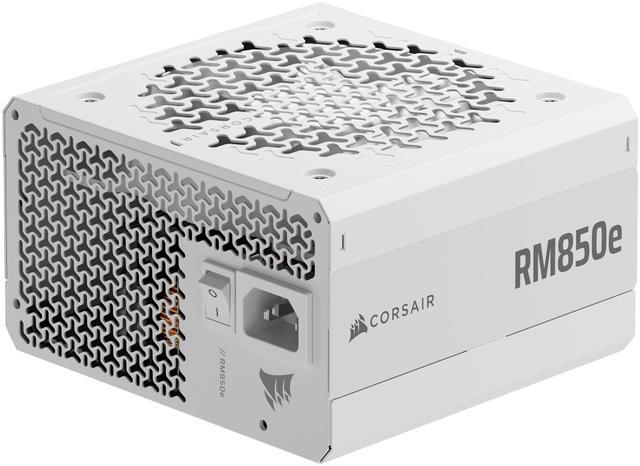
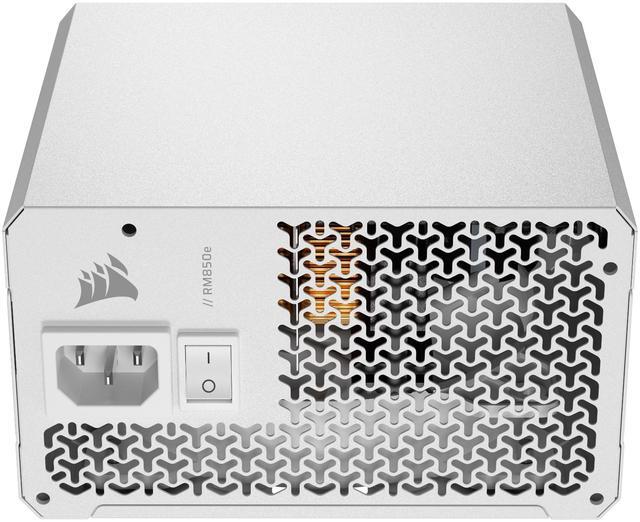
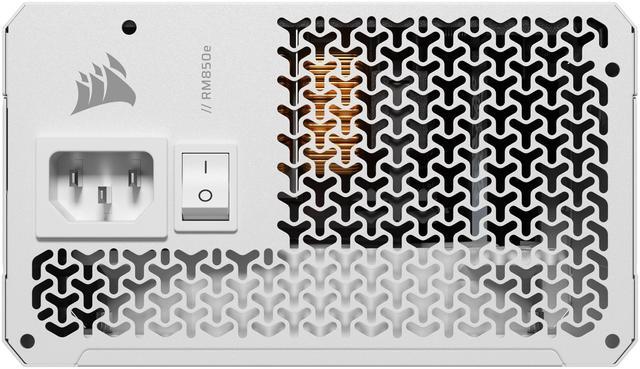
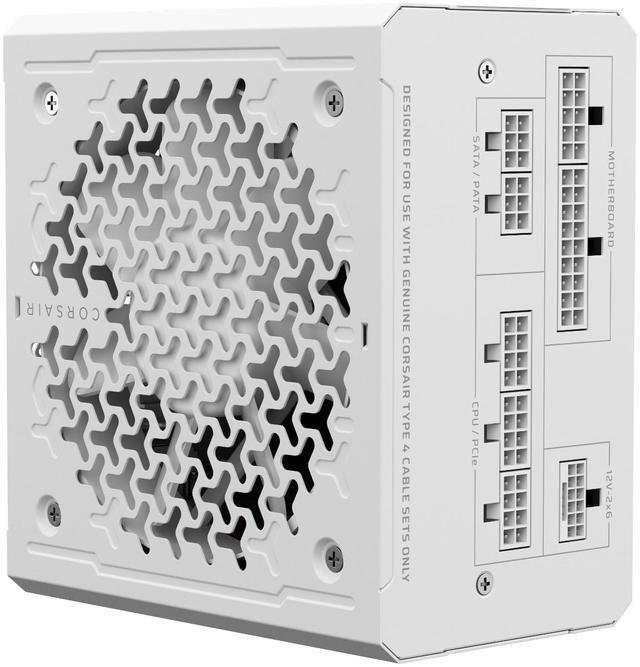
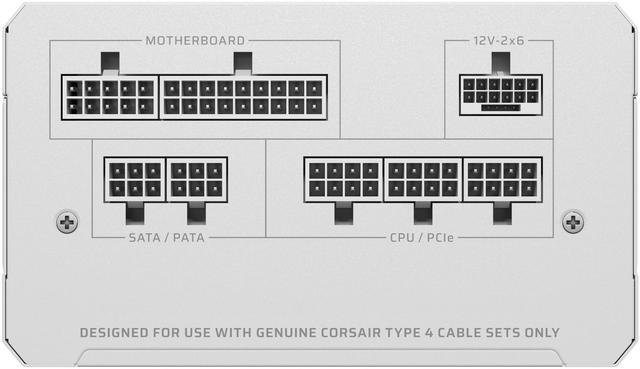
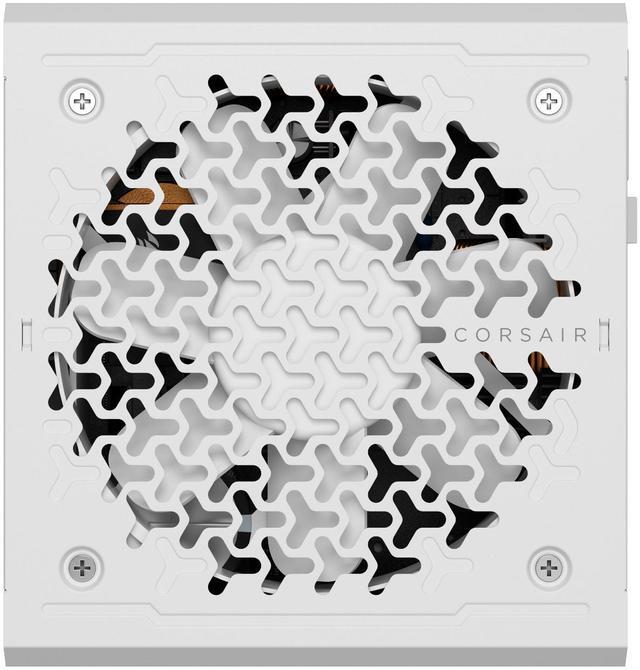
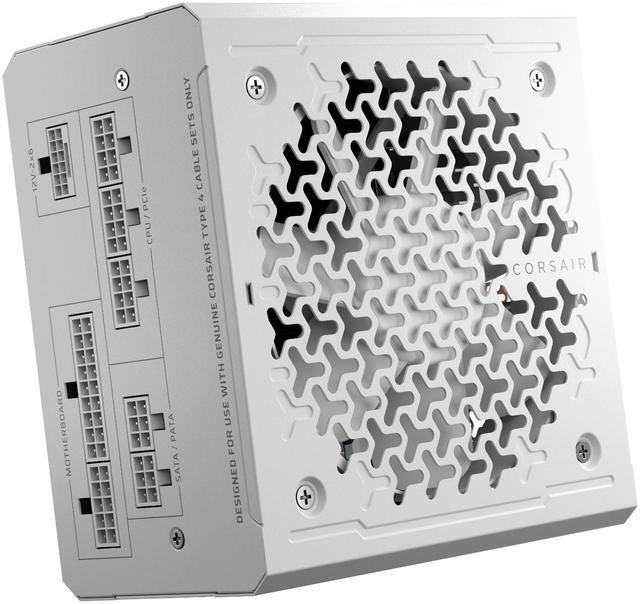


CORSAIR RM850e (2025) Fully Modular Low-Noise ATX Power Supply - ATX 3.1 & PCIe 5.1 Compliant - 105°C-Rated Capacitors - Cybenetics Gold Efficiency
- ATX 3.1 Compatible
- Full Modular
- Cybenetics Gold
- 100 - 240 V 47 - 63 Hz
+
+
Overview
Specs
Reviews (1,405)
Warranty & Returns
Warranty, Returns, And Additional Information
Return Policies
- Return for refund until: January 31, 2027
- Return for replacement until: January 31, 2027
- This item is covered by Newegg.ca's Extended Holiday Return Policy.
- Read full return policy for details.
We want to ensure your holiday shopping this year is hassle-free. That’s why we’re automatically extending our return policies on almost every product! For purchases placed between November 1st, 2026 and December 31, 2026 you will have until January 31, 2027 to return your product.
Manufacturer Contact Info
- Manufacturer Product Page
- Manufacturer Website
- Support Phone: 1-888-222-4346
- Support Website
- View other products from Corsair
LOADING...
LOADING...
The CORSAIR RM850e (2025) White is an 850W fully modular ATX 3.1 power supply with PCIe 5.1 support and a 12V-2x6 cable, making it a strong fit for modern gaming or creator PCs that want clean cabling, current-gen GPU readiness, and low-noise operation.
Recommended For
- Builders pairing a next-gen GPU with a mainstream-to-high-end gaming PC who want a native 12V-2x6 cable and ATX 3.1 support without moving up to a 1000W-class PSU.
- PC builders using compact mid-tower cases who want a shorter, fully modular PSU to simplify cable routing and leave more room around the PSU shroud.
- Users building a quiet gaming or home office desktop who care about low PSU noise under typical loads more than extras like digital monitoring or RGB.
- Upgraders replacing an older modular PSU for a current-gen GPU refresh and wanting modern connector support, cleaner cabling, and broad compatibility in a standard ATX build.
Real-World Use Scenarios
- Building a mid-to-high-end gaming PC with a current NVIDIA or AMD graphics card: users can power the system with the included native 12V-2x6 cable instead of relying on adapters, which usually makes the build cleaner and reduces cable clutter around the GPU.
- Upgrading an older ATX PC to a newer GPU platform: this PSU is commonly used as a straightforward replacement when builders want ATX 3.1 / PCIe 5.1 support for newer graphics cards without moving to a larger or more expensive enthusiast PSU.
- Putting together a white-themed gaming build with visible internals: the white housing and modular cabling make it easier to keep the PSU visually consistent with white cases and GPUs, so the finished build usually looks tidier in glass-side-panel setups.
- Assembling a compact or cable-sensitive mid-tower build: builders typically choose this model when they want full modularity and a shorter, easier-to-route PSU layout, which helps reduce extra cable bulk behind the motherboard tray.
- Running a gaming or work PC where low idle noise matters: in normal desktop use and moderate loads, users generally report a quiet experience, but community discussions show some buyers still watch for possible fan or coil-noise behavior under certain loads.
Spec Summary
| Attribute | Value |
|---|---|
| Best For | Systems requiring ATX 3.1 and PCIe 5.1 compliance that need up to 850 W from a fully modular, Cybenetics Gold–rated power supply |
| Power And Output | 850 W total output |
| Efficiency | Cybenetics Gold efficiency rating |
| Modular Design | Fully modular PSU design for easier cable management and installation |
| Connectors And Compliance | ATX 3.1 compatible with PCIe 5.1 indicated in model style; includes a standard 24-pin ATX main connector (connector type listed as ATX) |
| Input Power And AC | AC input 100 - 240 V (minimum 100 Volts, maximum 240 Volts), 47 - 63 Hz; input current listed as 10A-5A |
| Cooling And Fans | Air-cooled design with one fan |
| Physical Dimensions And Weight | Chassis dimensions 5.91 L x 5.51 W x 3.35 H inches; item weight 3.37 Pounds; package weight 2.89 Kilograms; package dimensions 12.9 L x 18.9 W x 28.9 H centimeters |
| Packaging And Unit Count | Sold as a single unit (package quantity 1; number of items 1) |
| Model Identifiers | CORSAIR RM850e (RMx Series) — model / part number CP-9020293-NA; manufacturer Corsair; style referenced as RMe (2025) ATX 3.1, PCIe 5.1 |
| Compatibility | Compatible device listed: Monitor |
| Batteries | No batteries required or included |
Reference Q&A
Q: Should I buy the Corsair RM750e or the RM850e (2025)?
A: Choose the RM850e (2025) if you want more headroom for newer high-end GPUs, stronger upgrade flexibility, or a system that may see higher transient power spikes. Choose the RM750e if your build is clearly mid-range and you want to stay closer to your power target. Reviews and official positioning place both models in the same mainstream ATX 3.1 family, so the main decision is wattage headroom rather than a major feature difference.
Q: Is the Corsair RM850e (2025) worth buying over an older RM850e or ATX 3.0 PSU?
A: Yes, the RM850e (2025) is the better fit if you specifically want a current-spec ATX 3.1 unit with a native 12V-2x6 cable for modern GPUs. Compared with older RM850e or ATX 3.0-era alternatives, the 2025 version is positioned as the updated model for newer graphics card compatibility and cleaner out-of-box cabling. If your current PSU already handles your GPU and uses standard 8-pin PCIe without issues, the upgrade is more about connector standardization and future compatibility than a dramatic day-to-day performance change.
Q: Corsair RM850e (2025) vs RM850x ATX 3.1: which one makes more sense?
A: Choose the RM850e (2025) if you want a more value-focused 850W ATX 3.1 power supply with compact sizing and native 12V-2x6 support. Choose the RM850x ATX 3.1 if lower noise, higher-end internal positioning, and premium-series features matter more than price. Official Corsair positioning and review coverage consistently place RMx above RMe in the lineup, while the RM850e remains the practical choice when you want modern standards and 850W capacity without moving into the higher-priced tier.
Q: Corsair RM850e (2025) vs MSI MAG A850GL: which should I choose?
A: Choose the RM850e (2025) if you prefer Corsair's RMe platform, compact 140 mm form factor, and a buying decision supported by broad review coverage around the RMe family. Choose the MSI MAG A850GL if you want a similarly modern 850W ATX 3.1 option and find it at a better price or prefer MSI for the rest of your build. In practice, this is usually a value-and-brand-confidence decision because both target the same buyer: a mainstream 850W ATX 3.1 PSU for current-generation gaming systems.
Q: Should I step up from the RM850e (2025) to a 1000W PSU?
A: Move to 1000W if you are building around a very power-hungry GPU, expect future GPU upgrades, or want extra overhead for transient spikes and lower average PSU load. Stay with the RM850e (2025) if your system is already well-matched to 850W and you want a more balanced cost-to-capacity choice. Review coverage of the RMe 2025 lineup treats the 850W model as the sensible point for many upper-midrange and high-performance gaming builds, while 1000W is the planning-ahead option.
Q: Is the CORSAIR RM850e (2025) a good choice for a modern gaming PC with a next-gen GPU?
A: Yes for most single-GPU gaming builds. The RM850e (2025) is an 850W, fully modular ATX 3.1 power supply with PCIe 5.1 support, which matches the main compatibility questions shoppers ask around newer GPUs and native 16-pin power delivery. It is best suited to mid-range to upper-tier systems that want current power-standard support without stepping up to a higher-wattage class.
Q: Who is the RM850e (2025) best for?
A: It is best for builders who want a clean, current-spec 850W PSU for a mainstream or performance desktop. The strongest fit is a single-GPU ATX build that benefits from full modular cabling, ATX 3.1 compatibility, and a white color option for themed builds. It is less ideal for ultra-budget systems that do not need modular cables or newer GPU power support.
Q: Is this power supply quiet enough for a low-noise build?
A: It is a reasonable option for a low-noise build, especially if you want a modern modular PSU rather than a budget unit. The product is positioned as low-noise, but the provided specs do not include a detailed fan curve or zero-RPM mode summary, so buyers who are extremely sensitive to acoustics may still want to compare detailed noise behavior against premium alternatives before choosing.
Q: What are the main trade-offs versus a higher-end 850W alternative like a Seasonic Focus GX model?
A: The RM850e (2025) gives you the core features most buyers ask for: 850W capacity, ATX 3.1 support, PCIe 5.1-era readiness, full modular cabling, and Gold-level efficiency. A higher-end alternative may offer a stronger efficiency tier or more premium positioning, but the practical trade-off is usually value versus refinement rather than basic compatibility. Choose the RM850e if you want modern standards and a simpler value case; choose a pricier rival if top-tier efficiency or premium extras matter more.
Q: Is the RM850e (2025) worth buying over an older non-ATX 3.x 850W PSU?
A: Usually yes if you are building new or planning a GPU upgrade soon. The main advantage is updated ATX 3.1 and PCIe 5.1 compatibility, which addresses one of the most common shopper concerns on PSU retail pages: avoiding adapter clutter and buying something that matches newer graphics-card power standards. If you already own a good older 850W PSU and do not need newer cabling or standards support, the upgrade is less urgent.
Q: Is the CORSAIR RM850e (2025) a good buy for a modern gaming PC?
A: It is a reasonable buy if you want an 850W ATX 3.1 power supply with a native 12V-2x6 cable and full modular cabling for a current mid-to-high-end gaming build. Reddit discussions around the RM850e repeatedly frame it as 'good enough' when priced well, but also note that buyers often compare it against higher-tier alternatives like the RM850x when the price gap is small. The main decision point is value: it fits modern GPU needs, but it is usually better as a price-conscious choice than as a premium pick.
Q: Who is the RM850e (2025) best suited for?
A: It is best suited for builders who want a current-standard 850W PSU for a mainstream or upper-midrange gaming system, especially one using newer GPUs that benefit from ATX 3.1 and the included 12V-2x6 cable. It makes the most sense for users who want modern connector support without moving up to a more expensive flagship PSU. It is less ideal for buyers who specifically want extra connector headroom, quieter premium-class acoustics, or a more upgrade-heavy cable layout.
Q: Can the RM850e (2025) handle newer GPUs, and is the included 12V-2x6 cable actually useful?
A: Yes. Based on both the product details and repeated Reddit questions, one of the main reasons people choose this model is native support for newer GPU power standards. The included 12V-2x6 cable is useful because it helps connect newer ATX 3.1 / PCIe 5.1-era hardware without relying on older-style adapter bundles. Community discussion also shows that buyers use the included cable for GPU connection decisions, which makes this a practical advantage over older designs.
Q: What are the main trade-offs of choosing the RM850e (2025) instead of stepping up to an RM850x-class PSU?
A: The main trade-offs are positioning and refinement rather than basic capability. Discussion around the RM850e often centers on fewer connection options, lower perceived premium feel, and more concern about noise or quality variation than buyers expect from a higher-tier model. In practice, the RM850e is the more budget-leaning modern option, while RM850x-class models are more often treated by users as the safer choice when pricing is close.
Q: Should I avoid the RM850e (2025) if I am sensitive to PSU noise or worried about reliability complaints?
A: If low noise consistency is a top priority, it is reasonable to be cautious. Reddit and YouTube discussion around the RM850e repeatedly raises questions about coil whine, clicking, fan noise, or unit-to-unit variance. That does not prove every unit has a problem, but it does make this model a less obvious choice for buyers who prioritize acoustic consistency or want the least risk of returning a PSU.