


- Free 91-day Returns
$699.99
Add to PC build list
Sold by Newegg
Shipped by Newegg
Add to Wish List(Found on 167 wish lists)
Best Sellers
 Hot Seller
- $753.22
- + $10.99 Shipping
Hot Seller- $1,030.72
- + FREE SHIPPING


Get Educated
Make informed decisions with expert advice. Learn More

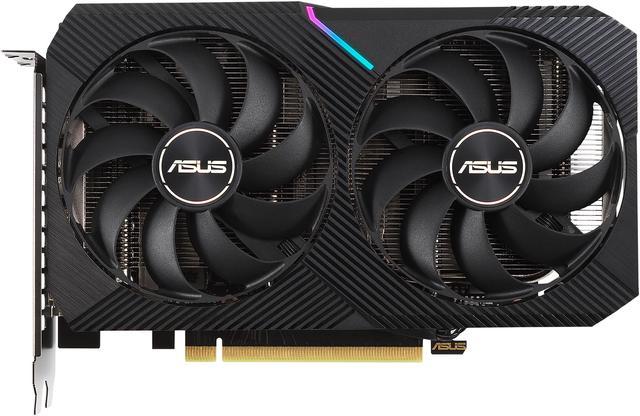

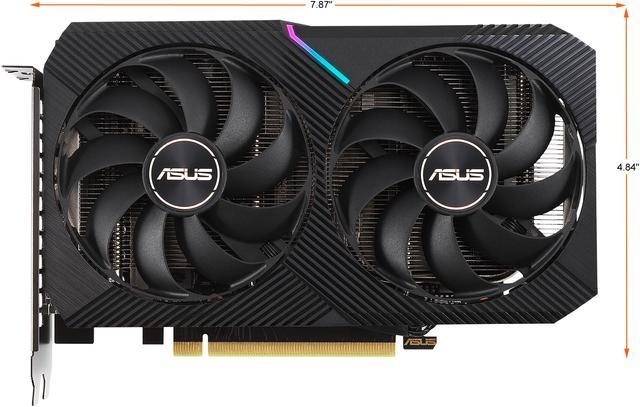
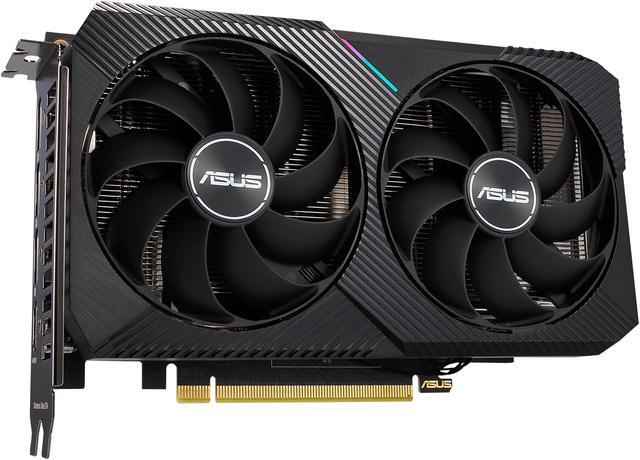
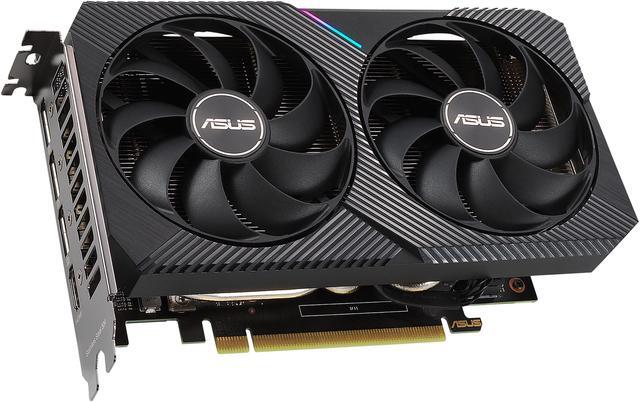
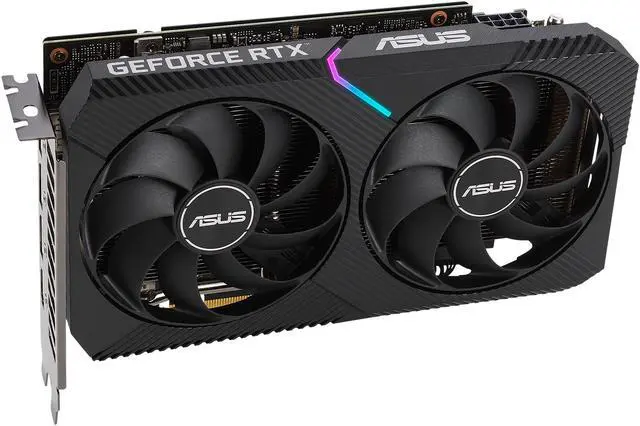
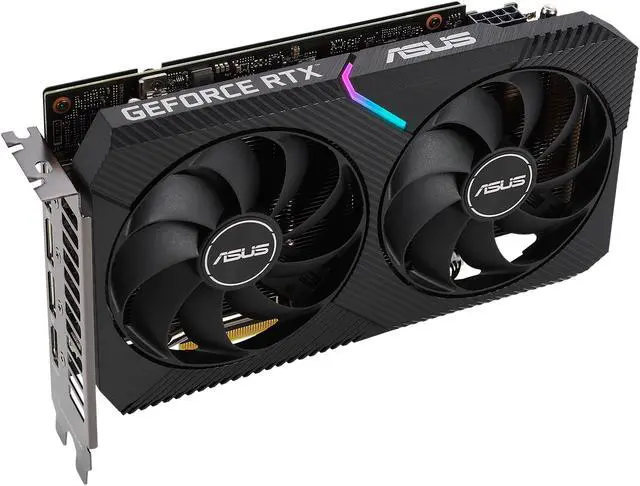
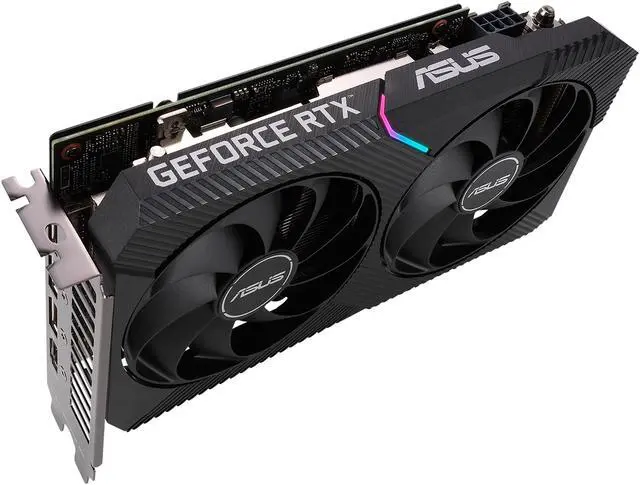
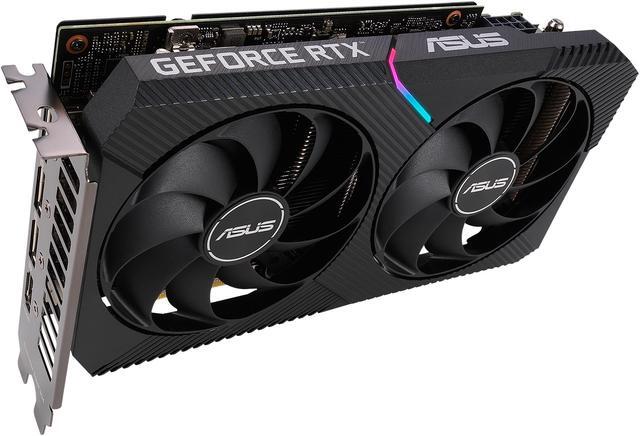
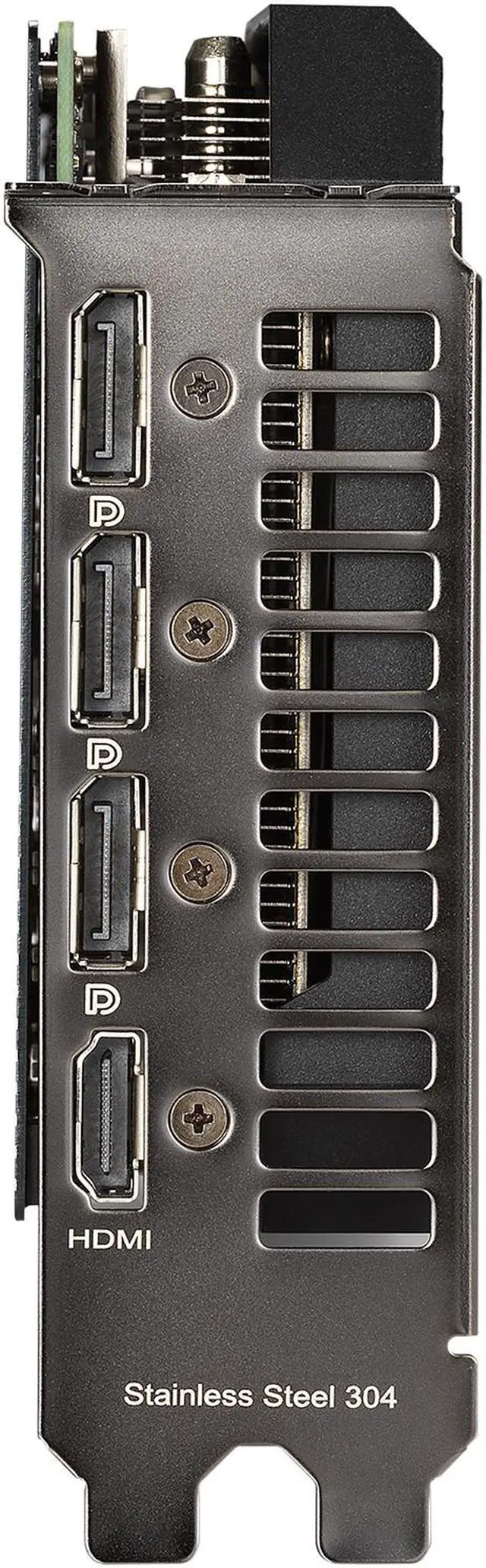
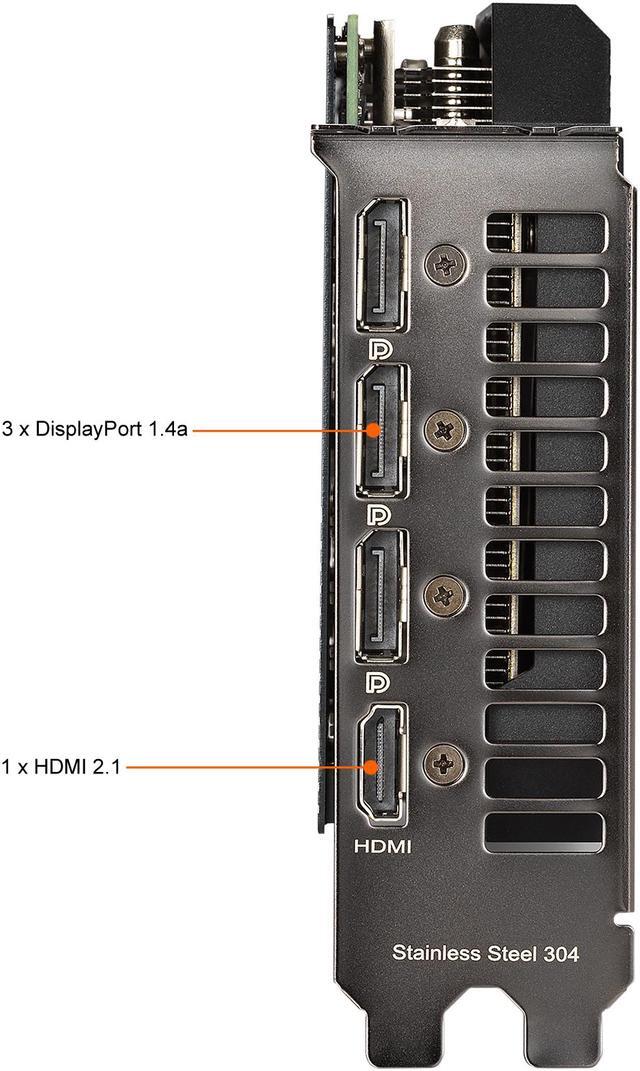
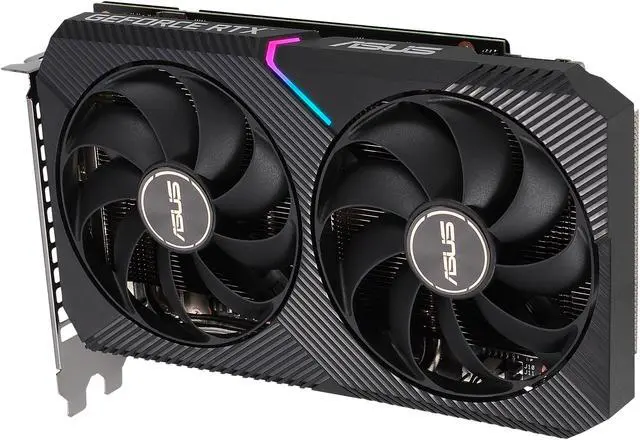
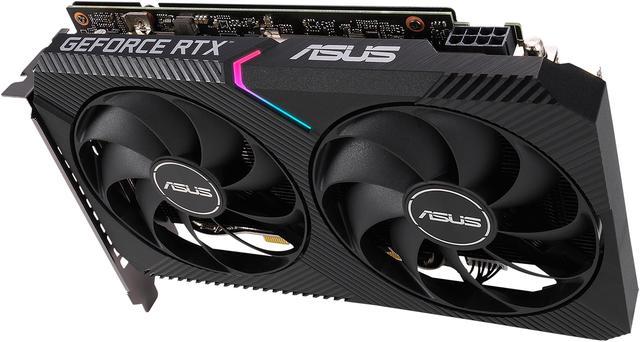
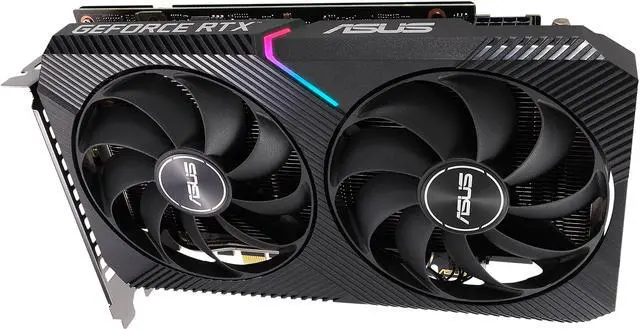
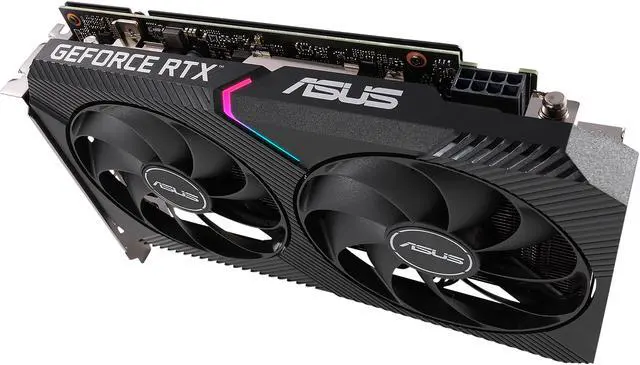
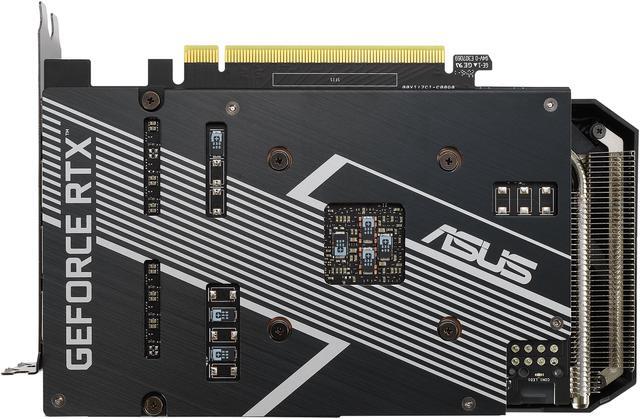
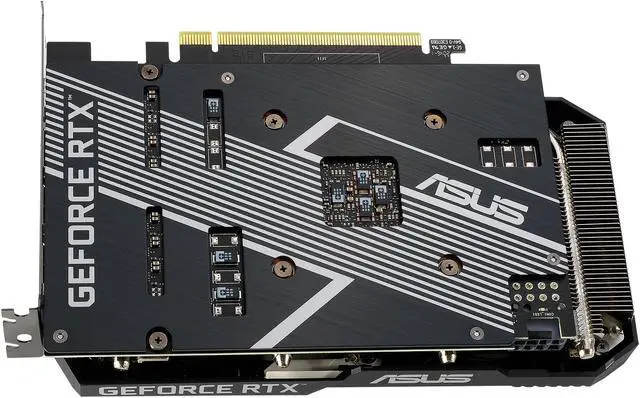
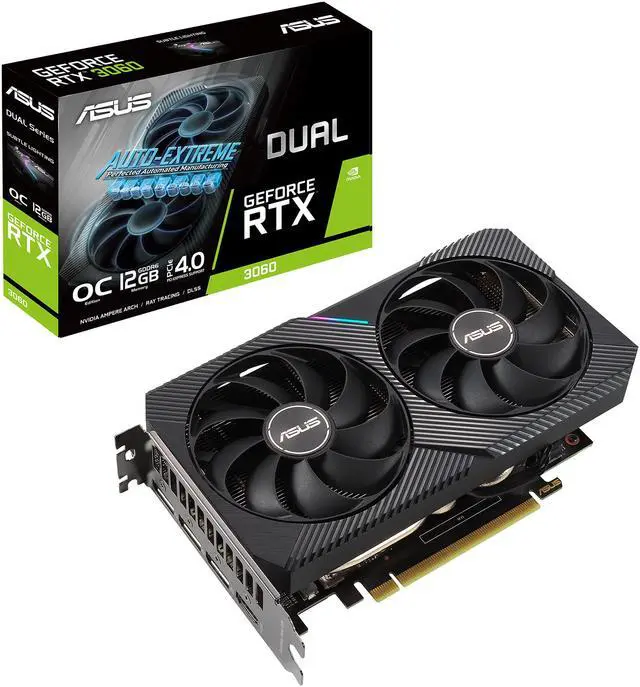
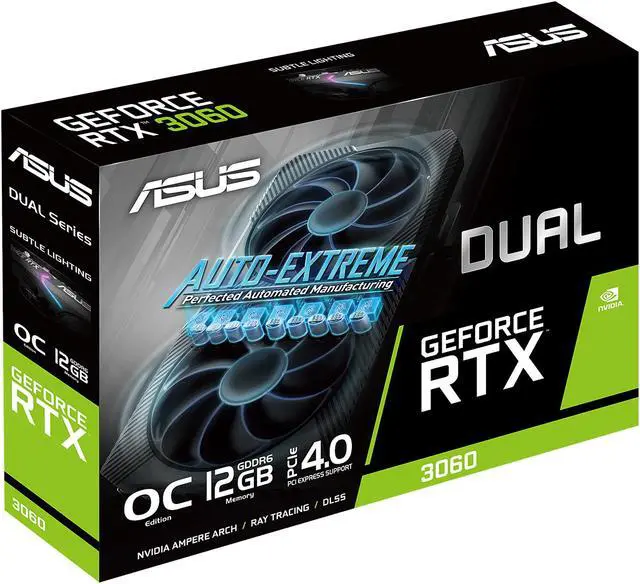


ASUS Dual GeForce RTX 3060 12GB GDDR6 PCI Express 4.0 Graphics Card DUAL-RTX3060-O12G-V2
- 12GB 192-Bit GDDR6
- Boost Clock OC Mode: 1867 MHz
- Gaming Mode: 1837 MHz
- 1 x HDMI 2.1 3 x DisplayPort 1.4a
- 3584 CUDA Cores
- PCI Express 4.0
+
+
Overview
Specs
Reviews (261)
The GeForce Dual RTX 3060 brings a whole new meaning to going with the flow. Inside and out, every element of the card gives the monstrous GPU headroom to breathe freely and achieve ultimate performance.
Warranty & Returns
Warranty, Returns, And Additional Information
Warranty
- Limited Warranty period (parts): 3 years
- Limited Warranty period (labor): 3 years
- Read full details
Return Policies
- Return for refund until: January 31, 2026
- Return for replacement until: January 31, 2026
- This item is covered by Newegg.ca's Extended Holiday Return Policy.
- 15% restocking fee may apply.
- Read full return policy for details.
We want to ensure your holiday shopping this year is hassle-free. That’s why we’re automatically extending our return policies on almost every product! For purchases placed between November 1st, 2025 and December 31, 2025 you will have until January 31, 2026 to return your product.
Manufacturer Contact Info
- Manufacturer Product Page
- Manufacturer Website
- Support Phone: 1-510-739-3777
- Support Website
- View other products from ASUS
LOADING...
LOADING...
The ASUS Dual GeForce RTX 3060 DUAL-RTX3060-O12G-V2 is a compact dual-fan 12GB GDDR6 graphics card built for mainstream 1080p gaming, entry 1440p play, and everyday creator workloads, making it a strong fit for buyers who want modern display support and NVIDIA RTX features in a shorter 200 mm card.
Recommended For
- Budget-focused 1080p PC gamers who want high settings in esports and playable settings in newer AAA games, especially if they plan to use DLSS to stay near 60+ fps.
- Upgraders building in smaller mid-tower or compact ATX cases who need a relatively short 2-slot card instead of a larger triple-fan model.
- Entry-level creators and local AI hobbyists who specifically need 12GB of VRAM for Blender scenes, Stable Diffusion, or other CUDA workloads on a tighter budget than newer midrange cards.
- Mainstream 1440p gamers who are comfortable using medium settings, selective ray tracing, and upscaling rather than aiming for maxed-out image quality.
Real-World Use Scenarios
- 1080p gaming on high settings is the most common fit: users can expect smooth play in most esports and many AAA games, while newer demanding titles may need a few settings reductions or DLSS to stay comfortably above 60 fps.
- 1440p gaming is realistic for many single-player games if the goal is medium-to-high settings rather than maxed-out visuals; the experience is usually solid, but this card sits closer to entry-level 1440p than high-refresh 1440p.
- Gaming with ray tracing is workable mainly at 1080p with DLSS enabled; users aiming for higher resolutions or native rendering should expect a noticeable performance drop and may need to lower settings substantially.
- Streaming gameplay to Twitch or YouTube at 1080p is a practical use case: the card's NVENC encoder lets users stream or record with modest impact on in-game performance, especially compared with CPU-only encoding.
- Blender, GPU rendering, and lightweight 3D content creation are common real-world uses: the 12GB VRAM helps with scenes and assets that can be tighter on 8GB cards, though render speed is still midrange by current standards.
- Small and compact desktop builds are a realistic match for this specific ASUS Dual model: its short 2-slot design makes it easier to fit into cases where larger triple-fan cards are inconvenient, without changing the core RTX 3060 usage profile.
Spec Summary
| Attribute | Value |
|---|---|
| Best For | Desktop systems that need an NVIDIA GeForce RTX 3060 with 12GB GDDR6 for gaming, VR-capable experiences and multi-monitor setups |
| Model Identifiers | ASUS Dual series DUAL-RTX3060-O12G-V2 (NVIDIA GeForce RTX 3060, RTX 30 Series) |
| GPU And CUDA Cores | NVIDIA GeForce RTX 3060 with 3584 CUDA cores |
| Clock Speeds | Boost clocks: OC Mode 1867 MHz and Gaming Mode 1837 MHz (external attributes also list 1867 MHz) |
| Memory Configuration | 12GB GDDR6 on a 192-bit bus with 15 Gbps effective memory clock |
| Interface And Form Factor | PCI Express 4.0 x16 interface (PCIe x16); dual-slot form factor |
| Display Outputs And Resolution | 1 x HDMI 2.1 and 3 x DisplayPort 1.4a outputs; supports up to 7680 x 4320 resolution and up to 4 simultaneous displays with HDCP 2.3 |
| Cooling And Fans | Dual-fan cooling design (2 fans) |
| Thermal And Power | 170W thermal design power (TDP); requires an 8-pin power connector and a recommended 650W system PSU |
| Compatibility And Features | DirectX 12 Ultimate and OpenGL 4.6 support; VR-ready; no SLI support; designed for desktop systems |
| Physical Dimensions And Weight | Card dimensions 7.87" x 4.84" with max GPU length 200 mm; card weight 1.2 lb and package weight 0.8973 kg; sold as a single-unit package |
| Package Contents | Includes speedsetup manual and collection card |
| Regulatory And Safety | RoHS compliant; safety attestation true; includes California Proposition 65 on-product cancer warning |
| Appearance | Black color |
Reference Q&A
Q: Should I buy the ASUS Dual RTX 3060 12GB or an RTX 4060 8GB?
A: Choose the RTX 4060 if you want higher average 1080p gaming performance, lower power draw, and access to newer Ada features such as DLSS 3 Frame Generation. Choose this ASUS Dual RTX 3060 12GB if your workloads benefit from more VRAM, such as some texture-heavy games, 3D content work, or GPU tasks that can exceed 8GB. The practical trade-off is newer architecture and efficiency on the RTX 4060 versus 12GB memory capacity on the RTX 3060.
Q: Is the ASUS Dual RTX 3060 12GB worth choosing over an RTX 3060 Ti 8GB?
A: Choose the RTX 3060 Ti if gaming performance is the priority. Across major reviews and comparison testing, the 3060 Ti is consistently faster in rasterized gaming and remains the stronger performance-first option. Choose this ASUS Dual RTX 3060 12GB if you specifically want more VRAM for memory-hungry games, modded setups, or creator workloads where 12GB can be more useful than the Ti model's 8GB.
Q: Is the ASUS Dual RTX 3060 12GB a good upgrade from an RTX 2060?
A: Yes, the RTX 3060 12GB is a practical upgrade from an RTX 2060 if you want more VRAM and a noticeable step up in gaming performance. Review data commonly shows the RTX 3060 ahead of the RTX 2060 by a meaningful margin, while also adding 12GB of memory that can help in newer games and creator applications. It is the better choice if you are keeping your system for several more years and want more headroom without moving into a higher power class.
Q: Should I get the ASUS Dual RTX 3060 12GB or an RX 6600?
A: Choose the RX 6600 if your goal is a lower-power 1080p gaming card and you mainly care about standard raster performance per watt. Choose this ASUS Dual RTX 3060 12GB if you want more VRAM, stronger NVIDIA ecosystem support, and better flexibility for ray tracing, CUDA-accelerated apps, or creator workloads. The trade-off is efficiency on the RX 6600 versus broader feature and memory headroom on the RTX 3060.
Q: Is the ASUS Dual RTX 3060 12GB better for compact builds than larger triple-fan alternatives?
A: Yes, this ASUS Dual RTX 3060 is a better fit when case clearance is a priority. Its 200 mm length and dual-fan, 2-slot design make it easier to place in smaller ATX and many mATX builds than longer triple-fan cards. It is the better choice when you want RTX 3060-class performance in a more space-efficient form factor, while larger cards are usually chosen for cases with more room and a stronger focus on cooler size or acoustics.
Q: Will this RTX 3060 fit in a small or older desktop PC?
A: Usually yes, if the PC has a standard full-height PCIe x16 slot and enough clearance. This ASUS Dual RTX 3060 is relatively compact for a desktop GPU at 200 mm long and 2 slots wide, which makes it easier to fit than many larger triple-fan cards. The main risk is not slot compatibility, but case clearance and power supply support.
Q: What power supply do I need for this card?
A: Plan for a PSU with one 8-pin PCIe power connector and enough total wattage for the full system. ASUS lists 650W as the recommended PSU for this model, while comparable RTX 3060 retail Q&A pages often mention 550W as a practical minimum for some builds. For most buyers, the safe decision is to follow ASUS's 650W recommendation, especially in older or prebuilt systems.
Q: Is this a good upgrade for a prebuilt PC?
A: It can be, but only if the prebuilt has the physical room, a suitable PSU, and standard PCIe power connections. Retail Q&A for this exact ASUS card and similar RTX 3060 models repeatedly focuses on compatibility with Dell, HP, and HP Omen prebuilts. In practice, the card is often compatible, but prebuilts commonly need a power supply check before purchase.
Q: Who is this card best for?
A: This card is best for buyers who want an affordable mainstream GPU for 1080p gaming, light 1440p gaming, and general-purpose creator workloads that benefit from 12GB of VRAM. It is also a practical option for users who need a shorter 2-slot card with modern outputs. It is less suitable for buyers chasing high-end 1440p or 4K performance, where newer or faster GPUs are the better fit.
Q: What are the main trade-offs versus a larger or newer GPU?
A: The main advantage of this ASUS Dual RTX 3060 is practicality: compact size, modest 170W board power, 12GB VRAM, and current display outputs. The trade-off is lower performance than newer-tier GPUs or larger premium 3060 variants with bigger coolers. Buyers choosing this model are usually prioritizing fit, power efficiency, and balanced cost over maximum frame rate.
Q: Is the ASUS Dual RTX 3060 O12G V2 a good fit for a compact midrange gaming build?
A: Yes, if you want a relatively compact RTX 3060 with 12GB VRAM and standard power requirements. This model is short at 200 mm, uses a 2-slot cooler, and needs one 8-pin power connector with a 650W recommended PSU. It fits builds where case clearance matters more than getting a larger triple-fan card.
Q: Who is this card most suitable for?
A: It is most suitable for buyers who want an entry-to-midrange NVIDIA card for 1080p gaming, light 1440p use, and workloads that benefit from 12GB of VRAM. It is also a practical option for users who need up to four displays through 1 HDMI 2.1 and 3 DisplayPort 1.4a outputs. It is less suitable for buyers expecting high-end ray tracing performance or a major upgrade path through multi-GPU.
Q: What are the main trade-offs of choosing this ASUS Dual RTX 3060 model?
A: The main trade-offs are cooling headroom and acoustics versus size. This is a compact dual-fan, 2-slot card, which helps with case compatibility, but buyers in Reddit discussions also raise noise and temperature questions typical of smaller dual-fan designs under load. It is a practical form-factor choice, but not the best pick if your priority is the quietest or coolest RTX 3060 variant.
Q: Is buying a second ASUS Dual RTX 3060 O12G V2 a good upgrade idea?
A: No for most gaming buyers. This card does not support SLI, and current games generally do not benefit from adding a second RTX 3060. If you need more gaming performance, replacing it with a faster single GPU is the more practical path.
Q: Are there any reliability or setup concerns buyers should be aware of?
A: Potentially, but not enough to treat as a universal issue. Reddit discussion includes at least one report of driver-related problems on this exact model, while other threads focus more on normal thermal and fan behavior than outright failure. The practical takeaway is to buy it if the size, power draw, and 12GB VRAM fit your needs, but update drivers carefully and make sure your case airflow is adequate.