


- Free 82-day Returns
$3,499.99
Sold by Newegg
Shipped by Newegg
Add to Wish List(Found on 60 wish lists)
Best Sellers
- $4,899.99
- + FREE SHIPPING



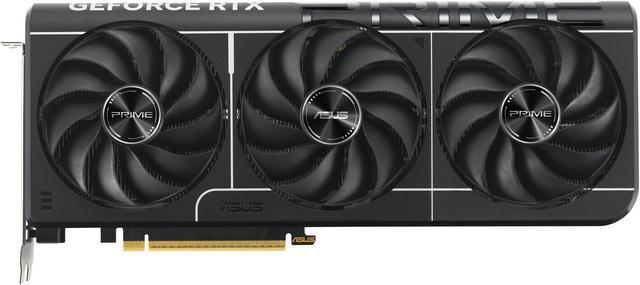
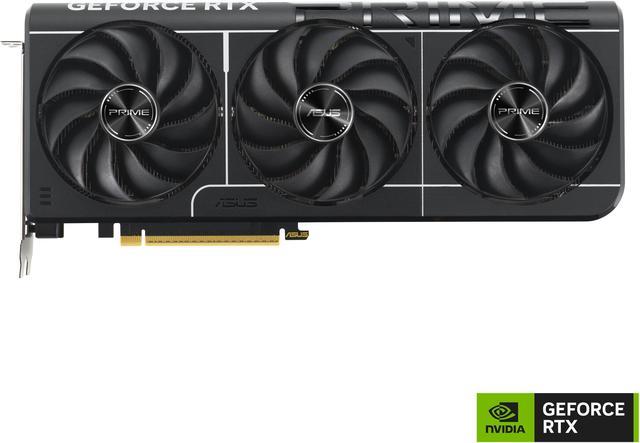
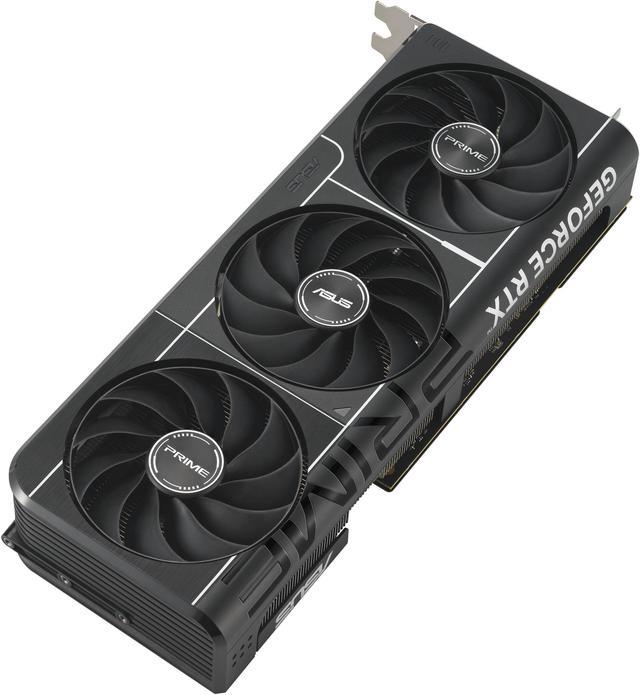
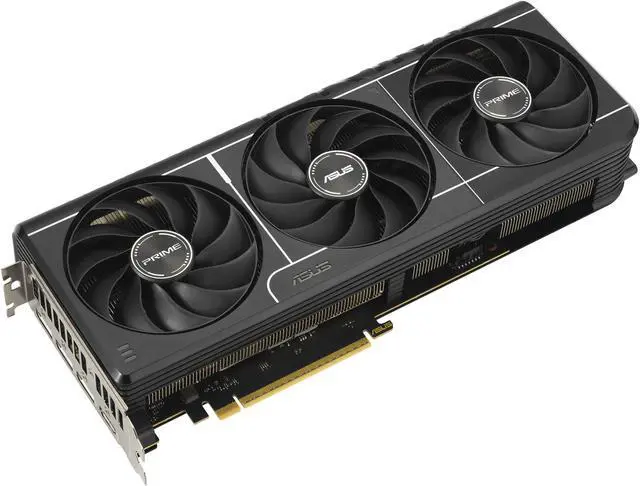
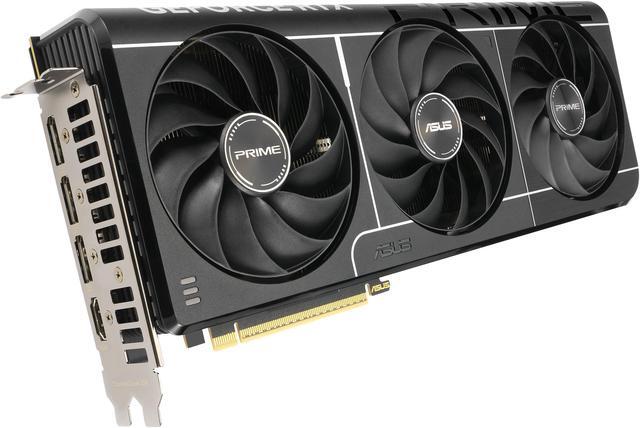
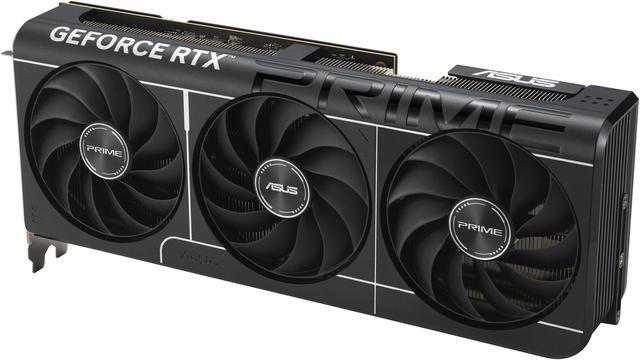
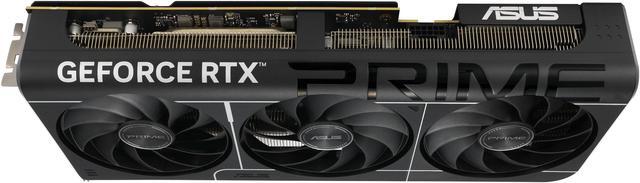
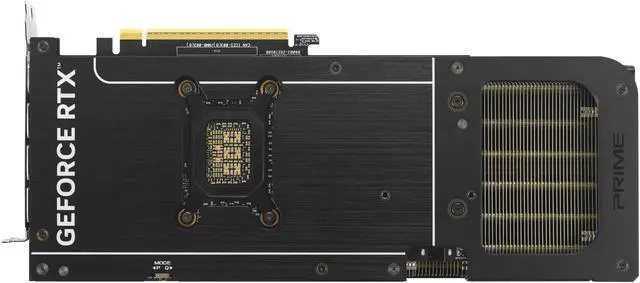
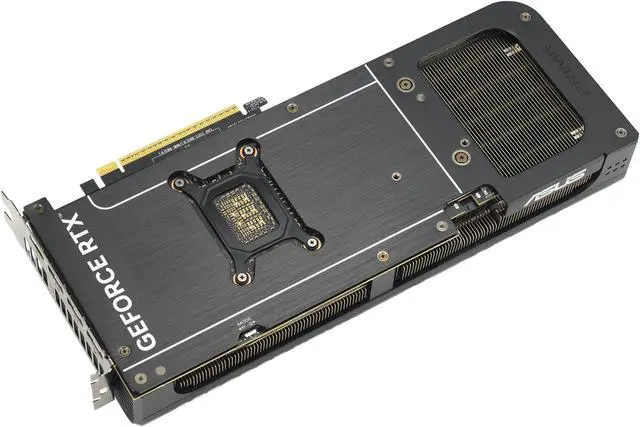



ASUS PRIME GeForce RTX 5080 16GB GDDR7 OC Edition PRIME-RTX5080-O16G PCI-Express 5.0 DLSS 4.0 Graphics Card
- 16GB 256-Bit GDDR7
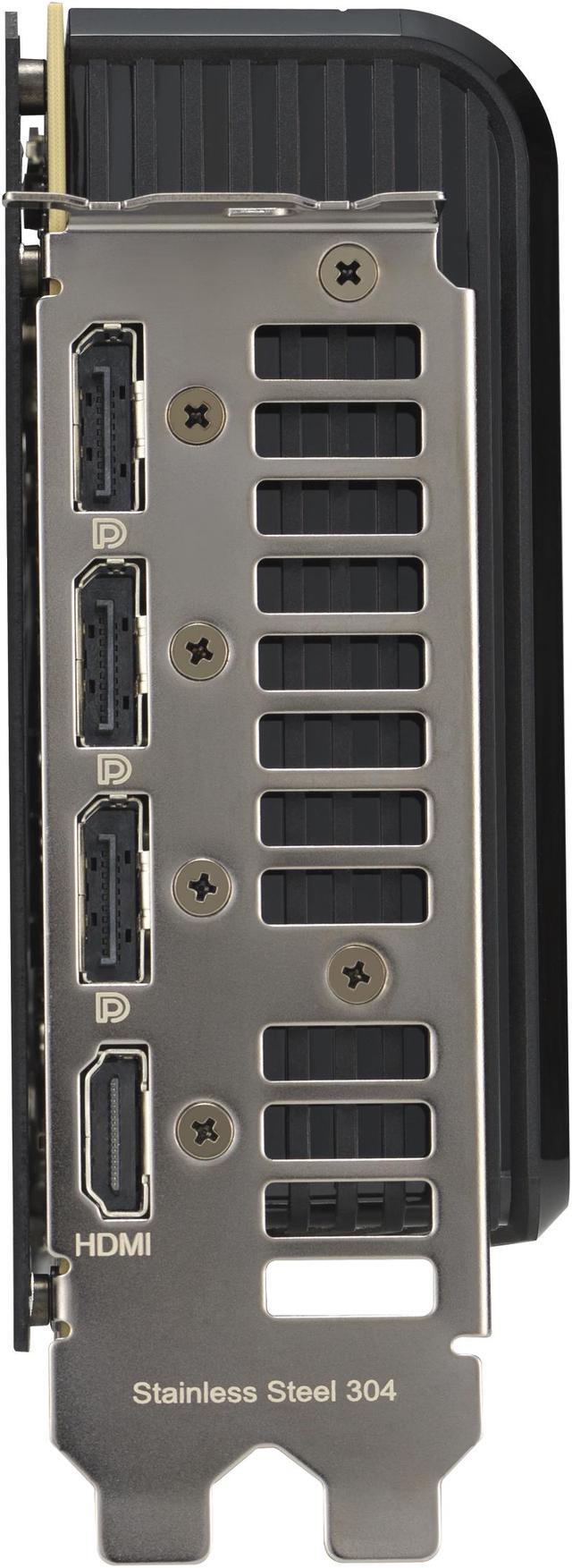
- 1 x HDMI 2.1b 3 x DisplayPort 2.1a
- 10752 CUDA Cores
- PCI Express 5.0 x16
+
+
Overview
Specs
Reviews (184)
PRIME RTX5080 O16G
Warranty & Returns
Warranty, Returns, And Additional Information
Warranty
- Limited Warranty period (parts): 3 years
- Limited Warranty period (labor): 3 years
- Read full details
Return Policies
- Return for refund until: January 31, 2027
- Return for replacement until: January 31, 2027
- This item is covered by Newegg.ca's Extended Holiday Return Policy.
- 15% restocking fee may apply.
- Read full return policy for details.
We want to ensure your holiday shopping this year is hassle-free. That’s why we’re automatically extending our return policies on almost every product! For purchases placed between November 1st, 2026 and December 31, 2026 you will have until January 31, 2027 to return your product.
Manufacturer Contact Info
- Manufacturer Product Page
- Manufacturer Website
- Support Phone: 1-510-739-3777
- Support Website
- View other products from ASUS
LOADING...
LOADING...
The ASUS PRIME GeForce RTX 5080 OC is a 16GB GDDR7 PCIe 5.0 graphics card built for high-end 4K gaming, advanced ray tracing, and demanding creative workloads, making it a strong fit for enthusiasts who want next-generation display support and substantial GPU power in a 2.5-slot ATX design.
Recommended For
- Desktop gamers targeting high-refresh 1440p or step-up 4K play, especially if they plan to use DLSS and frame generation in newer AAA games. Reviews and user discussions consistently frame the RTX 5080 as strongest when paired with modern upscaling features rather than treated as a no-compromise native-4K card.
- Builders who want a high-end GPU in a more manageable air-cooled form factor. ASUS positions the Prime model around a 2.5-slot, chassis-friendly triple-fan design, which suits full-size ATX systems where buyers want upper-tier performance without moving to the largest flagship card classes.
- PC users mixing gaming with GPU-accelerated creator work such as video editing, 3D rendering, and effects workflows, where fast CUDA-class performance matters but workstation-level VRAM is not required. Coverage around the RTX 5080 places it as useful for content creation, while also noting that memory-heavy AI or larger pro datasets can outgrow 16GB.
- Users upgrading an older enthusiast GPU and also planning for next-gen display connectivity, including multi-monitor desks and high-bandwidth 4K/8K display setups. The card's HDMI 2.1b and DisplayPort 2.1a outputs align with buyers who care about modern monitor support as much as frame rate.
Real-World Use Scenarios
- Playing recent AAA games at 4K on a 120Hz TV or monitor with high settings, ray tracing, and DLSS enabled usually delivers a smooth premium experience; the card is commonly used as a 4K gaming GPU, though the heaviest path-traced settings may still require upscaling or reduced settings.
- Using a 1440p high-refresh monitor for shooters, racing games, or esports-style play is a common fit: users typically get enough headroom for very high frame rates while keeping image quality settings high.
- Building a gaming-and-creator PC for Blender, V-Ray, or GPU-accelerated AI workflows is a realistic use case; reviews and test videos regularly include these workloads, and the card is typically used for faster renders and shorter iteration times than mainstream gaming GPUs.
- Running visually demanding single-player games with DLSS Frame Generation and ray tracing is one of the most repeated real-world patterns for this class of card; the experience is usually strongest for cinematic games where visual quality matters more than native-only rendering.
- Connecting the card to a 4K OLED living-room TV for couch gaming is a practical setup seen in community discussions; users generally target 4K120-style play with VRR, but may still tune settings in the newest heavy titles.
- PC VR is a valid but more selective use case: community reports show good results in many VR titles, but the most demanding native-resolution VR workloads may still need settings adjustments rather than expecting maxed-out performance across every game.
Spec Summary
| Attribute | Value |
|---|---|
| Best For | Desktop users wanting multi-monitor 4K/8K gaming and VR or GPU-accelerated creative workflows on a PCIe 5.0 platform (supports up to 4 displays) |
| Model Identifiers | ASUS PRIME series PRIME-RTX5080-O16G (Part Number 90YV0LX0-M0AA00), model name/number PRIME-RTX5080-O16G |
| GPU And Architecture | NVIDIA GeForce RTX 5080 (GeForce RTX 50 Series) based on Blackwell architecture with 10,752 CUDA cores |
| Memory Configuration | 16GB GDDR7 on a 256-bit bus with an effective memory data rate of 30 Gbps and a reported memory clock of 2685 MHz |
| Interface And Form Factor | PCI Express 5.0 x16 interface, ATX card occupying 2.5 slots with maximum GPU length ~306 mm (card dims 12 x 5 x 2 inches) |
| Display Outputs And Resolution | 1× HDMI 2.1b and 3× DisplayPort 2.1a native outputs, supports up to 7680 x 4320 and up to 4 simultaneous monitors |
| Power And Thermal | Thermal Design Power 360W, requires a recommended system PSU of 850W and uses 1 × 16‑pin power connector |
| Cooling | Triple-fan cooler (3 fans) designed for a 2.5-slot card profile |
| API, Standards And Compatibility | DirectX 12 Ultimate and OpenGL 4.6 support, HDCP ready, no CrossFireX/SLI support, marked VR Ready |
| Clock Speeds | Reported clock entries list 2685 MHz (appears as GPU and memory clock in external attributes) |
| Physical And Shipping | Card weight ~2.9 lb; package weight ~1.94 kg with package dimensions 9.2 L x 23.6 W x 40.9 H cm; sold as single unit (package quantity 1) |
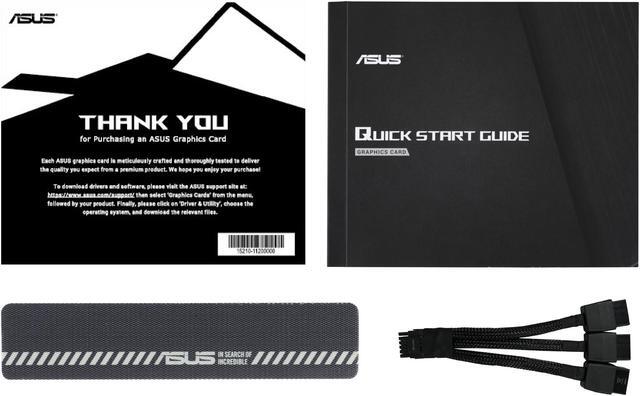
| Package Contents | Includes speedsetup manual, ASUS Velcro hook & loop, thank you card and an adapter cable (1 to 3) alongside the graphics card (single-unit package) |
| Supported Systems And Devices | Designed for desktop PCs (PCIe x16 slot required) |
| Safety And Compliance | Contains California Proposition 65 on-product cancer warning |
| Identifiers And Miscellaneous | Product marketed under ASUS PRIME, style/size noted as RTX5080|OC; item/package counts listed as 1 |
Reference Q&A
Q: RTX 5080 or RTX 4080 SUPER for 4K gaming?
A: Choose the ASUS PRIME RTX 5080 if you want a newer-generation card with Blackwell features, 16GB of faster GDDR7 memory, DisplayPort 2.1a support, and a modest but consistent step up in 4K performance. Independent testing shows the RTX 5080 is roughly 8% to 9% faster than the RTX 4080 SUPER in 4K rasterized gaming, while NVIDIA positions the RTX 5080 on the newer Blackwell platform with DLSS 4 support. The RTX 4080 SUPER remains the more practical choice if its street price is meaningfully lower and you do not specifically need the newer display outputs or Blackwell feature set.
Q: Is the RTX 5080 worth buying over the RTX 5070 Ti?
A: Buy the ASUS PRIME RTX 5080 when your priority is stronger native 4K performance, more headroom for demanding ray tracing, and a higher-end card for longer upgrade cycles. Across current review data, the RTX 5080 is typically about 10% to 15% faster than the RTX 5070 Ti, depending on the game and workload. The RTX 5070 Ti is the better fit when you mainly play at 1440p or use 4K with upscaling and want to reduce total system cost without moving far down in performance.
Q: RTX 5080 or RTX 5090 for a high-end build?
A: Choose the ASUS PRIME RTX 5080 if you want high-end gaming performance with a smaller, easier-to-fit 2.5-slot card and lower power demands than the flagship tier. Move up to an RTX 5090 if you are targeting the highest possible 4K ray-tracing performance or heavier creator and AI workloads where the flagship's larger performance gap matters. Review coverage indicates the RTX 5090 can be up to about 60% faster than the RTX 5080 in especially demanding ray-traced games, so the decision mainly depends on whether you want balanced high-end performance or a no-compromise top tier setup.
Q: Is the RTX 5080 a good upgrade from the RTX 3080?
A: Yes, the ASUS PRIME RTX 5080 is a meaningful upgrade from an RTX 3080 if you are moving into 4K gaming, newer ray-traced titles, or want access to the latest Blackwell generation features. NVIDIA's architecture comparison shows the RTX 5080 increases CUDA cores, memory bandwidth, and RT/Tensor generation versus the RTX 3080, and review positioning consistently places it in a much higher performance class. If your current RTX 3080 still meets your needs at 1440p, the upgrade is easier to justify when you also want newer display connectivity, DLSS 4 support, or a longer-term platform refresh.
Q: Should I pick the ASUS PRIME RTX 5080 or a smaller GPU for a compact PC?
A: Pick the ASUS PRIME RTX 5080 when performance comes first and your case and power supply can support a 306 mm, 2.5-slot card with a recommended 850 W PSU. Pick a smaller GPU class or a more compact board design when case clearance, airflow, or lower system power is the main constraint. This ASUS PRIME model is relatively moderate in size for an RTX 5080, but it is still a full-size high-performance card rather than a portability-focused option.
Q: Will this ASUS PRIME RTX 5080 fit in most mid-tower PC cases?
A: Usually yes, but you should verify clearance before buying. This card is 306 mm long and 2.5 slots thick, so it fits many mid-tower ATX cases, but it is not a small-form-factor card. The main buying check is whether your case supports a GPU length over 306 mm and enough slot space near the motherboard.
Q: Is an 850W power supply enough for this RTX 5080?
A: Yes for most standard high-end builds. ASUS lists an 850W recommended PSU, and NVIDIA's RTX 5080 guide also sets 850W as the minimum recommendation. You should also confirm that your PSU can provide one 16-pin GPU power connection, either natively or through the included adapter setup.
Q: Who is this ASUS PRIME RTX 5080 best for?
A: It is best for buyers building a high-end desktop for 4K gaming, ray tracing, VR, and GPU-heavy creative work. It is less suitable for budget-focused upgrades, compact cases, or lower-power systems because it uses a 360W board power, needs an 850W PSU recommendation, and occupies 2.5 slots.
Q: Can this card run multiple monitors, including HDMI and DisplayPort displays?
A: Yes. This model supports up to four displays at once and provides 1 HDMI 2.1b port plus 3 DisplayPort 2.1a outputs. It is a good fit for mixed-monitor setups, but buyers should check whether their monitors need native DisplayPort, HDMI, or adapters.
Q: Is this a better choice than a larger premium RTX 5080 model like ASUS TUF or ROG Astral?
A: It is a better choice if you want a simpler, somewhat easier-to-fit RTX 5080 without moving into oversized premium designs. A larger TUF or ROG Astral card may offer a heavier cooler or more premium build, but the trade-off is more case-clearance and weight concerns. The PRIME version is the more practical option when fit, power, and straightforward installation matter more than flagship-style extras.
Q: Is the ASUS PRIME RTX 5080 OC a good buy if I want a quieter, smaller RTX 5080?
A: Yes, if you want an RTX 5080 that is relatively compact for the class and community discussion consistently describes it as quiet with solid temperatures. Based on the product data, it uses a 2.5-slot, 306 mm design, which makes it easier to fit than many larger premium 5080 models. The main trade-off is that it is positioned as a simpler PRIME model rather than a flagship cooler or feature-heavy card.
Q: Who is the ASUS PRIME RTX 5080 OC best suited for?
A: It is best suited for buyers who want high-end RTX 5080 performance without moving to a bulkier or more expensive premium variant. The card fits users building a standard ATX gaming or creator PC who also care about case compatibility, since the listed size is 306 mm long and 2.5 slots wide. It is less suited to buyers specifically looking for premium extras like RGB-heavy styling or the most oversized cooling designs.
Q: Are the thermals and noise good enough on the ASUS PRIME RTX 5080 OC, or should I pay more for a higher-end model?
A: For most buyers, the PRIME model appears good enough. Repeated Reddit discussion describes it as quiet and cool enough in real-world use, so paying more mainly makes sense if you specifically want a higher-end cooler, a different brand, or extra features. The practical trade-off is that higher-tier models may offer more thermal headroom or build extras, but the PRIME already covers the main decision points for many buyers.
Q: What are the main trade-offs of choosing the ASUS PRIME RTX 5080 OC instead of a more premium RTX 5080?
A: The main trade-offs are features and overhead, not the core GPU. You still get the same GeForce RTX 5080 chip, 16GB of GDDR7, a 256-bit bus, and the standard display outputs, but the PRIME model is a more straightforward design. Compared with pricier variants, buyers may give up some combination of larger coolers, flashier aesthetics, or higher factory positioning, while keeping a more manageable size and usually lower cost.
Q: Do I need to plan my build carefully before buying the ASUS PRIME RTX 5080 OC?
A: Yes. The biggest practical checks are power and fit. Based on the product data, this card has a 360 W TDP, uses one 16-pin power connector, recommends an 850 W PSU, and is 306 mm long at 2.5 slots thick. That makes it easier to fit than some larger RTX 5080 cards, but it is still a high-power GPU that needs a compatible case and power supply.