


- Free 91-day Returns
$1,249.99
Add to PC build list
Ships from United States.
Sold by Newegg
Shipped by Newegg
Add to Wish List(Found on 7 wish lists)


Get Educated
Make informed decisions with expert advice. Learn More

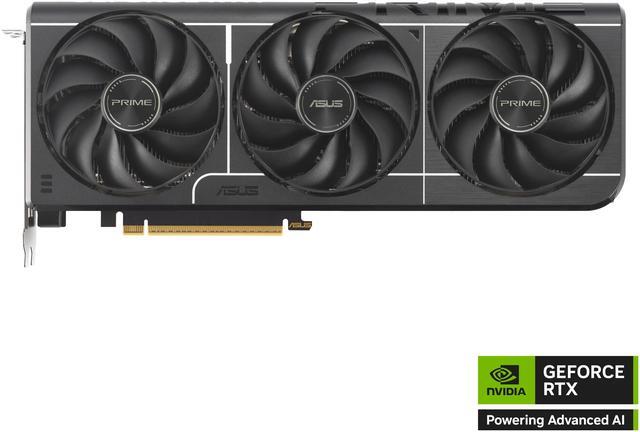
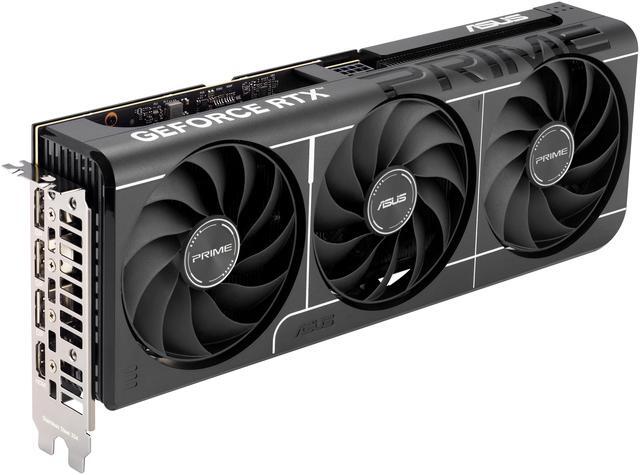
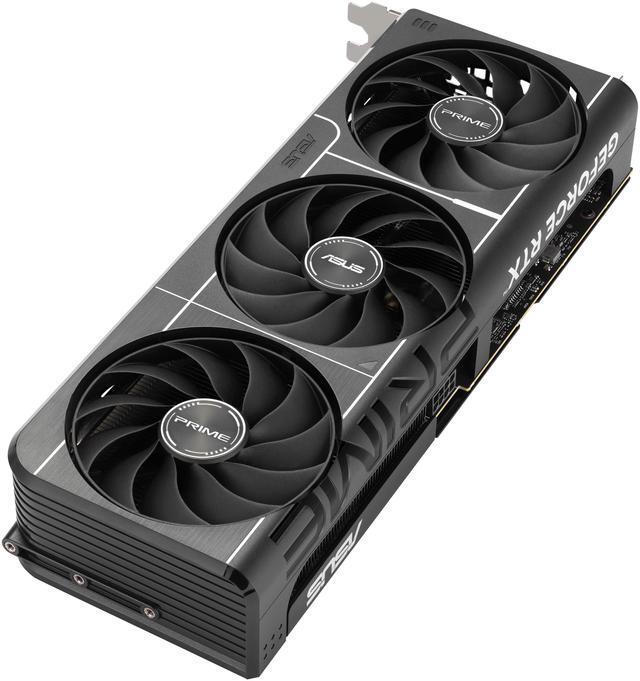
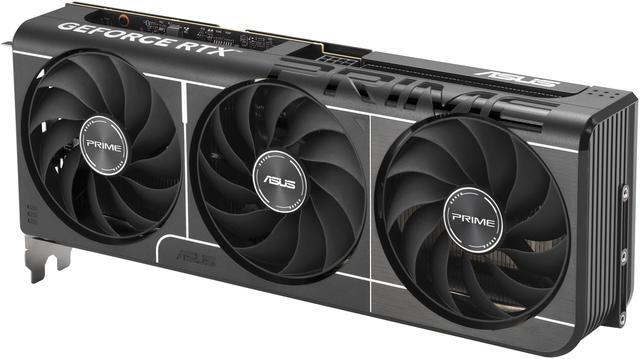
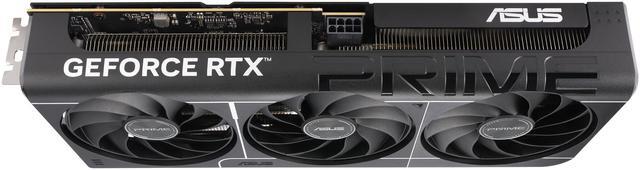
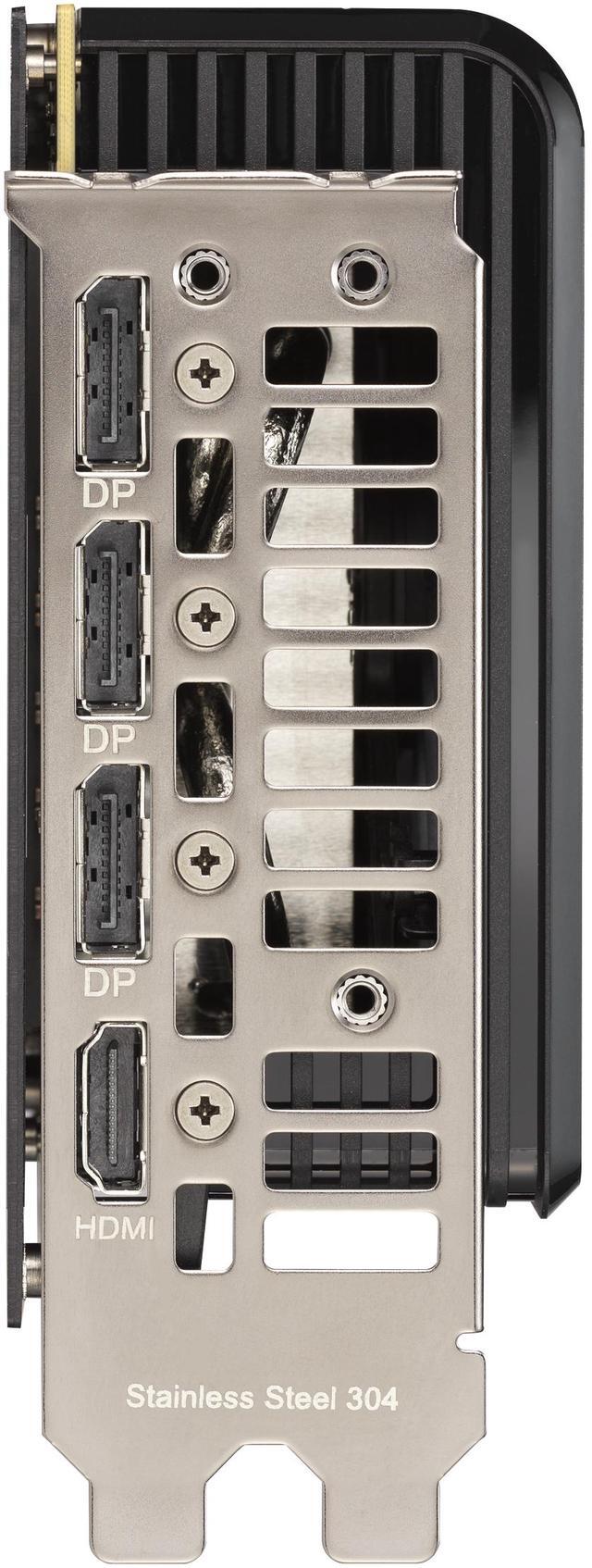
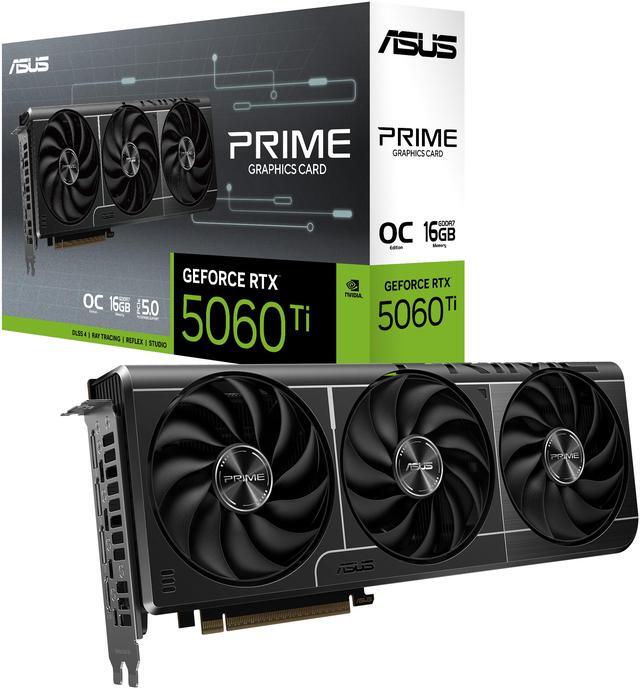
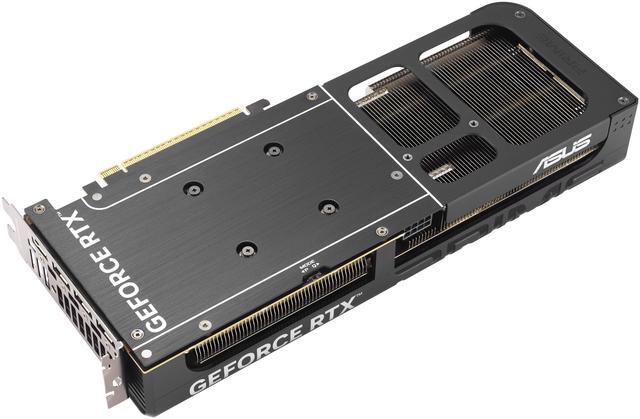
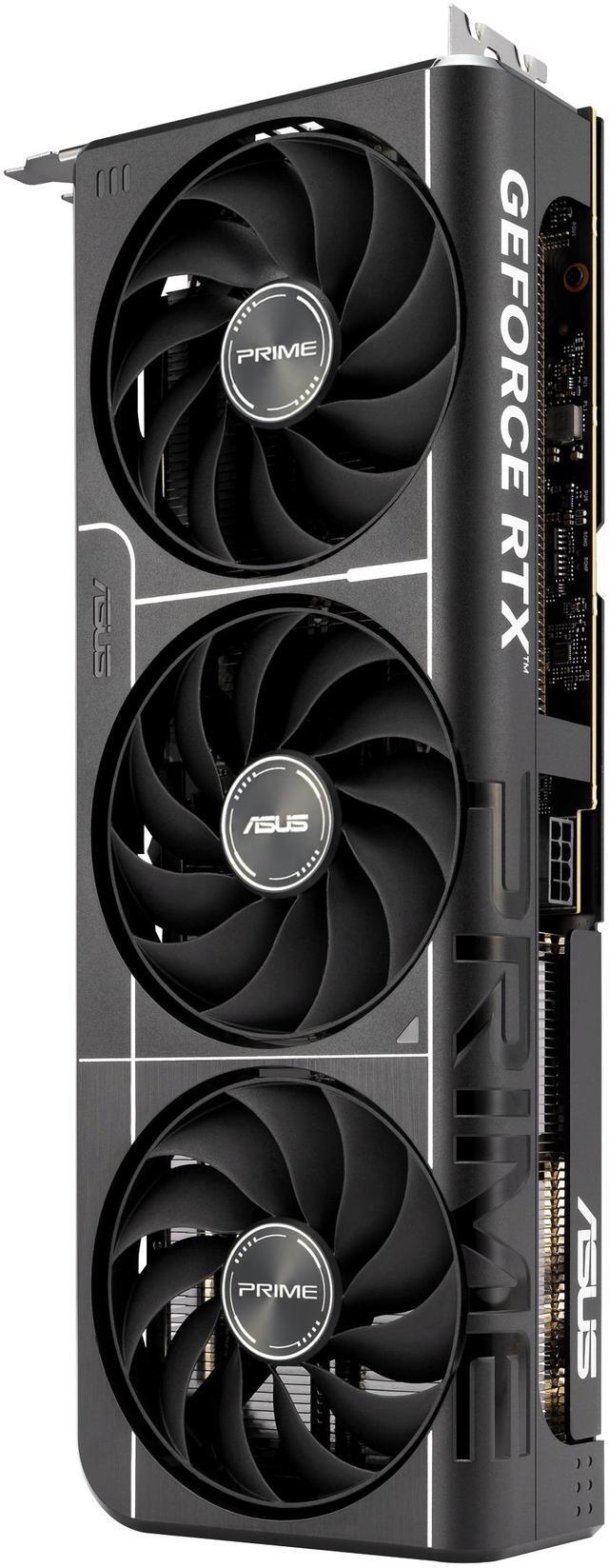


ASUS PRIME GeForce RTX 5060 Ti 16GB 128-Bit GDDR7 PCI Express 5.0 x8 DLSS 4.0 Graphics Card PRIME-RTX5060TI-O16G
- 16GB 128-Bit GDDR7
- 1 x HDMI 2.1b 3 x DisplayPort 2.1b
- 4608 Cores CUDA Cores
- PCI Express 5.0 x8
- DLSS 4.0
+
+
Overview
Specs
Reviews (64)
Experience Primal performance with the Prime GeForce RTX 5060 Ti, an SFF-Ready Enthusiast GeForce Card featuring a 2.5 -slot design for expansive compatibility, enhanced by a triple-fan setup for supreme airflow design forsupreme cooling.
Warranty & Returns
Warranty, Returns, And Additional Information
Warranty
- Limited Warranty period (parts): 3 years
- Limited Warranty period (labor): 3 years
- Read full details
Return Policies
- Return for refund until: January 31, 2026
- Return for replacement until: January 31, 2026
- This item is covered by Newegg.ca's Extended Holiday Return Policy.
- 15% restocking fee may apply.
- Read full return policy for details.
We want to ensure your holiday shopping this year is hassle-free. That’s why we’re automatically extending our return policies on almost every product! For purchases placed between November 1st, 2025 and December 31, 2025 you will have until January 31, 2026 to return your product.
Manufacturer Contact Info
- Manufacturer Product Page
- Manufacturer Website
- Support Phone: 1-510-739-3777
- Support Website
- View other products from ASUS
LOADING...
LOADING...
The ASUS PRIME GeForce RTX 5060 Ti 16GB is a triple-fan ATX graphics card built for gamers and creators who want current-gen NVIDIA features, 16GB of GDDR7 memory, and broad display connectivity in a 2.5-slot design that fits many standard and SFF-ready desktop builds.
Recommended For
- 1440p gamers who want high settings with DLSS/Frame Generation available, but do not want to step up to a larger, pricier tier. Reviews and community discussion repeatedly place the 16GB RTX 5060 Ti as a practical 1440p card, especially for current AAA games where VRAM headroom matters.
- Builders fitting a midrange gaming GPU into a smaller or compatibility-sensitive case. ASUS positions this Prime model as SFF-ready, and its 2.5-slot, 304 mm design is aimed at users who need a triple-fan card without moving to a very thick cooler.
- Upgraders specifically avoiding 8GB-class GPUs for newer games, texture-heavy settings, mods, or longer ownership. External coverage and forum threads consistently treat the 16GB version as the safer buy when the goal is to avoid VRAM-related compromises at 1440p.
- Mainstream creators and streamers who also game, especially users working in GPU-accelerated apps like Blender or using NVIDIA's creator/encoder stack. NVIDIA positions the RTX 5060 Ti family for gamers and creators, and review testing covers Blender, AI, and creator workloads as part of the card's appeal.
- Users who want a quieter everyday card with simple tuning options rather than a heavily enthusiast-focused model. ASUS highlights Dual BIOS, 0dB behavior, and GPU Tweak III, which suits buyers who care about noise profile and easy setup more than extreme manual overclocking.
Real-World Use Scenarios
- Playing recent AAA games at 1440p high settings is the most common fit: users typically get a smooth experience, and DLSS 4 is often used to hold higher frame rates when ray tracing or heavier presets start to push the card.
- For 1080p high-refresh gaming, this card is usually more than enough in esports and lighter multiplayer titles, with users often pairing it with 144Hz to 240Hz monitors and only needing upscaling in the most demanding games.
- If the goal is to use ray tracing without dropping to clearly low frame rates, the usual approach is 1080p or 1440p with DLSS 4 enabled; that tends to feel practical, while native 4K ray tracing is generally not the main use case.
- For video editing, 3D work, and creator apps that benefit from GPU acceleration, the 16GB frame buffer makes the card easier to live with than lower-memory models, especially for larger timelines, textures, or AI-assisted effects.
- Small-to-mid tower builders looking for an easier RTX 50-series install can use this in space-limited systems: the 2.5-slot design, single 8-pin power, and 550W PSU recommendation make it a more straightforward upgrade than larger, higher-power cards.
- 4K gaming is usually a selective use case rather than the default: users can reach playable results in many titles by leaning on DLSS, and sometimes frame generation, but they generally need to lower expectations versus a card aimed primarily at native 4K.
Spec Summary
| Attribute | Value |
|---|---|
| Best For | Enthusiast desktop gaming and VR with support for high-resolution multi-monitor setups and small-form-factor (SFF) builds; suitable for systems that can accept a PCIe 5.0 x8 GPU and a ~2.5-slot card |
| Model Identifiers | ASUS PRIME series model PRIME-RTX5060TI-O16G (Part Number 90YV0MH2-M0AA00) |
| GPU And Cores | NVIDIA GeForce RTX 5060 Ti (GeForce RTX 50 Series, Blackwell architecture) with 4,608 CUDA cores and a reported GPU clock of 2647 MHz |
| Memory And Bandwidth | 16GB GDDR7 on a 128-bit memory bus with effective memory clock 28 Gbps (external listing reports a 2647 MHz memory clock) |
| Interface And Expansion | PCI Express 5.0 x8 interface (externally listed as PCI Express x16 hardware/graphics card interface) |
| Display Outputs And Resolution | 1 × HDMI 2.1b and 3 × DisplayPort 2.1b, supports up to 7680 x 4320 resolution and up to 4 simultaneous monitors |
| Cooling And Form Factor | Triple-fan axial-tech cooler in a 2.5-slot ATX card design with axial-tech blades and a barrier ring, dual-ball fan bearings, 0dB idle technology, and a dual-BIOS switch for Quiet/Performance profiles |
| Power And Requirements | Uses an 8-pin power connector with a recommended system PSU of 550W |
| Software And Features | Powered by NVIDIA Blackwell architecture with DLSS 4 and 758 AI TOPS; manufactured with Auto-Extreme process and includes GPU Tweak III for performance and thermal control |
| Compatibility And APIs | Desktop-compatible; DirectX 12 Ultimate and OpenGL 4.6 support; virtual reality ready; no CrossFireX or SLI support |
| Physical Dimensions And Weight | Card dimensions 304 × 120 × 50 mm (11.96 × 4.72 × 1.97 in), max GPU length 304 mm, approx. item weight 3.2 lb, 2.5-slot width (package dimensions available externally) |
| Included Items | Includes the PRIME-RTX5060TI-O16G card plus setup manual and accessory items listed by the manufacturer |
Reference Q&A
Q: Should I buy the ASUS PRIME RTX 5060 Ti 16GB or step up to an RTX 5070?
A: Choose the ASUS PRIME RTX 5060 Ti 16GB if you want a lower-power card with 16GB of VRAM for 1080p to 1440p gaming, creator workloads, or local AI use, and you value the smaller 2.5-slot, single-8-pin design. Step up to an RTX 5070 if your main goal is higher raw gaming performance, especially at 1440p with heavier ray tracing. Across reviews and community comparisons, the usual trade-off is 5060 Ti 16GB for more memory capacity and easier fitment, versus RTX 5070 for a clear performance uplift when pricing is reasonably close.
Q: Is the RTX 5060 Ti 16GB worth it over the RTX 5060?
A: Yes, the RTX 5060 Ti 16GB is the better choice if you plan to keep the card for several years, play newer games at high settings, use ray tracing more often, or need extra VRAM for modded games, content creation, or AI workloads. The RTX 5060 is the better fit only when budget matters more than headroom. In practice, the 5060 Ti 16GB is commonly treated as the safer long-term option because it combines a higher-tier GPU with 16GB of memory instead of an entry-level memory configuration.
Q: RTX 4060 Ti 16GB vs RTX 5060 Ti 16GB: which one makes more sense?
A: The RTX 5060 Ti 16GB makes more sense for most new builds because it keeps the 16GB VRAM advantage while moving to the newer Blackwell generation with faster GDDR7 memory and newer DLSS 4 support. Reviews consistently frame it as a meaningful step up from the RTX 4060 Ti 16GB rather than a sidegrade. The RTX 4060 Ti 16GB only makes more sense if you find it at a clearly lower price and your workload does not justify paying extra for the newer platform.
Q: Should I choose the RTX 5060 Ti 16GB or the RTX 5060 Ti 8GB?
A: Choose the 16GB version if you want more consistent performance in newer games, higher texture settings, heavier ray tracing, or extra memory for creative and AI workloads. The 8GB version can still work for tighter budgets and lighter 1080p gaming, but reviews have noted lower minimums and more visible memory limits in demanding settings. For a card in this class, the 16GB model is usually the easier recommendation because it reduces VRAM-related trade-offs without changing the overall system requirements much.
Q: Is the ASUS PRIME RTX 5060 Ti 16GB a good fit for compact or lower-power builds compared with larger GPU models?
A: Yes. This ASUS PRIME model is a practical choice when you want RTX 5060 Ti 16GB performance in a build that benefits from easier power delivery and broader case compatibility. Its 2.5-slot cooler, 304 mm length, and single 8-pin power connector make it simpler to fit and power than many larger cards aimed more at maximum cooling or heavier factory overclocks. If your priority is straightforward installation, moderate PSU requirements, and mainstream ATX or space-conscious cases, this version is easier to recommend than bulkier alternatives with similar real-world performance.
Q: Will this RTX 5060 Ti work in an older PCIe motherboard, or do I need PCIe 5.0?
A: Yes. This card can work in older PCIe x16 slots, so you do not need a PCIe 5.0 motherboard just to use it. The main decision point is not generation support but whether your system has a full-length PCIe slot, enough physical clearance, and adequate power. For this ASUS model, a 550W PSU and one 8-pin power connector are recommended.
Q: Is this card a good choice over an 8GB RTX 5060 Ti alternative?
A: Usually yes if you want a safer long-term buy. The 16GB version is the better fit for buyers who want more headroom for newer games, heavier texture settings, creator workloads, or AI tasks. The trade-off is price: an 8GB model can be fine for more budget-focused 1080p gaming, but 16GB is the less limiting option for broader use.
Q: Is this card suitable for 1080p and 1440p gaming, and what is the trade-off at higher settings?
A: Yes. This ASUS RTX 5060 Ti 16GB is a practical fit for 1080p and 1440p gaming, especially if you want ray tracing and NVIDIA features such as DLSS 4. The main trade-off is that it is still a midrange card, so for heavier ray tracing or more demanding 4K use, you may need DLSS, frame generation, or reduced settings to keep performance smooth.
Q: Will this card fit in a smaller case, or is size a buying risk?
A: Size is a real buying check. This ASUS model is 304 mm long and 2.5 slots thick, so it is more compact than many large triple-fan cards, but it is not small enough to assume universal fit. It is best for buyers who want strong cooling in a mainstream mid-tower or SFF-ready build with verified clearance. Check GPU length, slot clearance, and front radiator clearance before buying.
Q: Do I need a new power supply or special adapter for this card?
A: Usually not. This ASUS card is relatively straightforward to power because it uses one standard 8-pin connector rather than a newer high-power connector. If your PSU is a solid 550W unit or better and already has an 8-pin PCIe lead, it should be an easier upgrade than many higher-tier GPUs. The trade-off is that older or low-quality power supplies can still be a problem, so wattage alone is not the only check.
Q: Is the ASUS PRIME RTX 5060 Ti 16GB a good buy for 1440p gaming?
A: It is a reasonable buy for 1440p gaming if you want 16GB of VRAM, modern display outputs, and lower power requirements in a midrange card. It is a better fit for buyers targeting solid 1080p to 1440p play rather than high-end 4K or maximum-fps upgrades. The main trade-off is value: repeated Reddit and YouTube discussion treats the 5060 Ti 16GB as capable, but often questions whether paying more for an RTX 5070 makes better long-term sense.
Q: Who is the ASUS PRIME RTX 5060 Ti 16GB most suitable for?
A: It is best suited to buyers who want an NVIDIA card with 16GB of VRAM for mainstream gaming, lighter AI or creator workloads, and broad case compatibility. It makes more sense for users upgrading from older midrange GPUs than for buyers already considering higher-tier cards. Its 550W recommended PSU, single 8-pin power connector, and 2.5-slot cooler also make it easier to fit into conventional builds.
Q: Is the ASUS PRIME version worth paying extra for over cheaper RTX 5060 Ti models?
A: It can be worth a small premium if you care about quieter cooling, a triple-fan design, dual BIOS, and a more substantial 2.5-slot cooler. If the price gap is large, community discussion suggests the real-world performance difference is usually minor, so the cheaper model is often the better value. The PRIME model is mainly a comfort, cooling, and build-quality upgrade rather than a major fps upgrade.
Q: Should I buy this instead of stepping up to an RTX 5070-class card?
A: Buy the ASUS PRIME RTX 5060 Ti 16GB if your budget is tighter, you want 16GB of VRAM, and you prefer a lower-power card with a simpler 8-pin setup. Step up to an RTX 5070-class card if your priority is higher raw performance per upgrade and you are already close to that price tier. Reddit discussion repeatedly frames the 5060 Ti 16GB as the sensible stopgap or value choice, while the 5070-class option is the stronger performance choice when pricing is close.