





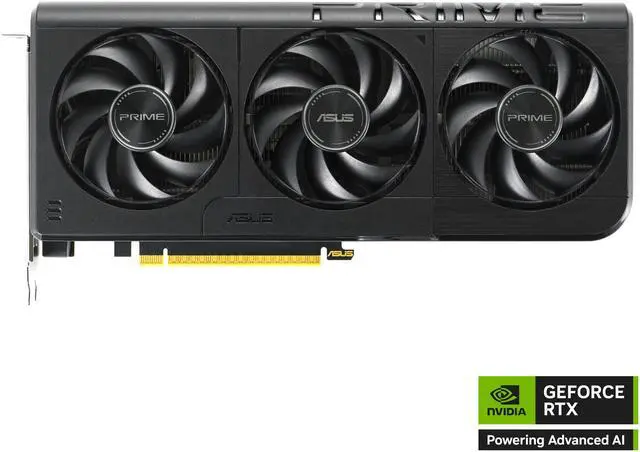
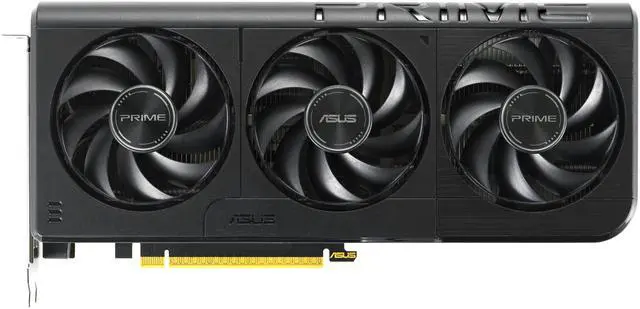
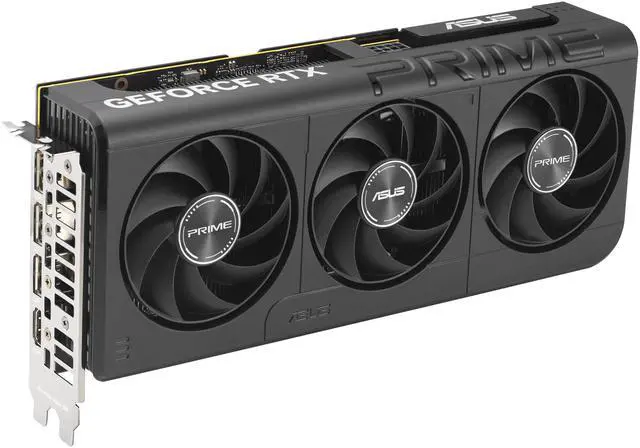
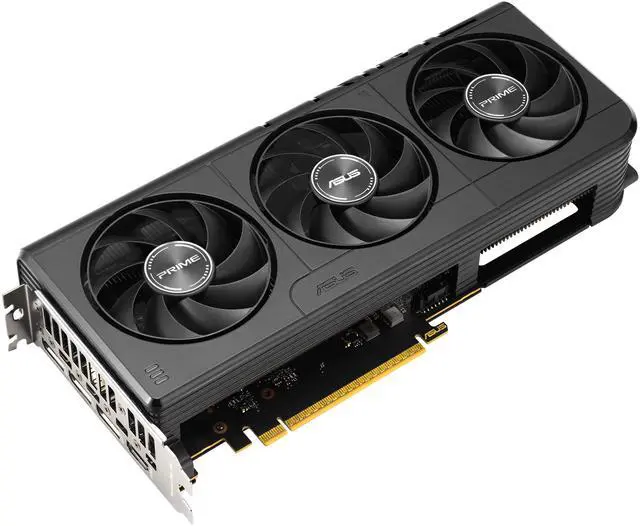
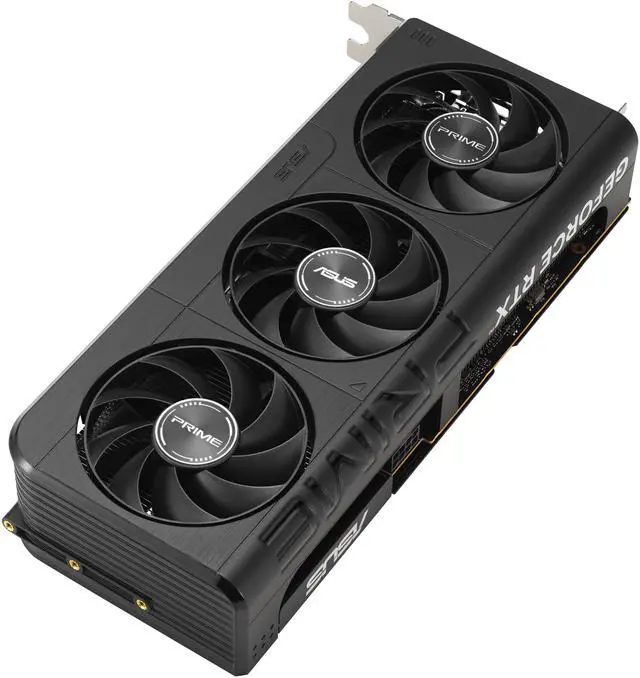
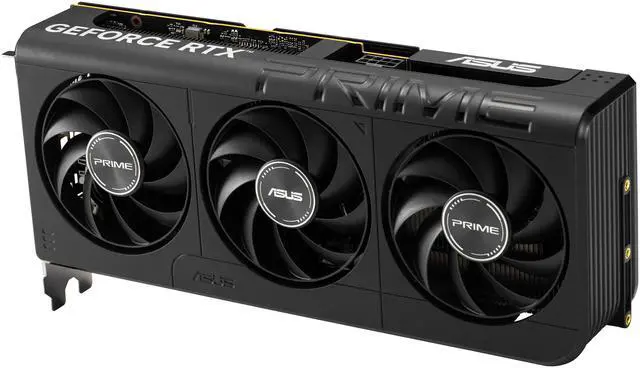
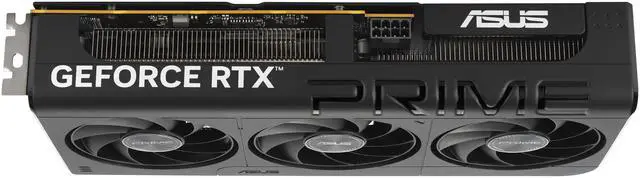
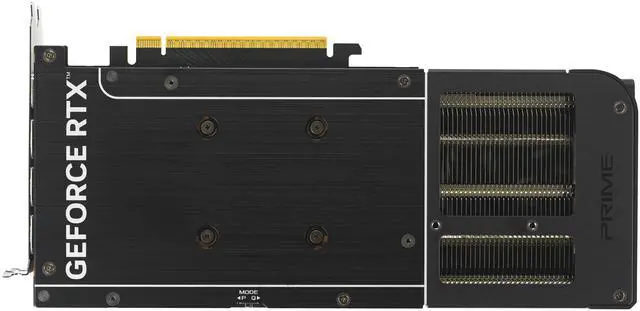

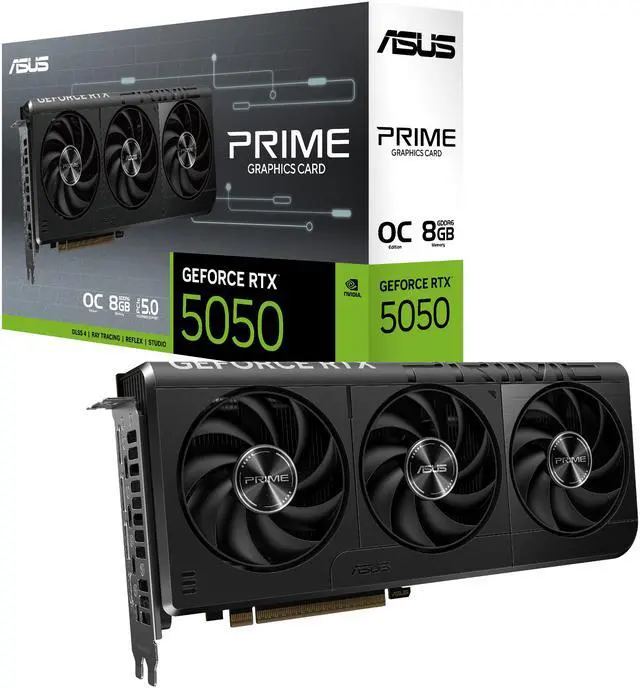
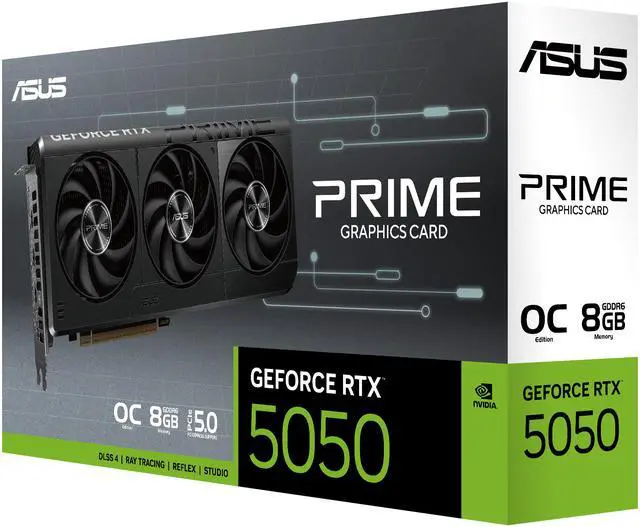


ASUS PRIME GeForce RTX 5050 8GB GDDR6 PCI Express 5.0 x8 ATX Graphics Card PRIME-RTX5050-O8G
- 8GB 128-Bit GDDR6
- Core Clock OC mode: 2707 MHz Default mode: 2677 MHz (Boost Clock)
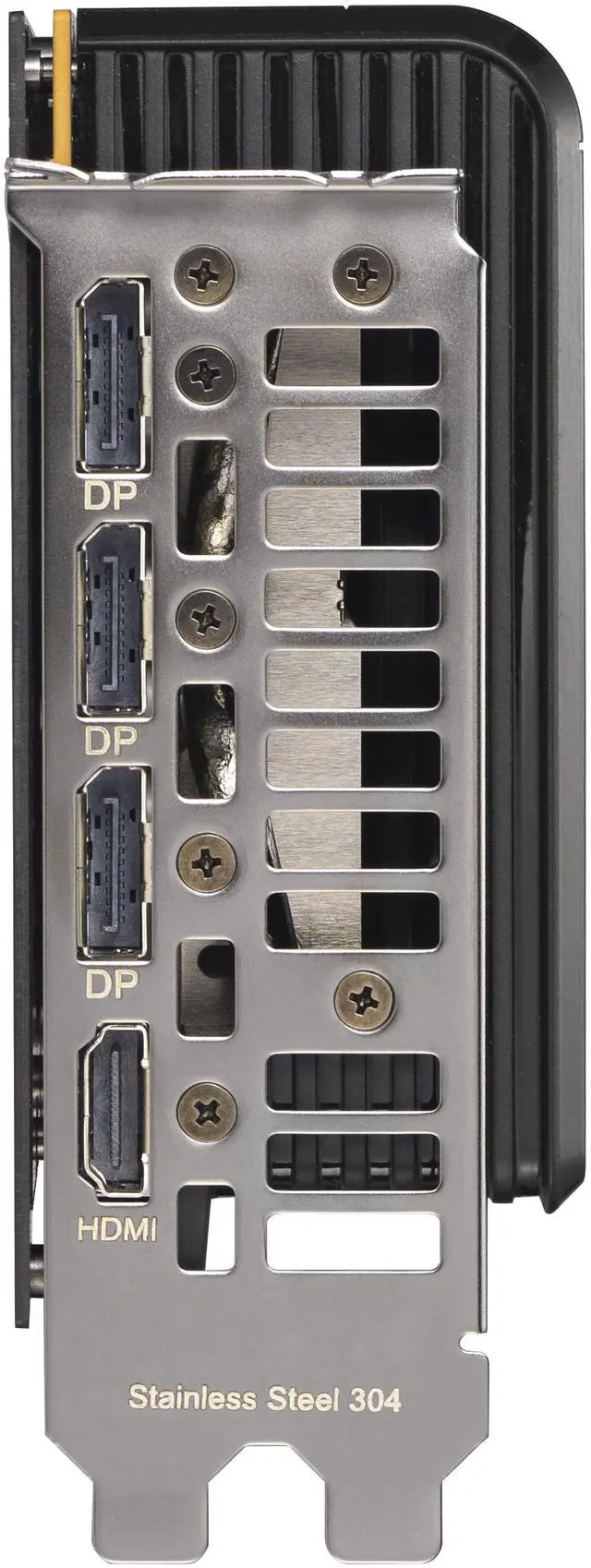
- 1 x HDMI 2.1b 3 x DisplayPort 2.1b
- 2688 CUDA Cores
- PCI Express 5.0 x8
Overview
Specs
Reviews
Warranty & Returns
Warranty, Returns, And Additional Information
Warranty
- Limited Warranty period (parts): 3 years
- Limited Warranty period (labor): 3 years
- Read full details
Return Policies
- Return for refund within: 30 days
- Return for replacement within: 30 days
- This item is covered by Newegg.ca's Standard Return Policy.
- 15% restocking fee may apply.
- Read full return policy for details.
Manufacturer Contact Info
- Manufacturer Product Page
- Manufacturer Website
- Support Phone: 1-510-739-3777
- Support Website
- View other products from ASUS
LOADING...
LOADING...
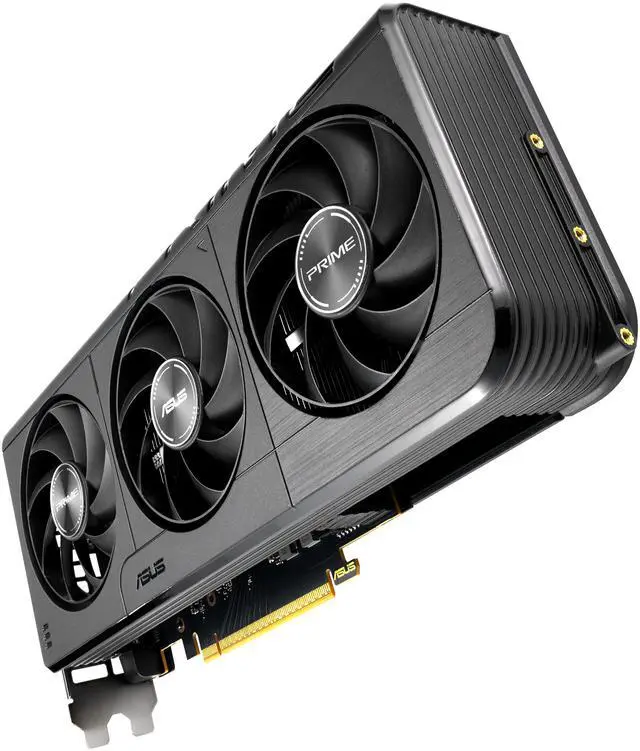
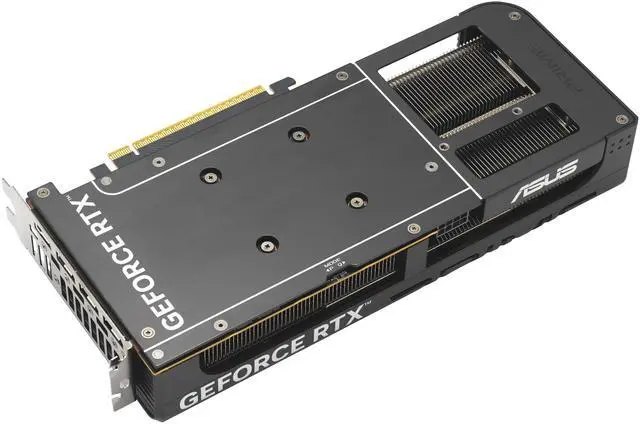
The ASUS PRIME GeForce RTX 5050 O8G is an ATX desktop graphics card with 8GB GDDR6, triple-fan cooling, and PCIe 5.0 x8, suited for gamers and everyday creators who want modern display support and efficient 1080p to entry-level 1440p performance in a standard mid-tower build.
Recommended For
- 1080p gamers upgrading from older GTX or RTX 20/30-entry cards who are comfortable using optimized settings, DLSS, and frame generation in newer games.
- Buyers building a mainstream desktop around NVIDIA features like DLSS, frame generation, AV1/video acceleration, and current display outputs rather than chasing maximum native-performance-per-dollar.
- Esports and lighter AAA players using a 1080p high-refresh monitor, where lower-to-medium-demand games can benefit more from the card's modern feature set than from raw shader throughput alone.
- Small-to-mid tower builders who want a relatively easy-power NVIDIA card with triple-fan cooling, an 8-pin connector, and support for multiple modern displays.
- Home users who also do media-heavy tasks such as streaming, capture, or Plex-style transcoding and want a current NVIDIA GPU that can game and handle video acceleration in one system.
Real-World Use Scenarios
- 1080p single-player gaming is the clearest fit: expect smooth play in most current games at medium to high settings, with DLSS often helping maintain 60 fps-class performance, but the 8GB VRAM can force lower texture settings in heavier titles.
- Esports and lighter competitive games are a practical everyday use case: for players targeting fast response at 1080p, this class of card is typically enough for high frame rates without needing aggressive settings cuts.
- Living-room or small-upgrade gaming builds make sense when the goal is to move up from older midrange GPUs or integrated graphics: users commonly report a noticeable jump in playability at 1080p, while staying within modest power limits.
- 1440p gaming is more of a compromise scenario: it can work in many games if the user is willing to use medium settings and DLSS, but reviews consistently show this is not the card for max-settings 1440p play or long-term headroom.
- Ray-traced games and frame-generation features are usable only selectively: users can try them at 1080p, but the real-world experience depends heavily on the game, and 8GB VRAM can limit how often advanced features stay comfortable in newer titles.
- Basic creator and multi-display desktop use is reasonable for users who want one card for gaming plus everyday GPU tasks such as video playback, multiple monitors, light editing, and general acceleration, but this is not the typical choice for heavier rendering workloads.
Spec Summary
| Attribute | Value |
|---|---|
| Best For | Desktop systems that need an NVIDIA GeForce RTX 5050 with 8GB GDDR6 for multi-monitor setups and VR; fits standard ATX builds and has a 550W recommended PSU |
| Model Identifiers | ASUS PRIME model PRIME-RTX5050-O8G (Part Number 90YV0N70-M0AA00) |
| GPU And Cores | NVIDIA GeForce RTX 5050 (GeForce RTX 50 Series, Blackwell architecture) with 2688 CUDA cores |
| Clock And Core Speeds | OC mode boost clock 2707 MHz; default/boost clock 2677 MHz |
| Memory Configuration | 8GB GDDR6 on a 128-bit (128-Bit / 128 Bits) memory bus with effective memory clock 20 Gbps |
| Interface And Expansion | PCI Express 5.0 x8 interface |
| Display Outputs And Max Resolution | 1 x HDMI 2.1b and 3 x DisplayPort 2.1b; supports up to 4 monitors; max resolution 7680 x 4320 |
| Cooling | Triple-fan cooler (3 fans) |
| Physical Dimensions And Weight | Card dimensions 268.3 x 120 x 50 mm (10.56 x 4.72 x 1.97 in); max GPU length 269 mm; slot width 2.5 slots; item weight 1.7 lb; package weight 1.36 kg; package dimensions 9.2 L x 23.7 W x 41.1 H cm |
| Power And Requirements | Requires one 8‑pin power connector; recommended PSU 550W |
| Compatibility And Features | Supports DirectX 12 Ultimate and OpenGL 4.6; HDCP ready; VR ready; no CrossFireX or SLI; intended for desktop systems |
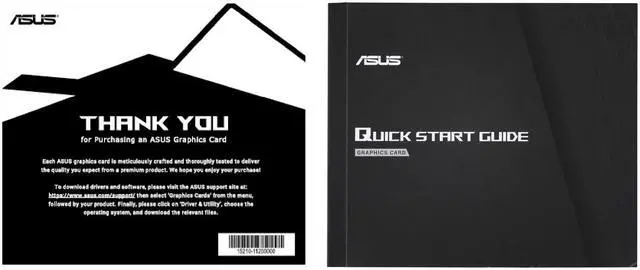
| Package Contents | Includes Speedsetup Manual and Thank You Card; unit/package quantity 1 |
| Regulatory & Power Misc | California Proposition 65 warning present; no batteries required or included |
Reference Q&A
Q: Should I buy the ASUS PRIME RTX 5050 or an RTX 4060 for 1080p gaming?
A: Choose the ASUS PRIME RTX 5050 if you want a newer entry-level NVIDIA card with DLSS 4 support, DisplayPort 2.1b outputs, and current-generation platform features in a 130W class GPU. Choose an RTX 4060 instead if similarly priced, because multiple early desktop comparisons place the RTX 4060 modestly ahead in standard raster gaming on average. The RTX 5050 makes more sense when newer NVIDIA feature support and ASUS's triple-fan Prime design matter more than a small raw-FPS advantage.
Q: Is the ASUS PRIME RTX 5050 a better buy than an RTX 3050 upgrade?
A: Yes, the ASUS PRIME RTX 5050 is the more practical choice for most buyers deciding between these two tiers. It keeps the 8GB frame buffer but moves to a newer GeForce generation with stronger feature support, higher rated memory speed, and materially better efficiency and gaming performance expectations than RTX 3050-class cards. The RTX 3050 only makes more sense when found at a clearly lower price for basic 1080p esports or light gaming.
Q: Should I spend more for an RTX 5060 instead of the ASUS PRIME RTX 5050?
A: Spend more for an RTX 5060 if your goal is higher average FPS, more headroom for new AAA games, or a better path to 1440p. The ASUS PRIME RTX 5050 is the better fit when you want to stay closer to entry-level pricing, focus mainly on 1080p, and still keep NVIDIA's current-generation feature set. The trade-off is straightforward: the RTX 5060 usually offers a clearer performance cushion, while the RTX 5050 is the value-focused option when the price gap is meaningful.
Q: Is the ASUS PRIME RTX 5050 or Intel Arc B580 the smarter budget GPU choice?
A: The ASUS PRIME RTX 5050 is the safer choice if you prefer NVIDIA software features, creator-app support, and a more familiar upgrade path for DLSS-focused gaming. The Arc B580 is worth considering if lower street pricing or stronger raster performance per dollar is your priority, because early third-party comparisons cited by major review outlets show the RTX 5050 trailing it slightly in conventional gaming averages. The decision usually comes down to feature preference versus raw value.
Q: Will this card work well for a 4-monitor setup?
A: Yes. The ASUS PRIME-RTX5050-O8G supports up to 4 displays and includes 1 HDMI 2.1b plus 3 DisplayPort 2.1b outputs. It is a practical fit for multi-monitor office, trading, and general productivity setups. The main trade-off is port mix: if your monitors are mostly HDMI, you may need DisplayPort-to-HDMI adapters for some screens.
Q: Is 8GB VRAM enough for this GPU?
A: 8GB is enough for mainstream gaming, esports, media use, and everyday creator workloads, but it is a limit for buyers who want more headroom for newer AAA games at higher settings, heavier texture packs, or larger AI and content-creation workloads. This card makes the most sense for value-focused 1080p use rather than buyers who want long-term VRAM headroom.
Q: Who is this card a good fit for?
A: This card is best for buyers who want a current-generation NVIDIA GPU for 1080p gaming, general PC upgrades, media playback, VR readiness, and multi-monitor desktop use without stepping into larger, higher-power models. It is less suitable for shoppers targeting heavier 1440p/4K gaming or maximum future-proofing, because it has 8GB of GDDR6 on a 128-bit bus.
Q: Do I need to check power supply and case size before buying?
A: Yes. This card is not a drop-in upgrade for every PC. ASUS lists a 550W recommended PSU, one 8-pin power connector, a 269 mm class card length, and a 2.5-slot cooler. It is a safer choice for mid-tower builds with a modern power supply than for older compact systems.
Q: Is this a better buy than a larger step-up GPU like an RTX 5060 Ti or RTX 5070?
A: It is the better buy if your priority is a lower-cost NVIDIA upgrade for 1080p gaming and everyday use. A step-up card such as an RTX 5060 Ti or RTX 5070 is the better choice if you want stronger performance for higher settings, heavier creator work, or better long-term headroom. The trade-off is simple: this RTX 5050 should be easier on budget and power, while higher-tier cards are better for performance-focused buyers.
Q: Is the ASUS PRIME RTX 5050 a good buy for 1080p gaming?
A: It is mainly suited to entry-level to midrange 1080p gaming. Community discussion repeatedly frames the RTX 5050 as acceptable for esports and many modern games at sensible settings, but its 8GB VRAM and 128-bit memory bus make it a weaker choice for buyers expecting high or ultra settings in newer AAA titles. The ASUS PRIME version adds a triple-fan cooler and standard display outputs, but it does not change the core trade-off of this GPU tier.
Q: Who is this card best suited for?
A: This card is best suited for buyers upgrading from much older GPUs, building a lower-power gaming PC, or targeting 1080p play without stepping into higher-priced models. It fits users who value a current-generation NVIDIA card, modest PSU requirements, and a standard 8-pin power connector more than maximum raw performance per dollar.
Q: What are the main trade-offs of buying this RTX 5050 instead of moving up a tier?
A: The main trade-off is longevity and headroom. This ASUS card has a competent cooler, 8GB of GDDR6, and modern outputs, but buyers in Reddit discussions repeatedly question the value of staying at 8GB when spending more can buy a meaningfully faster card. If you want better 1440p performance, more buffer for newer games, or fewer compromises on texture settings, moving up a tier is usually the safer decision.
Q: Will this card fit and work easily in a typical mainstream PC build?
A: Usually yes, if the case and PSU are reasonably modern. The card uses one 8-pin power connector, ASUS recommends a 550W PSU, and the card is 268.3 mm long and 2.5 slots thick. That makes it easier to power than higher-end GPUs, but buyers should still check case clearance and slot space before purchase.