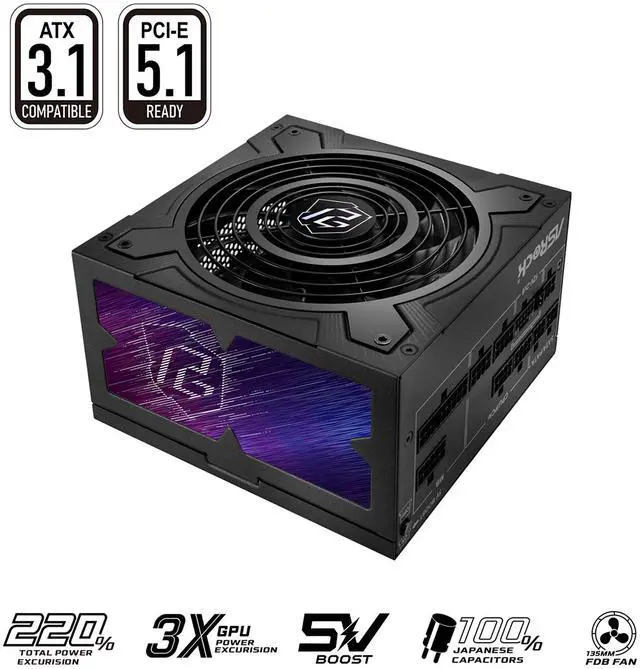
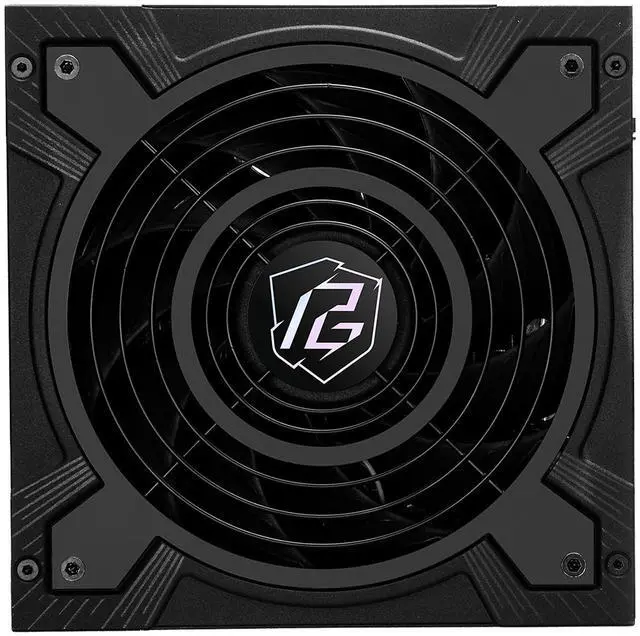
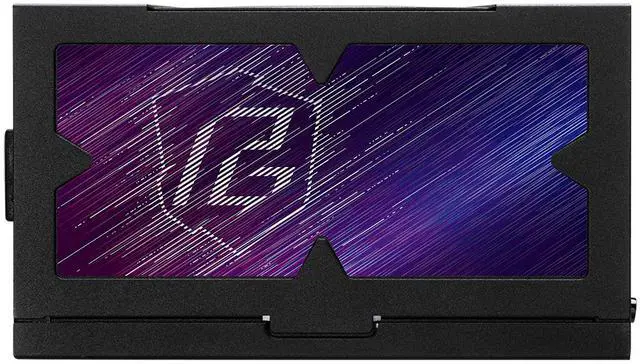
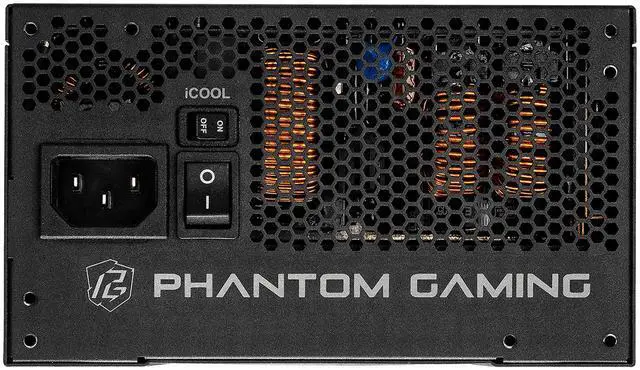
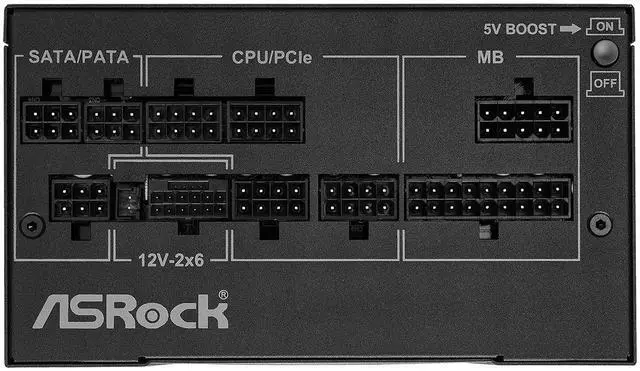
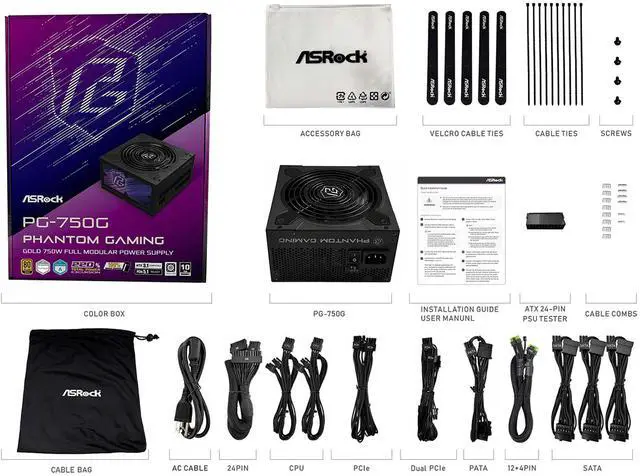
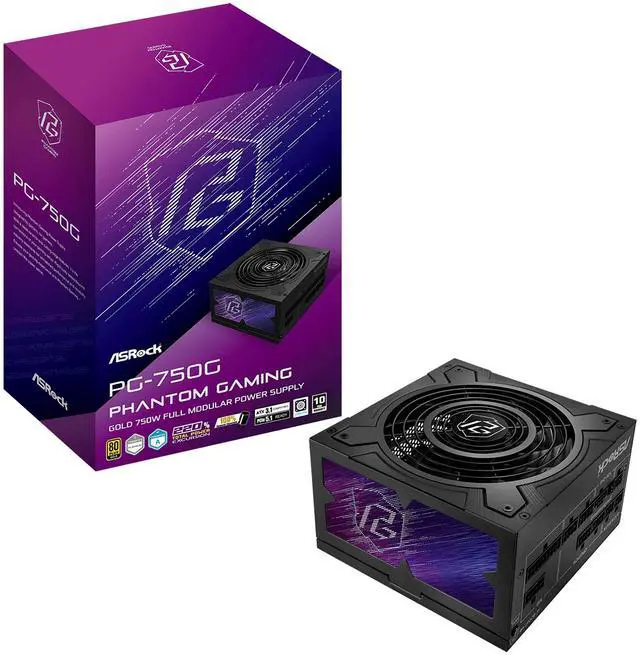
The ASRock Phantom Gaming PG-750G is a 750W fully modular ATX 3.1 power supply with 80 PLUS Gold efficiency and a native 12V-2x6 cable, making it a strong fit for mainstream to upper-midrange gaming PCs and modern GPUs that need clean, up-to-date power delivery.
Recommended For
- Builders putting together a mid-to-upper-range gaming PC with one modern GPU, especially GeForce RTX 40/50-class cards that use 12V-2x6, and who want an ATX 3.1-ready PSU without using adapter cables.
- Value-focused PC builders who want a fully modular 750W unit that is commonly recommended in community build lists as a higher-tier budget pick for mainstream gaming and upgrade-friendly systems.
- Users who care about lower PSU noise in a typical desk-side gaming setup and want a model with strong third-party acoustic certification plus semi-passive fan behavior at lighter loads.
- First-time or less-experienced builders who want easier cable management, a long warranty, and clearer handling guidance for the native 12V-2x6 cable during installation.
Real-World Use Scenarios
- Building a mid-range to upper-mid-range gaming PC with one modern graphics card is the most typical fit. In practice, users get a native 12V-2x6 GPU cable, current ATX 3.1 compatibility, and enough headroom for common single-GPU gaming builds without needing adapter cables.
- Upgrading from an older non-modular or pre-ATX 3.x PSU is a common real-world use case. The likely experience is a cleaner rebuild with fewer unused cables, easier routing in windowed cases, and direct support for newer GPUs instead of relying on bundled power adapters.
- For users trying to keep a gaming or work-and-play PC quieter at everyday loads, this model is positioned for low-noise operation rather than constant high fan speed. In normal desktop use, lighter gaming, or mixed productivity, the expected outcome is that PSU noise is unlikely to be a standout part of the system.
- It suits builders pairing efficient gaming CPUs with mainstream or upper-mid-tier GPUs and several SATA devices. The likely result is a straightforward single-system setup for gaming, school, work, and media storage without immediately running into cable-count limits or power-delivery constraints.
- Buyers focused on long-term ownership often use a 750W Gold-class unit like this for a build they plan to keep through multiple GPU or case refreshes. The practical outcome is less need to replace the PSU early, provided the system stays within typical single-GPU power ranges.
Spec Summary
| Attribute | Value |
|---|
| Best For | Desktop PCs and custom builds that require up to 750W with ATX 3.1 and PCIe 5.1 (16‑pin) support; suitable where a full-modular PSU and multiple PCIe/SATA connectors are needed |
|---|
| Model Identifiers | ASRock PG-750G (model number 90-UXP075-GFUAAB), sold as style 750G |
|---|
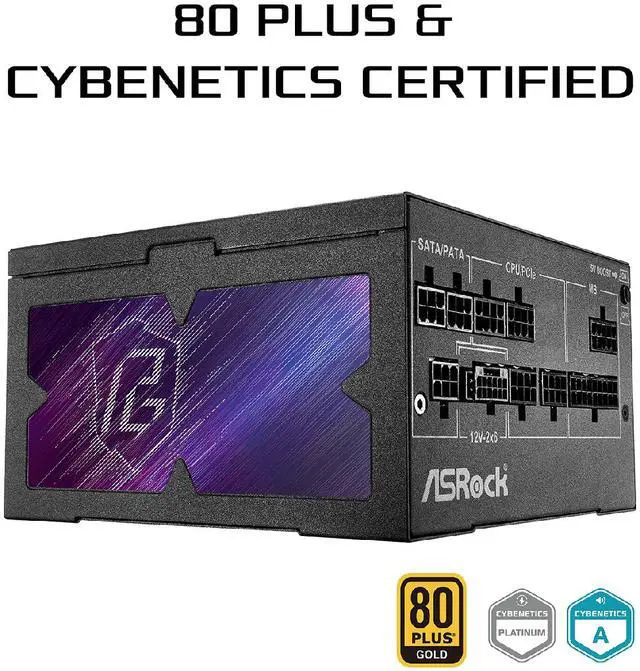
| Power And Certification | 750W output with 80 PLUS Gold efficiency and a Cybenetics A noise rating |
|---|
| Connectors And Cables | Comprehensive connector set: 1x 24‑pin ATX main, 1x 16‑pin PCIe (PCIe5.1), three 6+2‑pin PCIe, two 8‑pin (4+4) EPS CPU, three 4‑pin peripheral, nine SATA power; sleeved 24‑pin and 12+4 pin cables and individual braided pattern on cables |
|---|
| Form Factor & Compatibility | ATX 3.1 form factor and PCIe 5.1 ready with a full-modular layout; fits cases accommodating PSUs up to 175 mm in depth |
|---|
| Cooling And Fan | Air-cooled with a 135mm striped axial FDB fan |
|---|
| Electrical Input / Rails | AC input range 100–132 V and dual +12V rails |
|---|
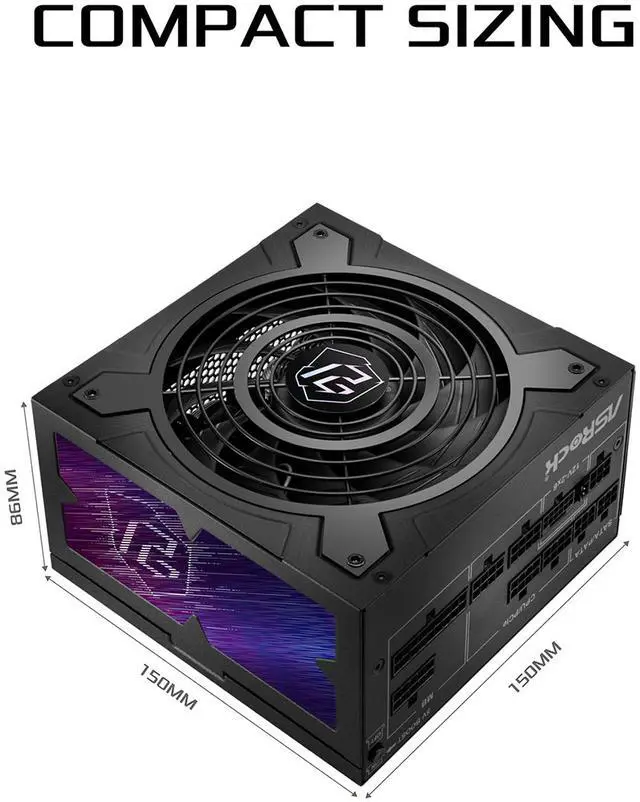
| Physical Specifications | Chassis measures 15 x 15 x 8.6 cm and weighs 7.5 lb |
|---|
| Reliability | Mean time between failures (MTBF) greater than 100,000 hours |
|---|
Reference Q&A
Q: Should I buy the ASRock Phantom Gaming PG-750G or Corsair RM750e for a 750W gaming build?
A: Choose the ASRock Phantom Gaming PG-750G if you want a modern ATX 3.1 / PCIe 5.1 unit with a native 12V-2x6 cable, low-noise positioning, and a 10-year warranty in a mainstream 750W class. Choose the Corsair RM750e if you prefer a more established review track record from major PSU reviewers. In practical use, both target the same buyer: a mid-to-upper-tier gaming PC that needs current GPU power standards, full modular cabling, and enough transient headroom for newer graphics cards.
Q: Is the ASRock Phantom Gaming PG-750G a better fit than a 650W PSU?
A: The PG-750G is the better fit when you want more upgrade headroom, plan to use a stronger GPU, or want extra margin for transient spikes under ATX 3.1. A quality 650W PSU can still be enough for many efficient gaming builds, but 750W is the safer choice for users moving toward higher-end graphics cards, future upgrades, or lower fan noise under load because the PSU does not need to run as close to its limit.
Q: Should I step up from the ASRock Phantom Gaming PG-750G to an 850W PSU?
A: Step up to 850W if you are pairing your system with a more power-hungry GPU, expect future graphics upgrades, or want more electrical headroom for sustained heavy loads. Stay with the PG-750G if your build is centered on a typical single-GPU gaming system and you want a balanced wattage choice rather than oversizing the PSU. For many current gaming PCs, 750W remains the practical middle ground between capacity, efficiency range, and cost.
Q: How does the ASRock Phantom Gaming PG-750G compare with MSI MAG A750GL?
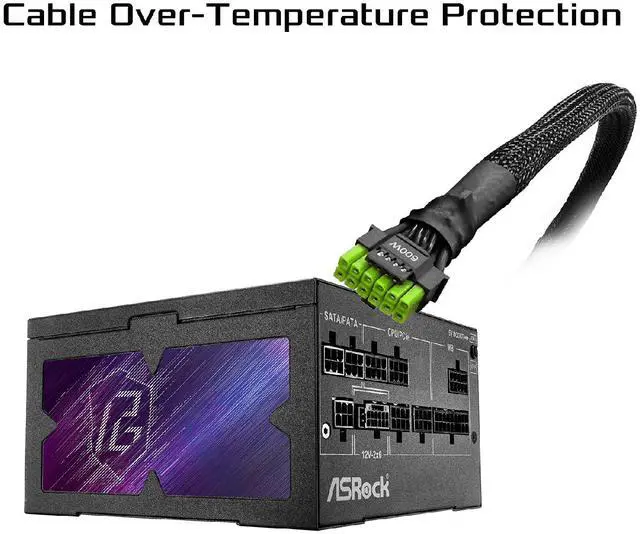
A: These two models compete very closely: both target mainstream 750W gaming builds with full modular cabling and current-gen GPU connector support. The ASRock PG-750G stands out for its official emphasis on Cybenetics efficiency and Lambda A acoustic certification, plus its TempGuard-monitored 12V-2x6 cable design. The MSI MAG A750GL is a similar alternative for buyers who want a widely available mainstream ATX 3.1 unit with comparable positioning. The deciding factors are usually price, local availability, and whether you value ASRock's extra focus on cable-temperature monitoring and acoustic certification.
Q: Is a 750W PSU like the ASRock PG-750G enough for a modern gaming PC with one newer GPU?
A: Yes, a quality 750W unit is a practical fit for many single-GPU gaming builds, especially mid-to-upper-range systems. This model is aimed at current platforms because it supports ATX 3.1, PCIe 5.1, and includes a native 12V-2x6 connector. It is a better fit for one modern graphics card than for extreme multi-upgrade plans or unusually power-hungry flagship builds, where 850W or higher gives more headroom.
Q: Does it come with the cables most builders need, including a native cable for newer GPUs?
A: Yes. Based on the product data, the PG-750G includes the standard motherboard and CPU power leads, SATA and peripheral power, three 6+2-pin PCIe leads, and one native 16-pin 12V-2x6 GPU connector. That makes it suitable for most mainstream single-GPU builds without needing a separate GPU power adapter.
Q: Who is this PSU best for?
A: It is best for builders who want a current-spec 750W power supply for a clean single-GPU desktop build. The strongest fit is a mainstream or enthusiast gaming PC that benefits from full modular cabling, native 12V-2x6 support, Gold-level efficiency, and a long warranty. It is less specialized for ultra-compact cases, since the listed PSU length is 175 mm and compact cases often benefit from shorter units.
Q: What is the main trade-off versus a cheaper 750W alternative?
A: The main trade-off is price versus build convenience and newer platform support. Compared with cheaper semi-modular or Bronze-rated 750W units, this ASRock model offers full modular cabling, newer ATX 3.1 and PCIe 5.1 support, a native 12V-2x6 cable, Japanese capacitors, and a 10-year warranty. A lower-cost alternative can still power a build, but it usually gives up some cable management flexibility, efficiency, feature set, or long-term upgrade readiness.
Q: Will it fit in most ATX cases, and what should buyers check first?
A: It should fit many standard ATX and mid-tower cases, but buyers should verify PSU clearance before purchase. The listed length is 175 mm, which is longer than some compact ATX power supplies. The most important check is case support for PSU length and space for cable bend radius, especially if the build uses a shroud, front drive cage, or a tight lower compartment.
Q: Is the ASRock Phantom Gaming PG-750G worth buying if I want a low-cost ATX 3.1 / PCIe 5.1 PSU?
A: It is mainly a value-focused option for builders who want modern PSU features at a lower price. Reddit discussion around this model often centers on its aggressive pricing and feature set, especially full modular cabling and native 12V-2x6 support. The trade-off is that some buyers hesitate because ASRock is newer in PSUs and this exact model has limited independent long-term feedback in community discussion.
Q: Who is the PG-750G best suited for?
A: It is best suited for mainstream gaming or general-purpose desktop builds that need up to 750W, want a fully modular PSU, and may use a newer graphics card with a native 16-pin power connection. It fits buyers who care about current connector standards and price efficiency more than buying from a long-established PSU brand.
Q: Is 750W enough if I am building a modern gaming PC with a higher-end GPU?
A: For many single-GPU gaming PCs, 750W is enough, especially if the total system power stays in the mid-range and you want ATX 3.1 support for transient handling. Community discussion that mentions the PG-750G usually treats it as appropriate for mainstream to upper-midrange builds, but if you are pairing a very power-hungry GPU and CPU or want more upgrade headroom, an 850W class unit is the safer choice.
Q: What are the main trade-offs of choosing the PG-750G over a more established PSU model?
A: The main advantages are price, modern cabling, and modularity. The main trade-offs are buyer uncertainty around long-term track record, fewer model-specific reviews discussed by users, and less brand trust than long-standing PSU lines from specialist power-supply vendors. If you prioritize proven reputation over price, a more established alternative may be the better fit.