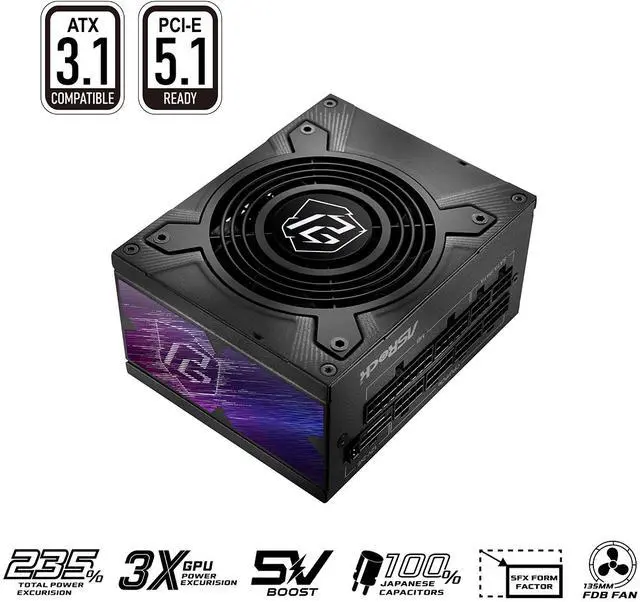
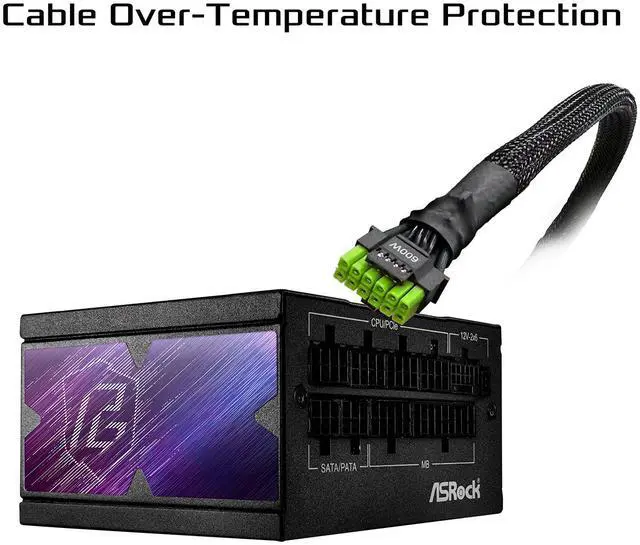
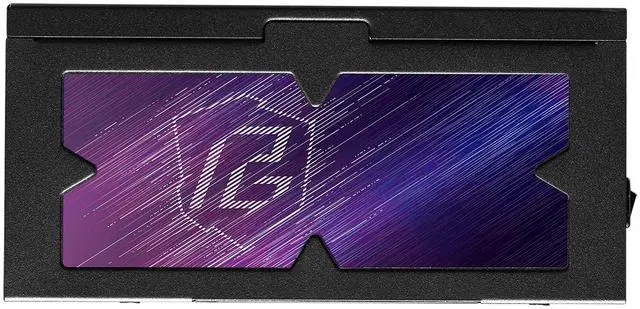
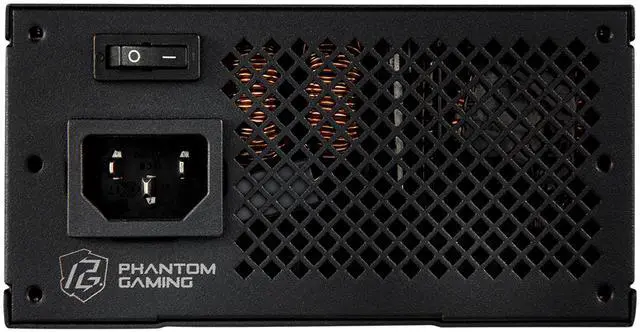
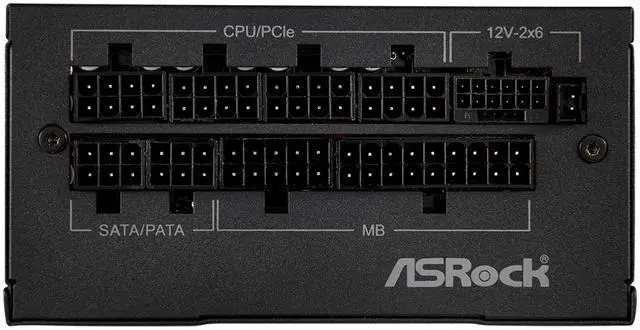
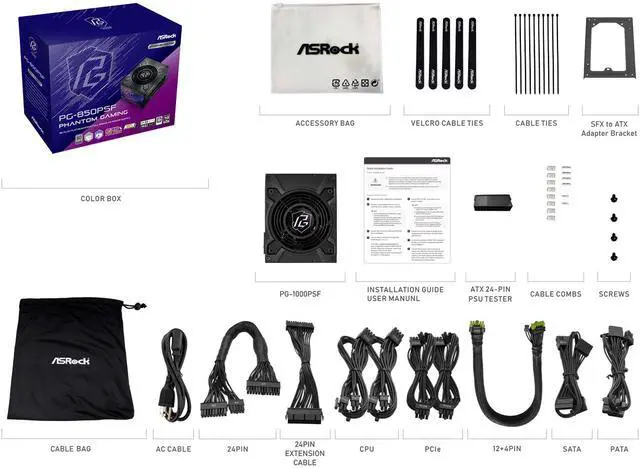
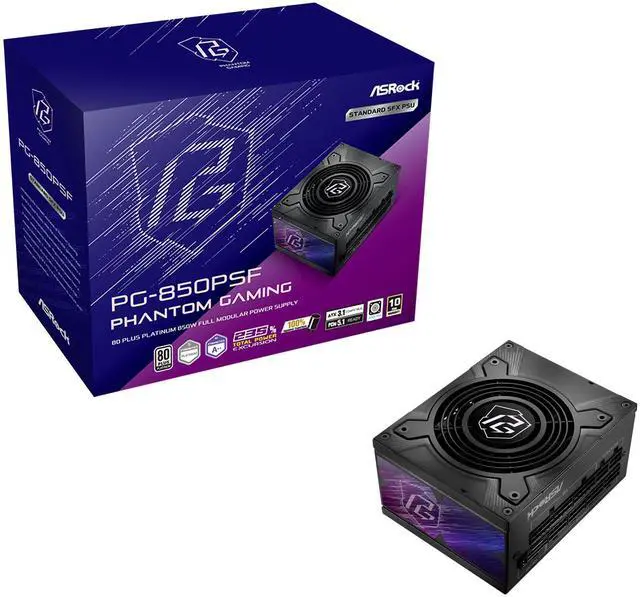
The ASRock PG-850PSF is an 850W fully modular SFX power supply built for compact high-performance gaming PCs that need ATX 3.1 and PCIe 5.1 support, making it a strong fit for small-form-factor builds using modern GPUs and builders who want high efficiency, quiet operation, and a long 10-year warranty.
Recommended For
- Mini-ITX and other small-form-factor builders who need an SFX PSU for a compact gaming PC, especially when the case does not fit a full ATX power supply.
- SFF gamers pairing modern mid-high-end GPUs with a native 12V-2x6 cable and ATX 3.1 support, and who want cleaner cable routing in a compact case.
- Builders who care more about low PSU noise than chasing the absolute smallest price difference, since outside testing and SFF commentary consistently value quiet operation in this class.
- Upgraders planning a current build now and a future GPU swap later, who want an 850W SFX unit with modern transient handling rather than an older pre-ATX 3.x design.
Real-World Use Scenarios
- Building a high-end mini-ITX gaming PC with a current Nvidia or AMD GPU: the SFX size and native 12V-2x6 cable make it easier to fit cleanly in compact cases, and the ATX 3.1 design is intended to handle the short power spikes modern GPUs can produce.
- Upgrading a small-form-factor system to a newer PCIe 5.x graphics card: users are trying to avoid bulky adapters and cable routing problems, and this unit is positioned for that upgrade path with a native 12V-2x6 lead and fully modular cabling.
- Putting together a quiet living-room, desk-side, or studio-style compact PC: in normal use the expected experience is low PSU noise rather than a constantly noticeable fan, which aligns with the unit's Cybenetics Lambda A++ noise certification and semi-passive operation.
- Running a compact workstation or gaming build with a power-hungry CPU and GPU at the same time: the likely outcome is stable everyday operation without immediately needing to step up to a 1000W SFX model, assuming the rest of the system stays within a typical 850W budget.
- First-time SFF builders who are worried about 12V-2x6 connection mistakes: the dual-color connector and TempGuard positioning suggest a more reassuring install process, with clearer visual confirmation that the GPU power plug is fully seated.
Spec Summary
| Attribute | Value |
|---|
| Best For | ATX 3.1 desktop PC builds that need an 850 W, full‑modular power supply with PCIe5.1 GPU connector support |
|---|
| Capacity | 850 W output rating (850 Watts) for high‑draw desktop components |
|---|
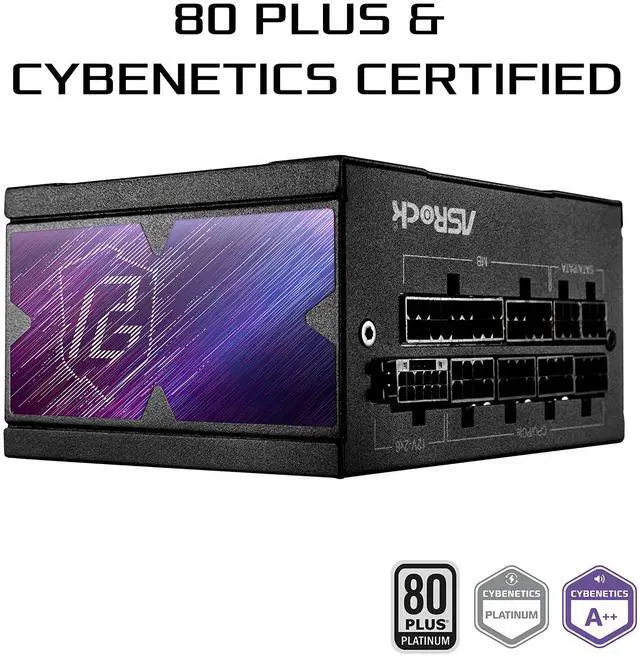
| Efficiency And Certifications | 80 PLUS PLATINUM certified for high conversion efficiency |
|---|
| Form Factor And Compatibility | ATX 3.1 form factor with a full‑modular layout; connector types include ATX and PCI Express for use in standard PC cases |
|---|
| Connectors And Cables | Fully modular cable set including 1×24‑pin ATX, 2×4+4 EPS CPU, 1×12+4 PCIe5.1 (dual‑color), 2×6+2 PCIe, 4×4‑pin peripheral and 4×SATA connectors |
|---|
| Cooling And Fan | Single 92 mm fluid‑dynamic bearing axial fan; air‑cooled design |
|---|
| Protections And Safety | Built‑in protections: OCP, SCP, OVP, UVP, OTP, OPP |
|---|
| Input And Electrical | AC input 100–240 V, 50/60 Hz |
|---|
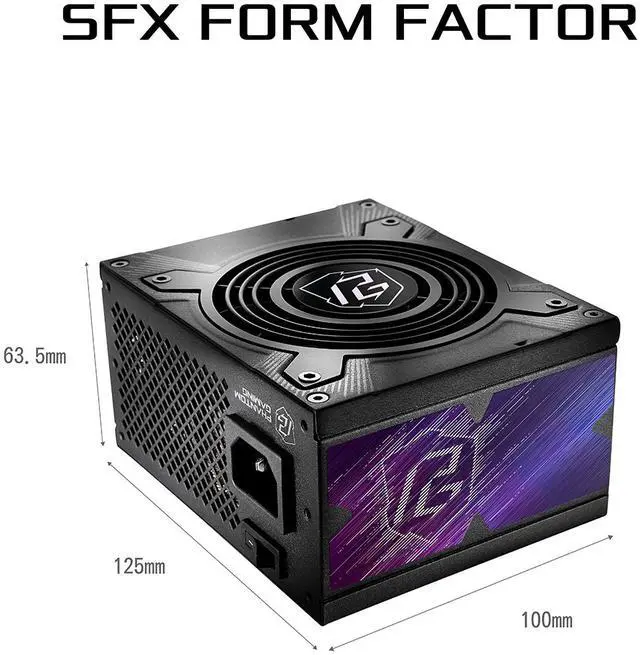
| Dimensions And Packaging | Unit dimensions 100 × 125 × 63.5 mm (3.94 × 4.92 × 2.5 in); package dimensions 10.55 × 7.68 × 3.82 in; package weight 5.56 Pounds |
|---|
| Reliability | >100,000 Hours MTBF |
|---|
| Model Identifiers | ASRock PG-850PSF (Model Number 90-UFP085-PFUAAB), also referenced as PG-850PSF / Style 850PSF |
|---|
| Package Contents And Unit Count | Sold as a single unit / package quantity 1 |
|---|
| Additional Info | No batteries required or included |
|---|
Reference Q&A
Q: Should I buy the ASRock PG-850PSF or a 750W SFX PSU for a small-form-factor gaming build?
A: Choose the ASRock PG-850PSF if you want more headroom for newer mid-to-high-end GPUs, a native 12V-2x6 cable, and ATX 3.1 support in a true SFX form factor. A 750W SFX unit is usually enough for efficient gaming systems, but 850W is the more flexible choice if you expect higher transient GPU loads, future GPU upgrades, or heavier CPU/GPU combinations. The trade-off is that 750W models are often enough for tighter-budget builds when the component power draw is already well understood.
Q: Is the ASRock PG-850PSF a better fit than an SFX-L 850W PSU like the ASUS ROG Loki 850?
A: The ASRock PG-850PSF is the better fit when case clearance is tight and you specifically want a standard SFX unit rather than SFX-L. The ASUS ROG Loki 850 is a common alternative for buyers who prioritize a premium SFX-L design and broader review coverage, but its larger housing can matter in compact builds. If your case supports both sizes, the decision is usually about size efficiency and price-to-feature balance rather than wattage, since both target high-end SFF systems.
Q: How does the ASRock PG-850PSF compare with the Corsair SF850 for an 850W SFX build?
A: The ASRock PG-850PSF makes the most sense if you want an 850W true-SFX PSU with ATX 3.1, a native 12V-2x6 cable, and a long warranty from a newer entrant in the category. The Corsair SF850 is the safer pick if you value broader third-party testing and stronger community familiarity, because it is one of the most discussed modern 850W SFX options. In practice, both are aimed at high-performance compact PCs, so the decision comes down to whether you prioritize market-proven review coverage or ASRock's feature set and positioning.
Q: Should I choose the ASRock PG-850PSF or a lower-cost 850W SFX Gold PSU like the Cooler Master V850 SFX?
A: Choose the ASRock PG-850PSF if you want newer-platform positioning with ATX 3.1 and a native 12V-2x6 implementation in a compact SFX unit. A lower-cost 850W SFX option like the Cooler Master V850 SFX is often selected when price matters more than efficiency tier or newer connector messaging. The practical trade-off is straightforward: both target powerful small-form-factor systems, but the ASRock model is better aligned with buyers who want current power-standard support and higher-efficiency positioning on paper.
Q: Is the ASRock PG-850PSF a good choice for a small-form-factor gaming PC?
A: Yes, if your case is built for a standard SFX power supply. The PG-850PSF uses the smaller SFX form factor, so it is a better fit for compact ITX and other small-form-factor builds than a full-size ATX PSU. The main buying check is physical compatibility: if your case only supports ATX, this model is not the simplest choice unless the case or bracket explicitly supports SFX.
Q: Will this power supply handle a modern gaming build with an RTX 4070 Super or similar GPU?
A: In most cases, yes. An 850W PSU is typically appropriate for an RTX 4070 Super class build, and this model is better prepared than older PSUs because it includes a native PCIe 5.1 / 12V-2x6 GPU power connector instead of relying on multi-plug adapters. It is a sensible fit for upper-midrange to high-end single-GPU systems, but buyers moving to more power-hungry GPUs should still verify their total system power and connector needs.
Q: Does the ASRock PG-850PSF have the right cables for motherboards that need both 8-pin and 4-pin CPU power?
A: Yes. Based on the provided specifications, it includes two EPS 12V CPU connectors, which is the usual requirement for boards that use one 8-pin plus one additional 4-pin CPU power connection. This makes it a safer choice for newer gaming and creator motherboards than entry-level PSUs that may offer fewer CPU power leads.
Q: What is the main trade-off versus a full-size ATX 850W power supply?
A: The main trade-off is form factor, not core capability. Compared with a typical ATX 850W unit, the PG-850PSF is easier to use in compact cases because it is standard SFX size, while still offering 850W output, full modular cabling, and current GPU support. The trade-off is that SFX units are usually chosen for space efficiency first, so buyers with normal mid-tower ATX cases may have more alternatives, and often lower-cost ones, in the larger ATX category.
Q: Who is this power supply most suitable for?
A: It is most suitable for builders who want high wattage in a compact PSU: small-form-factor gamers, ITX builders, and users planning a modern single-GPU system with native 12V-2x6 support. It is less compelling for budget-focused ATX tower builds, where a standard ATX 850W PSU may be easier to source and compare.
Q: Is the ASRock PG-850PSF a good fit for a small-form-factor gaming PC?
A: Yes, if you specifically need an SFX power supply with high wattage. Its 100 x 125 x 63.5 mm SFX size makes it suitable for compact cases, while 850 W, ATX 3.1 support, and a native 12V-2x6 connector make it more appropriate for modern mid-to-high-end GPU builds than older lower-power SFX units. The main trade-off is that SFX units can be harder to cable-manage and are usually bought for space constraints rather than value.
Q: Who is the ASRock PG-850PSF best suited for?
A: It is best suited for builders who need an SFX PSU for a compact PC but still want current-gen power features: 850 W capacity, ATX 3.1 behavior, PCIe 5.1 readiness, and a native 12V-2x6 cable. It makes the most sense for higher-end ITX or other space-constrained builds. It is less compelling for standard ATX builds, where larger ATX power supplies usually offer more choice and often better price-per-watt.
Q: Is 850 W enough for a modern gaming build, or should I buy more wattage?
A: For most single-GPU gaming systems, 850 W is enough. Community discussions around comparable modern GPU builds commonly treat 850 W as sufficient unless you are pairing a very power-hungry GPU and CPU or want extra headroom for future upgrades. The PG-850PSF is a practical choice when your target is a strong gaming system in a compact case, but 1000 W may be the safer pick for top-end parts or heavier upgrade plans.
Q: What are the main trade-offs of buying the ASRock PG-850PSF instead of a more established SFX PSU?
A: The main trade-off is confidence and track record. On paper, the PG-850PSF is strong: Platinum efficiency claims, full modular design, Japanese capacitors, modern protections, and a 10-year warranty. But ASRock is still newer in power supplies than long-established PSU brands, so buyers comparing options often focus on reputation, independent validation, and long-term reliability history. It is a reasonable spec-driven option, but more cautious buyers may still prefer a longer-proven PSU line.