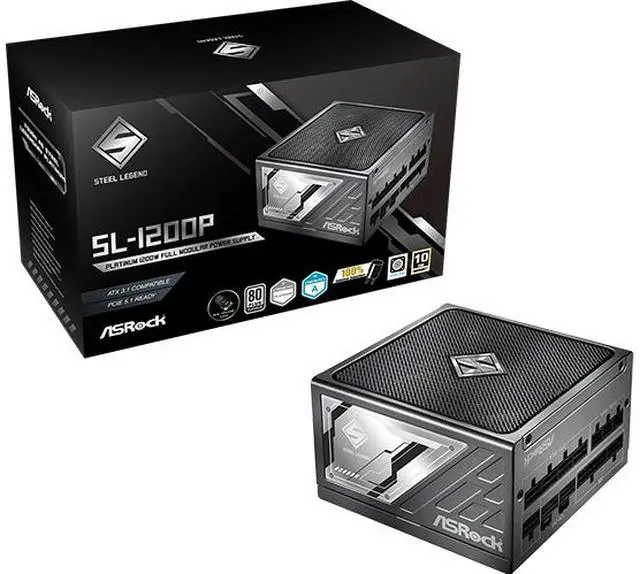
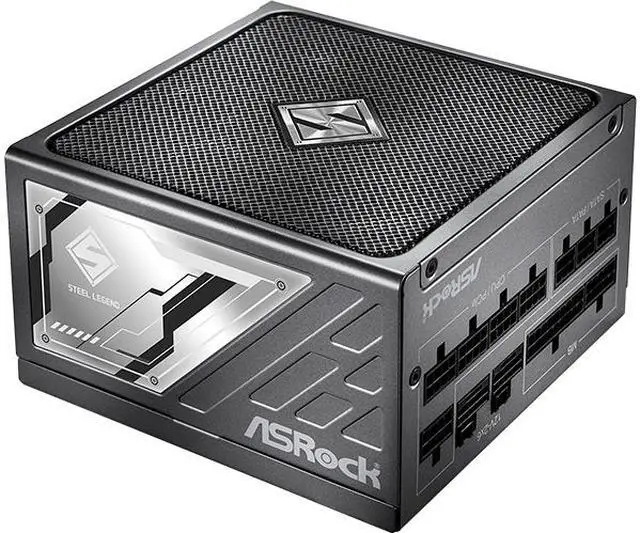
The ASRock Steel Legend SL-1200P is a 1200W fully modular ATX 3.1 power supply built for high-end gaming PCs and workstation builds that need strong power headroom, native 12V-2x6 GPU support, and premium efficiency.
Recommended For
- Builders pairing a flagship GPU with a current-gen platform and wanting a native 12V-2x6, ATX 3.1-ready PSU instead of using adapter cables.
- High-end gaming or creator PC owners who want extra wattage headroom for future GPU upgrades, transient spikes, or a more expansion-friendly long-term build.
- Users trying to keep a powerful desktop quieter at low to medium loads, especially those who value low-noise operation alongside high efficiency.
- Enthusiast builders who care about clean cable routing in a premium ATX tower and want a fully modular unit with current GPU power cabling included in the box.
Real-World Use Scenarios
- Building a high-end gaming PC with an RTX 5090 or RTX 4090 and a current Ryzen 9 or Core i7/i9 CPU: this PSU is sized for that class of build, so the typical result is enough headroom for gaming spikes, overclocking, and future GPU upgrades without needing adapters for 12V-2x6 graphics power.
- Replacing a PSU in a premium gaming or creator tower that uses a newer GPU with a native 12V-2x6 cable: the main benefit in practice is a cleaner install and fewer cable-routing compromises than using multi-plug adapter cables, especially in cases with side windows or tight front compartments.
- Using one system for gaming, streaming, and heavy CPU/GPU workloads such as video exports or AI-assisted creation: users should expect stable power delivery under sustained mixed loads rather than shutdowns or power-limit issues becoming the bottleneck.
- Installing a 1200W PSU in a mid-tower case where clearance is still a concern: compared with some oversized flagship PSUs, this size is more likely to fit without crowding drive cages or cable space, which makes it a practical option for compact high-end builds.
- Choosing a PSU for a quiet high-performance desktop that spends long sessions in gaming or rendering: the expected experience is lower PSU noise than many mainstream units, especially at typical loads below full output, though total system noise will still depend on the GPU and case airflow.
Spec Summary
| Attribute | Value |
|---|
| Best For | High-power desktop PCs and workstations that require up to 1200W and ATX 3.1 power delivery with PCIe5.1 12+4 connectors for modern GPU and high-load builds |
|---|
| Model Identifiers | ASRock SL-1200P (model number 90-UXS120-PFUAAA) |
|---|
| Power And Efficiency | 1200 W maximum output with 80 PLUS PLATINUM efficiency |
|---|
| Cooling And Fan | Air-cooled with one 135mm striped axial FDB fan |
|---|
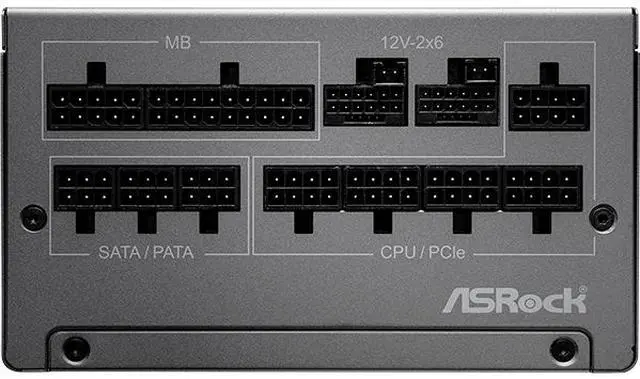
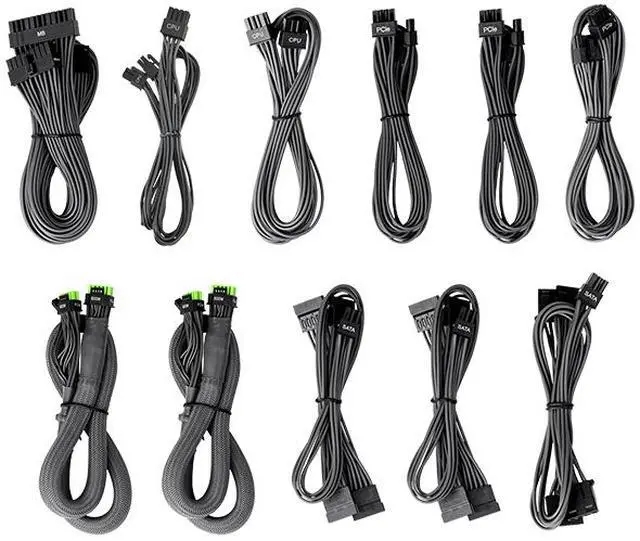
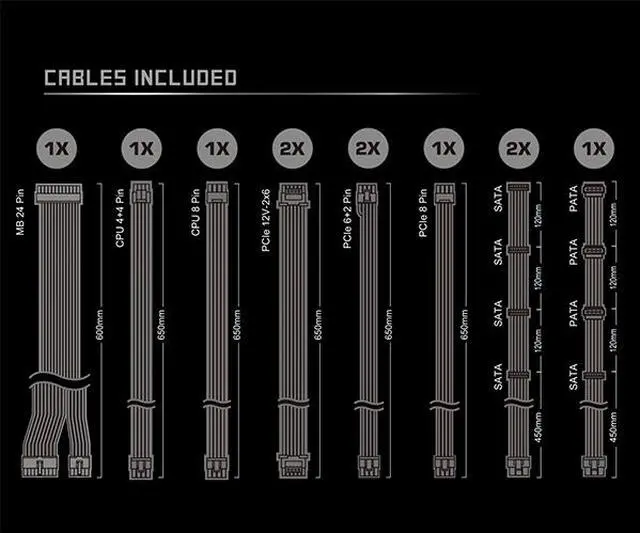
| Connectors And Cables | Full-modular cable design including 1× 24‑pin ATX, 1× 4+4 EPS, 1× 8‑pin EPS, 2× 12+4 PCIe5.1 (dual-color), 2× 6+2 PCIe, 1× 8‑pin PCIe, 3× 4‑pin peripheral and 9× SATA connectors |
|---|
| Protections And Safety | Built-in protections including OCP, SCP, OVP, UVP, OTP and OPP |
|---|
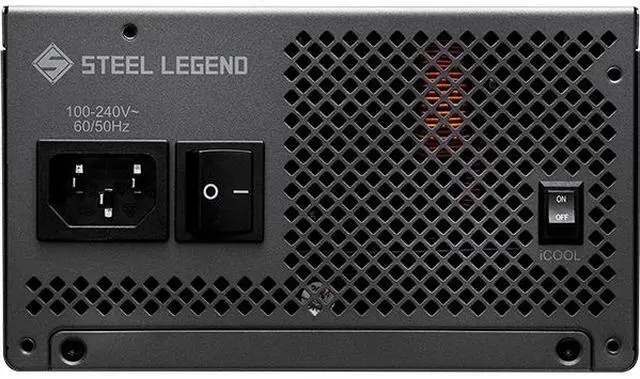
| Input And Voltage | Input voltage 100–240 V with 50/60 Hz input frequency |
|---|
| Physical Dimensions And Weight | 150 × 150 × 86 mm (5.91 × 5.91 × 3.39 in); package weight 3.62 kg |
|---|
| Form Factor And Compatibility | ATX 3.1 form factor; intended for personal computers |
|---|
Reference Q&A
Q: Should I buy the ASRock SL-1200P or a 1000W ATX 3.1 PSU for a high-end gaming PC?
A: Choose the ASRock SL-1200P when your build is expected to run a top-tier GPU, a high-draw CPU, or you want more headroom for transient spikes, future GPU upgrades, and lower fan activity at typical loads. A good 1000W ATX 3.1 unit is usually the more practical choice for a single-GPU gaming system that stays within the power recommendations from your GPU maker. The trade-off is simple: 1000W is often enough, while 1200W gives more margin and flexibility.
Q: How does the ASRock SL-1200P compare with the Corsair RM1200x Shift?
A: Pick the ASRock SL-1200P if you want a conventional rear-connector layout, 80 PLUS Platinum efficiency, dual native 12V-2x6 GPU connectors, and a 150mm-deep chassis that is easier to fit in more cases. Pick the Corsair RM1200x Shift if your case supports side-mounted PSU connectors and you specifically want easier cable access during building. In practice, both target modern high-power systems, but the decision usually comes down to layout preference, case compatibility, and whether you value Platinum efficiency over Corsair's Shift cable design.
Q: Is the ASRock SL-1200P a better fit than an older ATX 3.0 1200W PSU?
A: The ASRock SL-1200P is the better fit if you want a newer ATX 3.1 design with native 12V-2x6 support and clear compatibility for current high-end GPUs. An older ATX 3.0 1200W PSU can still be a strong option if it is a proven high-quality model, because ATX 3.0 already addressed modern GPU transient loads. The main advantage of the SL-1200P is not raw wattage alone; it is the newer connector standard, modern cable setup, and easier long-term compatibility planning.
Q: Should I choose the ASRock SL-1200P or the Seasonic Vertex PX-1200?
A: Choose the ASRock SL-1200P if you want a shorter 150mm housing, dual native 12V-2x6 connectors, and a 10-year warranty in a Platinum-rated ATX 3.1 design. Choose the Seasonic Vertex PX-1200 if you prioritize Seasonic's long-established PSU reputation and longer 12-year warranty. Both are aimed at premium, high-power systems, so this comparison is usually about brand confidence, physical fit, connector needs, and warranty preference rather than a large category difference.
Q: Do I need the ASRock SL-1200P for a quiet build, or should I look at quieter premium alternatives?
A: The ASRock SL-1200P makes sense for a quiet high-power build if you also want 1200W capacity, semi-passive fan behavior, and Cybenetics Lambda A positioning. If silence is your first priority above all else, it is reasonable to compare it with premium quiet-focused models such as be quiet! Straight Power 12 1200W, which is explicitly positioned around low-noise operation. The trade-off is that the ASRock model balances noise, power headroom, and modern GPU connectivity, while a quiet-first alternative may appeal more to users optimizing specifically for acoustics.
Q: Is the ASRock SL-1200P a good choice for a high-end gaming PC with a next-gen GPU?
A: Yes, if you are building a high-power desktop with a flagship or near-flagship GPU, the SL-1200P is a strong fit. It is a 1200W ATX 3.1 unit with native 12V-2x6 support, which matches one of the most repeated buying concerns on retail Q&A pages: whether the PSU is ready for modern GPUs without adapters and whether 1200W is enough for power-hungry cards. This model is better suited to high-end gaming and workstation builds than mainstream PCs, where 850W to 1000W is often sufficient.
Q: Who is the ASRock SL-1200P best suited for?
A: The SL-1200P is best suited for enthusiasts building a high-end ATX desktop, especially systems with powerful GPUs, multiple drives, and a preference for native PCIe 5.1 cabling. It is less appropriate for budget or compact builds because 1200W is more capacity than most mid-range PCs need, and buyers on retail Q&A pages commonly focus on fit, cable routing, and whether a PSU this large is necessary for their parts list.
Q: What are the main trade-offs versus a cheaper 1200W Gold PSU?
A: The main trade-off is efficiency and refinement versus price. Compared with cheaper 1200W Gold models, the SL-1200P offers Platinum-level efficiency claims, Cybenetics Platinum and Lambda A ratings, Japanese capacitors, a native 12V-2x6 design, and a 10-year warranty. A lower-cost Gold unit can still be adequate for many gaming builds, but the ASRock model is the better fit if you value quieter operation, stronger efficiency credentials, and longer-term platform readiness.
Q: Is the ASRock SL-1200P a quiet power supply?
A: It appears well-positioned for quiet operation for a high-wattage PSU. The product page lists Cybenetics Lambda A certification, a 135mm FDB fan, and a semi-passive iCool mode that keeps the fan off during low to medium loads. The trade-off is that very high-load systems will still activate the fan, so the quietest experience will be in builds that do not stay near maximum output for long periods.
Q: Is the ASRock SL-1200P better than a 1000W alternative?
A: It is better only if your build actually benefits from the extra headroom. Choose the SL-1200P over a 1000W PSU if you are running a top-tier GPU, expect high transient loads, want native 12V-2x6 support, or prefer more upgrade margin. If your system is a typical single-GPU gaming PC without extreme power demand, a quality 1000W model may offer similar real-world results at lower cost.
Q: Is the ASRock SL-1200P a good value 1200W PSU for a high-end gaming PC?
A: Yes, it appears most suitable for high-end builds that need modern power delivery and extra headroom. Reddit discussion around the SL-1200P repeatedly frames it as a strong-value option in the 1200W class, especially for RTX 5090 or similar systems. Based on the product data, its main value points are ATX 3.1 support, two native 12V-2x6 connectors, full modular cabling, Platinum efficiency, and a 10-year warranty. The trade-off is that 1200W is more than many mainstream builds need, so it makes the most sense when you specifically want GPU upgrade headroom or very high-end components.
Q: Who is the ASRock SL-1200P best suited for?
A: It is best suited for enthusiasts building a modern high-power desktop, especially with current or next-gen GPUs that may benefit from native 12V-2x6 support. Its feature set fits users who want a PSU for a flagship gaming or creator PC rather than a midrange system. With 1200W capacity, dual PCIe 5.1 12V-2x6 connectors, and ATX 3.1 compliance, it is a better fit for high-end GPU builds than for budget or compact builds where the wattage and cost may be unnecessary.
Q: Should I buy the ASRock SL-1200P if I specifically want modern GPU cable support?
A: Yes, if native next-gen GPU power support is a priority, this model is a sensible option. The product data includes two native 12V-2x6 PCIe 5.1 connectors and ATX 3.1 support, which makes it more directly aligned with current high-end GPU cabling requirements than older ATX 2.x power supplies. Reddit discussion also specifically mentions the 12V-2x6 temperature-sensor feature as a reason someone chose it. The main trade-off is that you are paying for features many older or lower-power GPUs do not need.
Q: What are the main trade-offs of choosing the ASRock SL-1200P over a lower-wattage PSU?
A: The main trade-off is overbuying capacity if your system does not need it. The SL-1200P makes the most sense for very high-end GPUs, heavy upgrade headroom, or users who want a long-term PSU for multiple builds. For a typical midrange gaming PC, 1200W may add cost and size without a practical benefit. Its 150 x 150 x 86 mm size is standard ATX, but buyers should still confirm case and cable clearance before choosing it.